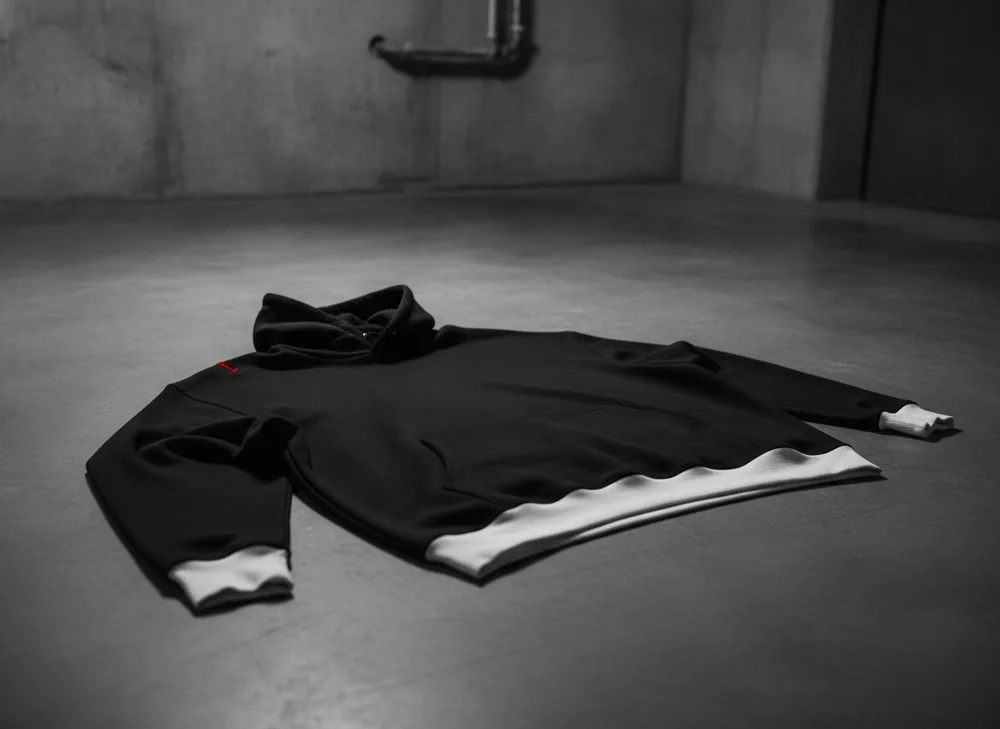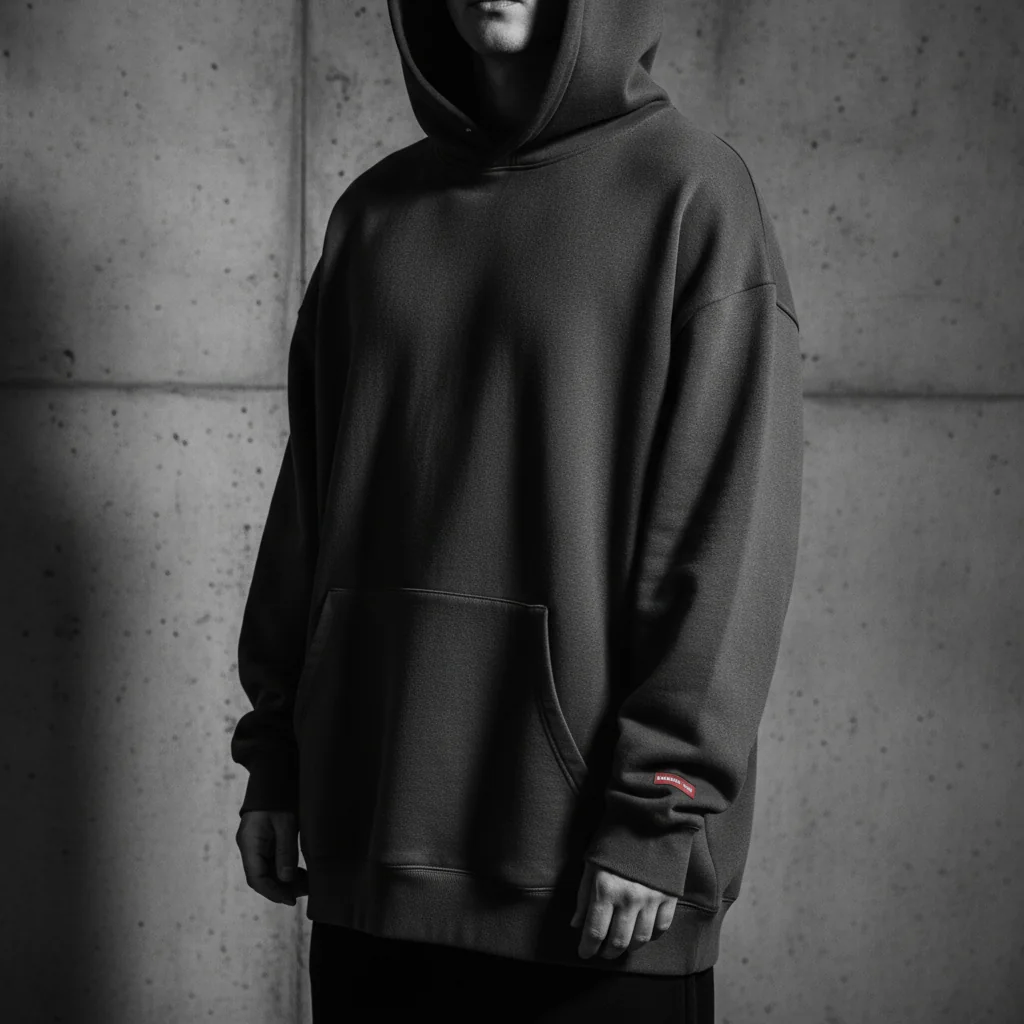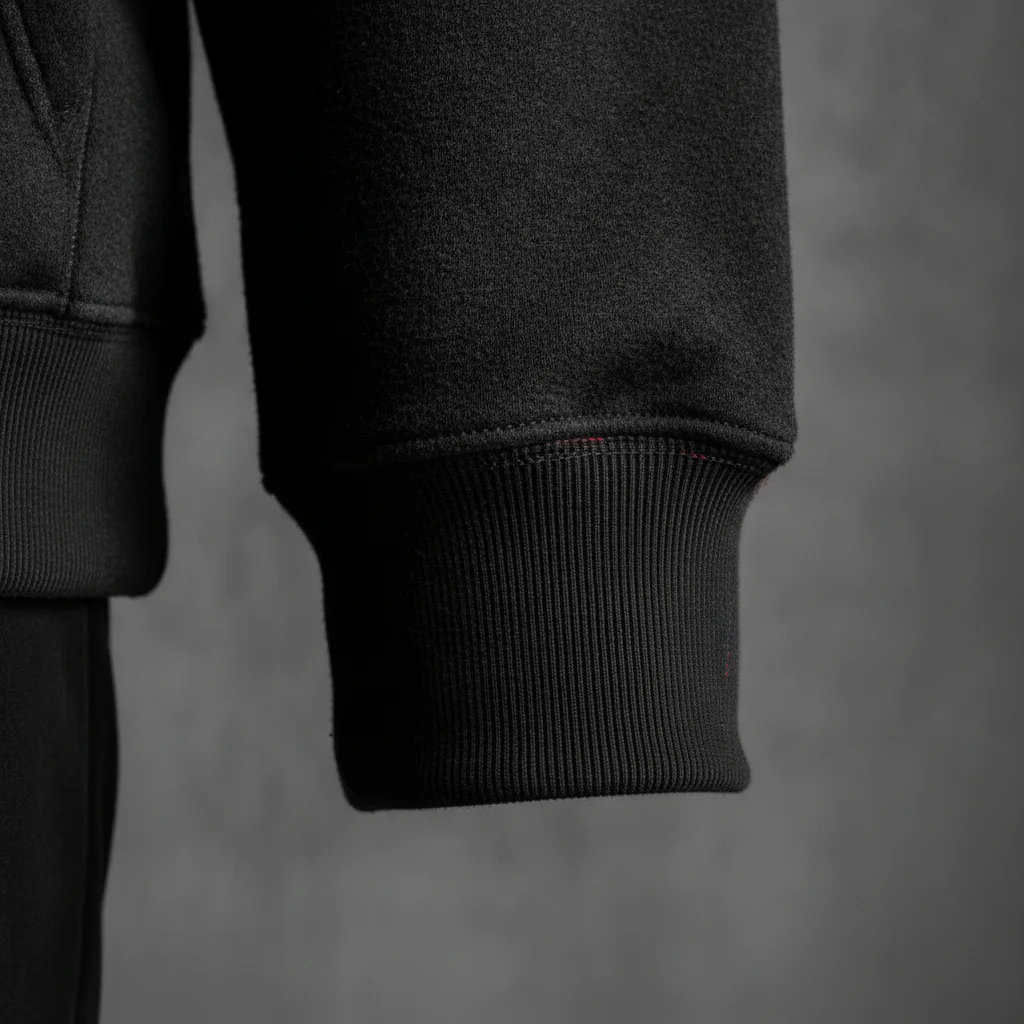
The best fabric for custom hoodies for most streetwear brands is 320 to 400+ GSM cotton fleece, which delivers the structured drape, warmth, and substantial hand-feel that separates a premium hoodie from a thin, mass-market basic. Lighter fleece (240-280 GSM) still works for a softer, more casual hoodie, but weight is the single biggest factor buyers notice when they pick up a garment.
Choosing hoodie fabric comes down to three variables working together: fiber content, fabric structure (fleece vs French terry), and GSM weight – and the right combination depends on the drop’s climate positioning, price point, and the drape a brand wants for oversized or boxy silhouettes.
Understanding GSM and why it matters for hoodies
GSM (grams per square meter) measures fabric density and directly correlates with how substantial a hoodie feels in hand, how it drapes on the body, and how warm it wears. A 180 GSM hoodie fabric feels thin and closer to a sweatshirt-weight tee; a 400+ GSM fabric feels structured and holds its shape even unworn on a hanger – the kind of weight buyers associate with a premium price point.
Higher GSM also affects how graphics and prints sit on the fabric: a heavier, denser weave gives screen print and embroidery a more stable base, reducing the fabric distortion that can happen with thinner, stretchier material under a large print.
Fleece vs French terry – which suits your hoodie
Fleece
Brushed interior for a soft, insulating hand-feel. Best for cold-weather drops and maximum warmth-to-weight.
French terry
Looped, unbrushed interior. Lighter drape, more breathable, suits warmer-climate or transitional-season hoodies.
Fleece is the standard choice for a heavyweight, cold-weather hoodie since the brushed interior traps warmth without adding excess bulk. French terry suits a brand targeting a lighter, year-round hoodie or a market with a warmer climate, trading some warmth for breathability and a more fluid drape. See what is fleece fabric and what is French terry fabric for the full breakdown of each construction.
GSM weight comparison table
| GSM range | Feel | Best for |
|---|---|---|
| 240-280 GSM | Light, soft, casual | Warm climates, transitional-season drops |
| 300-350 GSM | Structured, substantial | Core year-round hoodie line |
| 380-400+ GSM | Heavyweight, premium, boxy drape | Winter drops, oversized/boxy fits, flagship pieces |
Fiber content: cotton vs cotton-poly blends
100% cotton fleece gives the most natural, breathable hand-feel and takes garment dye and acid wash finishes most predictably, since these processes rely on a natural-fiber reaction. Cotton-poly blends (typically 80/20 or 70/30 cotton to polyester) add shape retention and reduce shrinkage, at a slight trade-off in breathability and a reduced response to natural-fiber-dependent finishes like garment dye.
For brands planning acid wash, garment dye, or tie-dye on their hoodie line, 100% cotton or a high-cotton blend fleece is the more reliable base fabric. For brands prioritizing shape retention across repeated wash cycles with no wash-finish plans, a cotton-poly blend is a reasonable trade-off.
How fabric weight affects fit and drape
Heavier fleece (350+ GSM) holds an oversized or boxy silhouette with structure – the fabric itself contributes to the shape rather than collapsing into a shapeless drape, which is why most oversized and boxy-fit streetwear hoodies default to heavyweight fleece. Lighter fleece on the same oversized pattern tends to look and photograph as baggy rather than intentionally structured.
A cropped or slim-cut hoodie can work with a lighter fabric weight since the pattern itself, not the fabric density, is doing more of the shape work – so fabric choice should always be considered alongside the intended silhouette rather than in isolation.
Real GSM examples across the market
Mass-market basic hoodies commonly sit in the 220-260 GSM range – functional, but noticeably thinner in hand than a premium streetwear piece. Recognized premium streetwear and heritage fleece brands typically manufacture in the 350-450 GSM range, which is part of why their hoodies command a materially higher price point and feel distinctly more substantial off the rack. A brand positioning itself in the premium tier should benchmark fabric weight against this range, not against fast-fashion basics.
Brushed vs unbrushed fleece interior
Most hoodie fleece uses a brushed interior finish, where the inner surface is mechanically raised into a soft nap that traps warm air and gives the classic soft, fuzzy hand-feel against skin. An unbrushed or lightly brushed interior feels closer to a smooth jersey on the inside, trading some of that plush warmth for a cleaner, less bulky feel – a choice some brands make deliberately for a more minimal, lightweight hoodie positioning.
Brushing level is a specification worth confirming explicitly with a factory rather than assuming standard, since two hoodies at the identical GSM can feel meaningfully different depending on how heavily the interior has been brushed.
Cost factors tied to fabric choice
Heavier GSM fabric costs more per yard than lighter weight, and cotton-poly blends typically run below 100% cotton at the same GSM due to fiber cost. Brands balancing unit economics should weigh fabric weight against their target retail price – a 400 GSM 100% cotton hoodie supports a higher retail price point than a 260 GSM blend, and pricing that ignores this mismatch either erodes margin or undersells a premium fabric choice.
Sampling multiple GSM options side by side, on the same silhouette, is the most direct way to compare hand-feel and drape before committing an entire production run to one fabric weight.
How to choose hoodie weight for your specific drop
Start with your primary market’s climate and season: a US Northeast or UK winter drop favors 350-400+ GSM fleece; a year-round or warmer-climate line can work well at 280-320 GSM. Then factor in silhouette – oversized and boxy fits benefit from the added structure of heavier fabric, while slim or cropped fits carry lighter fabric more comfortably. Our detailed guide on how to choose hoodie weight walks through this decision in more depth.
Fabric weight and decoration compatibility
Heavier fleece gives screen print, DTG, and embroidery a more stable surface to work against, which matters most on large-format graphics like full-back prints or all-over embroidery panels. A lighter, more elastic fabric can distort slightly under a large print area, occasionally causing cracking or misregistration on multi-color designs after repeated stretching and washing.
Puff print and puff embroidery in particular benefit from a heavier base fabric, since the raised texture holds its shape better against a denser, more stable surface than against thin, stretchy jersey. Brands planning heavy decoration on their hoodie line should factor this into fabric selection alongside climate and silhouette considerations.
Testing fabric before committing to bulk
The only reliable way to judge hand-feel, drape, and warmth is on a physical pre-production sample, not a fabric swatch card viewed on a screen or even in isolation. A swatch alone does not show how a fabric drapes on an actual oversized or boxy pattern, nor how it responds to a planned wash or dye finish.
Brands unsure between two GSM options should request samples in both weights on the exact silhouette they intend to produce, then compare fit, drape, and hand-feel side by side before locking a final specification for the bulk order. This single step prevents the most common and costly fabric-selection mistake: discovering after bulk cutting that the chosen weight does not deliver the intended look.
Seasonal and regional fabric strategy
Brands selling into multiple markets sometimes run two GSM variants of the same design – a heavier 380+ GSM version for cold-climate markets like the UK, Canada, or the US Northeast, and a lighter 280-320 GSM version for warmer or year-round markets. This dual-weight approach lets one design work across a wider range of climates without compromising the core silhouette or graphic.
For brands not yet ready to run dual-weight production, choosing a mid-range 320-350 GSM fabric offers a reasonable middle ground that performs adequately across most climates without fully optimizing for either extreme.
Reorder consistency for fabric weight
A brand that establishes a signature GSM weight for its hoodie line should expect that exact specification to repeat on every reorder – a manufacturer that documents fabric source, weight, and construction details protects this consistency, while one that sources loosely from whatever fleece is available at the time risks a reorder that feels noticeably different from the original approved sample, even under the same product name.
Asking a manufacturer how they log and reproduce a fabric specification across reorders is a practical question worth asking before a first order, not after a second order arrives feeling lighter or differently textured than expected.
How Minku sources and manufactures hoodie fabric
We manufacture custom hoodies across the full 240-400+ GSM cotton and fleece range, including 100% cotton and cotton-poly blend French terry, sourced and tested for the wash and print finishes each order requires. Every fabric choice is confirmed on a pre-production sample before bulk cutting, so hand-feel and drape are approved on your specific silhouette, not assumed from a swatch.
See our heavyweight hoodie manufacturer page for our top-tier fabric offering, or the custom hoodie manufacturer hub for the full hoodie product range. Ready to lock a GSM for your next drop? Get Your Custom Quote.
Best Fabric for Custom Hoodies (Weight & Feel Guide) — In Detail