DTG printing lets clothing brands reproduce full-color, photo-real artwork directly onto garments with no screens and no plate setup – which makes direct-to-garment the right decoration method for detailed designs and small, on-demand runs. Minku Apparel runs DTG printing in-house from 50 pieces per design, on heavyweight 240-400+ GSM cotton, with full private-label finishing and a pre-production sample approved before we cut bulk.
This page breaks down how DTG printing works, when it outperforms screen printing, how it holds up wash after wash, and how our Pakistan factory ships finished DTG orders DDP to your door in the USA, UK and Europe. If your artwork is ready, get your custom quote and we will match the right print method to your design.
What DTG Printing Is
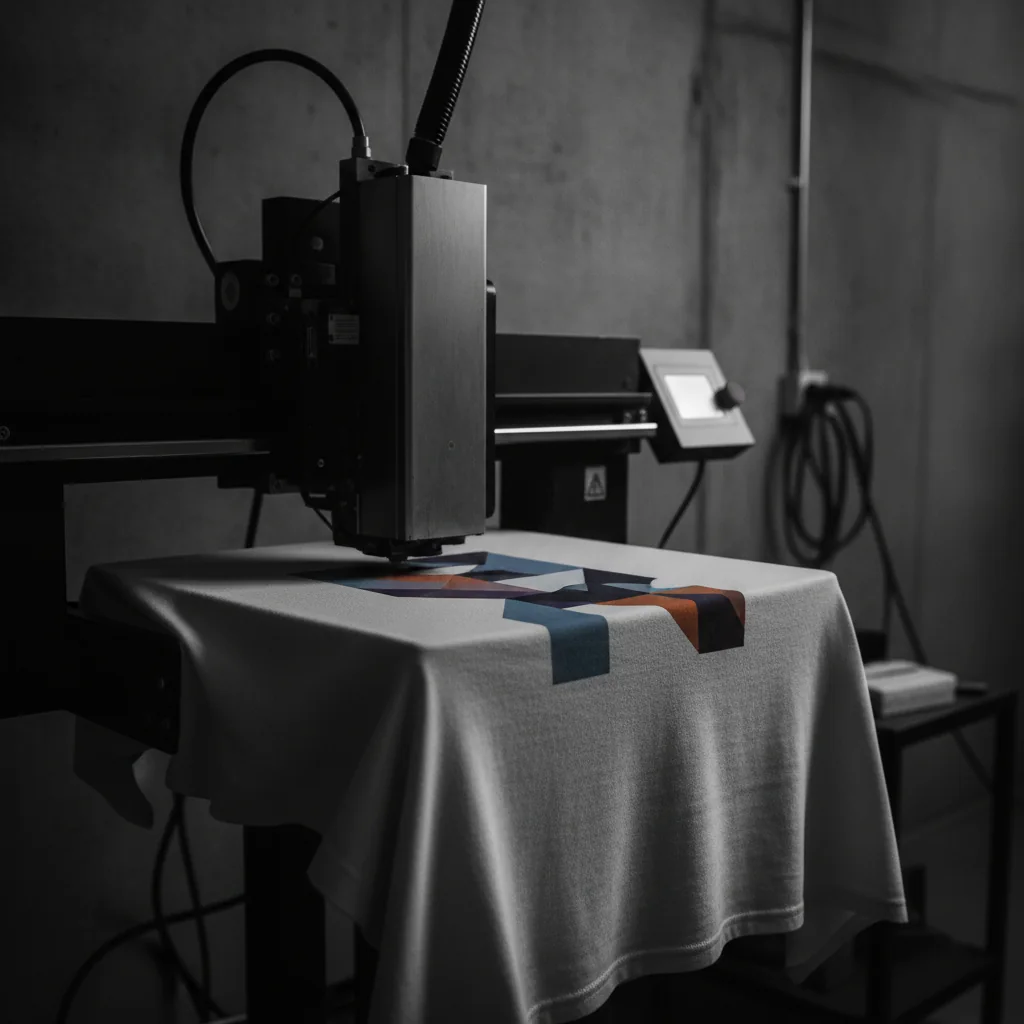
DTG stands for direct-to-garment. It is a printing process that uses a specialized inkjet printer to spray water-based textile ink straight into the fibres of a garment, the same way a desktop printer lays ink onto paper. Because the artwork is printed in a single pass, DTG reproduces gradients, photographs, fine detail and unlimited colors without the per-color cost that screen printing carries.
For streetwear and apparel brands, this changes what is possible on a small run. A screen-printed design with eight colors needs eight screens burned before a single shirt is decorated. The same design printed with DTG needs no screens at all – the file goes straight from your artwork to the garment. That is why DTG is the backbone of detailed graphic tees, photo prints and complex front-chest artwork produced in modest quantities.
DTG works best on cotton and cotton-rich blends, which absorb water-based ink cleanly and hold color depth. Every Minku DTG order is printed on garments we cut and sew ourselves, so fabric, fit and print stay under one roof.
How DTG Printing Works, Step by Step
The process is precise and repeatable, which is what protects color consistency across a production run. First, your artwork is prepared – cleaned up, sized to the print area and color-profiled so what you approve on screen matches what lands on fabric. High-resolution files at 300 DPI or better give the sharpest result.
Second, the garment is pre-treated. A thin coat of pre-treatment solution is applied and heat-pressed so the ink bonds to the fibres and colors stay vivid, especially white ink on dark garments. Skipping pre-treatment is the most common reason weak DTG fades, so we never skip it. Third, the garment is loaded onto the platen and the printer lays down a white under-base on colored fabric followed by the CMYK color pass.
Fourth, the print is cured. The garment passes through a heat tunnel or press that sets the ink permanently so it survives industrial and home washing. Finally, the piece is quality-checked, folded with your private-label tags and packaged. We sample this full sequence before bulk so you sign off on the exact color and hand-feel you will receive.
When to Use DTG for Your Clothing Line
Reach for DTG when your design has more detail than a screen can hold economically. Photo-real graphics, painterly gradients, fine line work, watercolor effects and designs with many colors are all natural fits. If your drop is a run of graphic tees where each style is 50 to 300 pieces, DTG keeps setup out of your cost per unit.
DTG also suits brands testing the market. Launching a capsule, validating three designs before a big reorder, or producing influencer and merch pieces all benefit from a method with no screen setup. You can run five designs of 50 without paying five sets of screen fees.
Where DTG is not the answer is high-volume single-color work – a 2,000-piece run of a one-color logo tee is faster and stronger with screen printing. Part of our role is telling you which method serves your design and budget, not selling you the one we happen to be running. On many lines, brands mix both across the range.
DTG vs Screen Printing: A Direct Comparison
The two methods solve different problems. The table below shows how they compare on the factors brand founders actually weigh when planning a run.
| Factor | DTG Printing | Screen Printing |
|---|---|---|
| Colors per design | Unlimited, full photo detail | Best up to 6-8 spot colors |
| Setup cost | None, no screens | Per-color screen fee |
| Ideal run size | 50-300 per design | 200+ per design |
| Cost per unit at volume | Flatter across quantities | Drops sharply at high volume |
| Hand-feel | Soft, printed into fabric | Sits on top, heavier ink lay |
| Best for | Detailed, multi-color, small runs | Bold, few colors, large runs |
Read alongside our screen printing capability, this comparison helps you split a range: DTG for the detailed graphics, screen printing for the bold logo staples. We produce both in-house, so a single order can carry both methods.
Quality and Wash Durability
A properly executed DTG print survives 40-plus washes with minimal fade when the garment is washed cold, inside out, and air-dried or tumble-dried low. The durability comes down to three controllable factors: correct pre-treatment, full ink saturation and complete curing. Get all three right and the print becomes part of the fabric rather than a layer sitting on top of it.
Because we control the blank as well as the print, we can specify ring-spun combed cotton that gives DTG a smoother, denser surface to print into. Rougher, lower-grade cotton scatters ink and dulls color, which is why print quality often traces back to fabric quality. Every Minku DTG run is wash-tested during sampling so you see real durability before approving bulk.
We back this with a quality guarantee and documented QC at cutting, printing and final inspection. If a sample does not hold color or hand-feel to spec, we correct the process before a single bulk piece is cut.
Fabric and Garment Requirements
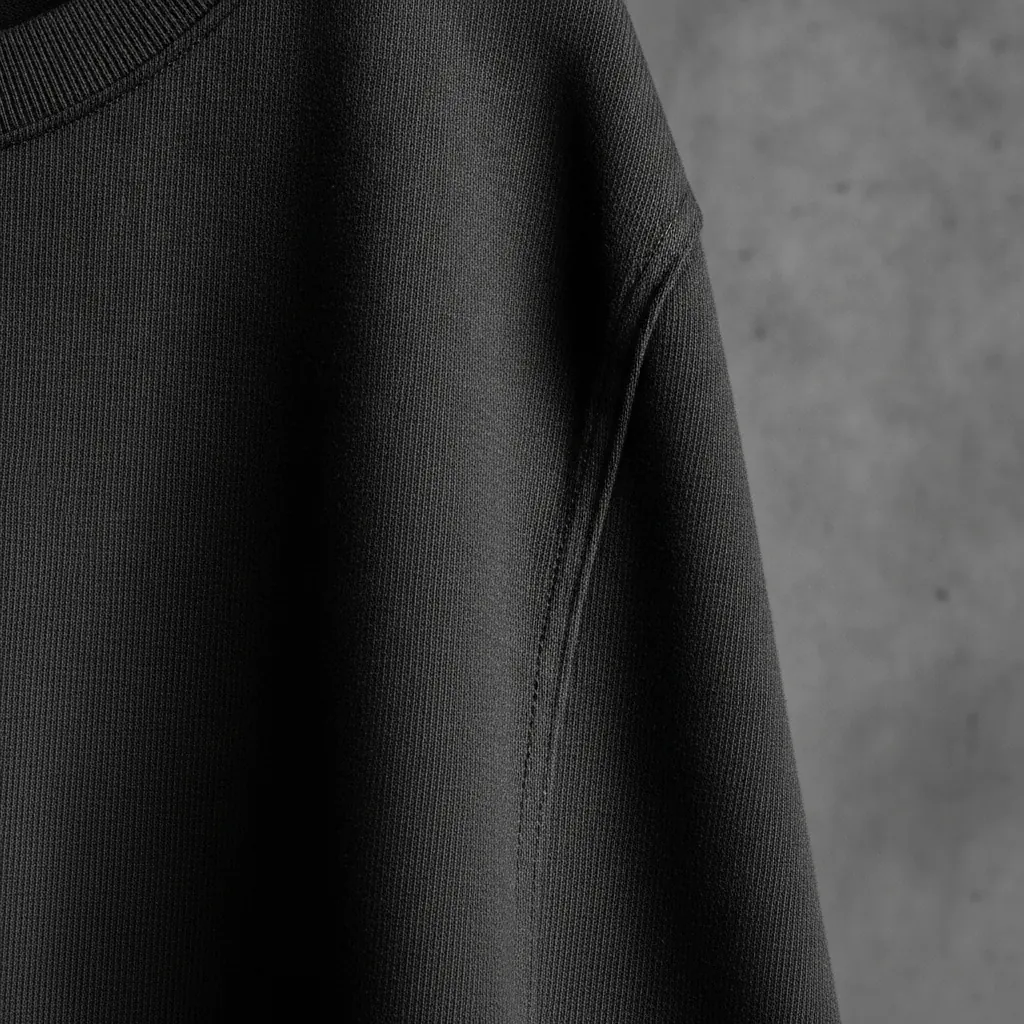
DTG delivers its best results on 100% cotton and high-cotton blends. Our heavyweight 240-400+ GSM cotton jersey and tubular knits give the ink a dense, even surface, so photo prints read sharp and colors stay saturated. Cotton-heavy French terry and fleece also take DTG well for hoodies and crews.
Polyester-rich fabrics are the exception – water-based DTG ink does not bond to synthetics the way it grips cotton, so for performance blends we will recommend an alternative such as screen printing with the correct ink system. Garment color matters too: prints on white and light garments skip the white under-base and run faster, while dark garments take a white base layer that we account for in sampling.
Because we cut and sew the blanks, you are not locked into stock garment options. You choose the weight, the fit and the fabric, and we build the DTG program around it. Explore our full range on the custom t-shirt and custom hoodie pages.
Combining DTG With Other Decoration Methods
DTG rarely works alone on a premium garment. The strongest streetwear pieces layer methods, and we build these combinations into a single production flow. A common build is a DTG photo graphic on the front paired with embroidery on the chest or sleeve for a tactile brand mark that signals quality the moment a customer picks it up.
You can also pair DTG with a woven label at the hem, a puff-print hit on the back, or a screen-printed logo where a bold solid works better. Each method is a decoration station in our factory, so combining them keeps the garment in one building from cut to pack.
When you combine methods, sampling matters even more, because the interaction between print, stitch and fabric has to be proven. We sample the full combination so the finished piece is exactly what your customer will hold.
MOQ, Cost and Turnaround
DTG carries a friendly minimum because there is no screen setup to amortize – our MOQ is around 50 pieces per design, letting new brands launch without committing to warehouse-filling quantities. Cost per unit is driven by garment weight, print size and coverage rather than color count, so a ten-color design costs the same to print as a two-color one.
On value, we compete on the weight of the blank, the accuracy of the print and the reliability of delivery, never on being the lowest number. Turnaround runs fast once your sample is approved, and we ship worldwide DDP door-to-door, so duties and freight are handled and your order clears customs without you touching an import broker.
For a full picture of price drivers across methods, see our custom clothing manufacturing hub.
How Minku Runs DTG In-House
Everything happens under one roof at our certified Pakistan factory – cutting, sewing, pre-treatment, printing, curing, QC and private-label finishing. That vertical control is why our color and durability stay consistent across reorders, and why we can promise a sample that matches bulk. Nothing is farmed out to a print shop that has never seen your fabric.
You send artwork and a tech pack; we translate it into a pre-production sample, refine color and placement, and hold the approved sample as the standard every bulk piece is checked against. Reorders reference the same file and the same blank spec, so your third run looks like your first. Reach us on WhatsApp at +923404001486 or email hello@minkuapparel.com to start.
When you are ready to move, get your custom quote with your design and target quantity, and we will confirm method, fabric, timeline and DDP delivery to your market.
DTG Printing for Clothing Brands | Minku Apparel — In Detail