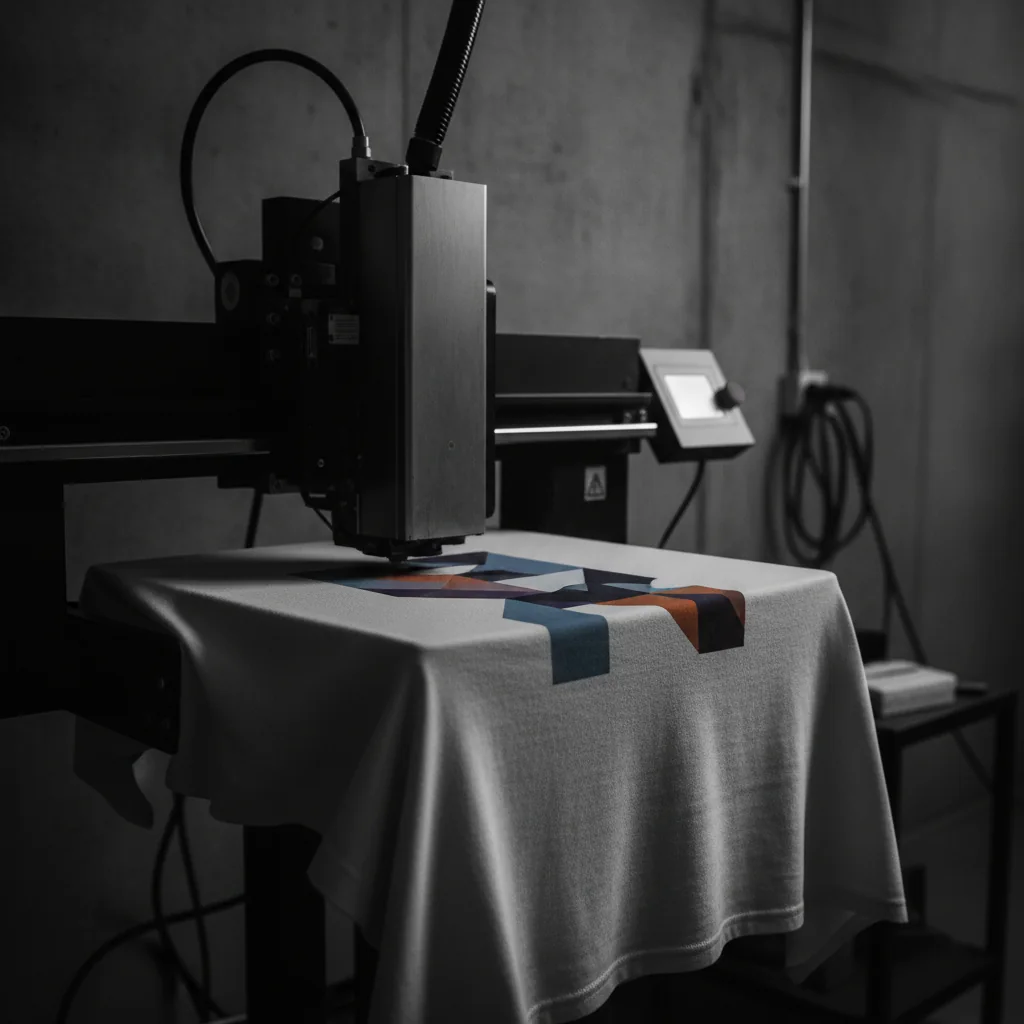
All-over print (AOP) covers a garment edge to edge, across seams and panels, so your artwork reads as one continuous design rather than a placed graphic – it is the decoration method behind bold, fully-printed hoodies, tees and shorts that stand out on a rail. Minku Apparel produces all-over print in-house through sublimation and cut and sew panel printing, on custom garments from a friendly minimum, with full private-label finishing and a sample approved before we run bulk.
This page explains what all-over print is, the two ways it is produced, how artwork must be set up, how it wears, and how our Pakistan factory ships finished orders DDP to your door in the USA, UK and Europe. If your pattern is ready, get your custom quote and we will map it to the right AOP method.
What All-Over Print Is
All-over print is decoration that covers the entire garment surface, including sleeves, seams and panels, with no blank border around the artwork. Instead of a chest hit or back graphic, the whole piece becomes the canvas. That continuous coverage is what gives AOP garments their bold, immersive look and their strong presence in a lookbook.
There are two production routes. The first is sublimation, where artwork is printed onto transfer paper and heat-pressed into polyester fabric so the dye becomes part of the fibre. The second is cut and sew panel printing, where fabric panels are printed before the garment is assembled, so the design aligns across seams on cotton and blended garments.
Because true AOP is built into the garment rather than added to a finished blank, it is tied closely to cut and sew production. Every Minku AOP order is produced on garments we construct ourselves, so print, fabric, fit and assembly are controlled in one factory from artwork to pack.
How All-Over Print Is Produced, Step by Step
The route depends on your fabric and design. For sublimation, artwork is prepared as a full garment layout, printed onto transfer paper, then heat-pressed onto polyester panels or garments. The heat turns the dye to gas, which bonds into the fibres, so the print becomes part of the fabric with no surface layer and no added weight.
For cut and sew AOP on cotton and blends, printed fabric is produced first, then our patterns are cut from the printed cloth and sewn into the finished garment. This route lets us align a pattern across the body, sleeves and pockets, and it is the path to premium fully-printed streetwear that is not limited to polyester.
In both routes, we sample first. You approve print scale, color, placement across seams and hand-feel on your real garment before bulk runs. Seam alignment and repeat scale are set at this stage, which is what separates a considered AOP piece from a misaligned one.
Sublimation vs Cut and Sew AOP
The two AOP routes suit different fabrics and looks. The table below shows how they compare on the factors that shape the decision.
| Factor | Sublimation AOP | Cut and Sew AOP |
|---|---|---|
| Fabric | Polyester and poly blends | Cotton, blends, most fabrics |
| Hand-feel | No added layer, breathable | Depends on print and fabric |
| Color range | Full photographic, vivid | Full, fabric dependent |
| Seam alignment | Good on cut panels | Precise, pattern matched |
| Best for | Sportswear, vivid graphics | Premium cotton streetwear |
| Setup | Digital, no screens | Fabric print plus assembly |
We run both in-house, so we match the route to your fabric target. For the construction side of AOP, see our cut and sew capability page.
When to Use All-Over Print
Reach for AOP when the pattern is the product. Camo, florals, abstract repeats, photographic scenes, brand-motif tilings and bold graphic takeovers all depend on edge-to-edge coverage that a placed print cannot deliver. If your design concept only works covering the whole garment, AOP is the method.
AOP also gives a line a distinctive, high-impact hero piece. A fully-printed hoodie or short set anchors a drop, photographs strongly and signals a brand with a point of view. It is the decoration that turns a plain silhouette into a statement garment customers remember.
Where AOP is not the right call is a simple logo or small graphic, which is faster and stronger as screen print, DTG or embroidery. Because AOP is tied to cut and sew, it carries more setup than decorating a blank, so we help you weigh whether a design truly needs full coverage or reads better as a placed hit.
Artwork and Fabric Requirements
AOP artwork must be built for full-garment layout. Repeat patterns should tile seamlessly so there are no hard breaks, and placement designs must be positioned to a garment template so key elements land where you intend. High-resolution files keep detail sharp when scaled across a large area. We guide file setup during sampling.
Fabric drives the route. Sublimation needs polyester or high-poly blends to bond the dye, and it shines for vivid, breathable sportswear and lightweight pieces. Cotton and cotton-heavy streetwear go the cut and sew route, where printed fabric is assembled into the garment, so you keep the heavyweight cotton hand your brand is built on.
Because we cut and sew every AOP garment, you choose the silhouette, weight and fit, and we build the print program around it rather than forcing your design onto a stock blank. Explore silhouettes on our custom t-shirt page.
Quality, Durability and Combining Methods
Sublimation is among the most durable decoration available, because the dye is bonded into the fibre – it does not crack, peel or fade the way a surface print can, even after heavy washing. Cut and sew AOP durability depends on the fabric printing method, which we select and wash-test during sampling so you see real performance before bulk.
AOP also combines with placed decoration. A fully-printed body can carry an embroidered logo, a woven label or a puff-print hit on top, layering a signature detail over the pattern. Each method is a station inside our factory, so combining them keeps the garment in one building from print to pack with no vendor hand-offs.
Every run is backed by a quality guarantee and documented QC at print, cut, sew and final inspection. If a sample does not align, hold color or feel right to spec, we correct it before bulk, so the approved sample is the standard every piece is checked against.
MOQ, Cost and Turnaround
Because AOP is tied to cut and sew, our minimum starts around 50 pieces per design and depends on the route and fabric. Cost is driven by print coverage, fabric and the construction of the garment rather than a simple color count, so a fully-printed hoodie sits above a placed-graphic tee. We map the price to your design during quoting.
On value, we compete on print quality, seam alignment and the weight and hand of the garment, never on being the lowest number. We ship worldwide DDP door-to-door, so duties and freight are handled and your order clears customs without an import broker. Turnaround runs efficiently once your sample is approved.
For price drivers across every method, see our custom clothing manufacturing hub, then send your pattern to lock a quote.
How Minku Runs All-Over Print In-House
Fabric printing, sublimation, cutting, sewing, QC and private-label finishing all happen under one roof at our certified Pakistan factory. That vertical control is why our print scale, seam alignment and color stay consistent across reorders, and why we can promise a sample that matches bulk. Reach us on WhatsApp at +923404001486 or email hello@minkuapparel.com to start.
You send artwork and a tech pack; we set it up for the right AOP route, produce a pre-production sample, refine scale, placement and hand-feel, and hold the approved sample as the production standard. When you are ready, get your custom quote with your design and quantity, and we will confirm route, fabric and DDP delivery to your market.
All-Over Print for Clothing Brands | Minku Apparel — In Detail