Screen printing is the workhorse decoration method for streetwear brands that need bold, opaque graphics with long wash life across mid-to-large production runs. At Minku Apparel we run screen printing in house from our factory in Pakistan, pushing plastisol and water-based inks through fine mesh screens onto heavyweight cotton so your artwork lands sharp, saturated, and built to survive years of wear. From 50 pieces per design, with full private-label finishing and sampling before bulk, this is the method most established graphic labels are printed on.
What Screen Printing Actually Is
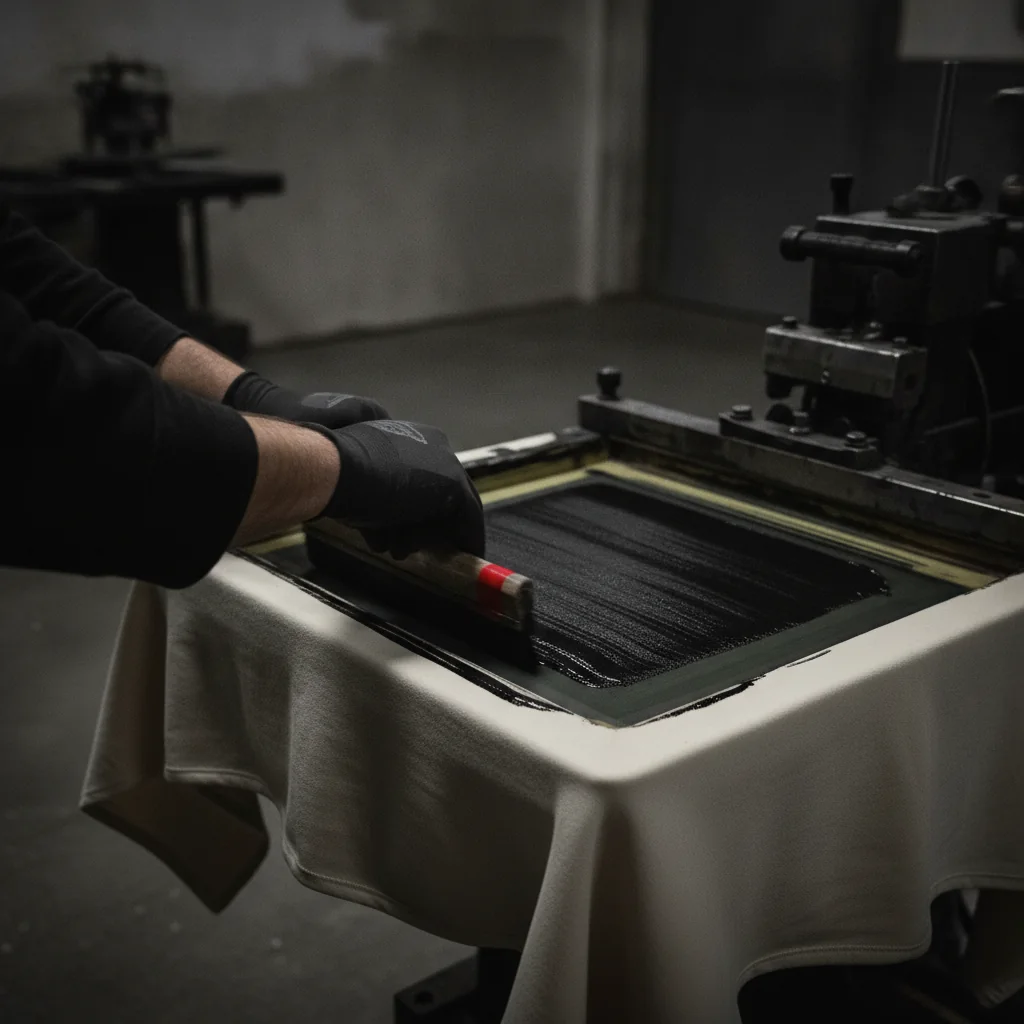
Screen printing is a stencil process. For each colour in your design, a separate mesh screen is coated with light-sensitive emulsion, exposed to a film positive of that colour layer, and washed out so ink passes only through the open artwork areas. Ink is then flooded across the screen and pulled through onto the garment with a squeegee, one colour at a time, building the graphic in registered layers.
Because the ink sits as a dedicated layer of pigment rather than being absorbed like a dye, screen printing delivers opacity that no digital method matches on dark fabric. A white or bright graphic on a black heavyweight tee reads crisp and solid, which is exactly why the method dominates streetwear graphics, band merch, and bold logo work. The trade-off is setup: every colour needs its own screen, so the process rewards volume and repeatable designs over one-off full-colour photographs.
The Screen Printing Process Step by Step
Our screen printing flow is deliberate so registration stays tight and colour is consistent from the first shirt to the last on the run.
- Artwork and colour separation – your design is split into individual colour channels and output as film positives, with Pantone colours matched to your brand.
- Screen coating and exposure – each mesh screen is coated with emulsion, dried, and exposed under UV light through the film so the stencil hardens around the artwork.
- Wash-out and registration – unexposed emulsion is rinsed away, opening the design, and screens are locked onto the press and aligned so every colour registers to the others.
- Ink mixing and test print – inks are mixed to your Pantone references and a strike-off is pulled to confirm placement, colour, and opacity before the run.
- Production run – garments are loaded on the press, printed colour by colour, and each print is flash-cured between layers where needed.
- Curing – finished prints pass through a conveyor dryer that heats the ink to full cure, locking it to the fibre for lasting wash resistance.
Every step is inspected in line, and the approved strike-off stays on file so a reorder of the same design six months later matches the original in colour and placement.
When to Use Screen Printing
Screen printing is the right call when your design uses a defined number of solid colours and you are printing enough units to absorb the screen setup. It shines on bold front hits, back prints, oversized graphics, and spot-colour logos – the core visual language of streetwear. On our custom t-shirt manufacturing and graphic tee lines, screen print is the default for anything from a chest logo to a full-back statement piece.
It is equally strong on heavier garments. For custom hoodies and sweatshirts, screen printing lays down thick, durable ink that holds up to the abrasion fleece garments take. Where it is less suited is photographic artwork, heavy colour gradients, or short runs of many different one-off designs – for those, digital printing is the better tool.
Ink Types and Special Finishes
The ink you choose defines the hand-feel and the look. We run a full range and match the ink to the effect your brand wants.
| Ink Type | Look and Feel | Best For |
|---|---|---|
| Plastisol | Opaque, slightly raised, vivid | Bold graphics on dark fabric |
| Water-based | Soft, absorbed into fibre | Vintage, breathable prints |
| Discharge | Ultra-soft, dyes the cotton | Soft-hand prints on dark cotton |
| Puff additive | Raised, three-dimensional | Tactile streetwear hits |
| Metallic / foil | Reflective, premium accent | Statement logos and highlights |
Water-based and discharge inks give that broken-in, printed-into-the-shirt feel favoured by premium labels, while plastisol delivers maximum punch and opacity. We can also blend techniques – a water-based base with a plastisol highlight – to hit a specific finish. If you want raised texture across the whole graphic, our puff print capability takes that further.
Quality and Wash Durability
A correctly cured screen print is one of the most durable decorations in apparel. When plastisol is heated to full cure, the ink cross-links and bonds to the fabric, surviving 50 or more wash cycles without meaningful cracking or fading. The failure most brands have seen elsewhere – ink that cracks after a few washes – comes from under-curing, not from the method itself, and our conveyor dryers are calibrated to hit cure temperature on every run.
Durability also depends on ink deposit and mesh choice. A finer mesh lays a thinner, softer deposit for detailed work; a coarser mesh pushes more ink for maximum opacity on dark garments. We match mesh count, ink, and cure to your fabric and artwork so the print holds its colour and edge through the life of the garment. Every production run is wash-tested against the approved sample before it ships.
Combining Screen Printing With Other Methods
Screen printing pairs cleanly with other decoration to build a richer, more premium garment. A common streetwear combination is a large screen-printed back graphic with an embroidered chest logo, marrying flat colour with stitched texture. Screen print also layers with puff additive for a mixed flat-and-raised effect within a single design.
For brands weighing print methods against each other, the honest answer is that they solve different problems. Screen printing owns bold spot-colour graphics at volume; DTG printing owns full-colour detail and low quantities. Many of our clients use both across a collection – screen print for the hero tees and hoodies, DTG for limited detailed drops. We run every method in house, so a single order can mix decoration without moving between vendors.
MOQ and Setup Implications
Our screen printing MOQ starts at 50 pieces per design. Because each colour requires its own screen and setup, the economics improve as quantity climbs – the fixed screen cost spreads across more units, and the per-piece decoration cost falls. A one or two-colour design is the most efficient entry point; every added colour adds a screen and a print head.
Cost and Turnaround Factors
Screen printing cost is driven by four levers: number of colours, print locations, quantity, and any special inks or finishes. A single-location, two-colour print at higher volume is the most efficient; multiple large prints in many colours across a small run sit at the other end. Fabric weight and garment type play in too, since heavier fleece takes more ink and handling than a lightweight tee.
Turnaround depends on screen preparation and run size, but our in-house setup keeps decoration fast because artwork, screens, printing, and curing all happen under one roof with no outside print shop in the chain. Sampling comes first – we print a pre-production strike-off for approval before committing bulk – and once approved, production and DDP dispatch follow the standard Minku timeline. Read the full flow on our custom clothing manufacturing hub.
How Minku Runs Screen Printing
We treat screen printing as a controlled, repeatable process, not a rush job. Pantone matching, calibrated cure, in-line inspection, and archived strike-offs mean your graphics stay consistent across the first run and every reorder. Because decoration is in house alongside cut-and-sew, we can print on garments we manufacture from scratch rather than being limited to stock blanks – so the fabric, fit, and print are all dialled to your brand.
Ready to print your next drop? Get your custom quote with your artwork and quantities, or reach us on WhatsApp at +923404001486. Send a design and we will advise the ink, mesh, and colour build that will make it land.
Screen Printing for Clothing Brands | Minku Apparel — In Detail