Custom embroidery stitches your logo and artwork into the garment with real thread, giving clothing brands the raised, tactile, premium finish that a print cannot match – and it is the decoration method buyers instantly read as quality. Minku Apparel offers in-house embroidery from 50 pieces per design, on heavyweight 240-400+ GSM cotton, fleece and terry, with full private-label finishing and a stitched sample approved before we run bulk.
This page covers what custom embroidery is, how digitizing and stitching work, the embroidery types we produce, how it holds up over years of wear, and how our Pakistan factory ships finished orders DDP to your door in the USA, UK and Europe. If your logo is ready, get your custom quote and we will digitize it for stitch.
What Custom Embroidery Is
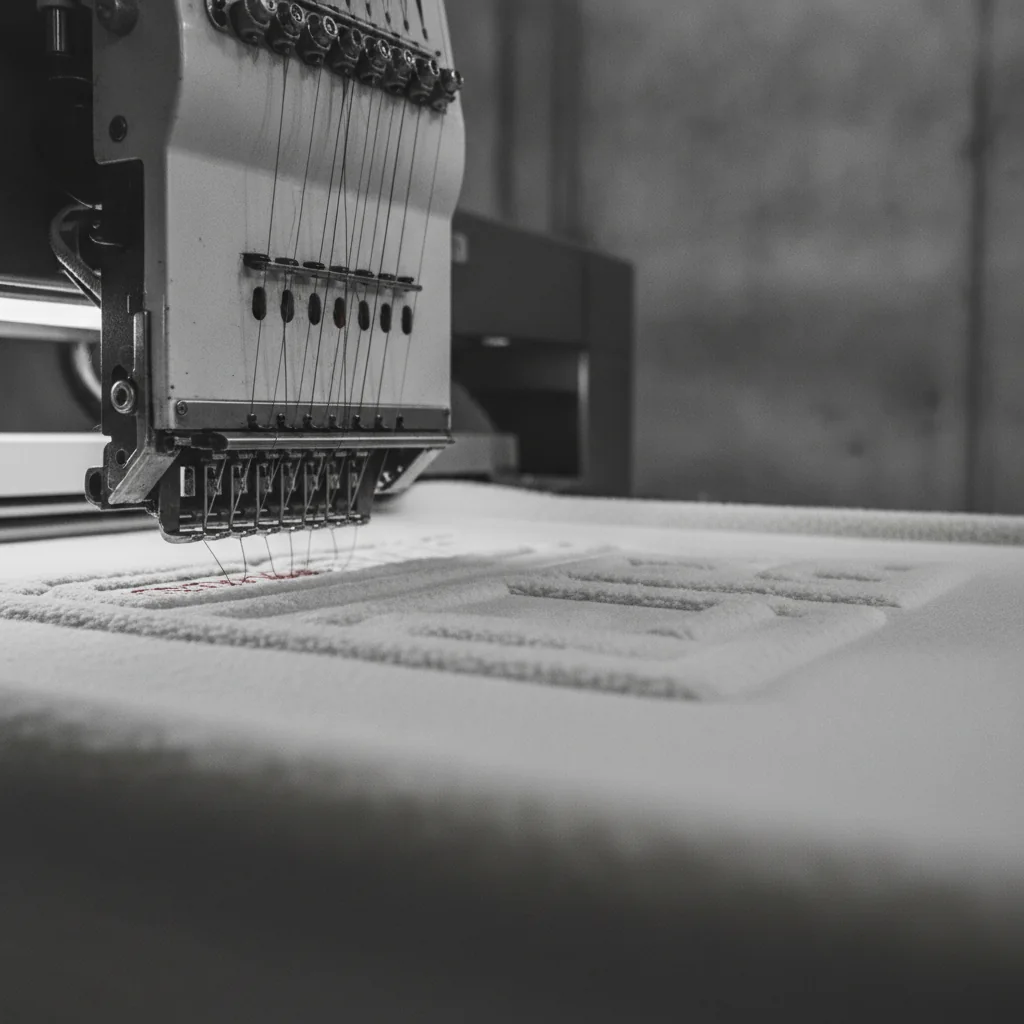
Embroidery is decoration created by stitching thread directly into fabric with a programmed multi-head machine. Instead of laying ink on the surface, the design is built from thousands of individual stitches, which gives it depth, texture and a durability that outlasts most prints. For streetwear and apparel brands, embroidery signals a higher price point the moment a customer touches the garment.
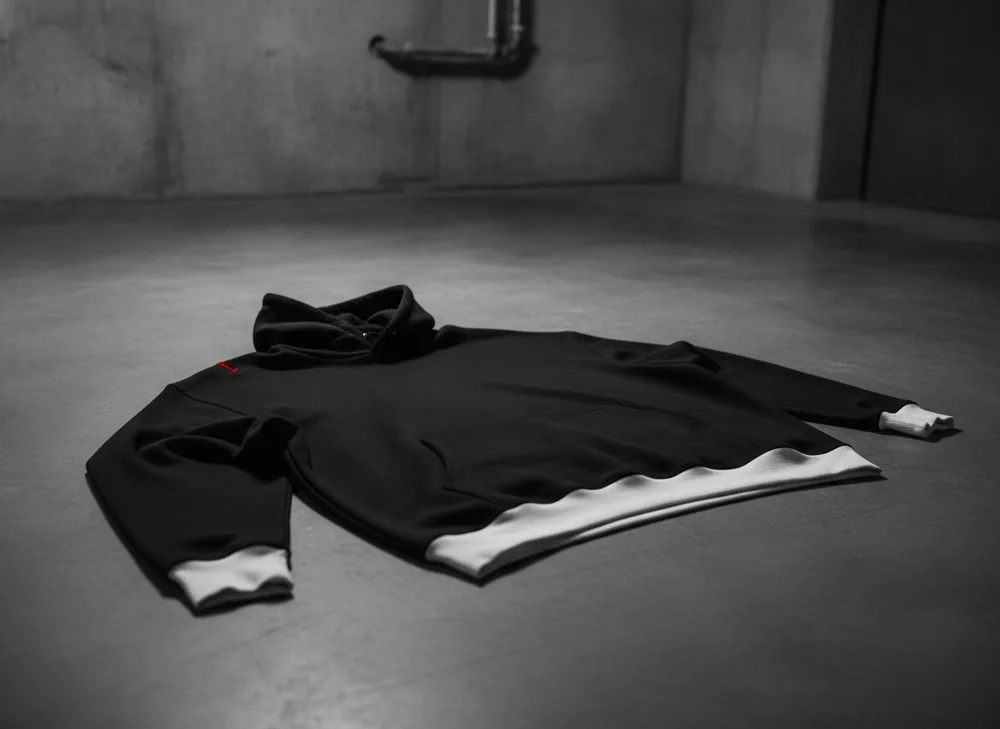
Because the design is thread rather than ink, embroidery holds its color and shape through hundreds of wash cycles without fading, cracking or peeling. That permanence is why premium hoodies, caps, polos and workwear lean on embroidery for logos, monograms and chest hits. It is the method that reads as heritage and craft rather than fast fashion.
Every Minku embroidery order is stitched on garments we cut and sew ourselves, so thread, backing, fabric and fit are controlled in one factory. That control is what keeps a logo looking identical across a first run and a third reorder.
How Embroidery Works, Step by Step
The process begins with digitizing, the single most important step. Your logo file is converted into a stitch file that tells the machine the exact path, direction, density and sequence of every stitch. Good digitizing is craft – it decides whether letters stay crisp, small text stays legible and the finished mark sits flat and clean.
Next, the garment or panel is hooped with a stabilizer backing that holds the fabric taut so stitches land accurately and the fabric does not pucker. The hooped piece loads onto the embroidery machine, which stitches the design thread color by thread color at high speed and high precision.
After stitching, excess backing is trimmed, loose threads are cleaned, and the piece is pressed and inspected. On knit and stretch fabrics we tune density and backing to prevent distortion. We stitch a pre-production sample first so you approve thread colors, size and placement on your real fabric before bulk runs.
Embroidery Types We Produce
We run the full range of embroidery styles brands ask for. Flat embroidery is the standard clean, low-profile stitch used for most logos and lettering. 3D puff embroidery raises the thread over a foam base for the bold, dimensional look seen on caps and streetwear chest hits – explore it further on our puff print capability page.
Applique combines fabric shapes with embroidered edges for large, tactile designs that cover more area with fewer stitches, keeping heavy graphics soft on the garment. Chain-stitch and tonal embroidery deliver a vintage, collegiate feel, while embroidered woven or twill patches let you produce a badge once and apply it across styles.
Each style suits a different brand story, and we help you choose based on your artwork, fabric and price target. Many lines mix them – flat embroidery for small labels, puff for the statement piece, patches for caps and outerwear.
When to Use Embroidery
Reach for embroidery when you want a mark that feels premium and lasts. Logos, monograms, small chest hits, left-chest branding, sleeve marks, cap fronts and back-neck details are ideal, because embroidery excels at bold, defined shapes and text at readable sizes.
Embroidery is the right call for garments customers keep and wear hard – heavyweight hoodies, jackets, polos and workwear where a print might crack but stitches endure. It is also the method that photographs as quality on a product page, which matters when your customer is deciding whether your brand is worth the price.
Where embroidery is not ideal is fine photographic detail, gradients or small intricate artwork, which thread cannot render the way a print can. For those we recommend DTG or screen printing, and often a combination. Part of our role is matching method to design so the finished garment earns its price.
Embroidery vs Printing: How They Compare
The table below shows how embroidery stacks up against printed decoration on the factors that shape a production decision.
| Factor | Embroidery | Print (DTG / Screen) |
|---|---|---|
| Finish | Raised, textured, tactile | Flat, sits on or in fabric |
| Durability | Outlasts the garment | Strong when properly cured |
| Best for | Logos, text, badges | Photos, gradients, large graphics |
| Detail limit | Bold shapes, readable text | Fine detail and color blends |
| Cost driver | Stitch count and size | Color count or print coverage |
| Perceived value | Premium, heritage | Graphic, contemporary |
Read alongside our custom clothing manufacturing hub, this helps you assign the right method per placement across a full range.
Quality, Durability and Fabric Fit
A well-digitized, correctly backed embroidery design outlasts the garment it sits on. Thread does not fade in UV or crack in the wash the way surface decoration can, and quality stabilizer keeps the mark flat for years. The variables that decide quality are digitizing precision, thread grade, stitch density and the right backing for the fabric.
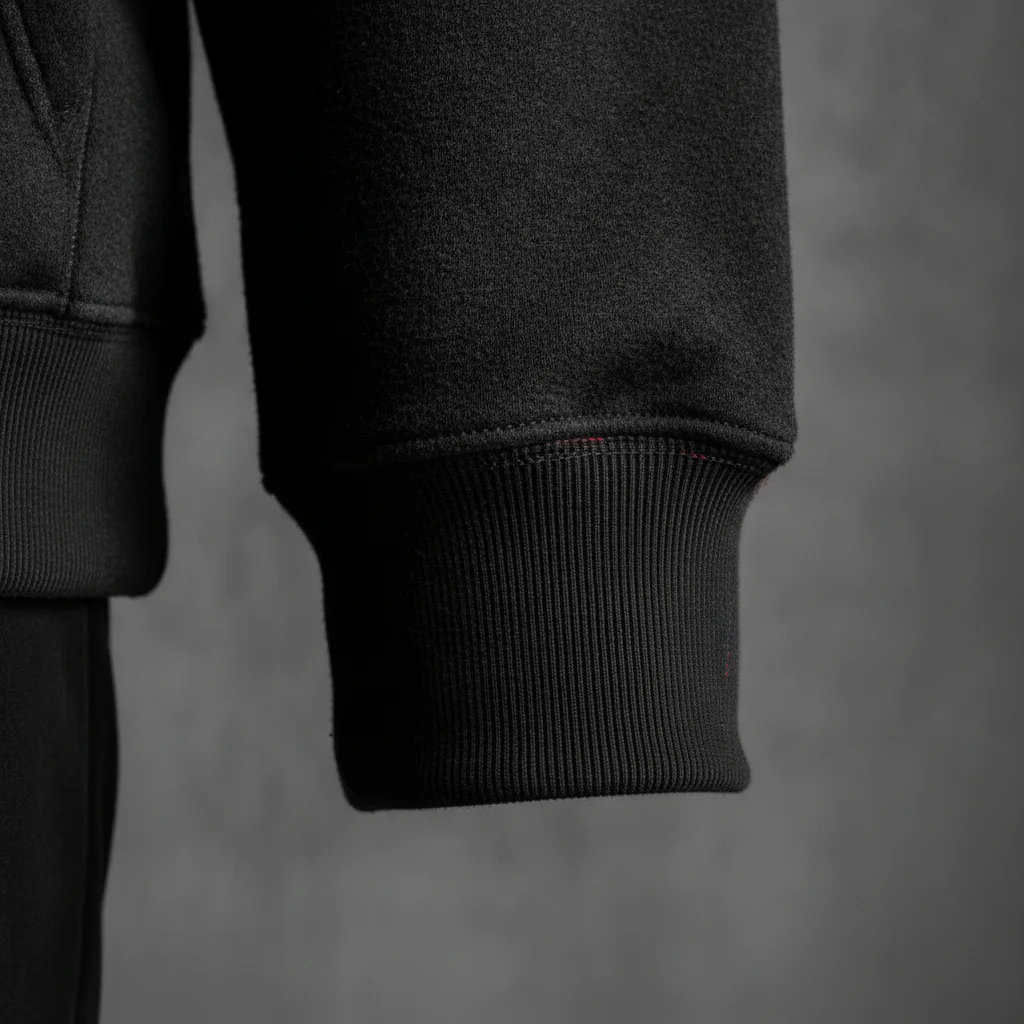
Because we cut and sew the blanks, we match backing and density to each fabric. Lightweight jersey needs a lighter touch to avoid stiffness, while heavyweight fleece and terry carry dense logos beautifully. On stretch fabrics we tune the design so it moves with the garment rather than puckering.
Every run is backed by a quality guarantee and documented QC at digitizing, stitching and final inspection. If a stitched sample does not sit clean or hold placement to spec, we correct the file before bulk – so the approved sample is the exact standard every piece is checked against.
Combining Embroidery With Print
The strongest streetwear garments layer methods, and we build these combinations into one production flow. A common build pairs a printed graphic on the body with an embroidered logo on the chest or sleeve, so the piece carries both a bold visual and a tactile brand mark.
You can combine embroidery with screen printing, DTG, woven labels, puff hits and patches on a single garment, because each is a station inside our factory rather than a separate vendor. That keeps the garment in one building from cut to pack and removes the shipping, delay and color-drift risk of splitting decoration across suppliers.
When methods combine, sampling proves the interaction of stitch, print and fabric before bulk. We sample the full combination so the finished piece is exactly what your customer receives.
MOQ, Cost and Turnaround
Our embroidery MOQ is around 50 pieces per design, so new brands can launch a premium-feeling product without oversized quantities. Cost per unit is driven by stitch count and design size rather than colors, so a two-color logo and a five-color logo of the same size stitch at a similar price. Larger, denser designs carry more stitches and therefore more cost.
Digitizing is a one-time step per logo, and once your file is set, reorders reference the same file for identical results. On value, we compete on stitch quality, thread grade and consistent placement, never on being the lowest number. We ship worldwide DDP door-to-door, so duties and freight are handled and your order clears customs without an import broker.
Turnaround runs fast once your sample is approved. Send your logo and target quantity and we will confirm method, placement and delivery timeline.
How Minku Runs Embroidery In-House
Digitizing, hooping, stitching, trimming, QC and private-label finishing all happen under one roof at our certified Pakistan factory. That vertical control is why our thread color and placement stay consistent across reorders, and why we can promise a stitched sample that matches bulk. Reach us on WhatsApp at +923404001486 or email hello@minkuapparel.com to start.
You send a logo and tech pack; we digitize it, stitch a pre-production sample, refine thread colors and placement, and hold the approved sample as the production standard. To move your line forward, get your custom quote with your design and quantity, and we will confirm fabric, method and DDP delivery to your market.
Embroidery for Clothing Brands | Minku Apparel — In Detail