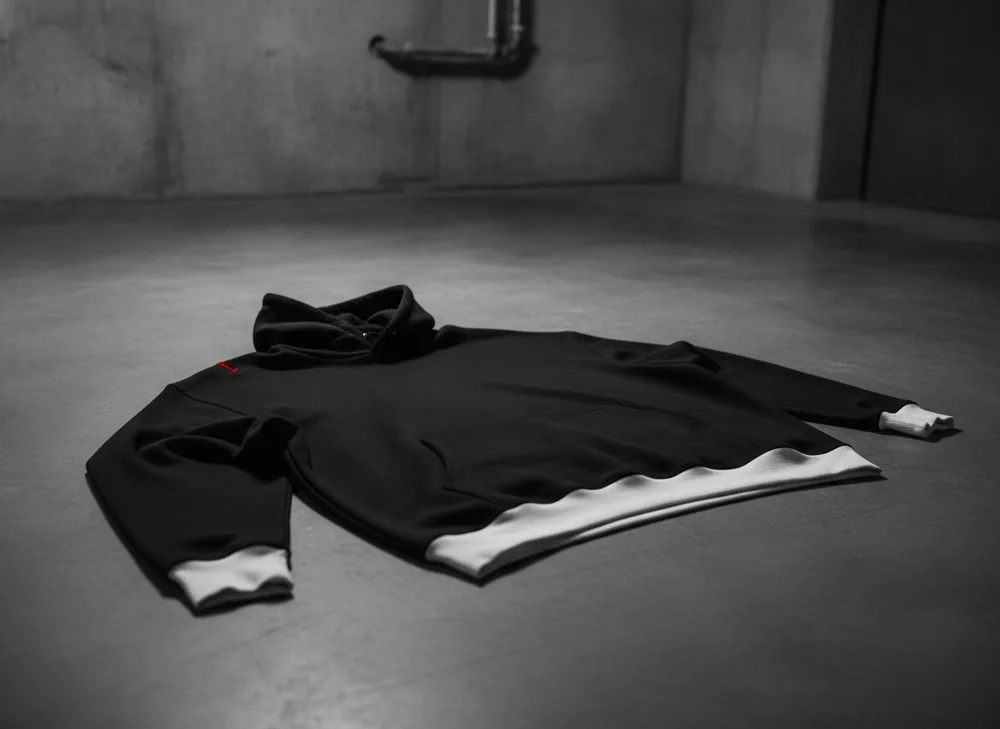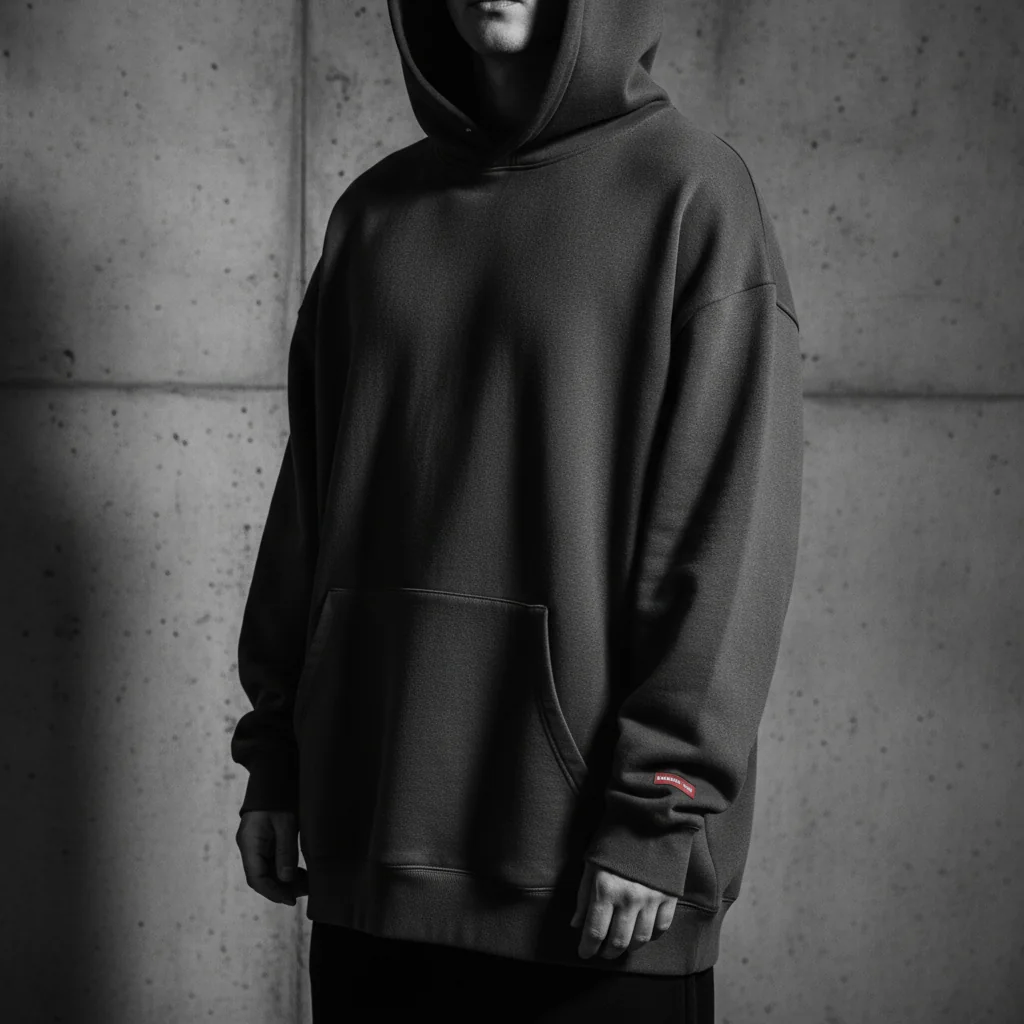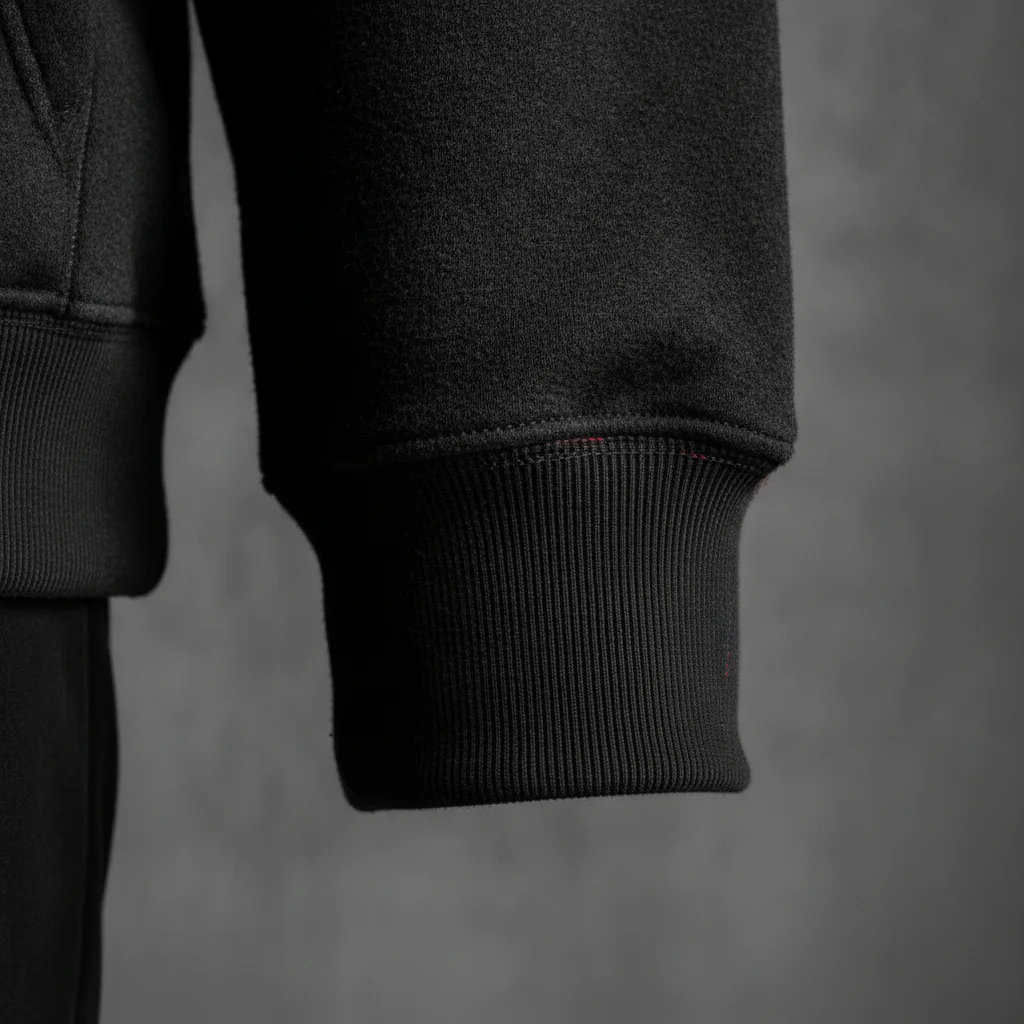
Choose your hoodie weight based on climate, drape, and how premium the finished piece needs to feel: 240 to 280 GSM suits year-round layering, while 320 to 400+ GSM heavyweight fleece is the standard for streetwear brands chasing a boxy, substantial drop. Most premium streetwear labels land between 320 and 400 GSM.
GSM (grams per square meter) is the number that tells you how much fabric is packed into a hoodie, and it drives almost all of what a customer feels when they pick one up: weight in the hand, drape on the body, warmth, and how the print or embroidery sits on the surface. Picking the wrong weight for your market or your price point is one of the most common and most fixable mistakes new brands make.
What GSM Actually Changes in a Hoodie
GSM is a direct measure of fabric density. A 240 GSM hoodie feels closer to a heavier t-shirt fabric – soft, flexible, and light enough for layering in warm weather. A 400 GSM hoodie has real structure: it holds a boxy silhouette on the hanger, resists pilling longer, and gives screen prints and embroidery a stable surface that will not pucker.
Weight also affects cost per unit, since heavier fabric uses more raw material per garment, and it affects how the hoodie photographs. Heavyweight fleece has a visible loop structure and a matte, substantial look in product photography that lighter fabrics cannot replicate, which is part of why premium streetwear brands lean into 320 GSM and above.
Matching Weight to Climate and Season
If your buyers are mostly in warm-climate markets like Miami, Houston, or southern Europe, a 240 to 280 GSM hoodie sold as a light layering piece will move faster than something built for a cold snap. If your core market is Chicago, Boston, Toronto, or Northern Europe, 320 to 400+ GSM heavyweight fleece matches how customers actually wear a hoodie there – as real outerwear, not only a layering top.
Brands selling into multiple markets often carry two weights across a season: a mid-weight 280 to 320 GSM piece for spring and fall, and a 380 to 400+ GSM piece positioned as the flagship winter drop. That split lets one core silhouette serve two selling seasons instead of sitting unsold for half the year.
Matching Weight to Fit and Silhouette
Fit and weight are connected. A boxy or oversized hoodie needs enough GSM to hold its shape away from the body; anything under 300 GSM on an oversized cut tends to sag and lose the silhouette after a few washes. A regular or slim-fit hoodie can work at a lower GSM since the fabric follows the body rather than standing away from it.
If your brand’s signature is an oversized, boxy drop-shoulder hoodie, plan for 320 GSM as a floor, not a ceiling. Our custom boxy hoodie and oversized hoodie lines are built almost exclusively in heavyweight fleece for this reason.
Matching Weight to Decoration Method
Heavier fabric gives screen print and puff embroidery a more stable base, so ink sits cleaner and thread does not pucker the surrounding fabric. If your design leans on a large chest-and-back screen print or raised puff-print logo, 320 GSM or higher will hold that decoration better over repeated washes than a lighter fleece.
Lighter fabric works fine for small embroidered logos, single-color prints, or all-over prints, where the decoration is not asking the fabric to carry much visual or physical weight. Match the ambition of your artwork to the weight of the base garment, not the other way around.
GSM Weight Comparison Table
| GSM range | Feel | Best for | Typical use |
|---|---|---|---|
| 240-280 | Soft, flexible, lighter hand | Warm climates, layering pieces | Daily wear, transitional-season hoodies |
| 280-320 | Balanced weight and drape | Year-round, most fits | Core drops, regular and relaxed fits |
| 320-360 | Structured, substantial | Boxy and oversized cuts | Signature streetwear silhouettes |
| 360-400+ | Heavyweight, premium hand-feel | Flagship winter drops | Statement pieces, embroidery-heavy designs |
Heavyweight vs Midweight: A Direct Comparison
Midweight (280-320 GSM)
Works across seasons, lower fabric cost per unit, suits slim and regular fits, layers cleanly under a jacket.
Heavyweight (320-400+ GSM)
Premium hand-feel, holds boxy and oversized shapes, better decoration surface, stronger perceived value at higher price points.
Neither is the correct choice in isolation. A brand selling a 35 to 45 dollar retail hoodie in a warm market may do better on midweight margins; a brand positioning a hoodie as a 65 dollar-plus flagship piece needs the heavyweight hand-feel to support that price at the point of sale.
How to Test Weight Before Committing to Bulk
Never choose a GSM from a spec sheet alone. Request a pre-production sample in your chosen weight, hold it, try it on, and check how it drapes before approving bulk. A fabric that reads correctly as a number on a tech pack can still feel different from what you pictured until it is in your hands.
If you are between two weights, ask for swatches of both, or a sample at each weight, before your final decision. That single extra sampling round costs a few days but removes the risk of a 500-piece order landing in a weight your customers reject.
Common Mistakes When Choosing Hoodie Weight
The most frequent mistake is choosing a low GSM to trim cost, without checking whether the silhouette needs structure – an oversized cut in 220 GSM fabric will not hold its shape and will read as thin in photos. The second most frequent mistake is going heavyweight for a market where customers actually want a light layering piece, which slows sell-through in warmer regions.
A less obvious mistake is ignoring GSM consistency across a reorder. If your first batch runs 340 GSM and your reorder ships at 300 GSM because of a fabric substitution, customers who bought both will notice the difference immediately. Lock your GSM in the tech pack and confirm it on any reorder, not only the first run.
How Weight Interacts With Price Positioning
Retail price and fabric weight need to tell the same story. A hoodie priced at the top of a brand’s range but built in a light, unremarkable 220 GSM fabric creates a mismatch a customer feels the moment they try it on, and that mismatch shows up as returns and weak repeat purchases. A hoodie priced in the mid-range but built in 380 GSM heavyweight fleece often outperforms expectations, since the hand-feel exceeds what the price tag suggested.
When you set your tech pack, decide the price point first, then choose the GSM that backs it up in hand, rather than picking a weight in isolation and hoping the price works itself out later.
Real Example: Two Brands, Two Weight Choices
A Los Angeles-based streetwear label launching a spring capsule chose 260 GSM lightweight fleece for a relaxed, cropped-fit hoodie, matching the mild climate and a lower 42 dollar retail price. The lighter fabric kept landed cost down while still holding the cropped shape, since the fit was closer to the body rather than boxy or oversized.
A Chicago-based label launching a winter flagship the same season chose 380 GSM heavyweight fleece for an oversized drop-shoulder hoodie priced at 78 dollars retail. The heavier fabric held the boxy silhouette, supported a large embroidered chest logo, and matched what a Chicago customer expects from a hoodie worn through a cold winter. Same product category, two entirely different weight decisions, both correct for their market and price point.
How Weight Affects Shipping Cost
Heavier fabric adds weight to your shipment, and DDP air freight is priced partly on chargeable weight, so a run of 400 GSM hoodies costs more to ship per unit than the same style at 260 GSM. This difference is usually small relative to the fabric and construction cost, but it is worth factoring into your landed-cost math when comparing two weight options at similar retail price points.
For brands ordering above 500 units, this shipping delta becomes more visible in the total invoice, so ask for an all-in landed cost at each candidate GSM rather than assuming the difference is negligible.
Weight Selection Checklist Before You Submit a Tech Pack
Before locking a GSM in your tech pack, confirm four things: your primary selling market’s typical season temperature, whether your silhouette is boxy or fitted, whether your artwork includes large-format print or embroidery, and your target retail price. Each of these four answers points toward a narrower GSM band, and together they should agree rather than pull in different directions.
If your answers conflict – for example, a fitted silhouette aimed at a hot-climate market but a target retail price that assumes flagship heavyweight positioning – resolve the conflict before sampling rather than after, since it is far easier to change a number on a spec sheet than to recut a bulk order.
How Minku Handles Weight Selection
We manufacture custom hoodies across the full 240 to 400+ GSM range in cotton fleece and French terry, and we recommend a weight based on your climate, fit, and decoration plan before you commit to a tech pack. Each order includes a pre-production sample in the chosen fabric so you can confirm the hand-feel before bulk cutting starts, and GSM is locked and repeated identically on any reorder.
Not sure where your design lands on the spectrum? Tell us your target retail price, market, and fit, and we will recommend the GSM before you spend a sample cycle finding out the wrong way. Our heavyweight hoodie line covers 320 GSM and above specifically, and the full range sits on our custom hoodie manufacturer page.
Get Your Custom Quote and tell us your target weight, or ask us to recommend one based on your brand.
How to Choose the Right Hoodie Weight — In Detail