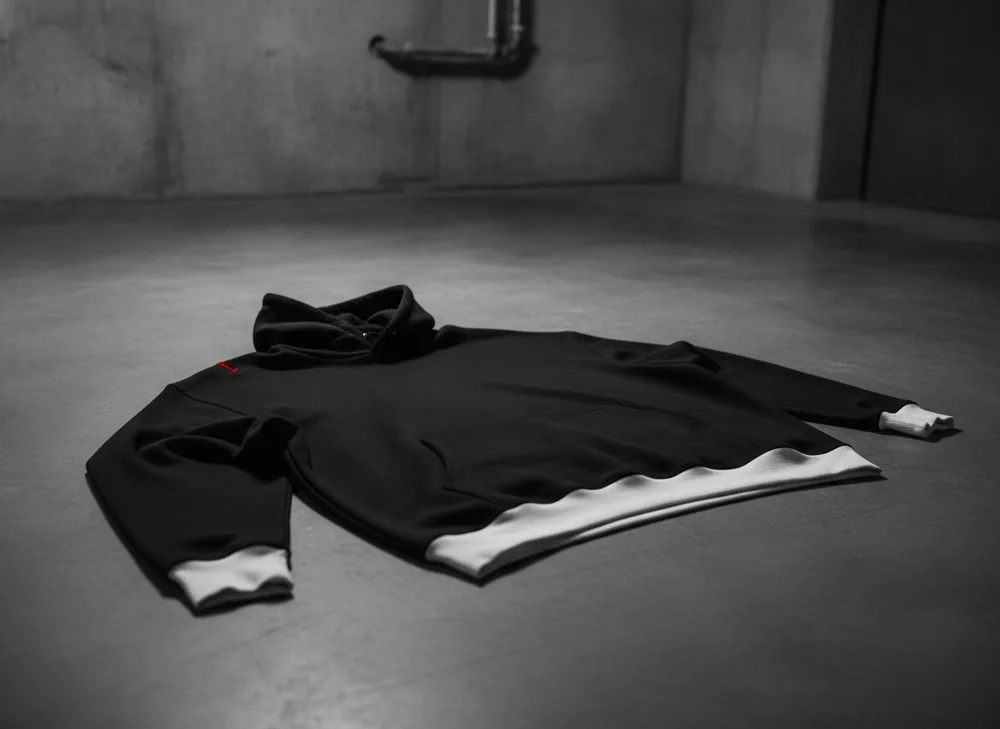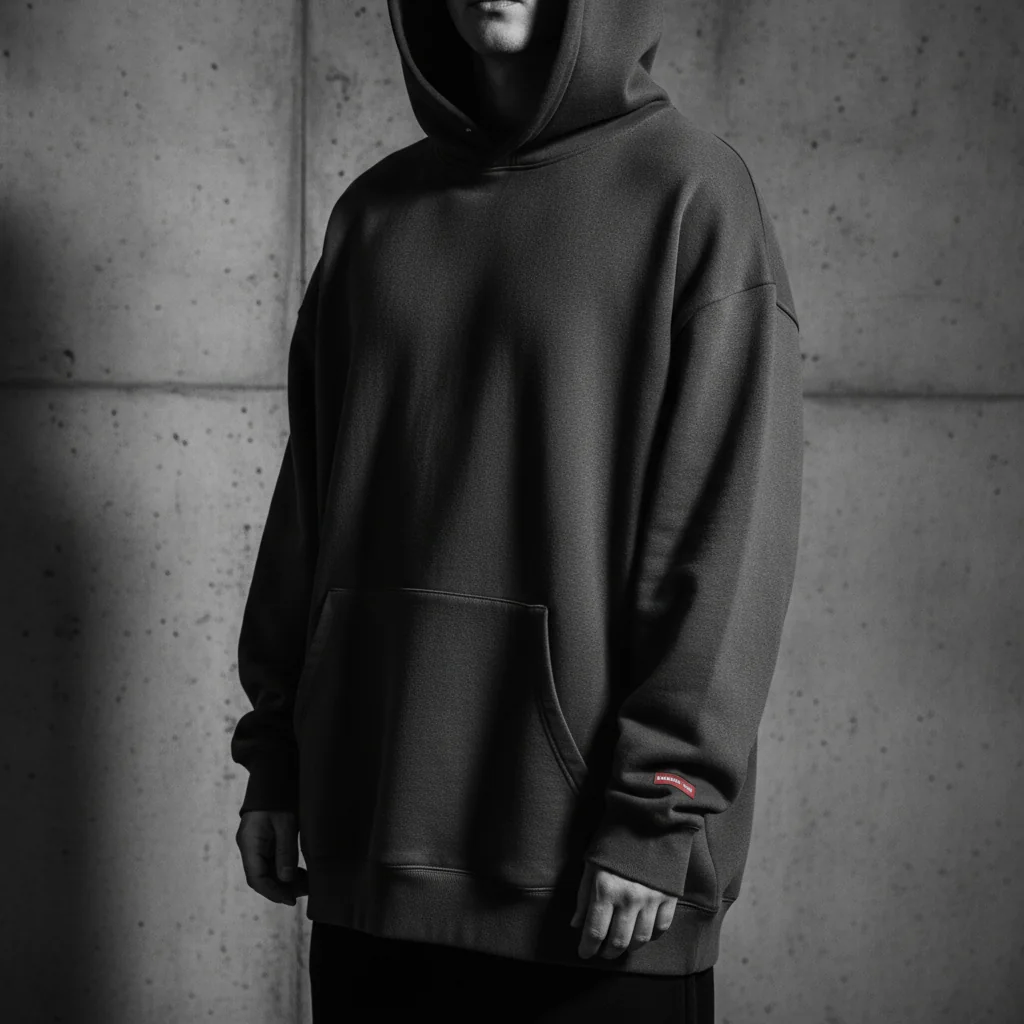
Minku Apparel is a custom heavyweight hoodie manufacturer building 400 to 480+ GSM brushed fleece pullovers and zip-ups from 50 pieces per design. The extra fleece weight is what separates a hoodie that reads premium on a rail from one that reads like a basic – it holds structure through the shoulder, drapes with real weight, and survives repeat washing without thinning out. We cut, sew, decorate, and private-label every heavyweight hoodie in one factory, then ship it worldwide DDP.
Heavyweight is a specific manufacturing decision, not a marketing word. Above 400 GSM, fleece needs a stronger knitting machine setting, denser yarn, and reinforced seams to carry its own weight without stretching out of shape at the shoulder and cuff. We build to that standard as the default on this line, not as an upsell.
What makes a hoodie heavyweight
GSM – grams per square metre – measures fabric density, and it is the single number that tells you how a hoodie will perform. A light 240 GSM fleece is thin and better suited to warm-weather layering; 320 to 350 GSM is a mid-weight everyday hoodie; and 400 to 480+ GSM is the heavyweight category, where the fleece has real body, holds its shape at the shoulder and hood without support, and delivers the substantial drape that defines a premium streetwear hoodie. Above 480 GSM you enter double-layered or bonded-fleece territory, used for outerwear-grade pieces.
Heavier fleece is not simply thicker fabric with more cotton in it. It requires a tighter knit, a stronger loop structure on the reverse face, and denser yarn spun to hold that structure without becoming stiff or board-like. Get the knit wrong and a heavy hoodie feels rigid instead of substantial – our knitting spec is tuned specifically to avoid that failure.
Why brands choose heavyweight fleece
Heavyweight fleece is the fabric decision behind almost every hoodie brand recognised for quality. It holds a boxy or oversized silhouette without collapsing, it drapes with weight instead of clinging, and it survives a wash cycle and a customer’s daily wear without pilling or thinning at the elbows and cuffs. For a streetwear label competing on product feel rather than price, the fleece weight is often the first thing a customer notices when they pick the hoodie up off a rail.
It also signals value at retail. A hoodie that feels substantial in the hand supports a higher price point without resistance, and repeat customers associate that weight with the brand’s overall quality bar – which is why heavyweight core styles tend to be the pieces brands reorder most.
Fit and construction for a heavyweight build
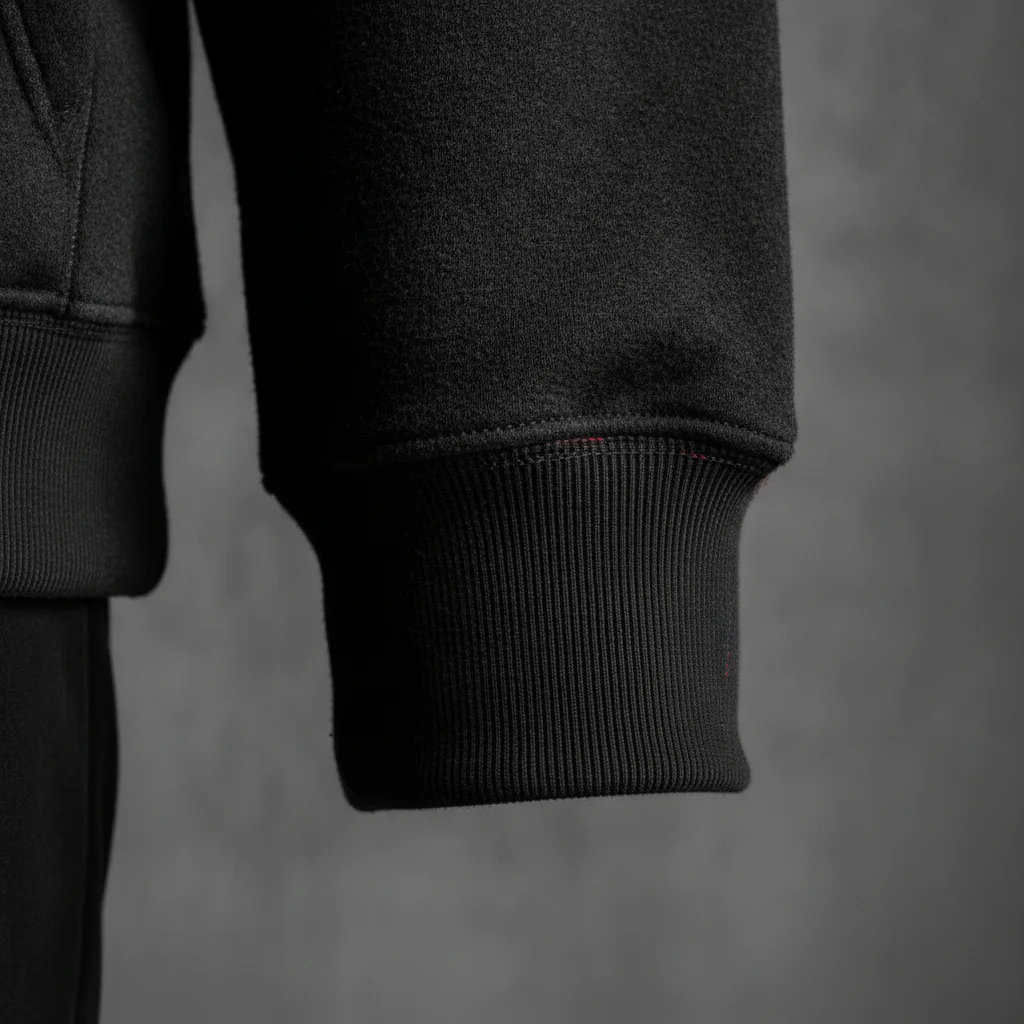
Heavyweight fleece pairs naturally with boxy and oversized silhouettes, where the fabric’s structure holds the drop-shoulder line and wide body without sagging. We also build regular and cropped fits in the same weight range for labels that want the heavier hand-feel in a slimmer silhouette. Every heavyweight hoodie gets double-needle stitching at the shoulder and armhole seams, bar-tacked pocket corners, a fully lined three-panel hood, and ribbed cuffs and hem knitted with spandex for recovery.
At this weight, seam placement matters more than on lighter fleece – a poorly placed seam on 480 GSM fabric can create a visible ridge under a decorated area, so we route seams around planned print and embroidery zones during pattern-making, not after the fact.
Heavyweight hoodie specification menu
| Spec | Options |
|---|---|
| Fleece weight | 400, 450, 480+ GSM brushed loopback |
| Fit | Boxy, oversized, regular, cropped |
| Style | Pullover, full-zip |
| Decoration | Screen print, DTG, embroidery, puff print, all-over print |
| Colour | Piece dye, garment dye, Pantone-matched |
| Branding | Woven neck label, inner tag, hangtag, drawcord tips |
We confirm the exact GSM and knit density against your target price point and market climate, then lock the spec on a pre-production sample.
Decoration on a heavy fleece base
A heavier fleece base is one of the better surfaces for decoration because the fabric holds its shape under a print or a stitched panel instead of stretching or bowing. Puff and 3D embroidery read with real dimension against a dense brushed chest, high-density plastisol screen prints hold sharp edges, and all-over prints keep their register across a wider, heavier body. Compare a stitched finish specifically on our embroidered hoodie page.
Heavyweight versus mid-weight – which to choose
400-480+ GSM heavyweight
Best for cold-climate markets, boxy and oversized fits, and brands positioning at a premium price point where fabric weight is part of the pitch.
320-350 GSM mid-weight
Best for warm-climate or year-round markets, regular fits, and layering pieces where a lighter hand-feel suits more of the calendar. See our fleece hoodie page for the full weight range.
Many labels run both – a heavyweight anchor piece for the core drop and a mid-weight version for warmer markets or shoulder-season wear.
MOQ and pricing for heavyweight orders
Minimum order is 50 pieces per design, the same as our standard hoodie line. Heavier fleece costs more per metre than mid-weight fabric, so per-unit price runs higher at 480 GSM than at 320 GSM, and that difference is worth understanding before you set retail. Decoration complexity and total quantity move the number further, and pricing steps down as reorder volume grows. We break the quote down by fabric, decoration, and finishing so you see exactly what the extra weight costs and what it returns in perceived quality.
Sampling and quality control at heavier weights
Heavier fleece needs closer quality control than mid-weight fabric, because a fault in the knit or the dye lot shows more visibly on a dense, brushed surface. Every heavyweight order starts with a fabric swatch approval, moves to a pre-production sample where you check hand-feel, drape, and seam placement, and only proceeds to bulk cutting once you sign off. We check GSM consistency, colourfastness, and shrinkage across the roll before cutting, backed by our written quality guarantee.
Why heavyweight fleece needs tighter shrink control
Heavier fleece is denser, so it takes on and releases moisture differently than a lighter blend, which changes how it behaves in a wash cycle if the fabric is not properly pre-shrunk and stabilised before cutting. We pre-shrink 400 to 480+ GSM fleece and test each batch against a standard three-wash cycle before bulk cutting begins, confirming that the finished hoodie holds its measurements within tolerance. This step matters more at heavier weights because a shrinkage error is harder to correct after the garment is sewn – the seams and ribbing are already built to the pre-shrink dimensions, so post-wash movement shows up as a genuine fit problem rather than a cosmetic one.
An illustrative heavyweight launch timeline
A typical heavyweight launch runs a predictable path: a founder specs a 480 GSM boxy pullover with a puff-embroidered chest logo and a garment-dyed washed-black colourway, orders 50 pieces to test the market, and approves a pre-production sample within roughly two to three weeks of sending the tech pack. Bulk production for a 50-piece order typically runs four to six weeks including decoration and finishing, after which the hoodies ship DDP. Once the piece proves out at retail, most brands reorder the same spec at 150 to 300 pieces, and per-unit cost improves at that volume because cutting, dyeing, and decoration run more efficiently across a larger batch.
Pairing heavyweight hoodies with matching pieces
A heavyweight hoodie rarely stands alone in a collection – most streetwear labels launch it alongside a crewneck sweatshirt or matching sweatpants cut from the same fleece batch so the colour and hand-feel match exactly across a co-ord set. Because we dye and cut fabric in batches, running a hoodie and a sweatshirt from the same fleece lot keeps colour identical across the pieces, which is difficult to guarantee when garments are dyed separately or sourced from different mills. See our custom sweatshirt manufacturer page to build a matching set from the same 400+ GSM fleece.
Care and longevity for heavyweight fleece
Heavyweight fleece rewards proper care with a longer usable life than lighter fabric, and passing basic care guidance to your retail customers protects the product’s reputation. We recommend washing inside-out in cold water, avoiding fabric softener – which coats the brushed fibres and reduces loft over time – and air-drying or tumble-drying on low heat to prevent the ribbed cuffs and hem from over-shrinking relative to the body. A well-cared-for 480 GSM hoodie retains its structure and colour for years rather than fading and thinning within a single season, which is part of why heavyweight fleece supports a premium price point at retail.
How Minku manufactures your heavyweight hoodie
We source and test the fleece to your target GSM, cut and sew the garment with seam placement designed around your decoration zones, apply your chosen decoration in-house, and finish with your private-label neck labels, tags, and packaging. Every order ships DDP, with import duty and customs handling built into the landed price so a heavyweight hoodie order lands at your door in the USA, UK, or Europe with no surprise costs.
See the full range on our custom hoodie manufacturing program, compare a lighter build on our fleece hoodie page, or get your custom quote to spec your heavyweight drop.
Custom Heavyweight Hoodie Manufacturer | Minku Apparel — In Detail