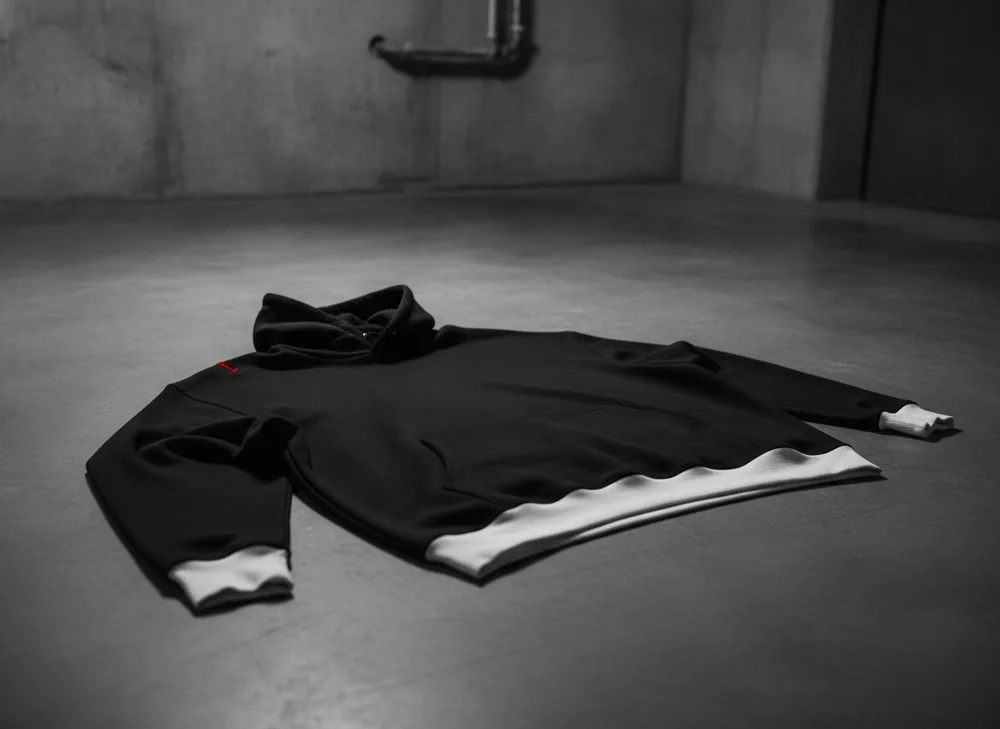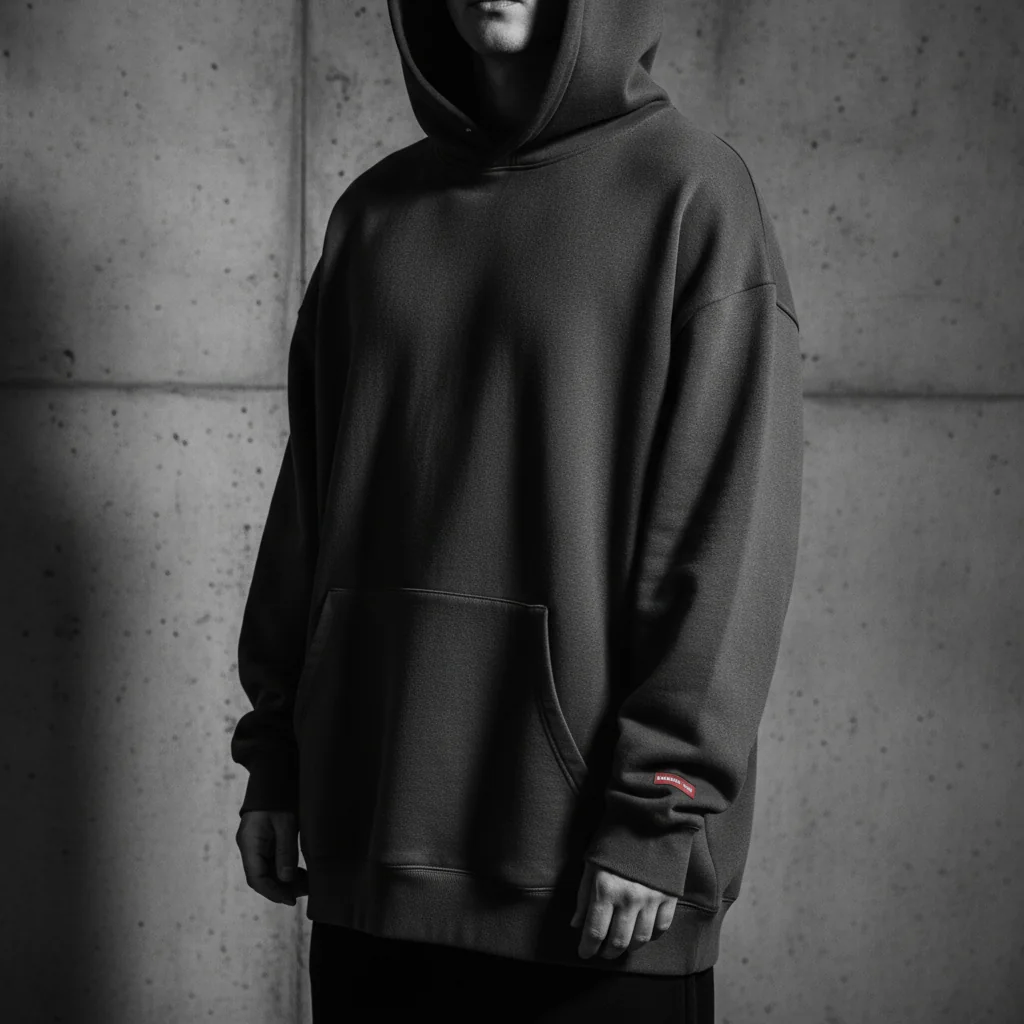
Minku Apparel is a custom fleece hoodie manufacturer building pullovers and zip-ups in 320 to 480 GSM brushed loopback and French terry from 50 pieces per design. Every hoodie is cut and sewn from your tech pack, decorated in-house, finished with your private-label branding, and shipped worldwide DDP door-to-door. Fleece is the fabric that defines a hoodie, and choosing the right weight and knit is the single biggest decision in the entire build.
Not all fleece is the same fleece. A thin, loosely knitted blend feels soft on a hanger and thins out within a season; a dense, brushed loopback holds its shape, its colour, and its drape wash after wash. We build every fleece hoodie to a spec you choose – weight, knit structure, cotton content, and brush finish – then lock it on a pre-production sample so the fabric that ships in bulk is the fabric you approved.
What fleece actually is and why the knit matters
Fleece is a knitted fabric with two distinct faces – a smooth outer jersey face and a looped or brushed inner face that traps air for warmth. That inner structure is what separates a hoodie from a t-shirt: it is the reason a hoodie feels substantial against the cold and holds a stitched or printed graphic without the fabric collapsing around it. The knit structure, more than the fibre content alone, decides how the finished hoodie drapes, insulates, and wears over years of use.
We build fleece on circular knitting machines that set loop density and yarn tension to your target weight, then finish the inside face by brushing or leaving it in loopback form. Brushed fleece has a soft, napped interior that feels close to a blanket; loopback fleece keeps its looped texture for a firmer, more structured hand. Both are legitimate choices – the decision comes down to the drape and hand-feel your brand wants.
Loopback fleece versus French terry versus brushed fleece
We manufacture three fleece constructions, each suited to a different product position.
Loopback / French terry
An unbrushed interior loop, lighter hand, and a slightly structured drape. Suits premium, minimal-branding hoodies and warm-weather markets where a hoodie is worn as a layering piece rather than an insulator.
Brushed fleece
The loops are brushed into a soft, napped interior for maximum warmth and a heavier hand-feel. Suits cold-climate markets and streetwear labels chasing a substantial, premium drape.
Most of our hoodie programs use brushed fleece in the 320 to 400 GSM range as the default, stepping up to 480 GSM for a true heavyweight anchor piece. Compare the full weight range on our heavyweight hoodie page if your target market runs cold.
Cotton content and yarn quality
Fleece performance starts with the yarn, not the knit alone. We run 100 percent combed cotton fleece for the softest hand and most breathable wear, and cotton-poly blends (typically 80/20 or 70/30) for extra shape retention, reduced shrinkage, and a lower price point at scale. Ring-spun and combed cotton yarns produce a smoother, more even surface than carded, open-end yarn, which matters both for hand-feel and for how cleanly a print or embroidery sits on the surface.
We source and test fabric before it reaches your bulk cut, checking for consistent GSM across the roll, colourfastness, and shrinkage rate after a standard wash cycle. That testing is what prevents the common overseas-manufacturing failure of a hoodie that fits perfectly on day one and shrinks two sizes after the first wash.
Construction built around the fleece
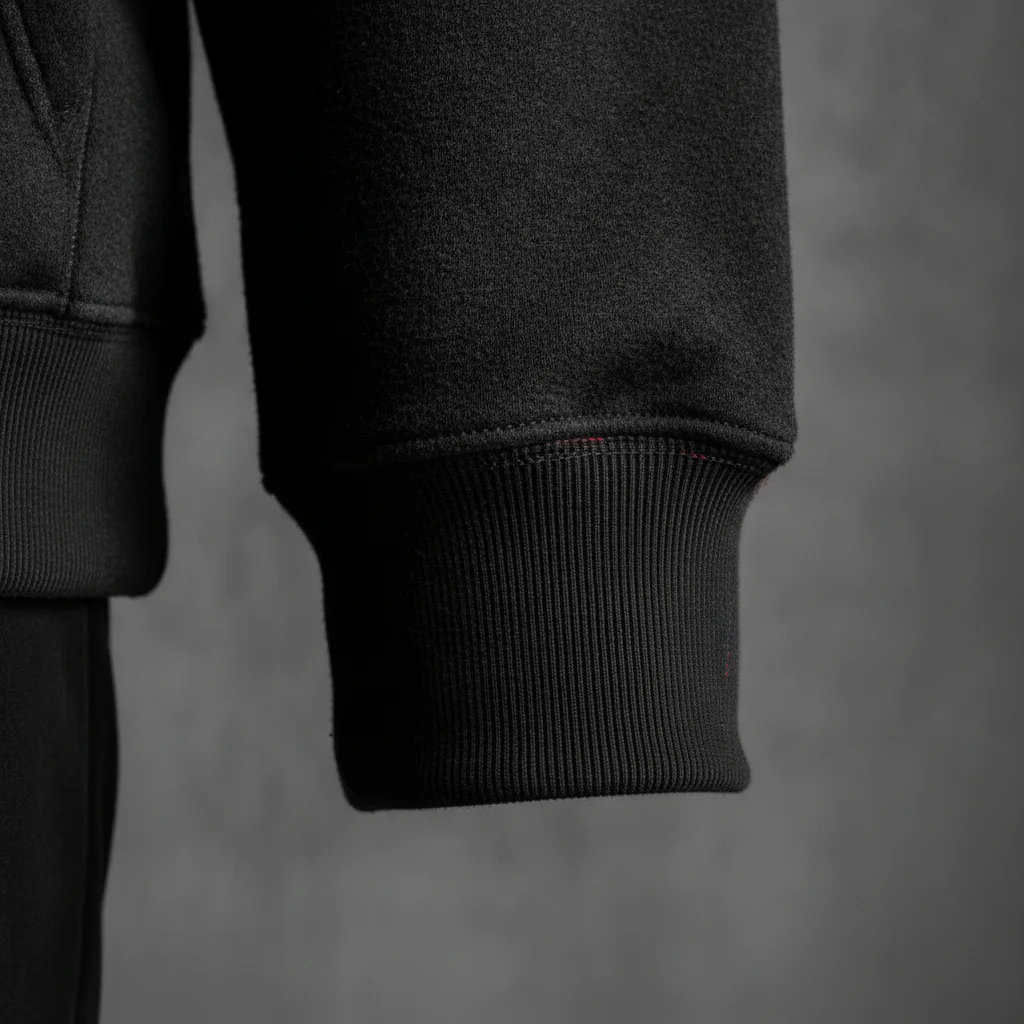
The fleece only performs if the construction around it matches. We reinforce the shoulder and armhole seams with double-needle stitching, bar-tack the kangaroo pocket corners where the pull of daily use concentrates, and finish interior seams flat or overlocked so nothing scratches. Ribbed cuffs and hem are knitted with spandex content so they recover their shape after stretching rather than sagging out within a month.
A three-panel, fully lined hood holds its shape around the face instead of collapsing flat, and matte-tipped drawcords – available with custom branded tips – finish the build. Every one of these details is written into your tech pack and checked against the pre-production sample before bulk cutting starts.
Fleece hoodie specification menu
Here is what you choose when you spec a fleece hoodie with Minku:
| Spec | Options |
|---|---|
| Fleece weight | 320, 350, 400, 480 GSM |
| Knit type | Loopback / French terry, brushed fleece |
| Fibre content | 100% combed cotton, 80/20, 70/30 cotton-poly |
| Style | Pullover, full-zip, boxy, oversized, cropped, regular |
| Colour | Piece dye, garment dye, Pantone-matched reactive dye |
| Decoration | Screen print, DTG, embroidery, puff print, all-over print |
We walk through each line against your brand positioning and target retail, then lock the full spec into a pre-production sample so bulk and every reorder match it exactly.
Decoration that suits fleece
Fleece is a forgiving canvas for decoration, and all of ours runs in-house. High-density plastisol and water-based screen prints hold crisp against the brushed surface, DTG handles fine multi-colour art on lighter-weight fleece, and flat or 3D puff embroidery reads with real presence against a napped chest or hood panel. For statement pieces, we run all-over prints across the full hoodie body, garment dye and acid wash for tonal finishes, and tie-dye for a more expressive drop.
Because decoration never leaves our factory, colour registration and placement stay identical from the first unit in your run to the last, and from your first order to your fifth reorder.
Private label on a fleece hoodie
Every fleece hoodie ships with full private-label branding as standard: custom woven neck labels, printed inner tags, size and care labels, sleeve or hem tags, hangtags, and branded polybags or boxes. Founders building a signature piece often add tonal ribbing, contrast drawcord tips, or a locker patch stitched inside the hood – small details that separate a real brand from a reseller running a blank with a logo added.
MOQ, pricing, and reorders
Minimum order is 50 pieces per design regardless of which fleece weight or knit you choose. Pricing moves with fleece weight, fibre content, decoration complexity, and total quantity, and per-unit cost steps down as your volume grows into a second and third reorder. Because we hold your approved pattern and fabric spec on file, every reorder reproduces the original fleece weight, colour, and fit without re-sampling from scratch.
Founders frequently start with a 350 GSM loopback hoodie to test a design, then move core styles up to 400 or 480 GSM once the piece proves out and margin allows for the heavier fabric cost. Request a quote for landed cost per unit at your target fleece weight.
Common fleece defects and how we prevent them
Overseas fleece manufacturing carries a handful of recurring failure points, and our process is built specifically to avoid them. Shrinkage is the most common complaint – fleece that fits on delivery and comes back a size smaller after the first wash. We pre-shrink and test every fabric batch against a standard wash cycle before cutting, so the garment you approve on the sample is the garment that ships in bulk. Pilling is a second common issue, caused by low-quality carded yarn that sheds fibre under friction, which is why we spec ring-spun or combed yarn to resist it.
Colour bleed and inconsistent dye lots are a third failure point, particularly on darker garment-dyed colours. We run colourfastness checks and match every production batch against your approved Pantone reference, rejecting any roll that falls outside tolerance before it reaches the cutting table. Uneven GSM across a fabric roll is the defect that is hardest to catch without testing – a roll can measure correctly at the edge and run lighter through the centre – so we sample-test multiple points on every roll rather than relying on a single reading near the selvedge.
Sizing consistency across reorders
A fleece hoodie that fits correctly on the first order and drifts a half-size wider or narrower on the second reorder is a common complaint with brands that switch factories or suppliers between runs. We hold your approved pattern, fabric spec, and pre-production sample on file for every fleece program, so a reorder placed a year later is cut against the identical block, the identical fleece weight, and the identical wash-shrinkage allowance as the original approved sample. That consistency is part of what a private-label manufacturing relationship is meant to deliver, and it is the reason established brands stay with one factory for a fleece hoodie rather than shopping the order to the lowest quote each season.
How Minku builds your fleece hoodie
Every fleece hoodie order starts with a tech pack or reference and a fabric swatch approval, followed by a pre-production sample in your exact fleece, fit, and decoration. Only after you sign off does bulk cutting begin, running under QC and our written quality guarantee with GSM and colour checked across the roll. The finished hoodies are trimmed with your private-label branding and shipped DDP, so import duty and customs handling are already built into the landed price you approved.
Compare fleece against a heavier option on our heavyweight hoodie page, add a stitched mark on our embroidered hoodie page, or see the full range on our custom hoodie manufacturing program.
Custom Fleece Hoodie Manufacturer | Minku Apparel — In Detail