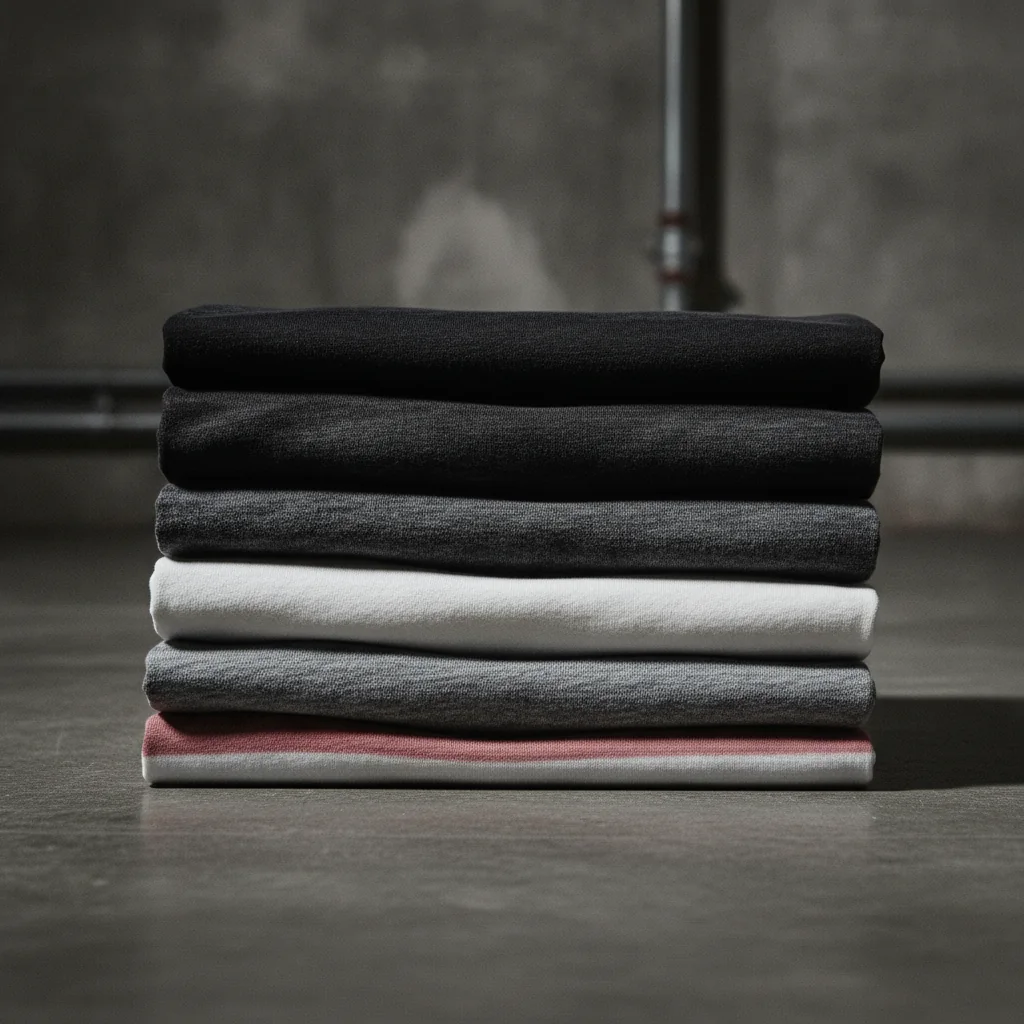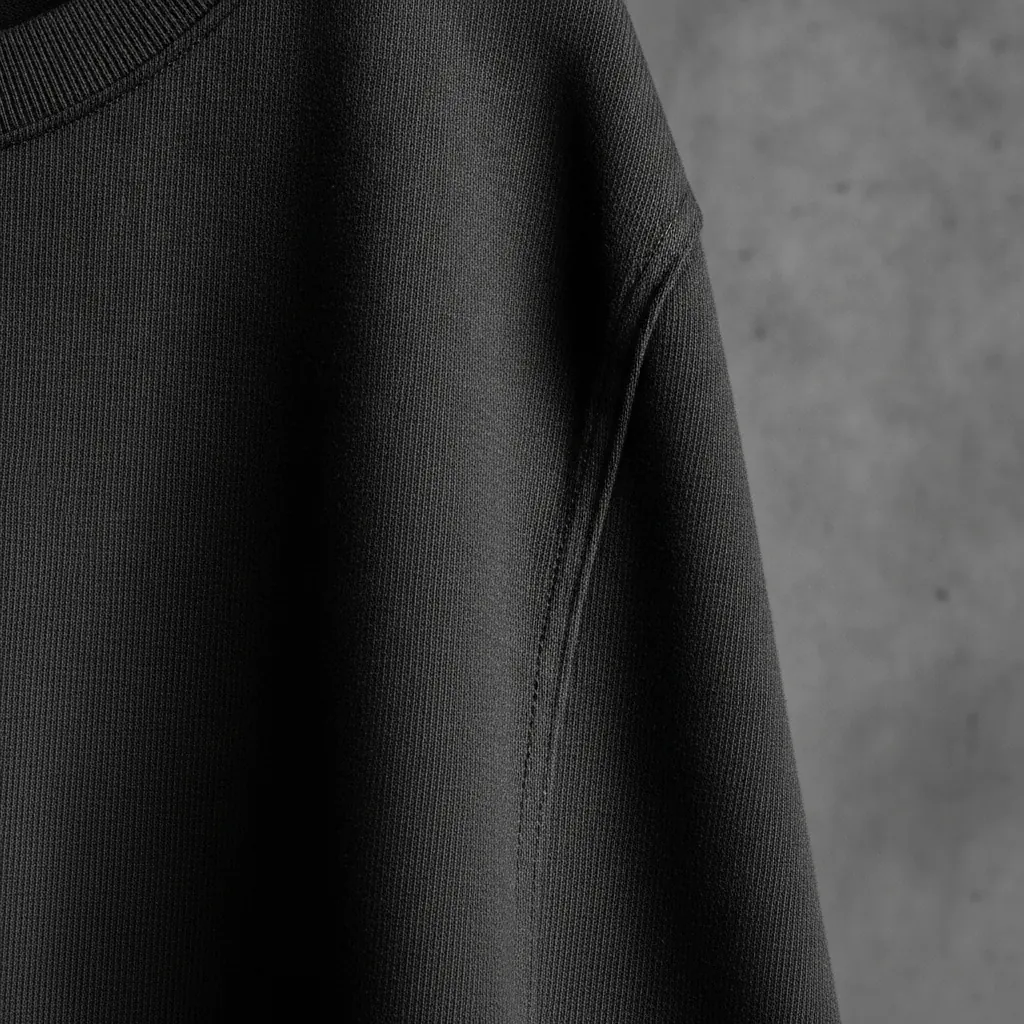
Acid wash is a garment-finishing technique that bleaches cotton fabric in an uneven, marbled pattern using chlorine-soaked pumice stones, producing the mottled, faded look associated with 1980s and 1990s denim and now streetwear hoodies and tees. The process happens after the garment is fully sewn, so the finish sits on the whole construction rather than on flat fabric before cutting.
Acid wash gets its name from the chemical bleaching agent, though modern factories use controlled, diluted solutions rather than raw acid, applied via tumbling drums loaded with pumice stone. The result is a high-contrast, patchy fade that is never fully uniform from garment to garment, which is part of what makes it read as an authentic, worn finish rather than a printed effect.
How the acid wash process works
Finished garments are loaded into large industrial washing drums along with pumice stones that have been soaked in a bleaching solution. As the drum tumbles, the stones abrade and bleach the fabric surface unevenly, lightening raised areas like seams, hems and fold lines more than flat, recessed areas. This is what produces the signature marbled contrast.
After the wash cycle, garments are rinsed to neutralize the bleaching agent, then dried and inspected. Because the tumbling action, stone quantity and wash time all affect the outcome, factories run small test batches on new fabric or colorways before committing a full order to the wash drum.
The origin of acid wash
Acid wash denim emerged in the early 1980s as manufacturers looked for ways to distress and lighten denim beyond a standard stone wash. It became a defining look of 1980s and early 1990s casualwear, particularly on jackets and jeans, before falling out of mainstream fashion through the 2000s.
Streetwear has since revived acid wash on a wider range of garments – hoodies, sweatshirts and tees in cotton and fleece rather than only denim – as brands look for a finish with visible texture and a lived-in character that a flat-dyed or printed garment cannot replicate.
Which fabrics and garments suit acid wash
Acid wash works on cotton and cotton-blend fabrics, including heavyweight fleece and French terry in the 240-400+ GSM range we use for hoodies and sweatshirts, as well as jersey cotton for t-shirts. The bleaching agent needs a natural fiber to react with, so a garment with a high polyester content will not take an acid wash finish the same way.
Construction also affects the result: garments with multiple fabric panels, contrast stitching or added trims can wash unevenly across those different elements, so a factory experienced with acid wash accounts for this when planning where seams and reinforcements sit.
Acid wash vs garment dye vs tie-dye
Acid wash
Chemical bleaching in a stone-loaded drum after construction. Produces an uneven, faded, marbled contrast. Lightens the garment.
Garment dye / tie-dye
Adds color to a finished garment via dip-dye or tied-and-dyed application. Builds color and pattern rather than removing it.
Both acid wash and garment dyeing are applied after construction rather than on flat fabric, which is what puts them in the same production category even though one lightens and the other adds color.
Consistency and quality control on acid wash runs
Because acid wash relies on tumbling and stone contact, no two garments in a batch come out identical – some natural variation in the fade pattern is expected and is part of the finish’s character rather than a defect. That said, a well-run process keeps variation within a controlled range: overall tone, level of contrast and general fade pattern should be consistent enough that a full size run of one style reads as one cohesive product.
Quality control on an acid wash order checks that the bleaching has not weakened the fabric structurally, that seams and stitching remain intact after the wash cycle, and that any decoration applied before the wash (rare, since most decoration follows an acid wash finish) has not been damaged by the process.
Combining acid wash with decoration
Acid wash is almost always applied before other decoration, not after, since the tumbling and bleaching process would damage a screen print, DTG print or embroidery applied earlier. A typical sequence is: garment construction, acid wash finish, then screen print or embroidery applied to the already-washed fabric.
This ordering also affects color planning – a graphic printed onto an acid-washed garment sits on a base that already has tonal variation, so designs with high-contrast ink colors or bold placements tend to read best against the faded background, while pale ink tones can lose contrast against the bleached areas.
Wash intensity and finish variations
Acid wash is not a single fixed look – factories control intensity through stone quantity, wash-cycle time and bleach concentration, producing a range from a light, subtle mottling to a heavy, high-contrast bleach-out. A brand can specify a target intensity by referencing a swatch or a described level, such as a soft mid-tone fade versus a stark, near-white peak contrast.
Color also plays into the outcome: acid wash on black garments produces a gray-toned fade, while acid wash on colored fleece can shift the base tone significantly, sometimes intentionally used to create a two-tone effect where the original color survives in the recessed areas and a lighter shade appears on the raised, abraded surface. Testing on the actual base color before committing bulk fabric is the only reliable way to confirm the outcome.
Acid wash on hoodies vs t-shirts
Heavyweight fleece hoodies and lighter cotton jersey tees respond differently to the same wash process, because fabric weight and construction affect how the pumice stones make contact and how the bleach penetrates. A 380 GSM fleece hoodie tends to hold a more textured, high-contrast fade concentrated on raised seams and the hood, while a lighter jersey tee bleaches more evenly across the whole panel.
Hoodies also have more construction detail – drawstrings, ribbed cuffs, pouch pockets – that a factory needs to account for during the wash, since trims and hardware can be damaged by prolonged bleach exposure if not protected or added after the wash cycle rather than before it.
Environmental and safety handling
Acid wash uses a controlled bleaching chemical, and a responsible factory manages this with proper ventilation, protective equipment for wash-floor staff, and wastewater handling that neutralizes the bleaching agent before disposal rather than releasing it untreated. Brands sourcing acid wash garments should expect their manufacturer to have a defined process for this rather than an ad hoc one.
From a garment-safety perspective, a properly rinsed and neutralized acid wash finish leaves no residual chemical on the fabric that would affect wearer comfort or skin contact, which is why the rinse and inspection step after washing is treated as a required part of the process, not an optional finishing touch.
MOQ and production considerations
Acid wash adds a processing step and a dedicated wash-drum run to standard cut-and-sew production, so it typically adds turnaround days rather than dramatically changing MOQ. Our standard MOQ of 50 pieces per design still applies to acid wash styles, though wash-drum capacity means small runs are sometimes batched with other orders using the same fabric type to keep timelines efficient.
Sampling is especially important for acid wash, since the finish’s tone and contrast level should be approved on an actual production-fabric sample before a full run of 50 or more pieces goes through the same wash cycle.
Acid wash vs vintage wash
Vintage wash and acid wash are often confused because both aim at a worn, aged look, but they use different methods. A vintage wash typically uses enzyme or softening treatments alongside light mechanical abrasion to soften fabric hand-feel and dull colors slightly, producing a more even, muted fade with less contrast than acid wash.
Acid wash leans into the opposite goal – high-contrast, uneven bleaching that reads as distinctly distressed rather than softly aged. Brands choosing between the two should think about the intensity of the vintage look they want: acid wash for a bold, patchy, statement finish, vintage wash for a subtler, broken-in feel. Our vintage wash t-shirt line runs the softer version of this finishing family alongside acid wash.
Ordering acid wash across a size run
Because the wash process is mechanical, larger garments in a size run (which sit differently in the drum and have more fabric surface) can pick up a marginally different fade pattern than smaller sizes, even from the same wash batch. An experienced factory accounts for this by tuning drum loading and wash timing per size grouping rather than running one uniform cycle across the full size range.
This is one reason a pre-production sample matters for acid wash specifically – approving the finish on one size does not guarantee an identical result at the opposite end of the size run, so reviewing samples across the range, or at minimum confirming the factory’s process for size consistency, protects the final look of the whole order.
How Minku produces acid wash garments
Acid wash is one of our in-house decoration and finishing capabilities, run on 240-400+ GSM cotton and fleece across hoodies, sweatshirts and tees. We sample the wash on your specified fabric and colorway first, so you approve the exact tone and contrast before bulk garments go through the drum.
Acid wash is one capability within our broader custom clothing manufacturing service. See our dedicated acid wash and garment dye manufacturing page for process detail, or explore our custom acid wash t-shirt line. Ready to start a design? Get Your Custom Quote.
What Is Acid Wash and How Is It Done? — In Detail