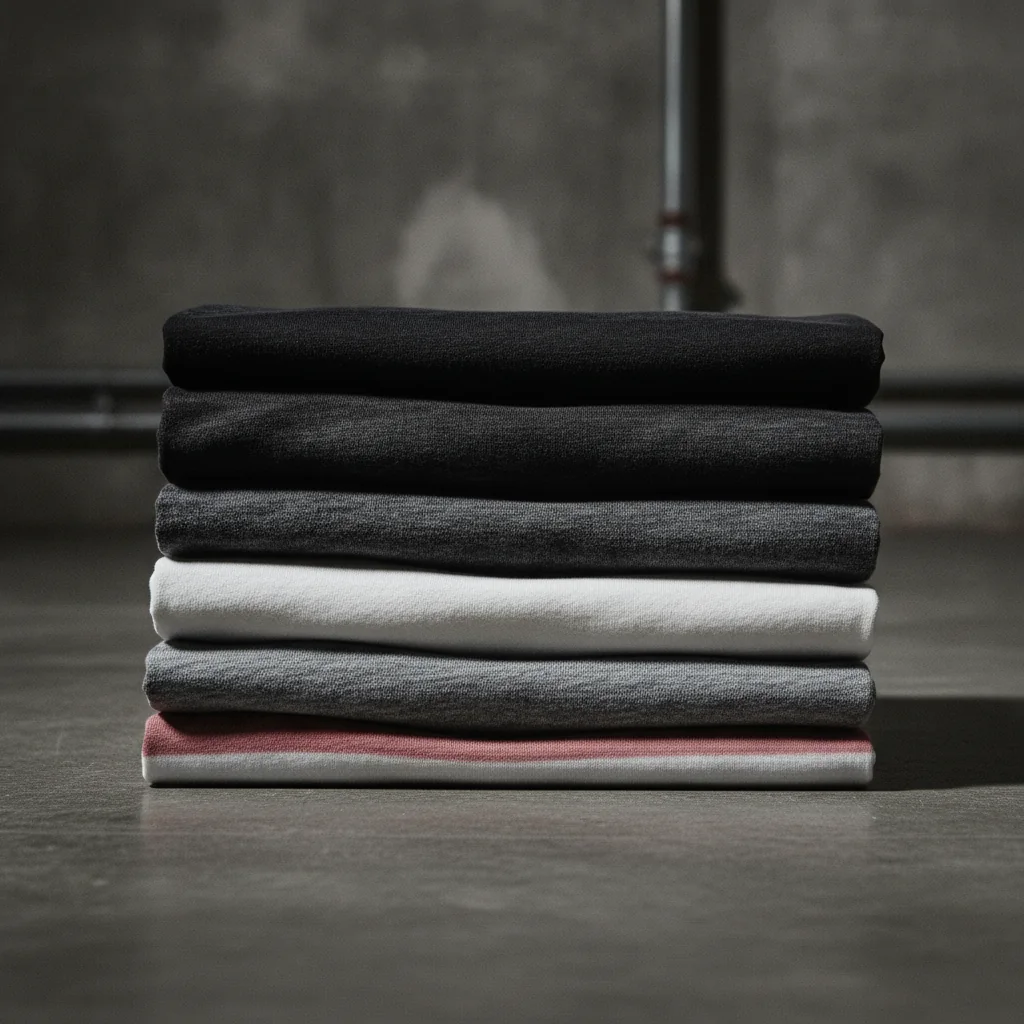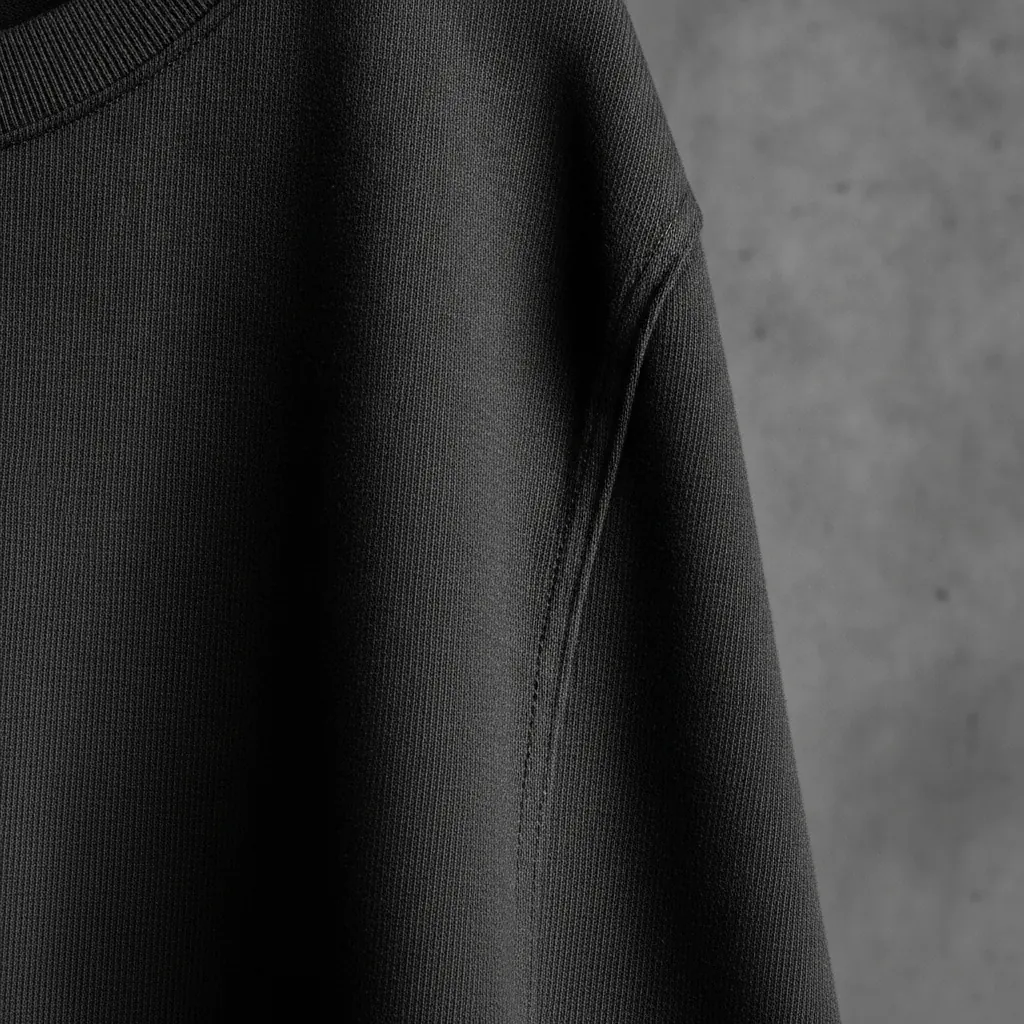
Garment dyeing is the process of coloring a fully constructed garment – after cutting and sewing, not before – so the dye settles into finished seams, panels and trims as one piece rather than being printed onto flat fabric ahead of cutting. The result is a softer, slightly uneven tone with a washed, lived-in hand-feel that piece-dyed or yarn-dyed fabric cannot fully replicate.
For streetwear brands, garment dyeing has become a go-to finishing method because it turns a plain cut-and-sew blank into a product with its own tonal character, without needing a graphic, a print, or embroidery to carry the design. A hoodie or tee can sell on color and hand-feel alone.
How garment dyeing actually works
A garment dye run starts with fully sewn, undyed (greige or bleached) garments loaded into a large rotary dyeing drum along with a dye bath mixed to the target shade. The drum rotates for a set cycle, allowing the dye to penetrate the fabric evenly across every panel, seam, and stitch line at once – which is the core difference from dyeing yarn or fabric before cutting.
After the dye cycle, garments go through a rinse stage to remove excess dye and fix the color, followed by a soften stage that gives the fabric its characteristic worn, brushed hand-feel. Garments are then dried, pressed, and inspected for shade consistency before moving to decoration or packing.
Why garment dye looks and feels different
Because the whole garment sits in the dye bath together, seams, ribbing, drawstrings, and the main body panels all take the dye at slightly different rates depending on fabric density and thread type. This produces the soft tonal variation streetwear brands look for – a color that reads as intentional and textured rather than flat and uniform like a solid pre-dyed fabric.
Sewing thread frequently takes dye differently than the surrounding fabric, so a garment-dyed piece often shows subtle seam contrast: stitching that reads a shade lighter or darker than the body. Brands who want this effect specify cotton-core or matching thread; brands who want it minimized ask the factory to select thread that dyes closer to the body fabric.
Garment dye vs piece dye vs yarn dye
Garment dye
Dyed after full construction. Soft, tonal, slightly uneven color with a washed hand-feel. Seams and thread can show contrast.
Piece / yarn dye
Fabric or yarn is dyed before cutting and sewing. Produces flat, uniform, edge-to-edge color with no seam variation.
Piece-dyed and yarn-dyed fabric gives a brand precise, repeatable color matching across every panel, which matters for logo-heavy designs where exact color consistency is the goal. Garment dye trades some of that precision for texture and character, which is why it suits blank-forward, minimal streetwear drops rather than color-matched uniform programs.
Fabrics and garments suited to garment dye
Garment dye works on natural and natural-blend fibers – cotton jersey for t-shirts, and heavyweight fleece or French terry (240-400+ GSM) for hoodies and sweatshirts. The fiber needs to accept dye evenly across its surface, so high-polyester blends dye less predictably and are generally not recommended for this finish.
Garment construction considerations
Garments with multiple fabric types in one piece – a cotton body with a polyester-mesh lining, for example – dye unevenly across those different materials, since each fiber absorbs color at a different rate. A factory planning a garment-dye order accounts for this at the design stage, flagging any trims, drawcords, or panels that will not match the main dye lot.
Color range and shade matching
Garment dye can hit a wide color range, though deep, saturated shades (black, navy, burgundy) dye more predictably than pale pastel tones, which show more of the natural variation inherent to the process. Brands working from a Pantone reference should expect garment dye to land close to – not identical to – a flat pigment match, since the fabric’s own texture and the tumbling process both affect the final tone.
| Shade depth | Consistency | Typical use |
|---|---|---|
| Deep / dark tones | High | Core blanks, logo-forward drops |
| Mid tones | Moderate | Seasonal colorways |
| Pastel / light tones | Lower – more visible variation | Limited-run, texture-forward pieces |
Lab dips and pre-production approval
Before a bulk garment-dye run, a factory prepares a lab dip – a small swatch or sample garment dyed to the target shade – so the brand can approve the actual color on real fabric rather than against a screen or a printed Pantone chip. Lighting, fiber content, and water quality can all shift a dye result slightly from batch to batch, which is why a lab dip and a pre-production sample matter more for garment dye than for a standard printed blank.
Reorders present their own challenge: matching a garment-dye shade exactly across two separate production runs, months apart, requires the factory to log the original dye recipe and reproduce it precisely rather than eyeballing a match. A manufacturer with a documented dye-recipe system protects a brand’s color consistency across reorders.
Combining garment dye with decoration
Garment dye is typically the first finishing step, applied before screen print, DTG, or embroidery, since printing onto an already-dyed garment gives a predictable, stable base color to print against. Puff embroidery, in particular, reads well against a garment-dyed base because the raised thread contrasts against the tonal fabric surface.
Acid wash and garment dye are sometimes confused, but they work in opposite directions: acid wash removes color from a garment through bleaching, while garment dye adds color to an undyed piece. Our acid wash and garment dye manufacturing line runs both finishes and can combine them – dyeing a base tone first, then applying a controlled bleach wash for a two-tone, distressed effect.
MOQ, cost factors, and turnaround
Garment dye adds a dedicated dye-drum cycle to standard cut-and-sew production, so it typically adds turnaround days rather than raising MOQ. Our standard MOQ of 50 pieces per colorway still applies, though multiple colorways in the same order usually mean multiple separate dye-drum loads, since each shade needs its own bath.
Cost is driven mainly by dye-lot size, shade complexity (deep tones and custom-matched colors take more testing than standard stock shades), and whether the brand wants a lab dip approved before bulk. Brands should plan for that extra approval round in their production timeline – it protects the final shade far more than skipping it saves a few days.
Garment dye and tie-dye compared
Tie-dye and garment dye share the same “dye after construction” family but produce different results: tie-dye ties, folds, or binds sections of the garment before dyeing to resist color and create a patterned effect, while garment dye immerses the whole piece for uniform-but-textured tonal color. Brands wanting a bold, patterned drop look at our tie-dye hoodie line; brands wanting a quiet, tonal blank look at standard garment dye.
Shrinkage and fit after dyeing
The dye-drum tumbling cycle and the heat used to fix and dry the fabric both introduce mechanical and thermal stress that can shrink a garment slightly beyond what standard pre-shrunk fabric already accounts for. A factory experienced in garment dye builds this into its pattern grading, cutting panels a controlled percentage larger so the finished, dyed garment lands on the intended size measurements rather than running small.
Brands sourcing garment-dyed styles for the first time should ask the factory directly how they account for dye-related shrinkage in their pattern blocks, and should request a measured pre-production sample, rather than only a fabric swatch, so finished fit can be checked against the brand’s size chart before bulk cutting begins.
Common garment dye defects and how they are caught
The most frequent defects on a garment dye run are shade banding (a visible line where dye penetration was uneven across a fold), off-shade batches (a full lot that runs lighter or darker than the approved lab dip), and dye migration onto trims that were meant to stay a contrasting color. Quality control checks every dye lot against the approved reference swatch under consistent lighting before a batch is cleared to move to decoration or packing.
Because these defects only show up after the full dye cycle rather than earlier in production, factories that run garment dye at scale typically dye a small test batch from the actual bulk fabric roll before committing the full order, catching shade or shrinkage issues on a handful of units rather than the whole run.
How Minku produces garment-dyed apparel
Garment dyeing is one of our in-house finishing capabilities, run on 240-400+ GSM cotton and fleece across t-shirts, hoodies, and sweatshirts. We prepare a lab dip against your target shade first, log the dye recipe for future reorders, and only move to bulk once the color is approved on real production fabric.
See our acid wash and garment dye manufacturing page for full process detail, or explore vintage wash t-shirts for a related tonal finish. Ready to lock a shade for your next drop? Get Your Custom Quote.
What Is Garment Dyeing? — In Detail