Price your custom t-shirts by multiplying your landed manufacturing cost by 2.5 to 4x for direct-to-consumer retail, or 2x to 2.5x for wholesale. A t-shirt landing at $6 per unit typically retails between $18 and $24 direct-to-consumer, or wholesales around $12 to $15. The right multiplier for your brand depends on channel, positioning, and what your landed cost actually includes – here is how to set a number you can defend at scale, tested against reorders, not one guess at launch.
The Retail Pricing Formula
Retail price equals landed cost multiplied by your channel multiplier. Landed cost is your full per-unit price including fabric, decoration, private label, and DDP freight – not the factory-price line alone. Multiplier is set by your sales channel: direct-to-consumer online typically supports 2.5x to 4x, wholesale to boutiques typically supports 2x to 2.5x, and big-box wholesale often compresses to 1.8x to 2.2x.
The formula is straightforward; the discipline is in using your complete landed cost, not a partial number. Brands that price off factory cost alone, before adding decoration, private label, and freight, routinely underprice their product and discover the margin problem after a season of sales, not before it.
A second layer sits on top of the formula: your target margin after channel fees. Payment processing, marketplace commission, and return handling all subtract from the retail price before you see net margin, so build a small buffer into your multiplier rather than pricing at the exact bottom of your target range.
What Your Landed Manufacturing Cost Actually Includes
| Line Item | Included in Landed Cost? |
|---|---|
| Blank fabric and cut-and-sew | Yes |
| Decoration (screen print, DTG, embroidery) | Yes |
| Private label (neck label, tag, hangtag) | Yes |
| DDP freight to your warehouse | Yes |
| Payment processing fees at retail | No – add separately at retail pricing stage |
| Return and exchange handling | No – build into your margin buffer |
See How Much Does It Cost to Manufacture Custom T-Shirts for the full manufacturing cost breakdown that feeds this formula, and Custom T-Shirt Manufacturer for how Minku structures fabric, decoration, and private label pricing from the start.
Standard Markup Multipliers by Sales Channel
| Channel | Typical Multiplier | Notes |
|---|---|---|
| Direct-to-consumer (your own site) | 2.5x – 4x | No wholesale margin to share, highest flexibility |
| Boutique wholesale | 2x – 2.5x | Retailer applies their own markup on top of your price |
| Marketplace (third-party platforms) | 2x – 2.8x | Factor in platform and payment fees before setting price |
| Big-box or mass wholesale | 1.8x – 2.2x | Volume compensates for a tighter per-unit margin |
A brand selling both direct-to-consumer and wholesale usually needs two price points from one landed cost – a direct-to-consumer retail price and a wholesale price the retailer marks up again to reach their own shelf price. Publishing one number across both channels tends to undercut your own wholesale accounts and creates channel conflict fast.
Pricing by GSM and Brand Positioning
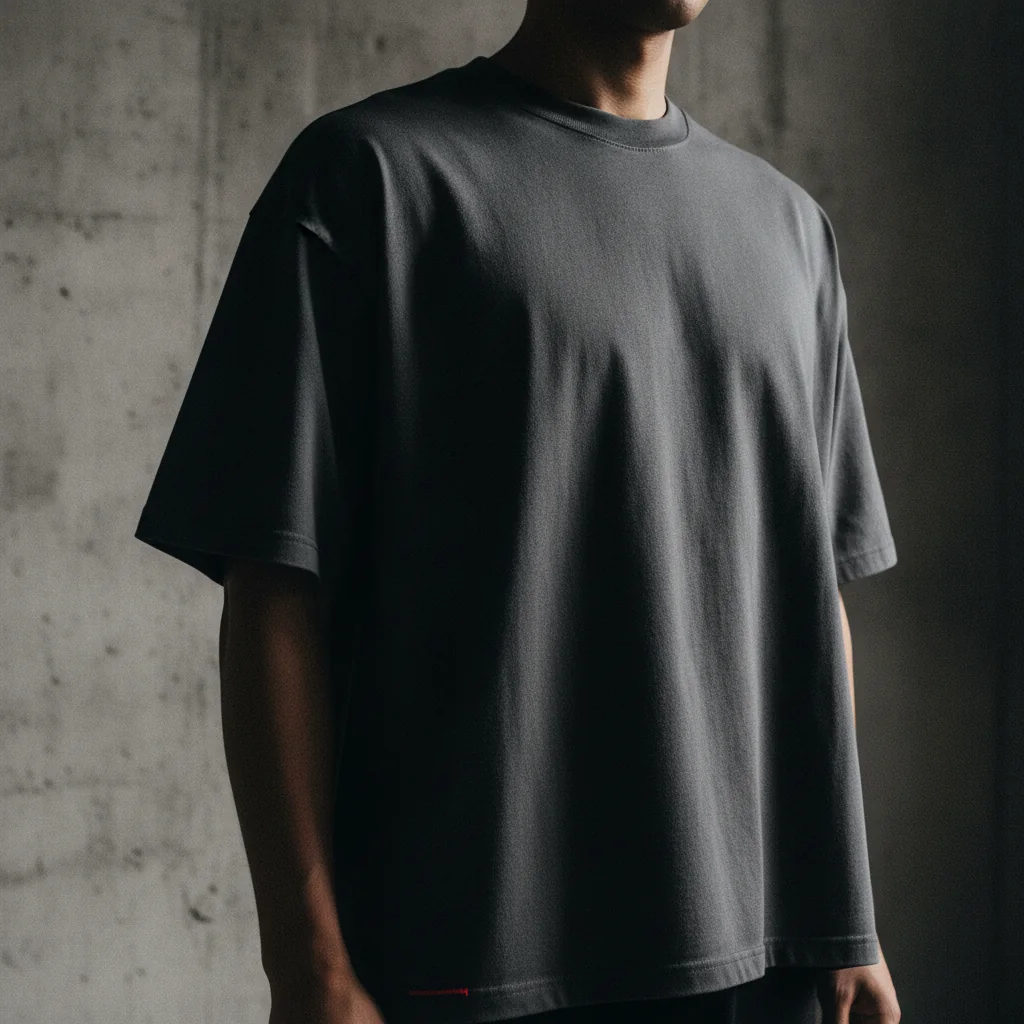
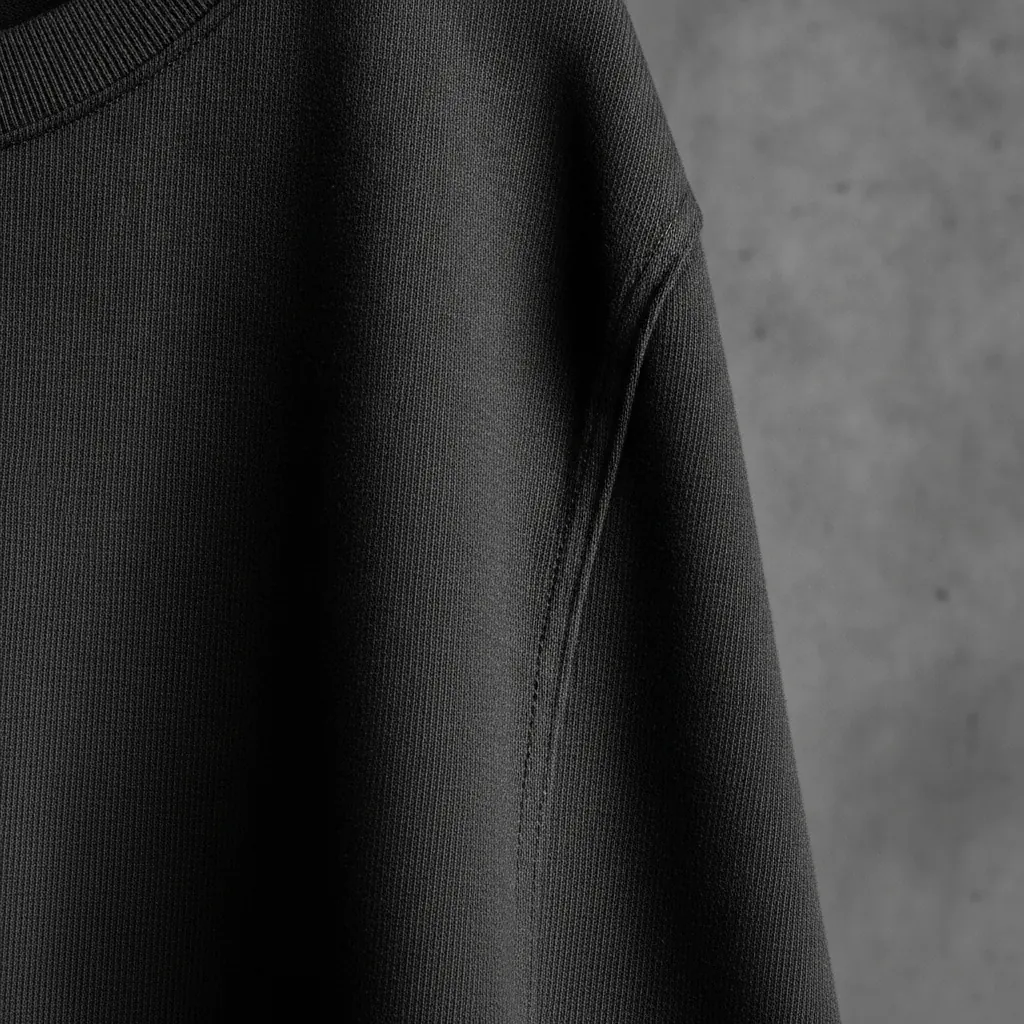
A 180-220 GSM lightweight tee generally sits at the accessible end of a streetwear brand’s range and supports a 2.5x to 3x multiplier. A 280-400+ GSM heavyweight tee reads as a structured, premium piece and supports a 3x to 4x multiplier on the same channel, because the product itself signals higher value at the point of sale.
Positioning has to match the fabric and finishing, not only the price tag. A 3.5x multiplier on a thin, unstructured tee reads as an inflated price to a customer holding the garment; the same multiplier on a heavyweight, private-labeled piece reads as fair value for what is in hand. Photograph and describe the fabric weight directly on your product page – customers who understand what they are paying for accept a higher multiplier without hesitation.
How Decoration Method Affects Retail Price
Screen Print
Lower per-unit cost at volume, which gives room to hold a strong multiplier while keeping the retail price approachable for a first drop.
Puff Embroidery
Higher per-unit cost and a raised, premium texture that customers associate with a higher price point, supporting a stronger multiplier on the same base garment.
An embroidered piece can typically carry $4 to $8 more in retail price than a screen-printed equivalent at the same multiplier, because the finish itself communicates the higher cost of production to the customer. See Embroidery vs Screen Printing for the full cost and durability comparison behind that gap.
Real Pricing Example
| Item | Landed Cost | DTC Price (3x) | Wholesale Price (2.2x) |
|---|---|---|---|
| 240 GSM tee, 1-color screen print, private label | $5.80 | $17.40 (round to $18) | $12.76 (round to $13) |
| 320 GSM tee, embroidered logo, private label | $8.20 | $24.60 (round to $25) | $18.04 (round to $18) |
Rounding to a clean number – $18 instead of $17.40, $25 instead of $24.60 – is standard practice and typically improves rather than reduces perceived value at checkout.
Psychological Pricing and Rounding
Charm pricing such as $24.99 tends to perform on impulse-driven marketplace listings, while a rounded number such as $25 or $28 tends to read as more premium on a direct brand site, particularly alongside heavyweight fabric and a private-label finish. Neither approach is universally correct – test both against your specific audience rather than assuming one fits each brand.
Bundle pricing – two tees for a set price below buying both individually – can move slower styles without cutting your core price point, since the bundle price is framed as a volume incentive rather than a markdown on the garment itself.
Testing Your Price Before a Full Launch
Before committing a full production run to one price point, test it against a small pre-order or a limited first drop of 50 to 100 pieces. A price that sells through at that scale without hesitation from buyers is a reasonable signal to hold for the full reorder; a price that stalls sales costs far less to correct at 50 pieces than after 500 units are sitting in a warehouse waiting for a markdown.
Watch conversion rate on your product page at the tested price, not only total units sold – a price that converts at a healthy rate but caps out at low volume may signal a demand ceiling rather than a pricing problem, which calls for a marketing fix rather than a price cut.
Pricing Across Multiple Products in a Collection
A t-shirt is typically the entry price point in a streetwear collection, with hoodies, sweatsuits, and jackets priced above it using the same landed-cost-times-multiplier logic. Keeping the multiplier consistent across your catalog, rather than picking a different number for each style, keeps your pricing logic defensible to both customers and wholesale buyers comparing your catalog side by side.
A common structure is tees at $18-$28, crewnecks at $32-$45, and hoodies at $48-$70 direct-to-consumer, scaled from the landed cost of each garment type using the same 2.5x to 4x range. See What Is the MOQ for Custom T-Shirts for how MOQ affects the landed cost feeding each of these numbers.
Common Pricing Mistakes New Brands Make
The first mistake is pricing off factory cost only, missing decoration, private label, and freight – a number that looks strong on a spreadsheet and then loses money once real landed cost is applied. The second is copying a multiplier from a well-known brand without accounting for their volume, brand equity, or marketing spend, none of which a new label has on day one.
The third mistake is pricing low to move inventory fast, then finding there is no room left to fund the next production run once fees, returns, and shipping are subtracted from that number. A price with no margin buffer cannot absorb a single unplanned cost, and a first collection with no buffer rarely survives to a second drop.
Pricing for Reorders and Margin Growth
Per-unit landed cost typically drops 10 to 20 percent on a reorder because sampling, screens, and grading are already on file – this is margin you can either keep as improved profit or reinvest into a lower retail price to grow volume, depending on your brand strategy.
Track landed cost per style each time you reorder so your multiplier stays consistent across seasons rather than drifting upward or downward without a documented reason. Consistent pricing logic builds trust with wholesale buyers who track your price history across multiple seasons, and it protects your margin as your product line grows from one style to a full catalog.
Document your multiplier decision alongside your tech pack and landed-cost sheet for each style, so a new team member or a new wholesale partner can see exactly how a retail price was set rather than treating it as an arbitrary number pulled from a competitor.
How Minku Helps You Price with Confidence
Minku Apparel manufactures custom t-shirts from 50 pieces per design, in 180 to 400+ GSM cotton, with in-house screen print, DTG, and embroidery, plus full private label. Because each quote is itemized, you can build your retail and wholesale pricing directly off real landed cost instead of an estimate pulled from a competitor’s price tag.
Send your tech pack or design brief and we will return an itemized quote you can plug straight into your pricing model. Get Your Custom Quote to see your real number.
How to Price Your Custom T-Shirts for Retail — In Detail