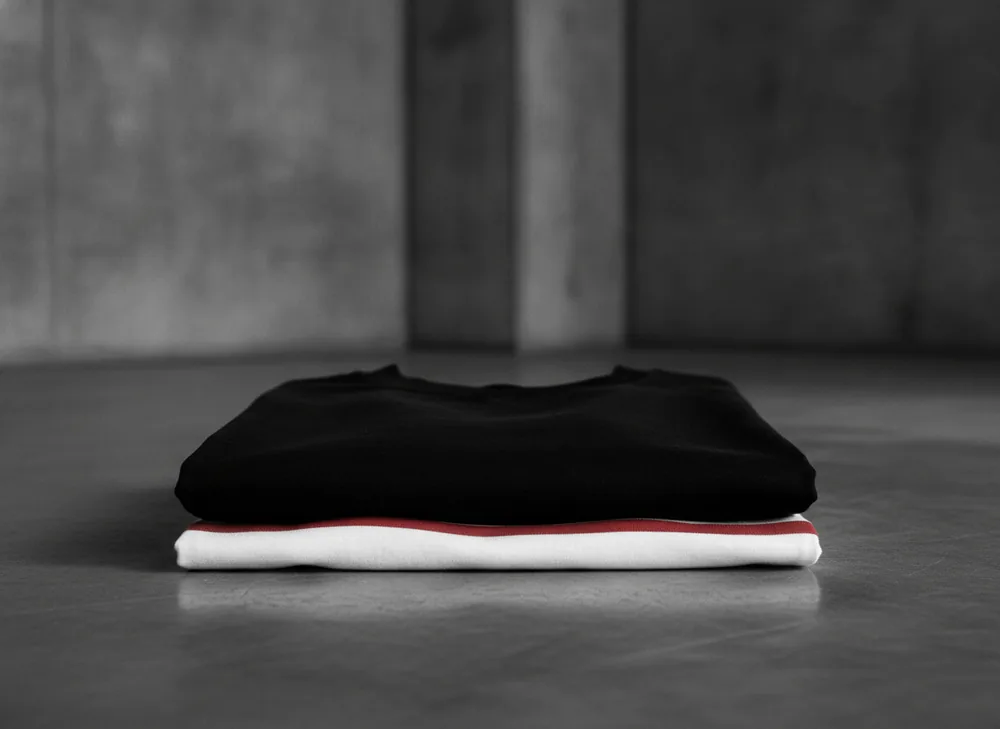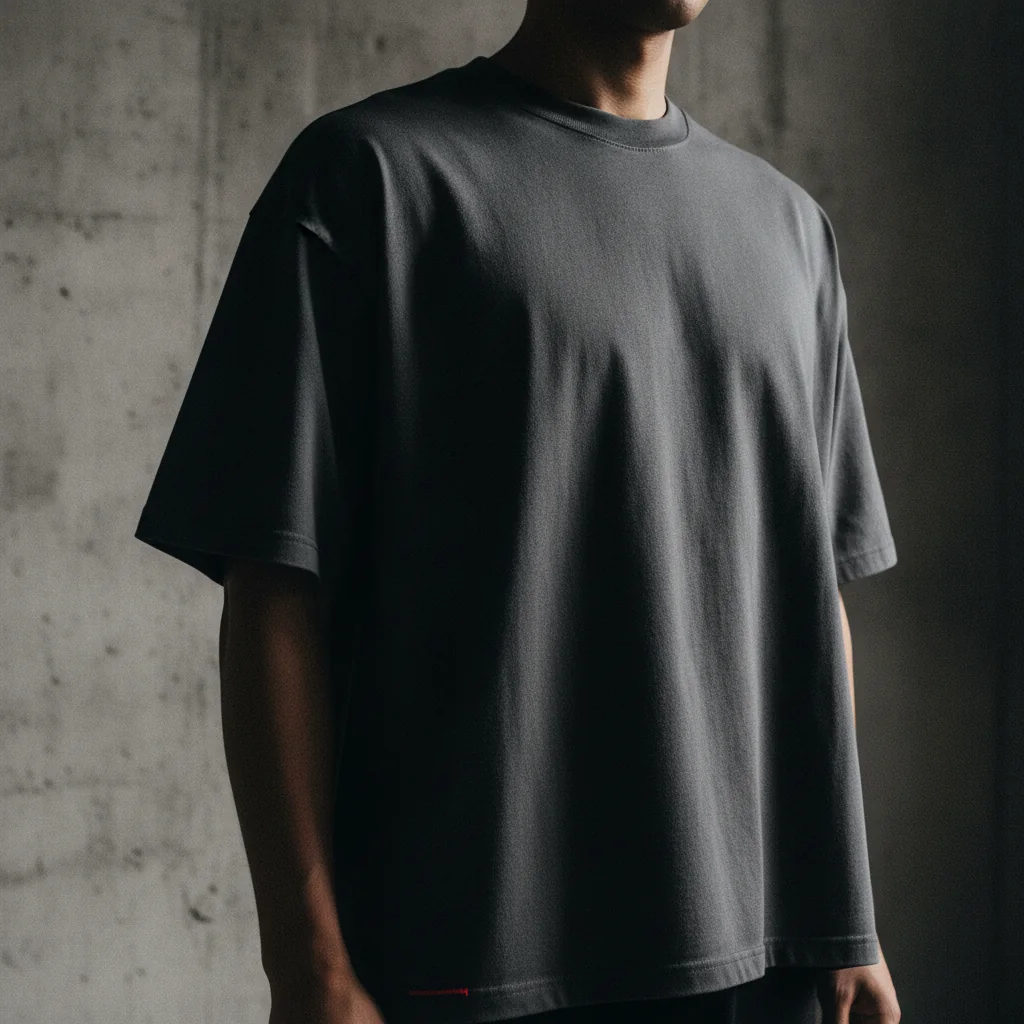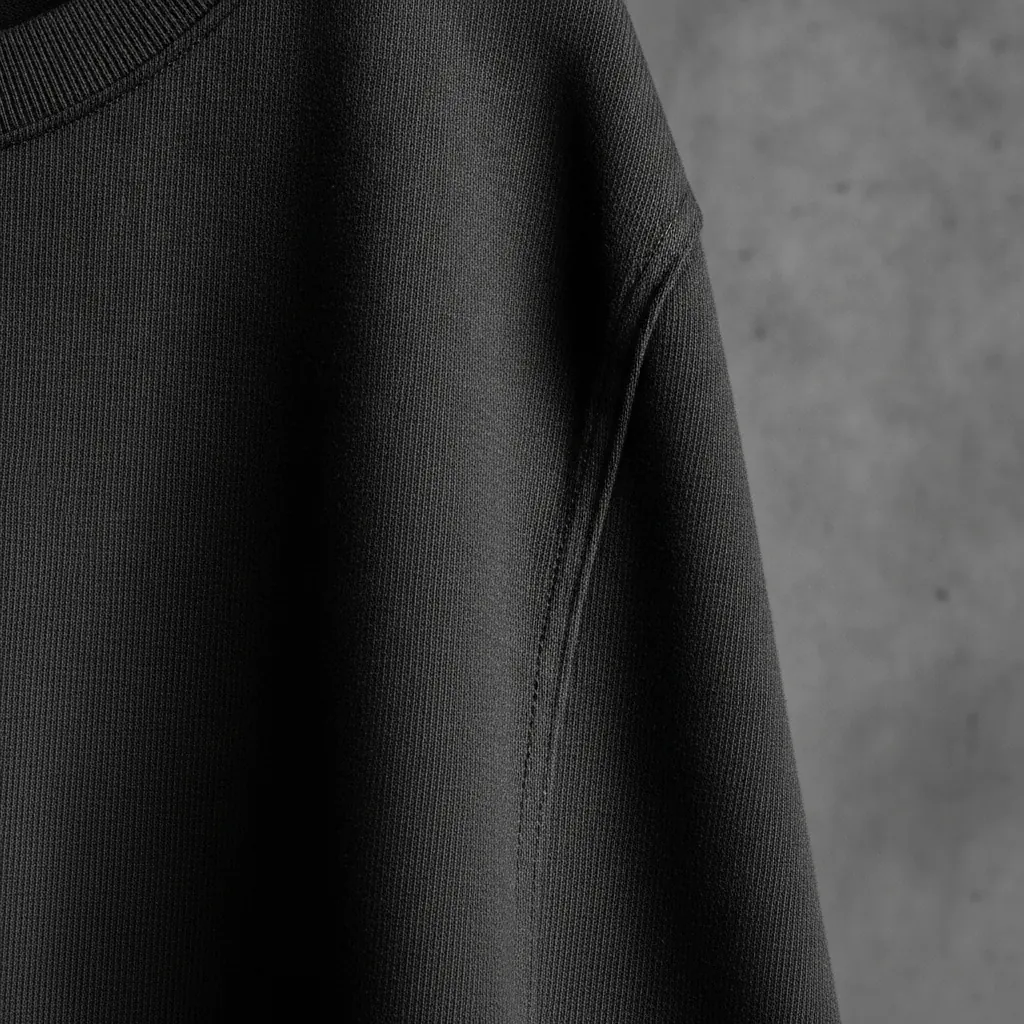
The MOQ (minimum order quantity) for custom t-shirts at Minku Apparel is 50 pieces per design, with per-unit cost improving as you scale to 150, 300, or 500+ pieces on a reorder. Industry MOQs for custom t-shirt manufacturing range widely, from 50 pieces at a new-brand-friendly factory to 1,000+ pieces at a factory built for established, high-volume labels. Here is what sets those tiers apart and how to choose the right one for your brand’s stage. See Custom T-Shirt Manufacturer for the full fabric, decoration, and private label range this MOQ applies to.
What MOQ Means and Why Manufacturers Set One
MOQ stands for minimum order quantity – the smallest number of units a manufacturer will produce per design in a single order. Factories set an MOQ because fixed costs such as pattern-making, screen or embroidery setup, and production line changeover cost roughly the same whether you order 20 pieces or 200, so a floor exists below which the order is not commercially viable for the factory to run.
A low MOQ does not mean a factory is cutting corners – it means the factory has structured its setup and sampling process to absorb more of that fixed cost per garment at entry volume, specifically to serve brands that are testing a design before committing to a large production run.
Typical MOQ Ranges Across the Industry
| Manufacturer Type | Typical MOQ per Design | Best Suited For |
|---|---|---|
| New-brand-friendly overseas manufacturer | 50-100 pieces | First collections, testing new designs, startups |
| Mid-size overseas manufacturer | 150-300 pieces | Brands with a proven design and repeat sales history |
| Large-scale overseas factory | 500-1,000+ pieces | Established labels with consistent, high-volume demand |
| Domestic cut-and-sew shop (US/UK/EU) | 25-75 pieces | Notably small runs, faster turnaround, higher per-unit cost |
See Minimum Order Quantity Explained for a full breakdown of how MOQ is calculated across garment categories, not only t-shirts.
Why Some Factories Require 500-1,000+ Pieces
Large-scale factories are built around production lines optimized for continuous runs of a single style – retooling a line for a 50-piece order costs the factory nearly as much in setup time as a 500-piece order, so many large factories simply decline small orders rather than price them at a level that makes them viable. This is a structural decision tied to how the factory’s equipment and labor are organized, not a reflection of your design’s value.
A brand that needs a 500+ piece MOQ factory for its scale but starts at 50 pieces per design should expect either a rejection or a per-unit price that reflects the factory absorbing an inefficient run on its own line – neither outcome serves a new brand well in its first year.
How a 50-Piece MOQ Changes the Math for New Brands
A 50-piece MOQ lowers the capital a new brand needs to launch a design from thousands of dollars in unsold inventory risk to a scale that a founder can reasonably fund from personal savings or a first round of pre-orders. This is the primary reason low-MOQ manufacturing has grown alongside the direct-to-consumer streetwear brand model over the past decade.
The tradeoff is per-unit cost – a 50-piece order carries a higher per-unit price than a 500-piece order of the same design, since fixed costs are spread across fewer units. Brands typically treat the first 50-piece run as a market test, then scale the MOQ on the reorder once the design proves itself in sales.
MOQ Per Design vs Per Order – the Distinction That Matters
A per-design MOQ means 50 pieces of one specific graphic, colorway, and size range meets the minimum. A per-order MOQ, used by some factories, means the total order across multiple designs must reach the minimum, which can let a brand launch three designs at 20 pieces each rather than one design at 60 pieces.
Confirm which structure a manufacturer uses before planning a multi-design first drop – a factory quoting a flat 50-piece MOQ without specifying per-design or per-order can lead to a costly misunderstanding once your tech packs for three separate graphics are submitted for a quote.
How MOQ Affects Per-Unit Cost
Per-unit cost drops as MOQ rises because fixed costs – sampling, screen or embroidery setup, and grading – are spread across more units. Moving from 50 to 150 pieces per design typically reduces per-unit cost by 10-15 percent; moving from 150 to 500 typically adds another 10-15 percent reduction. See How Much Does It Cost to Manufacture Custom T-Shirts for the full line-item cost breakdown behind these numbers.
Scaling MOQ as You Reorder
A design that sells through its first 50-piece run is a reasonable candidate to reorder at 150 or 300 pieces, since the tech pack, pattern, and screens or embroidery files are already on record and do not need to be rebuilt from scratch. This is where a low-MOQ manufacturer becomes a long-term partner rather than a one-time vendor – the same factory relationship that got your first design to market economically can also scale with you as demand grows.
Brands that switch factories between their first order and a scaled reorder often lose fabric and print consistency, since a new factory may source cotton from a different mill or calibrate screen print differently even against an identical tech pack.
Multi-Style Orders and Mixed MOQ
Some manufacturers allow a mixed order across multiple styles – t-shirts, hoodies, and shorts, for instance – to collectively meet a combined MOQ threshold, which can help a brand launch a fuller first collection without hitting the full per-design minimum on each individual style. Confirm this option directly, since it is not standard across the industry and varies by factory.
A mixed-style order typically still requires each individual design to hit a reduced floor, such as 25-30 pieces per style, rather than allowing one design to carry the entire order at a single unit.
MOQ and Sampling – How the Two Interact
A pre-production sample is produced separately from your MOQ order and does not count toward the minimum quantity – it is a single piece, or occasionally two or three, made specifically to confirm fit, color, and decoration before the full 50-piece (or larger) run is cut. Some factories charge for the sample separately, while others credit the sample cost against the bulk order once it confirms.
Understanding this distinction matters when budgeting a first order: your total first-run cost includes the sample fee plus the 50-piece bulk order, not the sample as a 51st unit inside the MOQ. Ask any manufacturer to itemize sample cost separately from bulk MOQ pricing so your budget reflects the real total.
How MOQ Compares Across Minku’s Product Lines
| Product | Typical MOQ per Design |
|---|---|
| T-shirts | 50 pieces |
| Hoodies and sweatshirts | 50 pieces |
| Tracksuits and sweatsuits | 50 pieces |
| Jackets | 50 pieces, though complex styles may sit slightly higher |
Minku holds a consistent 50-piece floor across its core product lines rather than varying MOQ by garment complexity, which simplifies budgeting for a brand planning a first collection across multiple product categories at once. See What Is the MOQ for Custom Hoodies for the same breakdown applied to hoodies specifically.
Common MOQ Mistakes New Brands Make
The first mistake is designing a full 10-style collection before confirming MOQ structure, then discovering the total capital required is considerably higher than expected once each design is priced at its individual minimum. The second is choosing the lowest MOQ factory available without checking fabric quality, decoration capability, or sampling process, which can produce a low-commitment order that still disappoints on quality.
The third mistake is assuming a 50-piece MOQ applies uniformly across each product category – a t-shirt MOQ and a jacket MOQ are not always identical at the same factory, since jackets involve more components and more complex construction. The fourth mistake is treating MOQ as the only variable that matters and ignoring turnaround time – a factory offering an especially low MOQ but a 12-week lead time can cost a brand an entire selling season waiting on inventory that a slightly higher MOQ factory would have delivered in half the time.
Questions to Ask a Manufacturer Before Committing to Their MOQ
Ask whether the stated MOQ is per design or per order, whether sampling is included or billed separately, and whether the quoted per-unit price is fixed at that quantity or subject to change once the tech pack and colorways are finalized. A manufacturer that answers all three clearly and consistently across multiple conversations is a stronger signal of reliability than one offering the single lowest number without context.
Also confirm what happens if your finished design comes in below the stated MOQ after a size-run change – some factories hold firm at the minimum while others allow a small variance of a few units in either direction without renegotiating the entire quote.
How Minku Structures MOQ for Custom T-Shirts
Minku Apparel sets a 50-piece MOQ per design for custom t-shirts, using 180 to 400+ GSM cotton, with in-house screen print, DTG, and embroidery, plus full private label – your neck labels, tags, and packaging. Per-unit cost improves as you scale to 150, 300, or 500+ pieces on a reorder, using the same tech pack and approved sample as your foundation.
Send your tech pack or design brief and we will confirm your MOQ, fabric, and decoration options in an itemized quote. Get Your Custom Quote to start your first run.
What Is the MOQ for Custom T-Shirts? — In Detail