MOQ, minimum order quantity, is the smallest number of pieces a clothing manufacturer will cut and sew in a single production run of one design and color. It is set by fabric mill minimums, machine setup time, and dye lot batching, not chosen arbitrarily, and it is the number each brand needs to plan a first order and each reorder around.
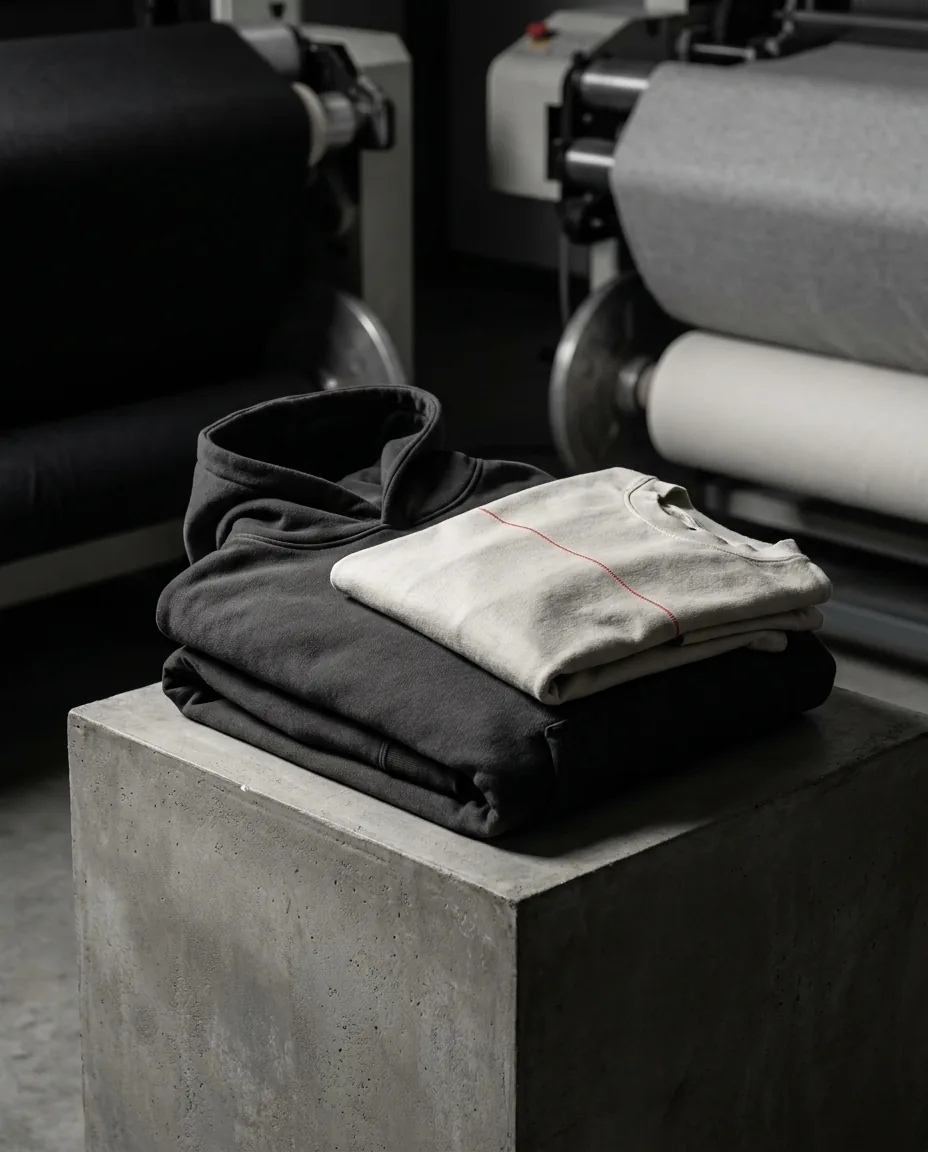
At Minku Apparel, MOQ starts at 50 pieces per design, across t-shirts, hoodies, sweatshirts, sweatsuits, tracksuits, jackets, and shorts, cut from 240-400+ GSM cotton, French terry, and fleece, with a pre-production sample approved before any bulk quantity is cut.
The core definition
MOQ is a floor, not a suggestion. When a factory quotes an MOQ of 50 pieces, it means the factory will not cut and sew fewer than 50 units of that specific design in that specific fabric and color, because the fixed costs behind that run, buying enough fabric, setting up the pattern and cutting marker, matching a dye lot, do not reduce proportionally below that number. Ordering 20 pieces would still consume close to the same setup cost as ordering 50, making the smaller order commercially unworkable for the factory to run.
This is why MOQ exists industry-wide and is not a policy any single factory invented to be difficult. It is a structural feature of how garments are produced at any real quality level, from a small brand’s first order through to a major retailer’s bulk contract.
Why factories cannot go below their MOQ
Fabric mills sell in bulk rolls, and a factory buying fabric for your order is either drawing from its own working stock, if the fabric and color are common, or placing a fresh mill order, if the color or weight is specific to your design. A mill order below its own minimum yardage simply is not sold, so the factory has to secure a mill-level minimum regardless of how small your piece count is, and that mill minimum sets a hard floor under the factory’s own MOQ to you.
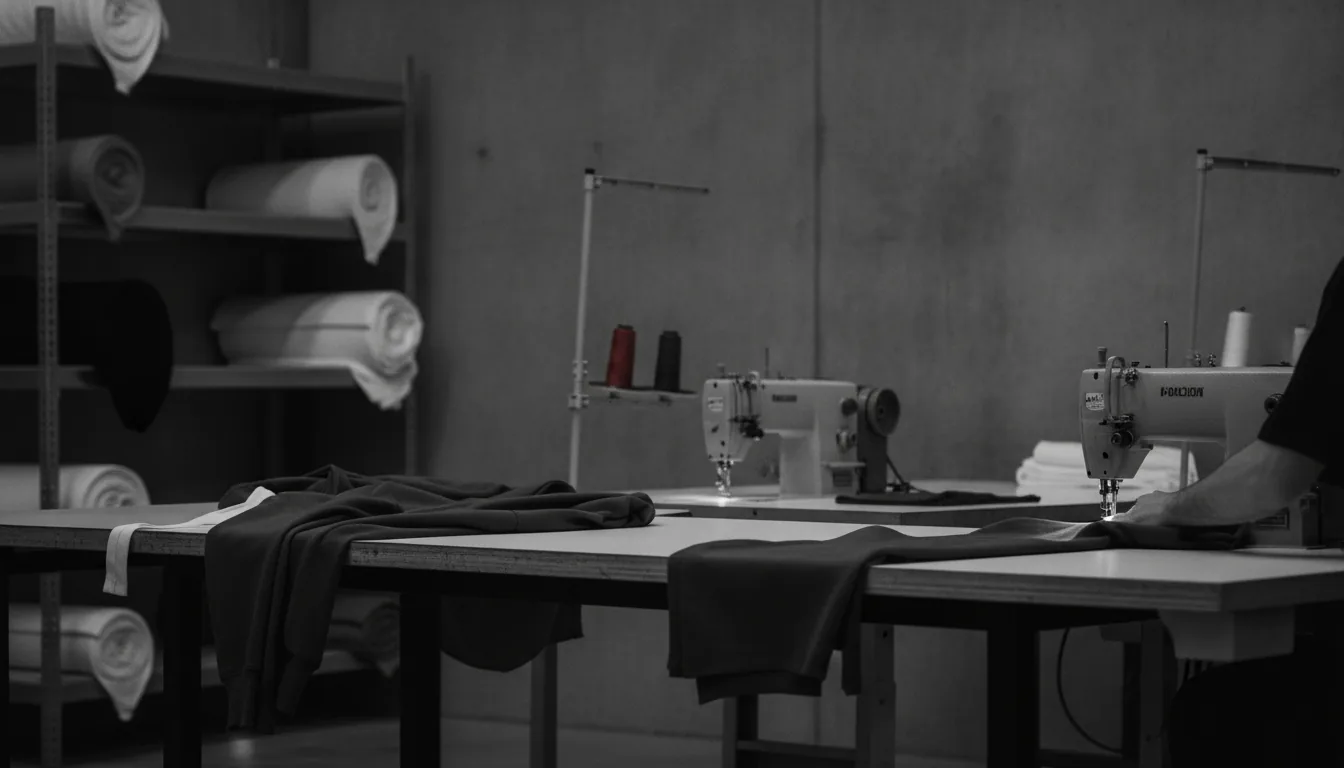
Machine setup time is the second driver. Cutting a garment first requires building a cutting marker (the layout that minimizes fabric waste across a stack of plies) and setting sewing machines to the specific seam types and stitch counts the design calls for. That setup takes the same amount of time whether the run is 50 pieces or 500, so spreading it across too few units makes the labor cost per garment unreasonably high.
Dye lot matching is the third factor, relevant on any custom-colored or garment-dyed piece. Fabric or garments dyed in one batch match each other in shade; a second small batch dyed later, even to the same target color, will show a visible shade difference. Factories set MOQs partly to avoid forcing a brand into a second dye run that will not visually match the first.
MOQ applies per design and color, not per order
This is the single most common point of confusion. An MOQ of 50 pieces means 50 units of one design in one colorway, it is not a total-order minimum spread however a brand likes across a whole collection. A brand ordering three designs at 50 pieces each is placing 150 pieces total, and each design still individually clears its own 50-piece floor.
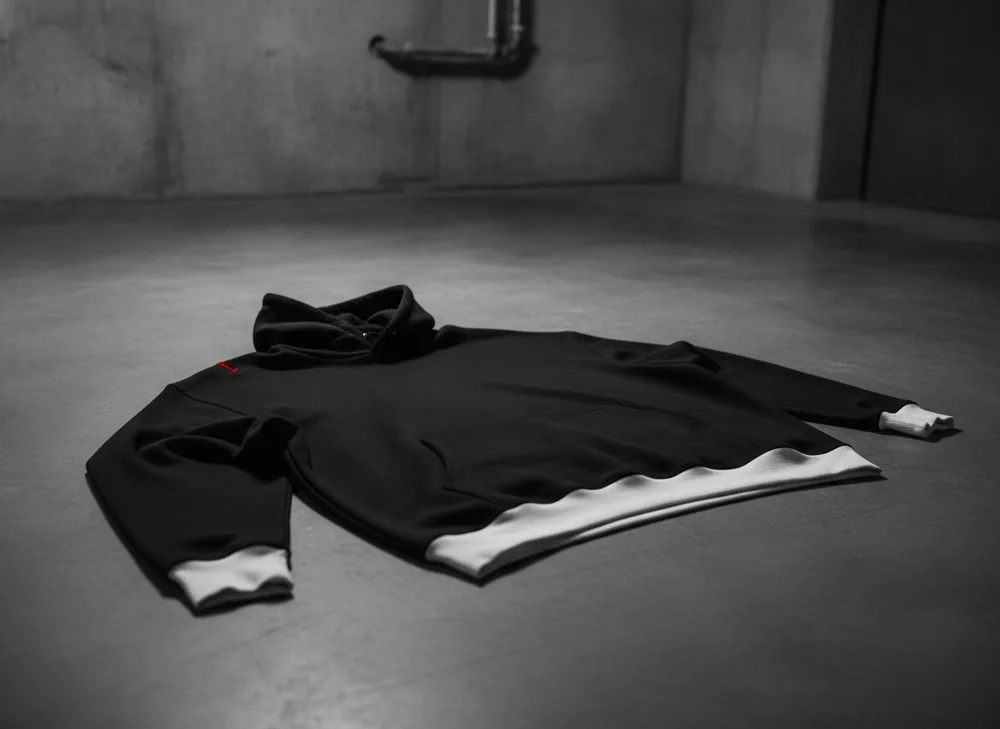
The same logic applies to color variations of the same design. A hoodie offered in black and cream is typically treated as two separate MOQ commitments, since each color requires its own dye lot and, in some cases, its own fabric order, unless a factory explicitly allows splitting one MOQ across colors of an otherwise identical design.
Typical MOQ ranges by garment type
| Product | Typical low-MOQ range | Notes |
|---|---|---|
| T-shirts | 50 to 150 pcs | Simplest construction, lowest setup cost |
| Hoodies / sweatshirts | 50 to 200 pcs | More trims (drawcord, ribbing) raise setup slightly |
| Sweatsuits / tracksuits | 50 to 150 pcs per set | Two garments per set, both count toward MOQ |
| Jackets | 100 to 300 pcs | Zippers, linings, and structure raise minimums |
| Shorts | 50 to 150 pcs | Similar to t-shirts in setup complexity |
How MOQ affects your price per piece
Because fixed setup and fabric-sourcing costs are the same whether you order the minimum or several multiples of it, ordering at exactly the MOQ carries the highest cost per piece the factory quotes for that design. Ordering 150 or 300 pieces of the same design spreads that same fixed cost across more units, lowering the price per garment even though the design and fabric have not changed.
This is why manufacturers quote tiered pricing by quantity rather than one flat number, and it is worth requesting pricing at your MOQ and at one or two higher quantities before deciding how large a first order to place. See our full breakdown on MOQ and pricing for how tiers typically move.
MOQ and sampling
MOQ governs the bulk production run; it does not apply to the pre-production sample, which is almost always one to a handful of physical units built to confirm fit, fabric, and construction before the MOQ-sized bulk order is cut. Sampling exists specifically so a brand does not have to commit to the full MOQ blind, the sample is the checkpoint, and the MOQ-sized run only happens after that sample is approved.
A factory that skips sampling and cuts straight to an MOQ-sized bulk run on an unconfirmed spec is passing sampling risk onto the brand’s full minimum order rather than absorbing it in a small pre-production piece first.
Low MOQ vs standard industry MOQ
Mass-production factories serving large retailers commonly set MOQs at 500 to 1,000+ pieces per design, since their whole operation is built around long, continuous runs. A low MOQ manufacturer, the kind most new and scaling streetwear brands need, sets that floor at 50 to 300 pieces instead, absorbing the mill-level minimum internally and spreading it across many smaller brand orders. Read more on what that distinction means in what a low MOQ clothing manufacturer is.
Can MOQ be negotiated
MOQ has some flexibility at the margins but rarely disappears. A factory might reduce its usual MOQ slightly for a brand ordering multiple designs at once, since the total order size across the drop offsets the smaller per-design quantity, or for a brand using a fabric and color already sitting in the factory’s working stock, since no fresh mill order is required. What will not move is the underlying floor set by fabric and setup cost, since that cost is real regardless of how the conversation with the factory goes.
Brands are better served asking for the fabric and color options that already sit inside a factory’s low-MOQ range than pushing to cut the number itself, since staying inside existing stock is what actually keeps a small order commercially workable for the manufacturer.
MOQ mistakes new brands make
The most common mistake is budgeting for one MOQ figure and then discovering the real commitment once multiple designs and colors are added up. A founder who reads an MOQ of 50 and plans a five-design, two-color launch is quietly signing up for a 500-piece total order, ten times the number that first caught their attention. Confirming the true total before committing avoids a launch that ties up far more capital in stock than intended.
A second mistake is treating MOQ as fixed regardless of fabric choice. A design using an unusual GSM, a rare color, or a fabric blend outside a factory’s normal stock will often carry a higher effective MOQ than the factory’s advertised headline number, because that specific material requires its own fresh mill order rather than drawing from stock the factory already holds. Asking specifically whether your chosen fabric and color sit inside stock, or require a dedicated order, is the fastest way to confirm the real minimum before quoting a launch budget.
MOQ, reorders, and inventory planning
MOQ is a floor for a single production run, not a ceiling on how a brand grows. A design that sells through its first 50 to 100-piece run typically gets reordered at a larger quantity, 300, 500, or more, once demand is proven, and the per-piece price usually improves as the reorder quantity climbs, since fixed costs from the first run, sampling, pattern setup, are already covered.
Because the approved sample, pattern, and tech pack are already on file after a first MOQ-sized order, reorders skip most of the initial setup time and move closer to straight bulk cutting once fabric availability is confirmed. This is one practical reason it pays to build a relationship with one manufacturer through the low-MOQ stage rather than re-sourcing a new factory for each reorder, since the documentation built during the first run carries forward directly.
How Minku implements MOQ
Our MOQ is 50 pieces per design and colorway across the full product range, with fabric sourced from 240-400+ GSM cotton, French terry, and fleece, full private label included at that same minimum, and a pre-production sample built and approved before bulk cutting starts. Reorders on an approved design and fabric move faster, since the tech pack and pattern are already on file from the first run.
Tell us your product, design count, and target quantity and we will confirm exact MOQ and tiered pricing for your order. See private label manufacturing or custom clothing manufacturing, or start with Get Your Custom Quote.
Minimum Order Quantity (MOQ) Explained for Clothing — In Detail