Making custom t-shirts for a brand runs through seven stages: design and tech pack, fabric and GSM selection, decoration method, MOQ and costing, sampling and approval, bulk production, then private label finishing and DDP shipping. Most first-time brands move from tech pack to delivered inventory in 5 to 7 weeks once a manufacturer is locked in. Here is the exact process, stage by stage, so you know what to prepare and what to expect at each point.
The 7-Step Process to Make Custom T-Shirts for Your Brand
Step one is design and tech pack: you lock the graphic, placement, colorway, and size grading. Step two is fabric and GSM selection, matched to your budget and positioning. Step three is decoration method – screen print, DTG, embroidery, or a combination of these.
Step four is MOQ and costing, where your manufacturer returns an itemized quote. Step five is sampling: a pre-production sample is cut, decorated, and sent for approval before bulk starts. Step six is bulk production and quality control across the full run. Step seven is private label finishing – your neck labels, tags, and packaging – followed by DDP shipping to your door.
Timeline at a Glance
| Stage | Typical Duration | What Happens |
|---|---|---|
| Design and tech pack | 3-7 days | Graphic, placement, colorway, and size grading locked |
| Quote and MOQ confirmation | 1-2 days | Itemized costing returned by fabric, decoration, and freight |
| Sampling | 7-14 days | Pre-production sample cut, decorated, and approved |
| Bulk production | 2-4 weeks | Fabric cut, sewn, decorated, and quality checked at scale |
| Private label and DDP shipping | 5-9 days | Labels and packaging applied, order shipped door to door |
Total time from a locked tech pack to inventory in your warehouse typically runs 5 to 7 weeks for a first order, and shorter on a reorder because the design, grading, and screens are already on file.
Step 1 – Design and Tech Pack
A tech pack is the technical blueprint of your t-shirt: measurements by size, fabric spec, print or embroidery placement with exact dimensions, colorways, and construction notes. It is the document a factory pattern-maker and print operator both work from, so ambiguity here becomes a costly fix later.
If you do not have design software experience, a flat sketch with labeled measurements and a Pantone or hex color reference is enough for a manufacturer to build a working tech pack around. See What Is a Tech Pack for a full breakdown of what belongs in one, and How to Create a Tech Pack for a template you can start filling in today.
Tools You Can Use to Prepare Your Design
Adobe Illustrator is the industry standard for flat sketches and vector artwork because print and embroidery files both work from vector paths, not raster images. Procreate or Photoshop work for concepting a graphic, but a manufacturer will still need a vector or high-resolution file for print-ready output.
For grading and measurement specs, a straightforward spreadsheet listing chest, length, and sleeve measurements by size is sufficient at the outline stage – a factory pattern-maker will convert this into a working pattern once your first sample is approved.
Step 2 – Choose Fabric and GSM
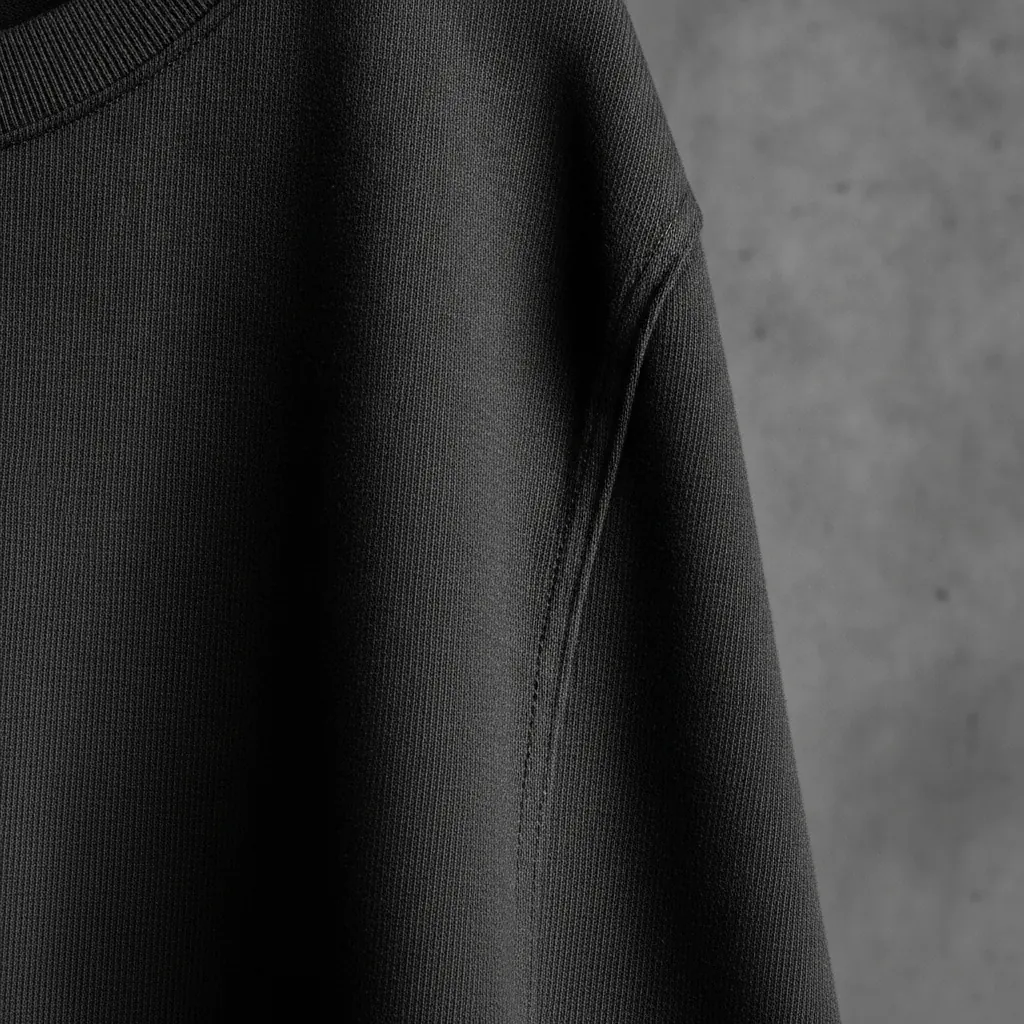
GSM (grams per square meter) sets the hand-feel, drape, and structure of your finished t-shirt. Lighter fabric in the 180-220 GSM range suits fashion-forward, drapier cuts; heavier fabric from 240 to 400+ GSM suits structured, premium streetwear silhouettes that hold shape on the hanger and on the body.
Cotton type matters as much as weight – combed cotton is smoother and pills less than carded cotton, while French terry and fleece-back constructions add texture and warmth for cooler-season drops. Reference What GSM Is Best for T-Shirts before locking your spec.
Step 3 – Choose Your Decoration Method
Screen print suits solid-color graphics at 100+ pieces per design and produces a hard-wearing, wash-resistant finish. DTG suits photographic, gradient, or multi-color designs and holds a flat per-unit cost regardless of order size, making it a strong fit for smaller drops. Puff or flat embroidery suits logo-scale marks and adds a raised, premium texture that print cannot replicate.
Many brands combine methods on one design – an embroidered chest logo alongside a screen-printed back graphic, for instance – which a manufacturer with in-house capability for both can execute without routing your order through a separate print shop. This keeps color matching, timeline, and quality control under one roof rather than split across two vendors.
Step 4 – MOQ and Costing
Minimum order quantity determines your entry point and your per-unit cost. A 50-piece MOQ lets a new brand test a design without overcommitting capital to inventory, while unit economics improve as you scale to 150, 300, or 500 pieces on a reorder. Request an itemized quote broken into fabric, decoration, private label, and DDP freight so you can see exactly where your budget goes.
See How Much Does It Cost to Manufacture Custom T-Shirts for full line-item pricing, and What Is the MOQ for Custom T-Shirts for how MOQ tiers work in practice.
Step 5 – Sampling and Approval
A pre-production sample is cut, decorated, and finished to the exact spec on your tech pack, then sent to you for approval before bulk cutting begins. This step exists to catch fit, color, and print-registration issues while the cost of a fix is one garment, not three hundred.
Expect sampling to add 1 to 2 weeks to your timeline. Skipping it to compress the schedule is the leading cause of bulk-order reprints, which cost considerably more in time and fabric than the sample round ever would. Check the sample against your tech pack measurements, not only against how the printed graphic looks at a glance.
Step 6 – Bulk Production and Quality Control
Once your sample is approved, fabric is cut at scale, sewn, and decorated to the same specification. Quality control checks stitching, print registration, color consistency, and measurements against your tech pack at multiple points during the run, not only at the end.
Bulk production for a t-shirt order typically runs 2 to 4 weeks depending on quantity and decoration complexity, running in parallel with private label finishing where possible to hold the overall timeline.
Step 7 – Private Label, QC and DDP Shipping
Private label finishing – your neck label, woven size tag, hangtag, and branded packaging – is applied before the order ships. A final quality pass confirms the finished garments match the approved sample before they leave the factory floor.
DDP (Delivered Duty Paid) shipping means duty, customs clearance, and freight are handled on your behalf, so the order reaches your warehouse in the US, UK, or EU in 5 to 9 days by air with no unplanned fees at the border.
Common Mistakes First-Time Brands Make
The most common mistake is skipping the tech pack and describing a design verbally – ambiguity in placement or sizing becomes an expensive correction once bulk fabric is cut. The second is choosing a decoration method before confirming it suits the order volume, which distorts the per-unit cost.
The third mistake is approving a sample without checking it against measurements on the tech pack, not only against the printed graphic. A sample can look right at a glance and still be off by half an inch at the chest or the sleeve. The fourth is ordering a single size run for approval and assuming the fit is correct across the full size range – grading errors typically show up at the smallest and largest sizes first.
How to Choose the Right Manufacturer for This Process
Look for a manufacturer that quotes fabric, decoration, private label, and freight as separate line items rather than one bundled figure – transparency at the quoting stage tends to predict transparency during production. Confirm decoration methods are handled in-house rather than outsourced to a third-party print shop, which adds time and removes a layer of quality control.
Ask directly whether sampling is included before bulk cutting and whether shipping quotes are DDP or EXW – the difference between those two shipping terms determines whether duty and customs land on the manufacturer or on your brand after the order has already shipped. A manufacturer willing to walk through each of these questions before you commit budget is a stronger long-term partner than one that only answers with a single flat price.
How Minku Makes Your Custom T-Shirts
Minku Apparel manufactures custom t-shirts from 50 pieces per design, in 180 to 400+ GSM cotton, with in-house screen print, DTG, and embroidery under one roof, plus full private label – your neck labels, tags, and packaging. Design and sampling happen before any bulk cut, and finished orders ship DDP to your door across the US, UK, and Europe.
Send your tech pack, or a flat sketch and a Pantone reference if you do not have one yet, and we will scope your first run. Get Your Custom Quote to start the process.
How to Make Custom T-Shirts for Your Brand — In Detail