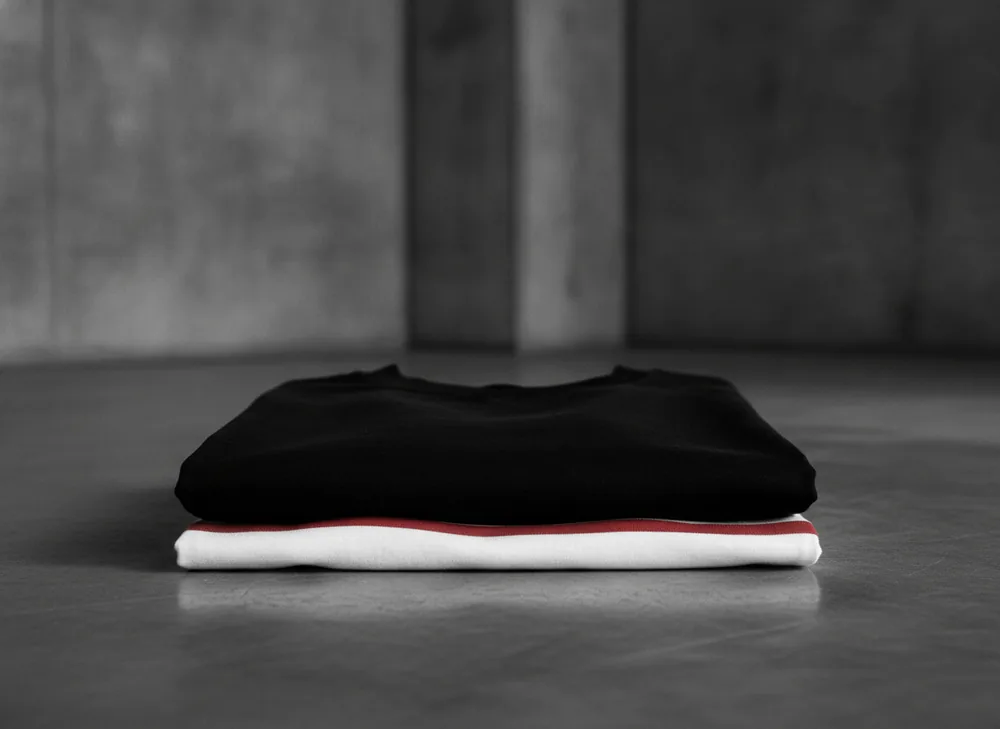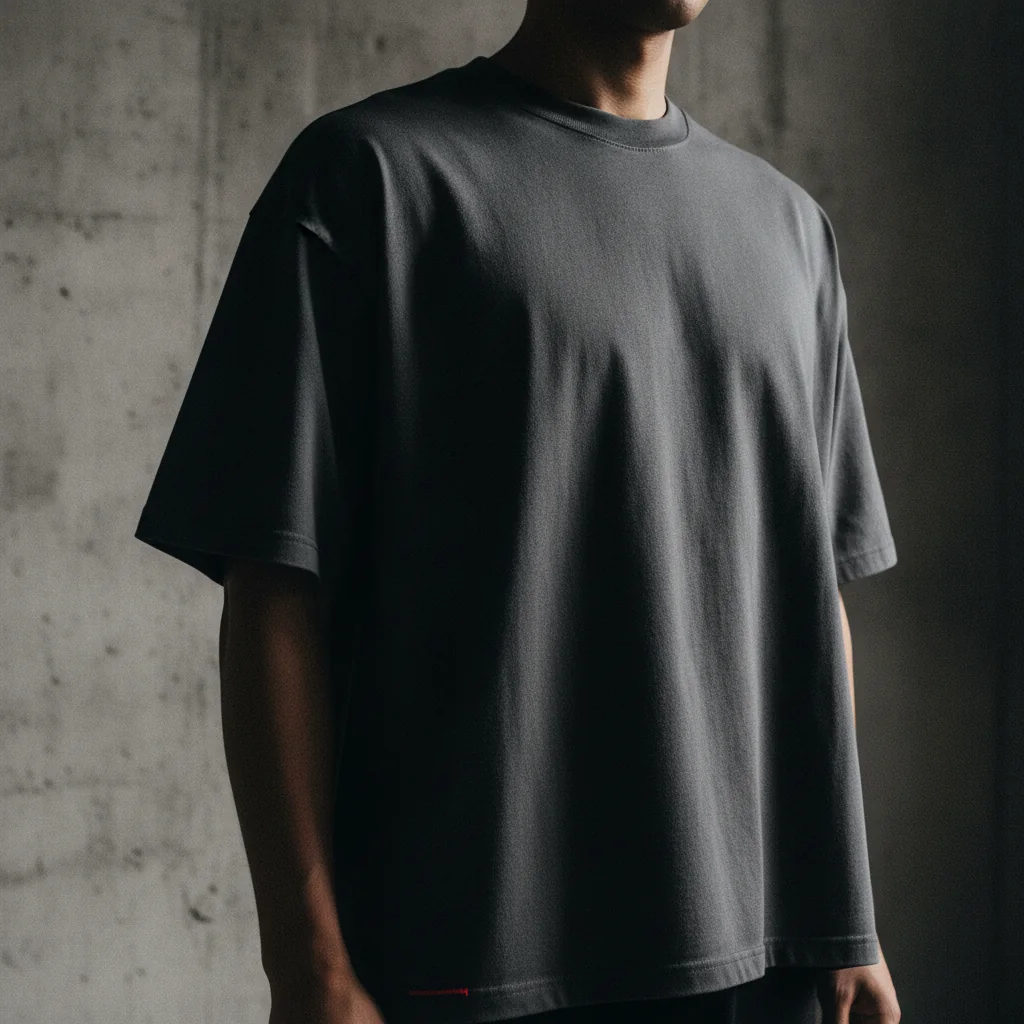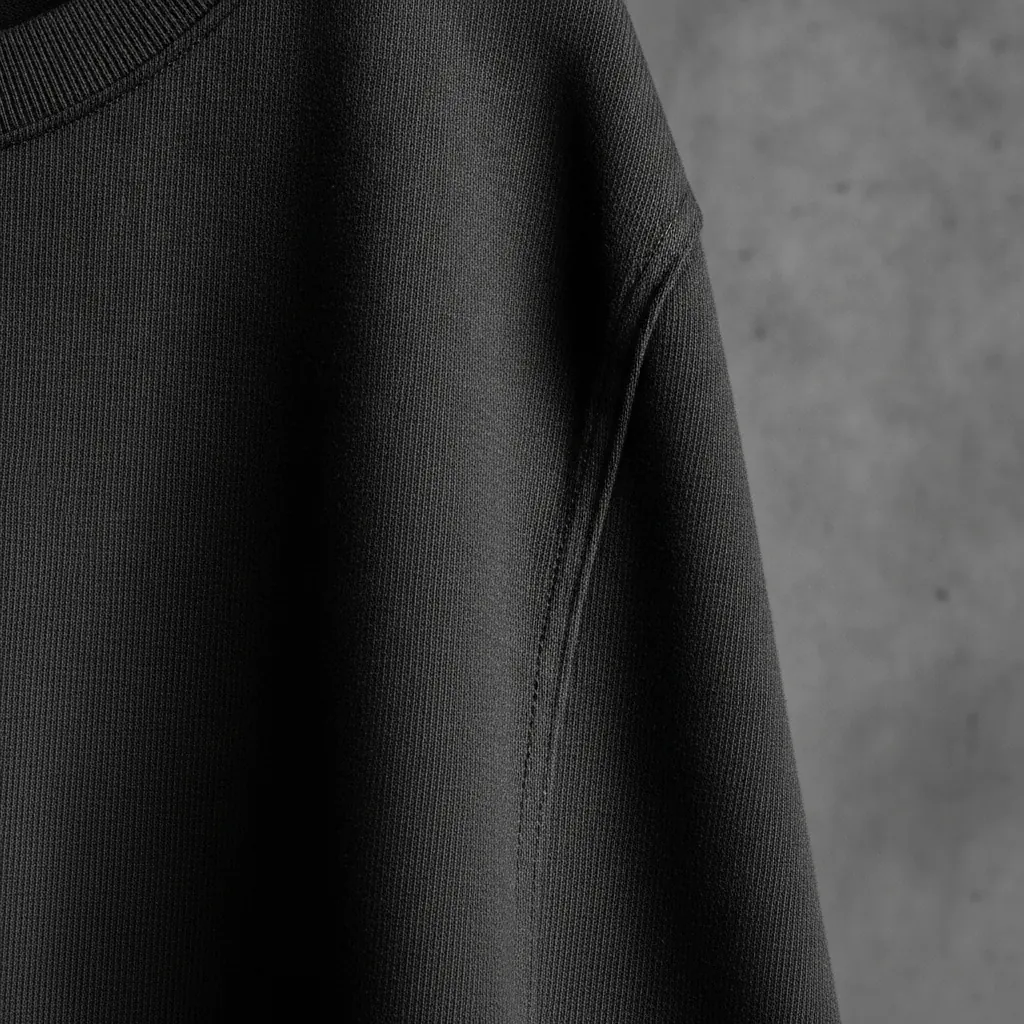
For most streetwear brands, 240 to 280 GSM is the best balance of structure, durability, and drape for a custom t-shirt. Lighter fabric under 200 GSM suits fashion-forward, drapier cuts, while fabric above 300 GSM suits heavyweight, boxy silhouettes built to hold shape through repeated wash cycles. The right number for your brand depends on fit, climate, and decoration method – here is how each GSM range performs in production and on the body.
GSM Explained – What the Number Means
GSM stands for grams per square meter, the standard measurement of fabric density used across the apparel industry. A higher GSM means more yarn packed into each square meter of fabric, which produces a thicker, heavier, more structured textile; a lower GSM means less yarn per square meter and a lighter, thinner, more drapey textile.
GSM is not a measure of quality on its own – a well-constructed 180 GSM tee can outlast a poorly constructed 300 GSM tee. It is a measure of weight and hand-feel that should be chosen to match your design intent, not chased as a number for its own sake. See What Does GSM Mean for the full technical explanation, and Custom T-Shirt Manufacturer for the full range of fabric and fit options Minku manufactures.
How to Test GSM Before You Commit to a Full Run
Request fabric swatches at two or three candidate GSM levels before finalizing your tech pack – a swatch lets you handle the actual hand-feel, weight, and opacity rather than relying on a spec sheet number alone. Hold the swatch up to light to check opacity for lighter designs, and stretch it gently to check how well it springs back, since that elastic rebound varies by knit structure at the same GSM.
A pre-production sample at your chosen GSM is the second checkpoint – approve the sample after washing it once, not straight off the cutting table, since shrinkage and hand-feel both shift slightly after a first wash cycle. A fabric that feels correct dry can feel different after laundering, and that first-wash state is closer to what your customer will experience.
Lightweight T-Shirts (160-200 GSM)
Lightweight fabric in the 160-200 GSM range suits fashion-forward brands prioritizing drape and breathability over structure. It works well for warm-climate markets, summer collections, and designs meant to move and fold with the body rather than hold a fixed shape.
The tradeoff is durability at scale – lightweight fabric shows wear and pilling faster than heavier constructions under repeated washing, and a large all-over print can show through to the reverse side on especially thin fabric. Lightweight tees typically cost less per unit in fabric, which lets a brand enter a lower price bracket.
Midweight T-Shirts (200-260 GSM)
Midweight fabric is the most commonly ordered range for a first streetwear collection, balancing enough structure to hold a graphic cleanly with enough drape to remain comfortable across most climates. A 220-240 GSM tee works for both a relaxed regular fit and a slightly boxier silhouette without feeling heavy.
This range is a reasonable default when you are unsure which direction to take a first design, since it performs across screen print, DTG, and light embroidery placements without the cost premium of a true heavyweight fabric.
Heavyweight T-Shirts (280-400+ GSM)
Heavyweight fabric above 280 GSM is the standard choice for structured, premium streetwear – it holds a boxy or oversized silhouette on the hanger and on the body, resists shape distortion through repeated washing, and reads as a higher-cost product to the customer holding it. This is the range most brands mean when they describe a tee as premium.
Heavyweight fabric supports puff embroidery and heavier print builds without the fabric puckering under the decoration, and it holds up to acid wash and garment dye processing better than lighter constructions. See Custom Heavyweight T-Shirt Manufacturer for full specs on this range.
GSM vs Fabric Type
| Fabric Type | Typical GSM Range | Best For |
|---|---|---|
| Standard jersey cotton | 160-220 | Fashion tees, warm-climate drops, higher volume runs |
| Combed cotton jersey | 180-240 | Smoother hand-feel, less pilling, slightly higher cost |
| French terry | 240-320 | Textured surface, cooler-season tees, loungewear crossover |
| Fleece-back cotton | 280-400+ | Heavyweight structured tees, boxy and oversized fits |
See Combed vs Carded Cotton and What Is French Terry Fabric for detail on how these constructions differ beyond GSM alone.
How GSM Affects Manufacturing Cost
Fabric cost scales close to directly with GSM, since a heavier fabric consumes more yarn per garment – plan on roughly $0.30 to $0.60 more per unit for each 50 GSM increase, depending on cotton type. See How Much Does It Cost to Manufacture Custom T-Shirts for the full cost breakdown across GSM ranges.
Heavier fabric can also add a small labor premium in cutting and sewing, since heavier material is less forgiving of pattern error and requires stronger stitching to hold the seams under the fabric’s own weight.
How GSM Affects Decoration Choice
Lightweight (160-220 GSM)
Best paired with screen print or DTG. Heavy embroidery or puff print can distort thin fabric and pucker around the stitched area.
Heavyweight (280-400+ GSM)
Supports puff embroidery, large-format screen print, and all-over print without distortion, and holds acid wash or garment dye processing cleanly.
If your design calls for puff embroidery or a heavy multi-color screen print, specify a GSM of 260 or above from the start rather than choosing fabric weight and decoration method separately – the two decisions are connected.
Climate and Market Considerations
US and UK markets support heavyweight tees through most of the year given cooler average temperatures across large parts of both countries, while warmer US regions and southern European markets favor midweight or lightweight fabric for spring and summer drops. A brand shipping into multiple climates within the US, UK, and EU may want two GSM tiers in the same catalog rather than one fixed weight across each region.
European markets generally lean toward midweight to heavyweight cotton for a structured, tailored streetwear look, particularly in Northern Europe, while Southern European markets show more demand for lighter, breathable fabric across a longer warm season.
Choosing GSM by Brand Positioning
A brand positioning around accessible price points and high sell-through volume tends to favor 180-220 GSM fabric, since fabric cost is lower and the lighter tee suits a broader range of climates and buyers. A brand positioning around premium price points and a structured, considered aesthetic tends to favor 260-400+ GSM fabric, where the fabric weight itself becomes part of the value story on the product page.
Neither positioning is a wrong choice – the mistake is choosing a GSM that contradicts your stated positioning, such as marketing a tee as premium while manufacturing it at 160 GSM with no visible fabric weight to support the claim. Align your GSM, price point, and marketing language on the same story before your first drop goes live, since customers notice a mismatch between the words on your product page and the fabric in hand faster than any other inconsistency.
Common GSM Mistakes New Brands Make
The first mistake is choosing a GSM based on a competitor’s marketing copy rather than handling the actual fabric – GSM alone does not capture hand-feel, and two 240 GSM fabrics from different mills can feel notably different. The second mistake is locking a GSM before confirming the decoration method, then discovering puff embroidery does not sit cleanly on a 180 GSM base.
The third mistake is assuming heavier always reads as better – a 400 GSM tee in a hot-climate market can sit unsold if your customer base is shopping for warm-weather basics rather than structured, heavyweight pieces.
GSM Consistency Across Reorders
Fabric mills can shift GSM slightly between production lots even when ordering the same specified weight, which is why a manufacturer should re-test and re-approve a swatch on each reorder rather than assuming a prior approval covers each future batch automatically. A shift of even 10-15 GSM between a first order and a reorder can be noticeable to a returning customer who owns both pieces.
Ask your manufacturer how they handle GSM consistency across production runs, and request a fabric test report on reorders above a few hundred pieces. See Consistent Sizing Across Reorders for how this same discipline applies to pattern grading, not only fabric weight.
A brand running three or four reorders of the same style over a year benefits from locking a single mill and a single fabric lot supplier where possible, since switching mills between orders is the most common cause of an unexplained GSM or hand-feel shift that a returning customer notices immediately.
How Minku Sources and Grades Fabric by GSM
Minku Apparel manufactures custom t-shirts in 180 to 400+ GSM cotton, French terry, and fleece, with in-house screen print, DTG, and embroidery matched to your chosen fabric weight. Each pre-production sample confirms GSM, hand-feel, and decoration compatibility before bulk cutting begins.
Tell us your target fit, climate, and decoration method and we will recommend a GSM range suited to your design, your market, and your budget. Get Your Custom Quote to start.
What GSM Is Best for T-Shirts? — In Detail