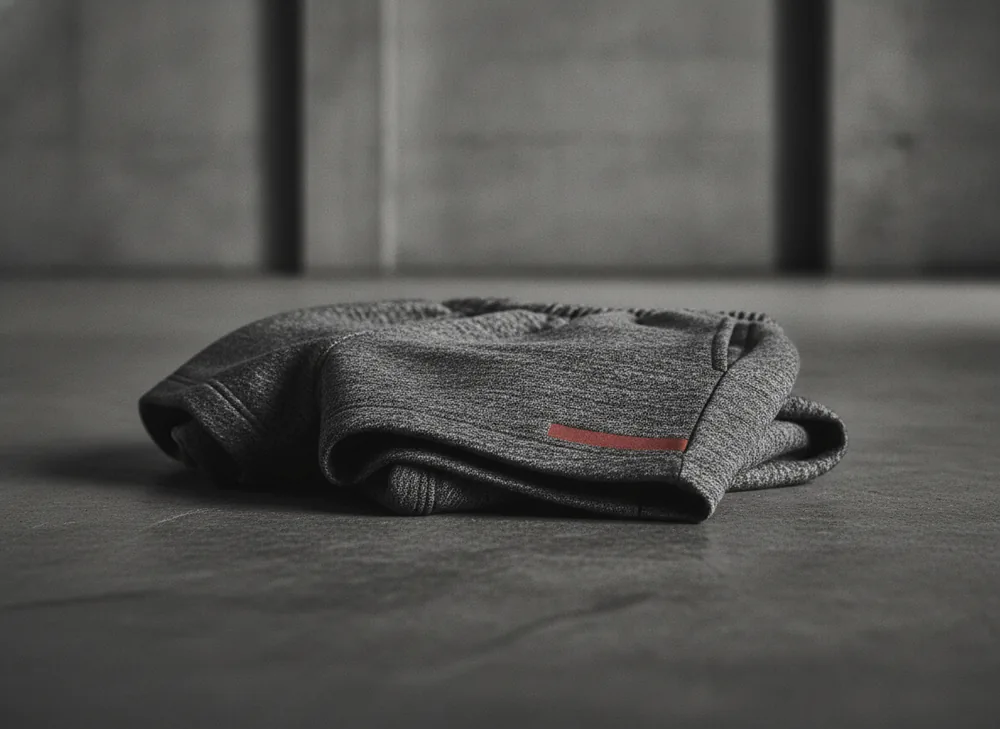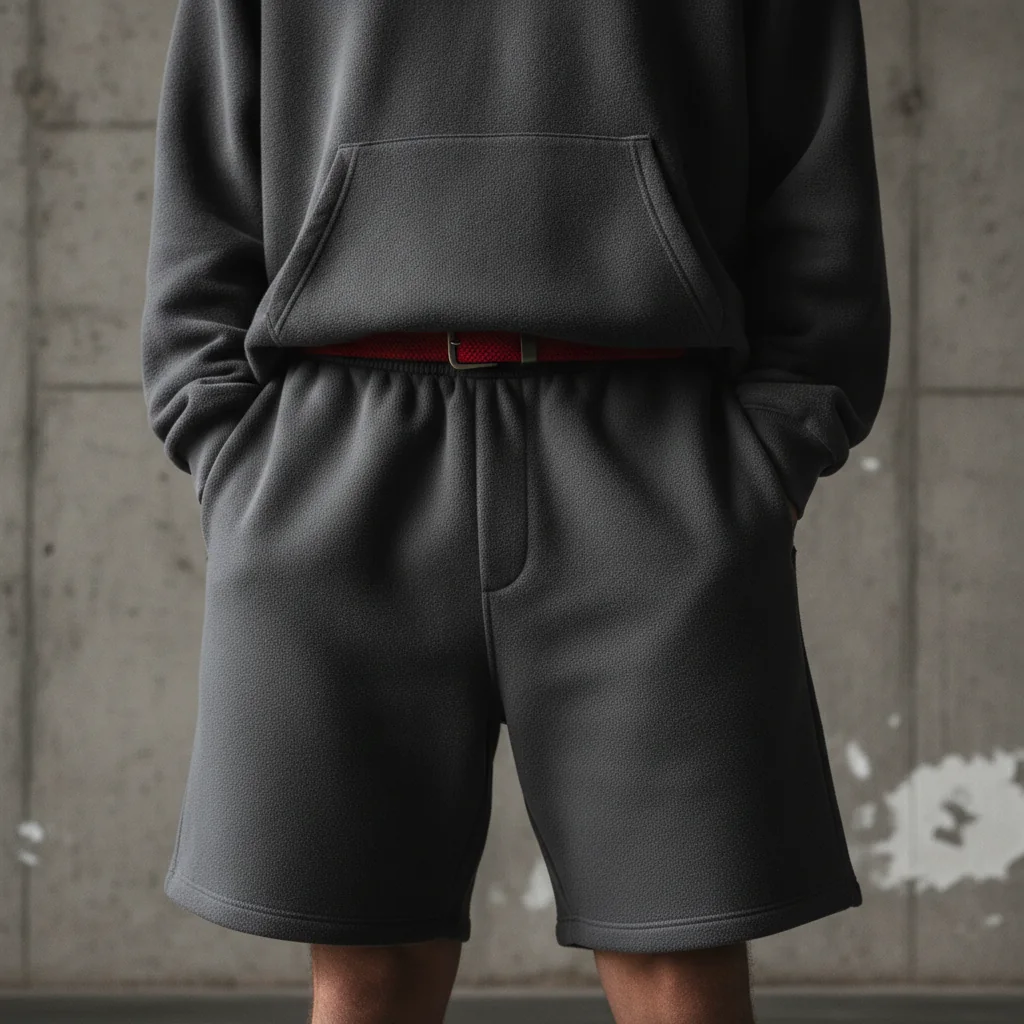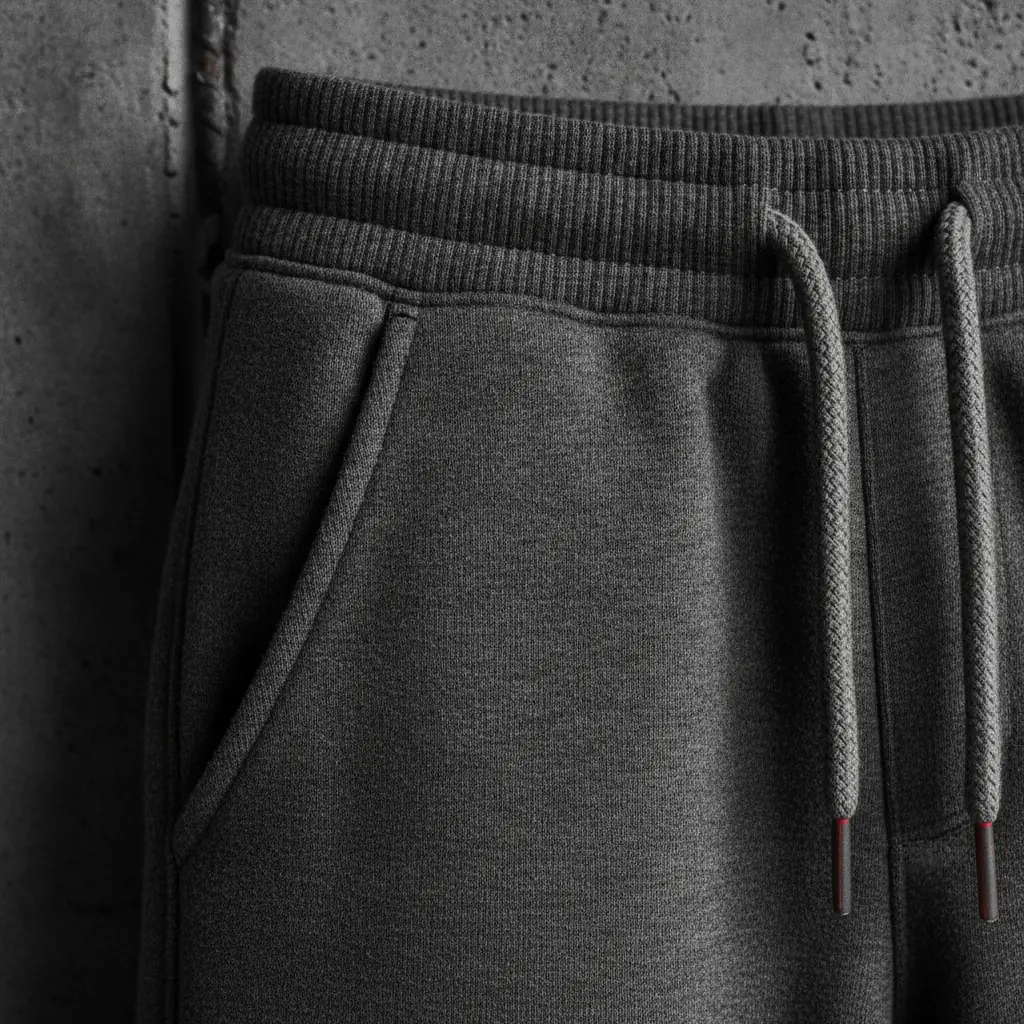
Minku Apparel manufactures custom cargo shorts for streetwear and utility-inspired brands from 50 pieces per design, cut from 240 to 320 GSM cotton twill or ripstop with reinforced patch pockets and a full private-label finish. Each pair is sampled before bulk so the pocket bags, waistband, and hem read as a finished product, then the run ships DDP door-to-door to your warehouse in the USA, UK, or Europe.
Cargo shorts moved out of workwear and into streetwear because the utility details – patch pockets, drawcord hems, D-rings, bar-tacked stress points – work as design elements, not only function. As a custom cargo shorts manufacturer we build both the function and the look, patterning pocket placement and hardware to your tech pack before a yard of fabric is cut.
What Makes a Cargo Short a Distinct Build
A cargo short is defined by its pocket count and hardware, not only its length. Where a sweat short or a mesh short is a plain rectangle of fabric folded and stitched, a cargo short carries side cargo pockets with box pleats, flap closures, and often a smaller utility pocket stacked on top. That means more fabric, more stitch lines, and more places for a build to fail if the factory does not reinforce the load-bearing seams. We treat the cargo short as its own pattern block rather than a shorter pair of cargo pants, so the pocket proportion and the rise sit correctly on a shorter leg.
Brands building a utility-streetwear line – think oversized tees, boxy hoodies, and a cargo short as the bottom-weight anchor – lean on the cargo short to carry visual weight. That means hardware choice (branded snap buttons, D-rings, cord locks) and pocket placement matter as much as fabric weight.
Fabric and Construction: Twill Weight, Ripstop, and Reinforcement
We build cargo shorts in 240 to 320 GSM cotton twill for a structured, workwear-adjacent hand, and in cotton-poly ripstop when a brand wants a lighter, more technical read with tear resistance across the pocket bags. Twill at the heavier end of that range (around 300 GSM) holds a crease and a boxy silhouette without going stiff; the lighter end (240 to 260 GSM) drapes closer to the body for a slimmer utility cut.
Because cargo pockets take repeated stress from phones, keys, and cardholders, we reinforce pocket corners with bar tacks and double-stitch the pocket bag seam rather than a single pass. Belt loops, if specified, are set on box-X stitching so they do not tear loose. A cargo short that loses a pocket seam in the first wash cycle is a returned garment, so this construction detail is confirmed on the pre-production sample, not left to bulk.
Pocket Architecture and Hardware
Pocket count and placement are the main design lever on a cargo short. We pattern:
- Side cargo pockets with box pleats for expansion, flap or Velcro closure.
- Front slash pockets and back welt or patch pockets, with or without button closure.
- Utility pockets stacked on the cargo pocket for a phone or card slot.
- Hardware: branded metal snap buttons, D-rings, drawcord hems, cord locks, and custom zipper pulls.
All hardware can carry your logo – a debossed snap button or a branded zipper pull reads as premium detail without adding a large graphic. We confirm pocket depth and closure function on the sample so nothing gapes open or loses items in wear.
Fit, Inseam, and Waistband Options
Cargo short inseams typically run 9 to 12 inches for a below-the-knee, utility-forward silhouette, though shorter 7-inch cuts work for a warm-climate or sport-leaning drop. Waistband options include a fixed waist with belt loops, an internal cinch cord for a set-and-forget fit, or an elasticated back panel for stretch without losing the flat front the cargo silhouette needs. We grade the block from XS to 3XL and confirm the taper from hip to hem on your reference pair or tech pack.
The relationship between rise and pocket placement is where most cargo shorts go wrong off the shelf. We set the cargo pocket to sit at a natural hand-reach point regardless of size, so a 3XL and an XS both wear the pocket in the same relative place.
Decoration Methods Suited to Cargo Silhouettes
Cargo shorts brand best through placement and hardware rather than a large chest graphic, since the leg and pocket flap carry more visual real estate. We run screen printing for a leg hit or pocket flap graphic, embroidery for a durable logo on the hip or back pocket, and garment dye for a tonal, worn-in finish that suits the twill base. Puff print reads well on a flat panel away from the pocket seams.
Because twill is a woven fabric rather than a knit, print and embroidery both sit cleanly without the stretch-distortion you sometimes see on jersey. We confirm placement against the pocket layout on the sample so a logo does not land across a seam or flap.
MOQ, Pricing, and the Sampling Process
MOQ starts at 50 pieces per design. Cargo shorts use more fabric and more construction time than a plain sweat short because of the pocket count, so per-unit cost sits above a basic short – we quote that difference transparently rather than cutting the reinforcement a customer would feel in three months of wear.
Sampling runs 10 to 14 days and covers pattern, fabric, and hardware approval before bulk. See MOQ and pricing, or read what shorts manufacturing costs for a fuller cost breakdown.
Private Label and Branding on Cargo Shorts
Cargo shorts ship under full private label and OEM: a woven waistband label, a back-pocket flag label, custom hangtags, branded hardware, and your packaging. Because a cargo short carries more hardware than a plain short, it is also a strong candidate for a branded cord lock or debossed snap – a small, repeated brand touch a customer notices each time they close a pocket.
The Utility-Streetwear Market Angle
Cargo shorts sit at the center of the current utility-streetwear wave – oversized tees, boxy silhouettes, and function-forward bottoms with visible pockets and hardware. Brands building this aesthetic use the cargo short as their bottom-weight anchor piece alongside a cropped hoodie or an oversized tee. The category also crosses into skate, hiking-inspired, and military-surplus-adjacent design languages, so pocket count and hardware finish become the differentiator between one brand’s cargo short and the next.
Production Timeline and Worldwide Shipping
After sample approval, bulk production for cargo shorts typically runs 3 to 5 weeks depending on quantity, hardware sourcing, and decoration, slightly longer than a plain sweat short because of the added pocket construction. We ship DDP (Delivered Duty Paid) worldwide, clearing import duty and customs before the shipment reaches your door – air freight to the USA, UK, and EU typically lands in 5 to 8 days. See worldwide DDP shipping for full transit detail.
Why Brands Manufacture Cargo Shorts With Minku
Cargo shorts fail on the details most factories skip: a pocket bag that tears at the corner, a cord lock that slips, a flap button that pops after a wash. We sample and inspect against those exact failure points because a cargo pocket carries real weight in daily use.
“We added a six-pocket cargo short to our fall drop and the pocket flaps still held their snap closure after a full season of testing pairs on our team.” – founder, US utility-streetwear label
Cargo shorts pair naturally with the rest of a utility-inspired range – explore our denim shorts and mesh shorts as sibling bottom-weight options, or step back to the full custom shorts manufacturer overview. When your pocket layout and hardware are ready to spec, get your custom quote.
Grading and Size Range
Cargo shorts are graded from XS through 3XL as standard, and the cargo pocket position and bellows depth are reset at each size point so the pocket sits at a consistent reach point across the full run rather than only on the sample size. Waistband elastic ratio and drawcord length are graded proportionally too, so a 3XL customer gets the same cinch-and-hold fit as an XS customer rather than a stretched-out band.
Grading is confirmed against a size set built during pre-production, not extrapolated from the sample alone, which is what catches a pocket that would otherwise sit too high on a larger frame or too low on a smaller one.
Cargo Shorts Cost Factors at a Glance
| Spec choice | Effect on unit cost |
|---|---|
| Pocket count (4 vs 6+) | Additional pockets add cutting, sewing, and bar-tack time per unit |
| Fabric: twill vs ripstop | Ripstop typically runs higher per yard than standard cotton twill |
| Hardware: branded snaps or D-rings | Custom-stamped hardware carries tooling cost versus stock hardware |
| Decoration: embroidery vs single-color print | Embroidery costs more per unit than a one-color screen print, less than a five-color placement |
| Order quantity | Unit cost drops as quantity rises past the 50-piece minimum, and again on reorders |
We break each of these line items out in your quote rather than folding them into one flat number, so you can see exactly which spec choice is driving cost before committing to a pocket layout or hardware finish.
Custom Cargo Shorts Manufacturer | Minku Apparel — In Detail