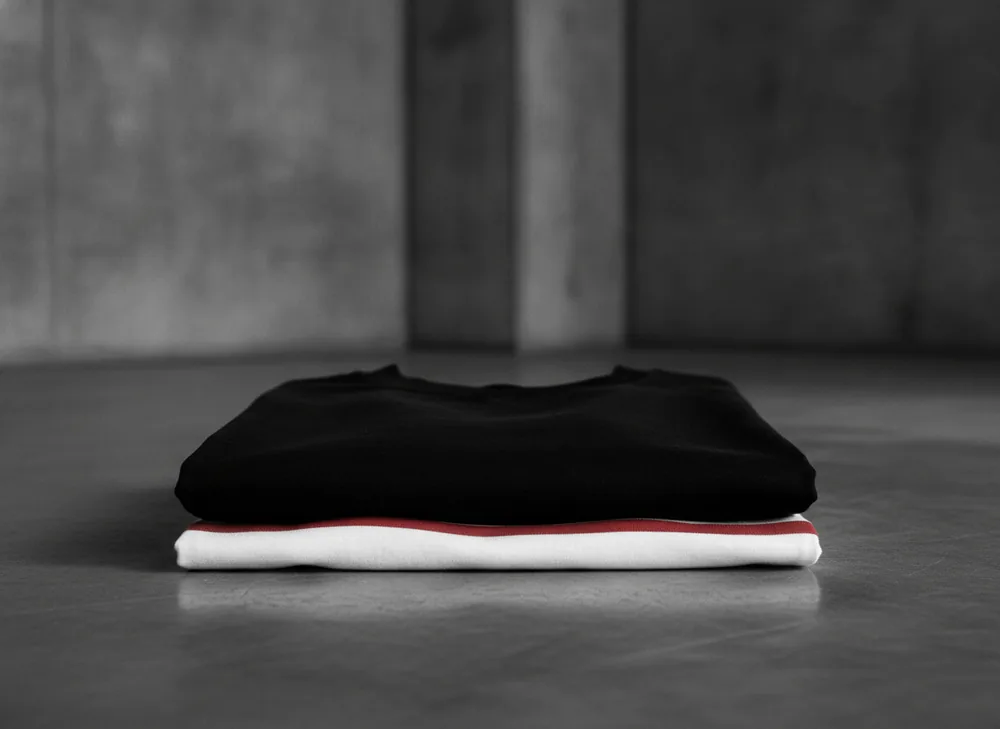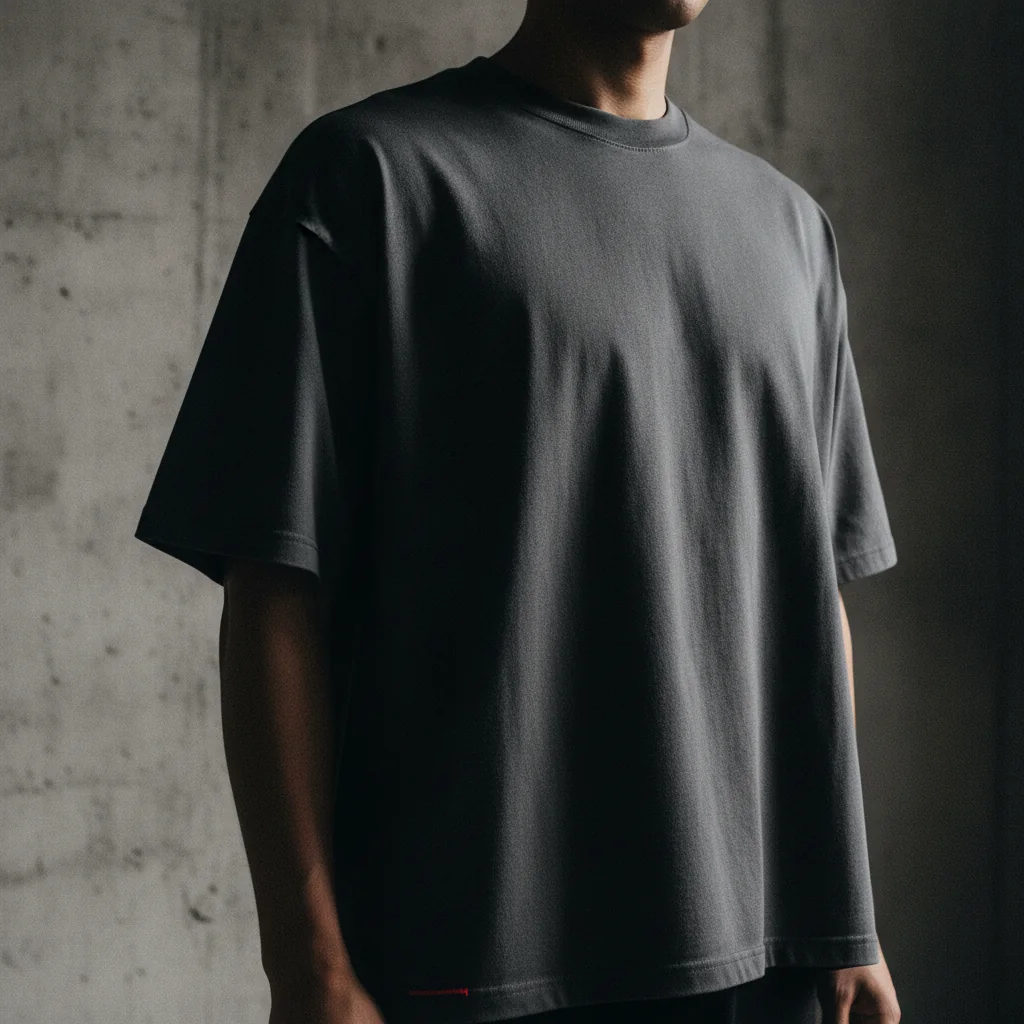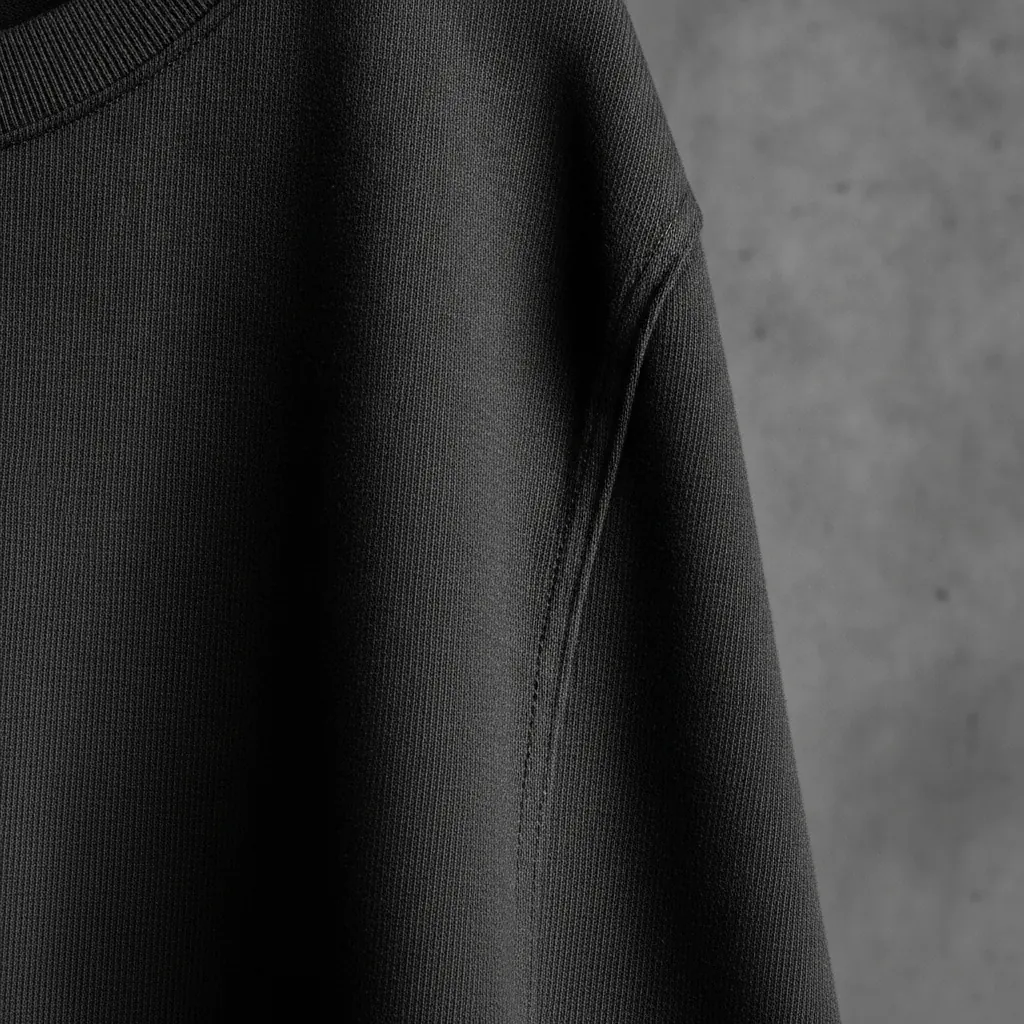
Wholesale t-shirts are pre-made blanks bought off a rack of existing colors and sizes with no design input; custom t-shirts are manufactured to a brand’s own tech pack, fabric spec, and decoration, with private labels attached before they ship. A brand building a line customers will reorder needs custom manufacturing, not a wholesale blank with a sticker on it. The right choice comes down to how much control a brand needs over fabric weight, fit, decoration, and labeling, and how fast it plans to scale past a first small run.
What “Wholesale” Actually Means in Apparel
Wholesale in the t-shirt trade usually means buying finished, undecorated blanks in bulk from a distributor at a lower per-unit price than retail. The distributor stocks a fixed range of colors, weights, and sizes from a handful of blank manufacturers, and a buyer picks from what is already sitting in the warehouse. There is no tech pack, no fabric negotiation, and no say in construction – the buyer is choosing between existing SKUs, not commissioning a garment.
This model works for screen printers and small print shops that need a fast-turn blank to decorate and resell, where the blank itself is not the brand’s product. It becomes a problem the moment a brand wants a specific GSM, a fit no blank supplier stocks, or a private label sewn into the collar rather than a generic tag.
What “Custom Manufacturing” Actually Means
Custom manufacturing starts with a tech pack: a specification document covering fabric type and GSM, colorway, construction details (seam type, hem, collar), print or embroidery placement, and label positions. The factory cuts and sews the garment to that document rather than pulling a stock item off a shelf. A pre-production sample comes first, so the brand approves fit, fabric, and decoration before a single bulk unit is cut.
Private label finishing – custom neck labels, woven tags, hangtags, and branded packaging – is part of the build, not an after-market addition. Minku Apparel runs this process from 50 pieces per design: a brand submits a design and spec, receives a sample, approves it, and only then does bulk production begin.
Cost Comparison: Wholesale Blanks vs Custom Manufacturing
Wholesale blanks often look less expensive per unit at first glance, but the comparison only holds if a brand adds no decoration or labeling – the moment a brand screen prints a design and sews in a label, it has effectively built a custom garment anyway, only through a slower, less controlled path (buy blank, ship to a printer, ship to a label service, hope the batches match). Custom manufacturing consolidates fabric, decoration, and labeling into one production run with one factory accountable for the result.
At low volume, wholesale blanks can carry a lower up-front spend since there is no sampling step. At the volumes a growing streetwear brand runs (50-500+ pieces per design, repeated across drops), custom manufacturing typically closes the cost gap because decoration and labeling are priced into the per-unit cost of the finished garment rather than paid for in three separate transactions with three separate vendors.
Consistency Across Reorders
Wholesale blanks change on a distributor’s schedule, not the brand’s. A blank that sold well in March can be replaced by the supplier’s next season’s fabric, colorway, or fit revision by the time a brand wants to reorder in the fall – forcing a brand to redo its decoration setup on a shirt that no longer matches the original. Custom manufacturing locks a specification (fabric, GSM, fit, colorway) that a factory reproduces on request, so a 300-piece reorder in month six matches the 100-piece first run in fit, weight, and color.
This matters most for a brand building repeat customers on a signature fit or fabric – a boxy, 240 GSM tee that fits and feels a specific way is a design decision, and losing that consistency because a wholesale blank got discontinued undermines the product a customer bought into.
Minimum Order Quantities: Wholesale vs Custom
Wholesale blank distributors typically sell by the case (often a fixed unit count per size run) with no design customization, which suits a print shop buying many colors and sizes across many customers, not a brand launching one design. Custom manufacturers set MOQ per design, meaning a brand can order 50 pieces of one design in a chosen colorway and fit, without buying a case of stock sizes it does not need.
Minku Apparel’s MOQ starts at 50 pieces per design, letting a new brand launch a small drop without the case-quantity commitment a wholesale blank purchase requires, while still receiving fabric, construction, and label specifications matched to its own tech pack rather than a stock item.
Brand Control and Differentiation
A wholesale blank is, by definition, available to any buyer with the distributor’s account minimums – a competitor can screen print the identical blank in the identical colorway. Custom manufacturing removes that overlap: fabric weight, fit block, colorway, and decoration are specified by one brand for one drop, and private labels ensure the finished garment carries that brand’s identity rather than a generic tag hidden under a printed design.
For a streetwear label building a following around a specific silhouette (an oversized boxy tee, a longline drop-shoulder cut), that differentiation is the product. A blank sourced from the same distributor as ten other brands cannot deliver it, no matter how good the print on top is.
When Wholesale Still Makes Sense
Wholesale blanks remain a reasonable choice for event merchandise, one-off community printing, or a print shop serving many small clients where speed and stock availability outweigh brand-specific fabric or fit. A local team ordering 24 shirts for a weekend tournament does not need a tech pack and sampling cycle – a same-week blank purchase and print run solves the problem.
The line shifts once a brand plans a recurring drop schedule, wants a signature fit customers recognize, or needs private labeling for retail or wholesale distribution of its own. At that point, the sampling and tech-pack process that feels like overhead on a one-off order becomes the mechanism that keeps each future reorder consistent.
Quality Control: Wholesale vs Custom
Wholesale blanks carry whatever quality control the original blank manufacturer ran before the distributor stocked them – a buyer has no visibility into that process and no way to flag a fit or fabric problem back to the source, since the transaction is a case purchase, not a production order. If a batch runs short in the body or the fabric weight drifts between dye lots, the buyer finds out after decorating and shipping to customers.
Custom manufacturing builds quality control into the order itself: a pre-production sample the brand signs off before bulk, in-line checks during cutting and sewing, and a final inspection against the approved tech pack before the run ships. A brand can reject or request rework on a custom order before it leaves the factory – an option that does not exist once a wholesale case has already shipped from a distributor’s warehouse.
A Practical Example: Launching a First Drop
Consider a founder launching a streetwear label with one hoodie-and-tee capsule. Buying wholesale blanks means picking from three or four stock fits in whatever GSM the distributor carries, sending them to a local print shop for a two-color design, then sending a portion to a separate label service for a sewn-in tag – three vendors, three timelines, and three points where a batch can come back inconsistent.
Routing the same capsule through custom manufacturing means one tech pack covering fit, GSM, print placement, and label position, one pre-production sample to confirm all of it together, and one bulk run that ships decorated and labeled. A founder working with Minku Apparel on a first 100-piece t-shirt drop typically sees a sample within one to two weeks of tech pack approval and bulk production completed within three to four weeks of sample sign-off – a single, trackable timeline instead of three vendors to coordinate.
Wholesale vs Custom T-Shirts at a Glance
Wholesale Blanks
Stock fabric, fit, and colorway; no tech pack; case-quantity minimums; generic label; fast for one-off printing; no guaranteed reorder consistency.
Custom Manufacturing
Brand-specified fabric, GSM, fit, and colorway; tech pack and sample approval; MOQ from 50 pieces per design; private label finishing; consistent reorders.
How Minku Apparel Handles the Switch to Custom
Brands moving off wholesale blanks typically start with one design: a tech pack covering fabric, GSM, fit, and label placement, a pre-production sample for approval, then a 50-piece minimum bulk run once the sample is signed off. Minku Apparel manages fabric sourcing, cutting, decoration, private labeling, and worldwide DDP shipping to the USA, UK, and Europe from its Pakistan factory under one production run, rather than the multi-vendor path a wholesale-plus-print-shop-plus-label-service approach requires.
Brands ready to compare their current wholesale setup against a fully custom t-shirt manufacturer can also read about what makes a t-shirt premium, check the MOQ for custom t-shirts, or start the process with a custom quote built around their own design and fabric spec.
Wholesale vs Custom T-Shirts: Which Is Right for Your Brand? — In Detail