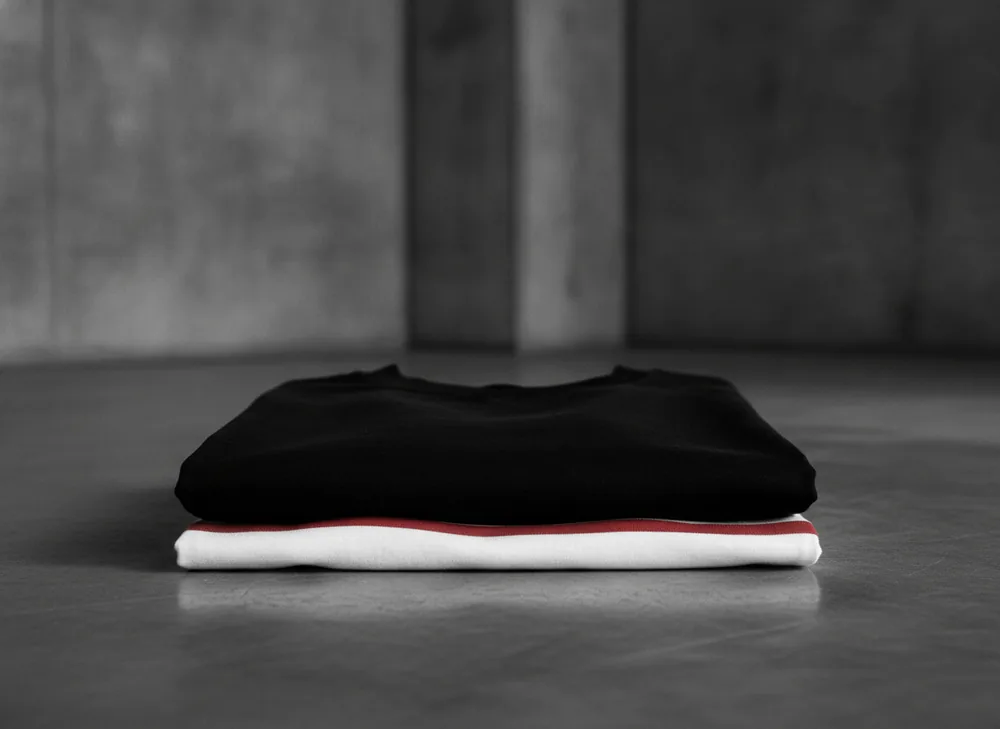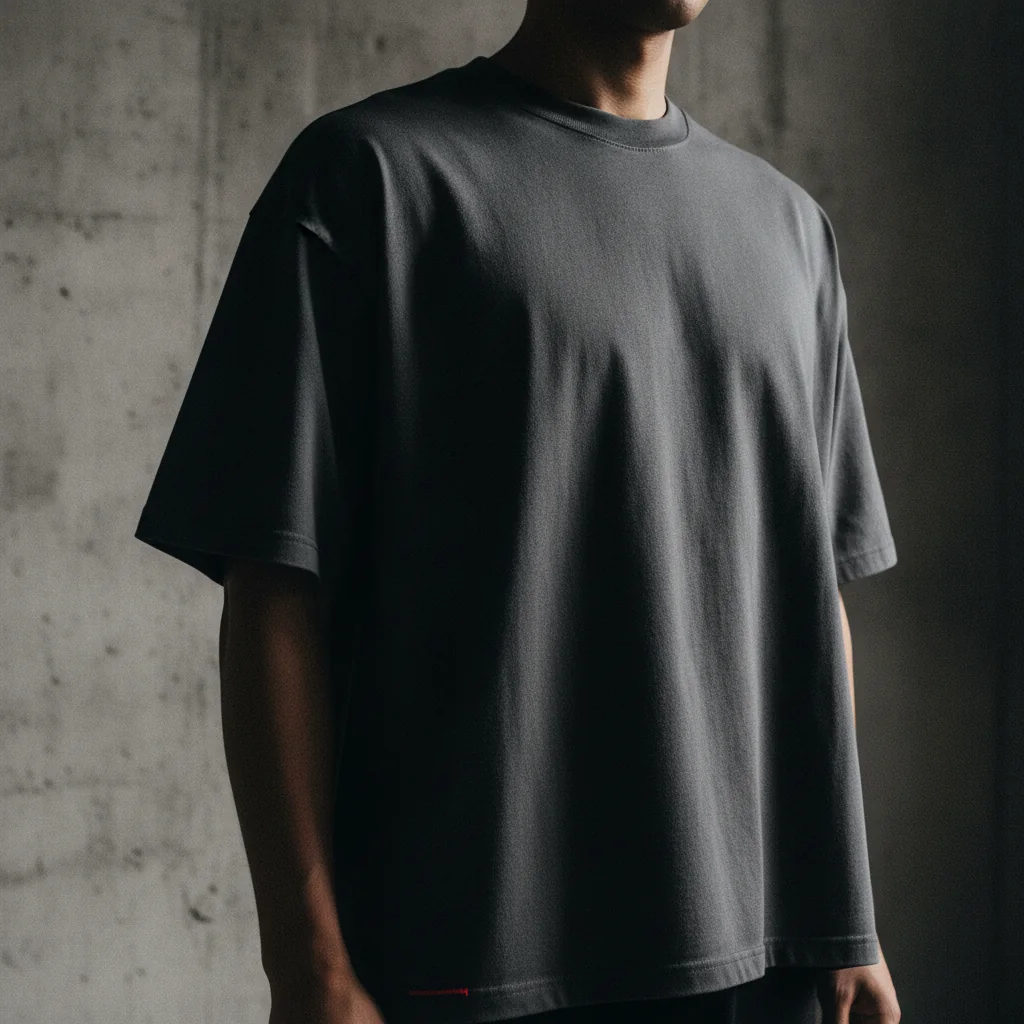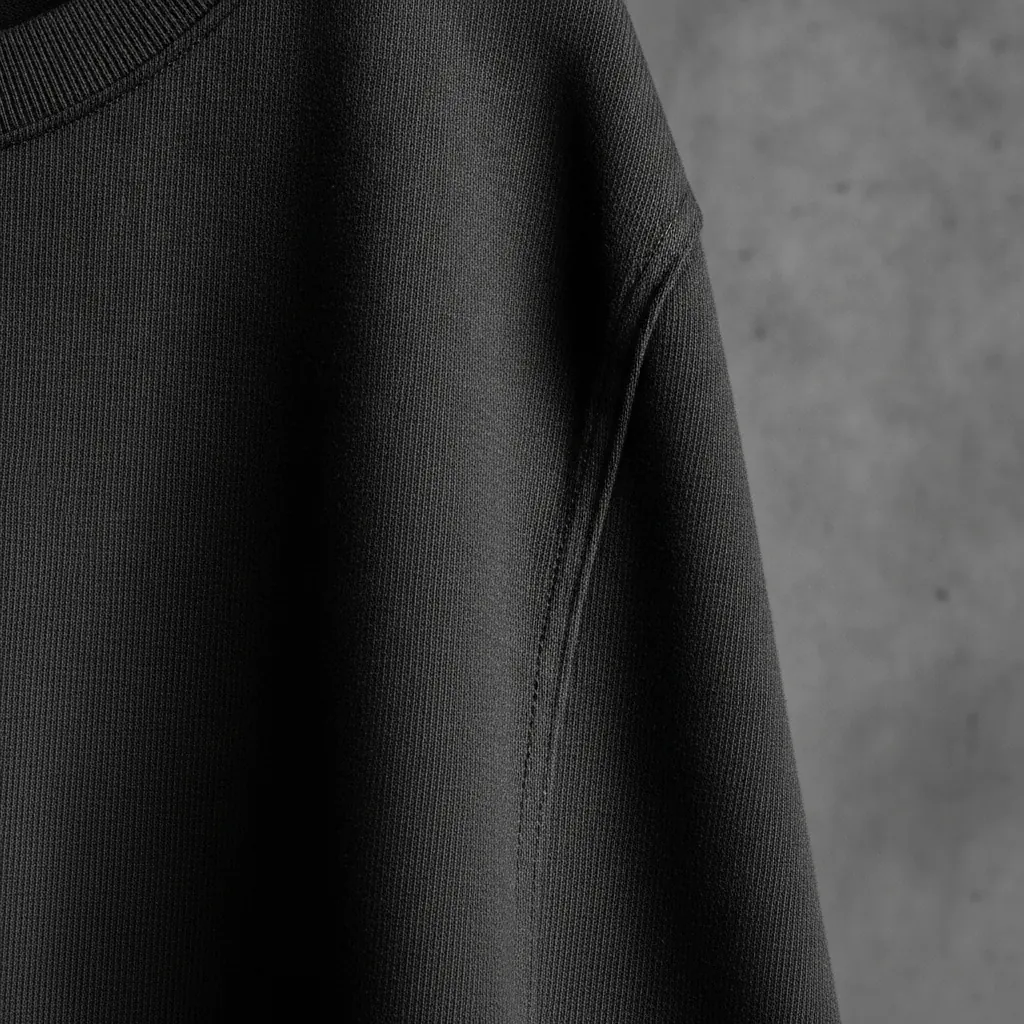
A premium custom t-shirt is built from heavyweight, tightly-knit cotton – usually 180 to 240+ GSM – cut with reinforced seams, a true-to-pattern fit, and decoration that survives dozens of wash cycles without cracking or fading. Fabric weight and construction quality, not the graphic on the front, are what separate a premium tee from a basic blank. For a streetwear brand building repeat customers, that distinction decides whether a drop gets reordered or returned. Minku Apparel manufactures custom t-shirts for brands in the USA, UK, and Europe from 50 pieces per design, using the same heavyweight cotton and construction standards on the first order as on the fiftieth.
Fabric Weight and Cotton Quality Define the Baseline
The foundation of a premium custom t-shirt is the fabric roll, not the artwork. Basic promotional tees run in the 140-160 GSM range – light, see-through under a flash, and prone to pilling after a handful of washes. A premium tee starts at 180 GSM and climbs to 220-240+ GSM for a heavyweight streetwear feel, the same range Minku Apparel uses across its custom t-shirt line. Higher GSM means a denser knit: more yarn packed into each square meter, which resists stretching out at the neckline and holds a screen print or embroidery design without the fabric puckering underneath it.
Cotton quality matters as much as weight. Combed cotton removes short fibers before spinning, leaving a smoother, stronger yarn than carded cotton, which is why combed ring-spun cotton is the standard for a tee meant to represent a brand rather than land in a markdown bin. Single jersey knit is the base construction for most streetwear tees, while interlock and pique variations show up on heavier drape pieces. Brands sourcing overseas should ask their manufacturer for the exact GSM and cotton type in writing before bulk cutting starts – a reputable factory puts this on the tech pack, not left as a spoken promise.
Construction Details: Seams, Collar, and Hem
Fabric weight sets the baseline; construction decides whether a t-shirt survives a season of wear or unravels after three washes. Premium tees use taped shoulder seams – a strip of fabric stitched inside the shoulder seam that stops it from stretching out under the weight of a heavier cotton. Basic tees skip this step to save on stitching time, and the shoulder seam creeps toward the front of the shirt within a handful of wears.
The collar is another giveaway. A premium tee uses a rib-knit collar with a percentage of spandex blended in, so it snaps back into shape wash after wash instead of going slack. Hemming matters too: a double-needle hem on the sleeve and bottom edge lies flat and resists curling, while a single-needle hem on a lower-tier tee often rolls after the first wash cycle.
Side-seamed construction – where the body panel is cut flat and sewn up the sides – holds its shape better on an oversized or boxy fit than a tubular body, which can twist at the seam line after repeated washing. Minku Apparel cuts side-seamed bodies as standard on its heavyweight and oversized t-shirt lines because the fit stays consistent from the first unit to a reorder months later, which matters more to a brand than it seems on a single sample.
Decoration That Survives Wash After Wash
A design is only as premium as its durability. Screen printing with plastisol ink, cured at the correct temperature on a conveyor dryer, sits on top of the fabric and can crack if the ink is under-cured; water-based ink soaks into the fibers and stays soft to the touch through repeated washing, which is why brands aiming for a premium hand-feel often specify it for lighter, single-color designs. DTG (direct-to-garment) printing lays down photographic detail directly onto the shirt and works well on 100% cotton, but the print needs a pre-treatment step and a proper cure or it fades early.
Embroidery adds texture and a tactile mark of quality that a customer notices before reading the label – flat embroidery for logos and small text, puff embroidery for a raised, 3D look that reads well on a chest hit. Stitch density and digitizing quality decide whether embroidered text stays crisp or turns into a blur of thread at small sizes.
Whatever the method, a wash test before bulk production is non-negotiable: Minku Apparel runs pre-production samples through a wash cycle to confirm the print or stitch holds before a single bulk unit is cut, catching cracking, fading, or thread-pull problems while they cost one sample instead of a full production run.
Fit and Pattern Engineering for Streetwear
Fit is where a t-shirt reads as a streetwear brand or a plain giveaway. Boxy fit uses a wider body block with a dropped or squared shoulder line and a shorter, straighter hem – the silhouette behind much of current streetwear. Oversized fit goes further, adding width and length across the body while keeping the shoulder seam close to true position so the shirt does not look like it is the wrong size. Drop-shoulder construction moves the seam down the arm entirely, creating a relaxed, boxier line, different from an oversized fit built on a regular block.
Regular fit stays closer to a traditional block: fitted through the body, standard shoulder point, hem sitting at the hip. None of these is better in absolute terms – the right fit depends on the brand’s customer and the drop concept.
A premium manufacturer builds and grades a pattern block for each fit rather than resizing one block up or down, which is why sample review matters: a first sample confirms shoulder point placement, body width at the chest and hem, and sleeve length before 50, 100, or 500 pieces get cut from that pattern. Brands that skip a fit sample and go straight to bulk often find the fit is off by the time garments land, with no way to correct the run already in production.
Private Label Finishing Turns a Tee Into a Brand Product
None of the fabric or construction work matters to a customer if the tee still reads as a blank. Private label finishing is what turns a manufactured garment into a branded product: a custom woven or printed neck label replacing the manufacturer’s stock tag, a care label with the brand’s own wash instructions, and a hangtag carrying the brand’s story, sizing, or a QR code linking to the drop page.
Packaging closes the loop – a printed poly bag, a tissue-wrapped fold with a branded sticker seal, or a small inserted card thanking the customer for the order. None of these steps cost more per piece in a meaningful way relative to the base garment cost, but skipping them is the fastest way to make a heavyweight, well-constructed tee still look sourced rather than made for the brand.
Minku Apparel builds full private label into its standard process: custom neck labels, woven brand tags, hangtags, and packaging are quoted alongside the garment itself, not treated as a paid add-on bolted onto a blank tee after the fact. A brand sending a logo file and label specification receives a private-labeled sample before bulk, not a stock-tagged prototype that needs a second round to get right.
Sampling and Quality Control Before Bulk Production
A premium result is not an accident on the factory floor – it is the outcome of a sampling process that catches problems on one unit instead of five hundred. The process starts with a tech pack: a document specifying fabric, GSM, colorway, measurements at each point of the body (chest, length, sleeve), print or embroidery placement, and label positions.
From the tech pack, the factory cuts a pre-production sample – a single garment built to the exact specification for the brand to review, measure, and approve before bulk cutting starts. A lab dip may run alongside this step for brands specifying a custom color, confirming the dye matches a Pantone reference before yardage gets dyed at scale.
Quality control continues through bulk production with in-line checks that spot stitching or print defects mid-run, and a final AQL (Acceptable Quality Limit) inspection before the order ships, checking a statistical sample of finished units against the approved specification for stitching defects, measurement variance, and decoration placement. Minku Apparel builds this sampling and inspection sequence into each order regardless of size, because a 50-piece first order and a 2,000-piece reorder both carry the brand’s name on the label.
What Drives the Cost of a Premium Tee
Cost on a premium custom t-shirt breaks down into a handful of variables a brand can control before requesting a quote. GSM and fiber content set the base fabric cost – a 220 GSM combed cotton tee costs more per unit than a 160 GSM tee, and organic or specialty cotton adds further. Decoration method and coverage matter next: a single-color chest-only screen print costs less per unit than a three-color design with a back print and a sleeve hit, and puff embroidery runs higher than flat embroidery due to the extra thread and stitch time.
Private label complexity – number of labels, hangtag printing, custom packaging – adds a smaller per-unit cost that compounds across a full order. Order quantity works in the brand’s favor at scale: cutting and setup costs spread across more units, so a 500-piece order per design carries a lower per-unit cost than a 50-piece minimum run, even though the total spend is higher. Sample rounds add a one-time cost before bulk, but catching a fit or color problem at the sample stage avoids reworking an entire bulk run later.
| Cost Factor | Lower-Cost Choice | Higher-Cost Choice |
|---|---|---|
| Fabric weight | 160-180 GSM | 220-240+ GSM heavyweight |
| Decoration | 1-color chest screen print | Puff embroidery + all-over print |
| Labels & packaging | Standard woven label | Custom labels, hangtags, printed poly bags |
| Order quantity | 50-piece MOQ run | 500+ piece reorder |
Premium vs Basic Custom T-Shirt
Laid side by side, the difference between a premium custom tee and a basic blank shows up in each measurable spec, not only the finish.
Basic Blank Tee
140-160 GSM single jersey, tubular body, single-needle hem, stock label, no fit grading, minimal wash testing before shipping.
Premium Custom Tee
180-240+ GSM combed cotton, side-seamed body, taped shoulder and double-needle hem, private label finishing, sample-approved fit and wash-tested decoration.
How Minku Apparel Manufactures Premium Custom T-Shirts
Minku Apparel manufactures premium custom t-shirts for streetwear and apparel brands in the USA, UK, and Europe from a factory in Pakistan, running combed cotton in the 180-240+ GSM range with side-seamed construction, taped shoulder seams, and full private label finishing on labels, tags, and packaging. Orders start at 50 pieces per design, with a pre-production sample and wash test completed before bulk cutting on any run.
Brands weighing a custom t-shirt manufacturer against a lower-spec supplier can compare the full heavyweight t-shirt line, check the MOQ for custom t-shirts, or read how a wholesale tee compares to a custom one before committing to a supplier. When the spec is set, the next step is a custom quote built around the fabric, decoration, and label details covered above.
What Makes a Premium Custom T-Shirt? — In Detail