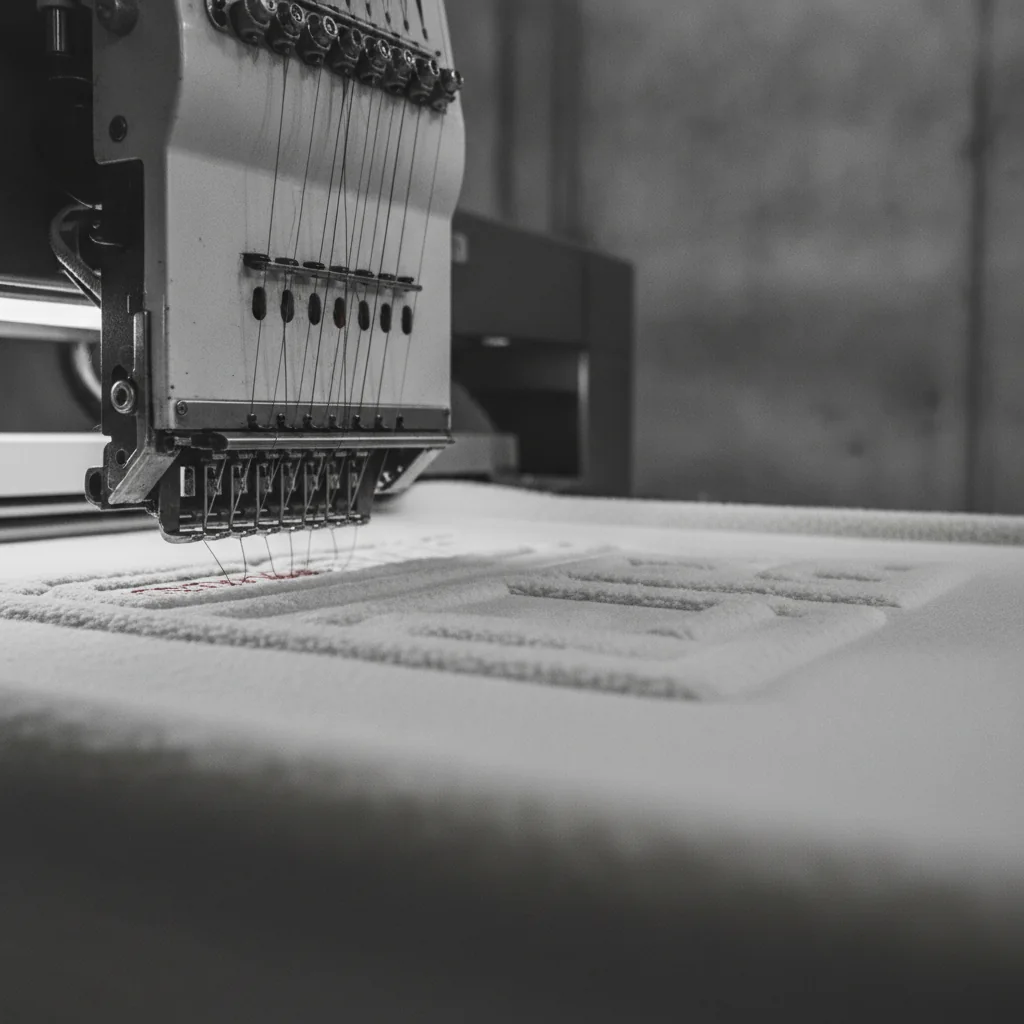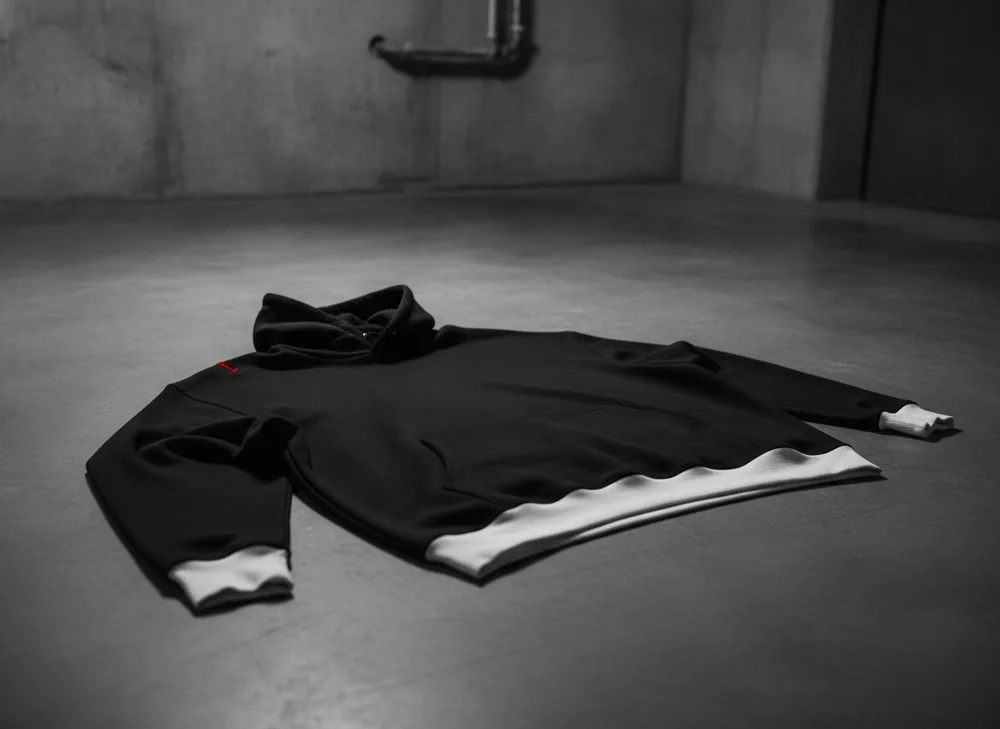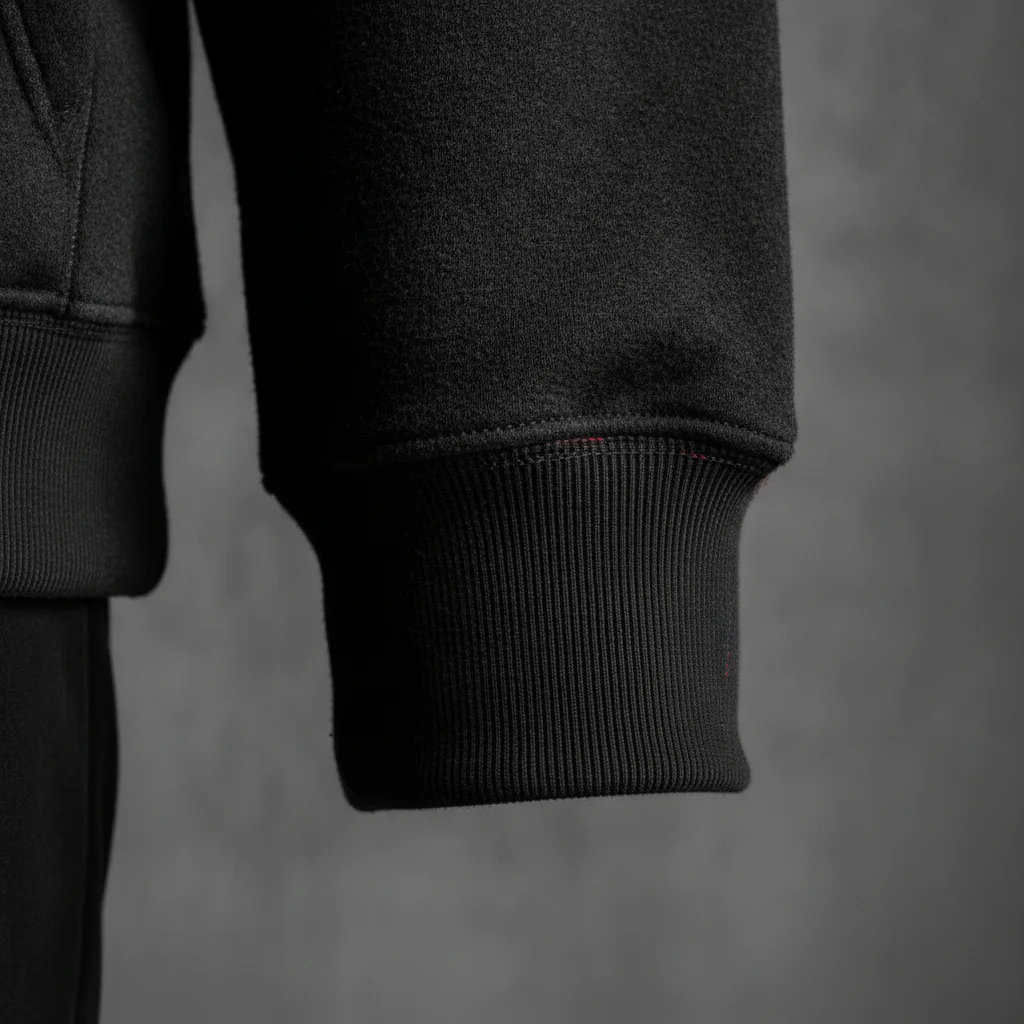
Puff printing is a screen-printing technique that uses a special foaming ink additive, which expands upward under heat to create a raised, three-dimensional texture rather than sitting flat on the fabric surface. The result is a tactile, visibly dimensional print – most commonly used on logo text, bold graphic lettering, and outline shapes where the raised texture reads clearly at a distance.
Puff printing works best when a design calls for texture and visual weight rather than fine photographic detail, which is why it shows up so often on streetwear logo drops, varsity-style lettering, and bold front-and-center graphics rather than complex multi-tone artwork.
How puff printing actually works
Puff printing starts as a standard screen print: ink is pushed through a mesh screen stencil onto the garment in the shape of the design. The difference is the ink itself – a puff additive is mixed into the plastisol ink before printing, containing microscopic agents that expand when heated.
After printing, the garment passes through a heat-curing process (typically a conveyor dryer) at a temperature that both cures the ink and triggers the foaming reaction, causing the printed area to rise up off the fabric surface by a small but distinctly visible amount. The final texture is soft to the touch and holds its raised shape through normal wear and washing when cured correctly.
What puff printing looks and feels like
A properly cured puff print has a smooth, slightly rounded raised surface – somewhere between a screen print and a light embroidery in terms of how it reads visually and how it feels under a hand. The height of the raise is controllable through ink formulation and cure settings, ranging from a subtle lift to a pronounced 3D effect.
Color and layering with puff
Puff additive can be mixed into any standard plastisol ink color, so puff prints are not limited to a specific palette. Designs with multiple colors can combine puff ink on certain elements (like bold outline text) with standard flat ink on others (like fine detail or a background fill), giving a design layered depth without puffing the entire graphic.
When puff printing is the right choice
Puff works best on bold, simple shapes – block lettering, thick outlined logos, simple icon marks – where the raised texture is visible and legible from a normal viewing distance. It is the wrong choice for small text, fine linework, or photographic-style graphics, since the foaming process softens sharp edges and fine detail gets lost as the ink expands.
Streetwear brands most often use puff on hoodie and sweatshirt front-chest logos, varsity-style back graphics, and bold single-word branding, where the tactile, dimensional quality adds a premium feel that a flat print alone does not deliver.
Puff printing vs embroidery
Puff print
Ink-based, raised via a foaming additive under heat. Softer texture, works well on large bold shapes, generally faster and more design-flexible.
Puff embroidery
Thread-based, raised via a foam backing stitched underneath. Firmer, more durable texture, reads as more premium but costs more per unit and has design limits on fine detail.
Puff print and puff embroidery both create raised, dimensional graphics but through entirely different processes – one is ink and heat, the other is thread and foam backing. Brands choosing between them should weigh design complexity and durability needs; see embroidery vs screen printing for the broader comparison between these decoration families.
Puff print on colored fabric bases
Puff ink behaves consistently across most base fabric colors, though deep-dark bases (black, navy) sometimes need a white or light underbase layer printed first so the puff ink color reads accurately rather than being muted by the dark fabric showing through. This adds one additional print pass but keeps color vibrancy consistent regardless of the garment’s base shade.
Brands running the same puff design across multiple colorways in one drop should confirm with the factory whether an underbase is needed on the darker options, since skipping it on a black garment can produce a noticeably duller result than the same ink on a lighter base.
Durability and care for puff prints
A well-cured puff print holds its raised texture through repeated washing, though – like any screen print – it should be washed inside-out on a cold or warm cycle rather than hot, and should avoid direct high-heat ironing on the printed area, which can flatten the foamed texture over time. Under-cured puff prints are the most common cause of texture loss after a few washes, which is why cure temperature and dwell time are tightly controlled in production.
Puff prints on heavyweight fleece (300+ GSM) tend to hold their texture especially well since the denser fabric base gives the raised ink a stable surface to sit on, compared to a lighter, more flexible jersey fabric where movement can gradually work at the raised edges.
MOQ, cost, and production factors
Puff printing runs through the same screen-print production line as standard ink, so our standard MOQ of 50 pieces per design applies without an added minimum. Cost sits slightly above a standard flat-ink screen print, reflecting the puff additive itself and the more closely controlled cure settings needed to get a consistent raised texture across a full run.
Multi-color puff designs, or designs mixing puff and flat ink in the same graphic, need additional screens and cure passes, which factors into both cost and turnaround compared to a single-color puff logo.
Sampling puff prints before bulk
Because cure settings directly control how much a puff print rises, a pre-production sample is the only reliable way to confirm the final texture height and feel match what the brand intended – a swatch print alone does not always translate to the same result on a full garment, especially across different fabric weights.
Brands should specifically check raised-edge sharpness and overall texture consistency across the sample, since these are the details that separate a premium puff finish from one that reads as under-cured or unevenly raised.
Combining puff print with other finishes
Puff printing is typically applied after any wash or dye finish (garment dye, acid wash) since the fabric needs to be in its finished, stable state before the ink and heat-cure process runs. Puff print pairs well with a garment-dyed or acid-washed base, where the tonal, textured background contrasts against a raised, bold graphic.
See our custom puff print hoodie line for a dedicated product page on this decoration applied to our heavyweight hoodie construction.
Puff print placement on garments
Puff print performs best on flatter, more stable areas of a garment – center-chest, full-back, and sleeve placements on a hoodie or tee all give the ink a consistent, even surface to cure against. Placements over seams, zippers, or pocket edges are harder to print evenly, since the raised additive needs a flat plane to expand into a uniform texture, and a seam underneath can cause an uneven rise or an ink crack along the ridge.
Brands designing a puff placement for the first time should keep primary graphics at least a defined margin away from any seam or hardware, both for print quality and to avoid the printed area rubbing against zipper pulls or drawstrings during normal wear.
Puff print and fabric weight interaction
Heavier fleece (320-400+ GSM) gives puff print a firmer, more stable surface, which tends to produce crisper raised edges than a lighter, more elastic jersey fabric. On lighter fabrics, the puff additive can pull slightly at the fabric surface during the foaming reaction, occasionally producing a subtle pucker around the print edge if cure settings are not tuned specifically for that fabric weight.
A factory running puff print across multiple fabric weights in the same order – say, a heavyweight hoodie and a lighter tee in the same drop – should test cure settings separately for each fabric rather than applying one standard setting across both, since the ideal temperature and dwell time shift with fabric density.
Choosing between puff print and puff embroidery for a design
A brand weighing puff print against puff embroidery should start with the design itself: bold block lettering with two or three colors suits puff print’s speed and cost profile, while a logo mark that needs to feel especially premium and durable – a flagship front-chest emblem, for instance – often justifies puff embroidery’s higher per-unit cost. Budget and order size also factor in, since puff print scales more cost-efficiently across larger multi-color runs than embroidery does.
Some brands run both within the same collection deliberately – puff print on higher-volume core pieces, puff embroidery reserved for a limited flagship drop – using the two techniques to signal a tier difference within the same product line.
How Minku produces puff prints
Puff printing is one of our in-house screen-print capabilities, run across our 240-400+ GSM cotton and fleece range on hoodies, sweatshirts, and tees. We sample cure settings against your specific design before bulk, so raised texture and color match your approved reference before 50 or more pieces run through the press.
Explore screen printing manufacturing for our broader ink-decoration capability, or best printing method for streetwear to compare puff against other techniques. Ready to put a bold logo on your next drop? Get Your Custom Quote.
What Is Puff Printing? (And When to Use It) — In Detail