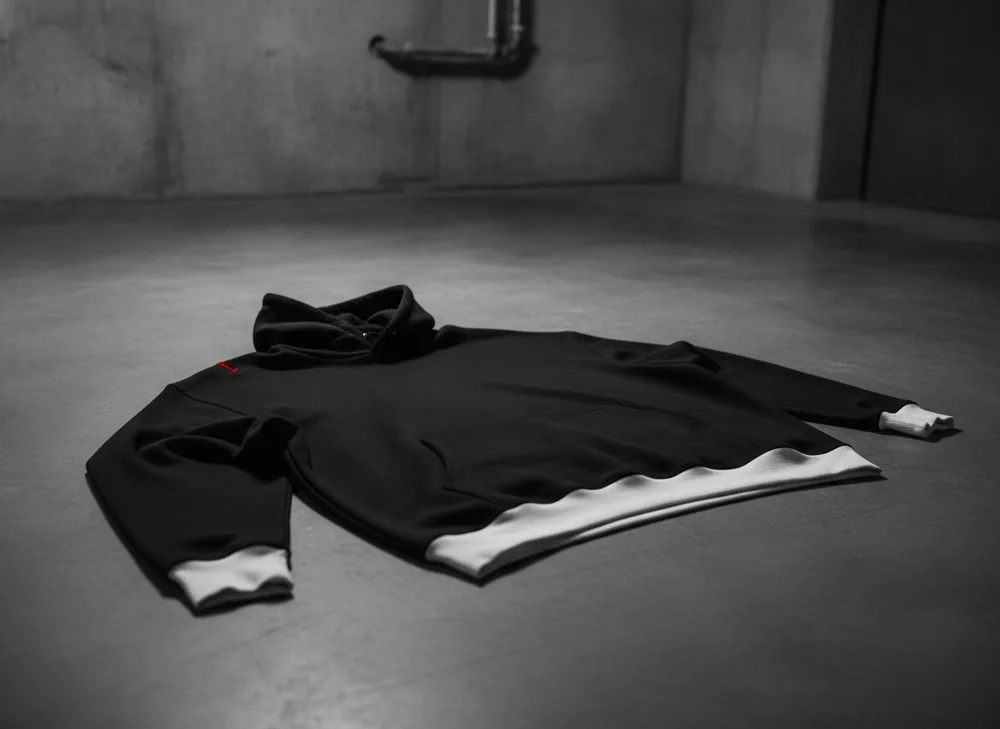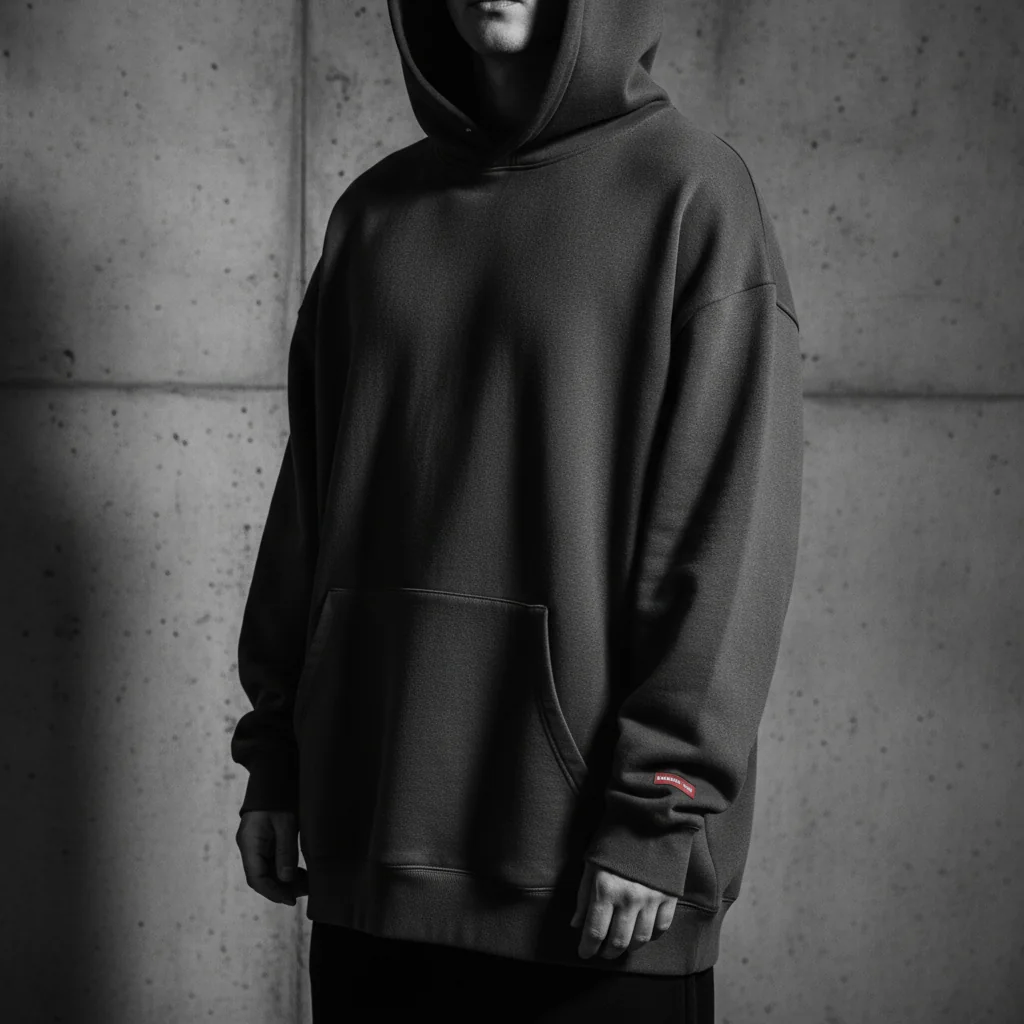
Making custom hoodies for your brand runs through five steps: lock your design in a tech pack, choose fabric weight and decoration, approve a pre-production sample, confirm private-label branding, then move to bulk production. The full process takes 5 to 8 weeks from tech pack to finished hoodies, starting from 50 pieces per design.
Brands searching for how to make custom hoodies are usually choosing between three routes: buy wholesale blanks and add a print, use a print-on-demand platform, or go to a manufacturer and build the garment from fabric up. Only the third route gives you control over fit, fabric weight, and branding, and it is the only one that produces a hoodie no competitor can source identically. Here is the real process, step by step.
Step 1: Define Your Design and Fit
Start with the fit, not the artwork. Decide whether your hoodie is regular, boxy, oversized, or cropped, and whether you want a drop shoulder, standard set-in sleeve, or a specific hood shape and pocket style. This decision drives the pattern, and the pattern drives all of the steps that follow, so nail it before you touch color or print placement.
Reference an existing hoodie you like the fit of, or provide body measurements for a size run, and describe silhouette in plain terms: boxy through the body, cropped length, oversized sleeve. A manufacturer can build a pattern from a clear written brief even without a full technical sketch.
Step 2: Build a Tech Pack, Even a Rough One
A tech pack is the document that turns your idea into a garment: measurements by size, fabric and GSM, colorways, print or embroidery placement with dimensions, and label and packaging notes. A complete tech pack removes the most common cause of sampling delays, which is a manufacturer guessing at details you had a specific opinion about.
If you do not have design experience, you do not need a professional tech pack to start. Reference photos, a fit sketch, exact placement measurements for your logo, and your target GSM are enough for us to build the first pattern and open the sampling conversation. See our tech pack guide for a full breakdown of what to include.
Step 3: Choose Fabric Weight and Construction
Hoodie fabric runs 240 to 400+ GSM in cotton fleece and French terry. Lighter weights (240 to 280 GSM) suit layering pieces and warmer markets; heavyweight fleece (320 to 400+ GSM) suits boxy and oversized cuts and reads as premium in photography and in hand. Our hoodie weight guide covers the full decision in detail.
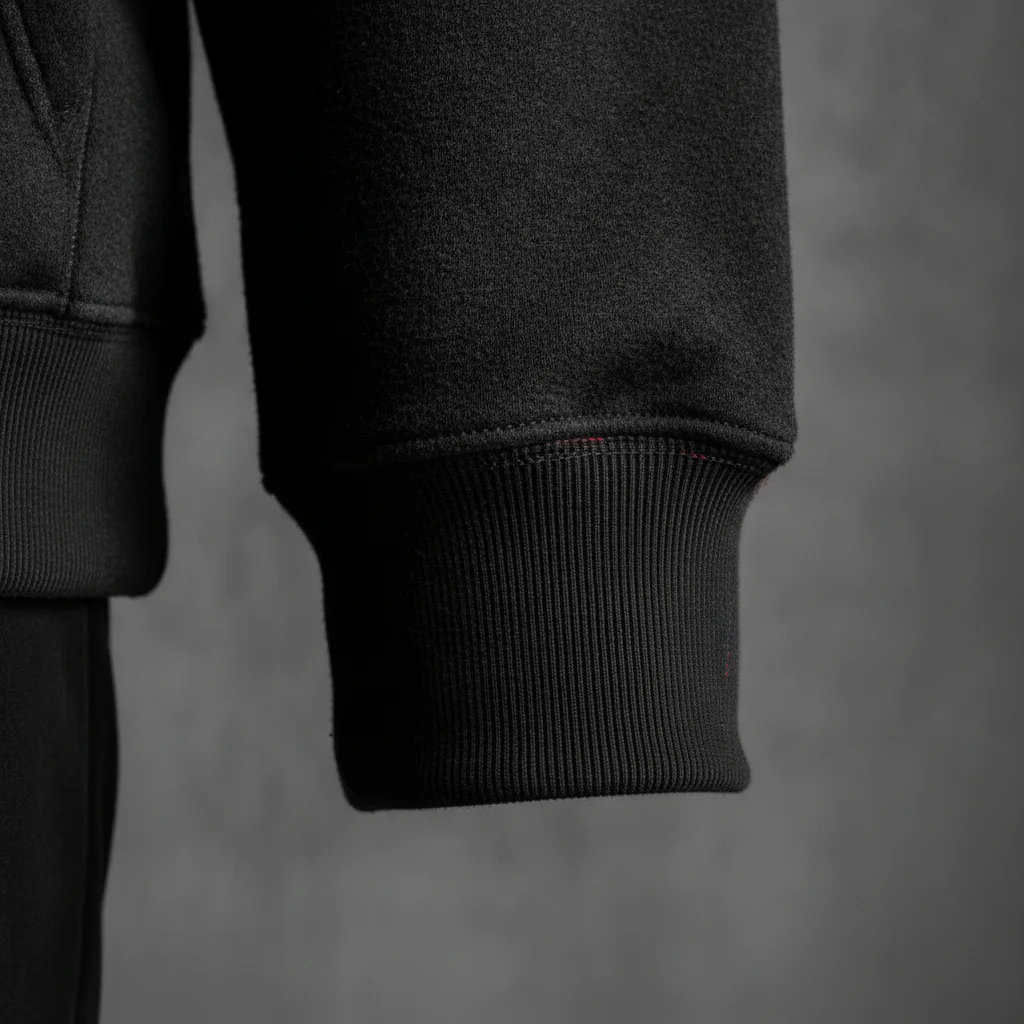
Construction details matter as much as fabric weight: ribbed cuffs and hem versus fleece-back cuffs, a kangaroo pocket versus split pockets, a drawstring with metal or matching-fabric tips. Each of these is a small decision that compounds into how premium the finished piece feels.
Step 4: Choose Decoration
Screen print suits bold, one to four-color graphics at strong opacity on any fabric weight. DTG (direct-to-garment) suits detailed, photographic, or gradient artwork in smaller runs. Embroidery, flat or puff, suits logos and text that need a raised, premium finish and holds up longer than print on high-wear areas like a chest logo.
Acid wash, garment dye, and tie-dye are available for brands building a distressed or hand-finished aesthetic, applied in-house after the base garment is constructed. Your decoration choice should match your artwork’s complexity and the durability your customer expects from that placement.
Step 5: Sample Before You Commit to Bulk
Each custom hoodie order gets a pre-production sample before bulk cutting starts. This is where you check fit against your intended body type, confirm the fabric weight in hand, verify print or embroidery placement and quality, and check labels and tags. Sampling takes 1 to 2 weeks and is the only stage where changes are inexpensive.
Do not skip this step to save time. A sample-approved design produces a bulk run that matches expectations; a bulk run cut from an unverified spec risks a fit, weight, or placement problem multiplied across all units in the order.
Step 6: Private Label the Whole Garment
Full private-label manufacturing means your neck labels, hem tags, hangtags, and packaging carry only your brand – no manufacturer branding appears anywhere on the finished product. Woven labels give the most premium, durable finish; printed or heat-transfer tagless labels suit a minimal, comfort-first look.
Decide your label type, care label content, and packaging (polybags, hangtags, mailer boxes) at the sampling stage so it is confirmed on your pre-production sample, not guessed at during bulk finishing. See our labels, tags and packaging page for the full options.
Step 7: Bulk Production and Quality Control
Once your sample is approved, bulk cutting begins against the graded pattern for your full size run. Quality control happens after cutting, after sewing, and at final inspection before packing, checking stitch consistency, print or embroidery registration, and label placement against your approved sample.
Bulk production for a straightforward single-colorway order runs 4 to 6 weeks depending on order size and decoration complexity. Multi-colorway or heavily embroidered orders run toward the longer end of that window. Full timeline detail lives on our hoodie manufacturing timeline page.
Cost Factors When Making Custom Hoodies
| Factor | Effect on cost |
|---|---|
| Fabric GSM | Higher GSM uses more raw material per unit |
| Decoration method | Multi-color embroidery costs more than single-color screen print |
| Order size | Per-unit cost decreases as quantity increases |
| Number of colorways | Each colorway adds setup and cutting cost |
| Packaging complexity | Custom mailer boxes cost more than standard polybags |
Real Example: A First-Time Streetwear Drop
A first-time brand launching a 150-piece oversized hoodie drop, single colorway, chest screen print, and woven neck labels, typically moves from tech pack to approved sample in 10 to 14 days, then through 5 weeks of bulk production, landing at roughly 6 to 7 weeks before DDP shipping. That is a realistic, achievable timeline for a first order built around one core design.
Building Your Size Run and Grading
Once your base sample fits are approved, the pattern is graded across your full size range, typically small through 2XL for a first drop. Grading means each size scales the pattern proportionally so the fit you approved in a medium carries through correctly to a small or an extra large, rather than simply scaling the garment up or down uniformly.
Decide your size run before bulk cutting, since a mid-production change to add a size outside the original grade means a new pattern piece and a delay. Most first orders run five to six sizes; brands with a clear customer base sometimes narrow this to three or four core sizes to concentrate volume and reduce per-size cutting setup.
Working Without a Design Background
A number of brands approach a manufacturer with a strong sense of what they want but no formal design training, and that is a normal starting point, not a barrier. Bring reference photos of hoodies with a fit or feature you like, describe your logo placement in plain measurements (for example, four inches from the center chest seam), and tell us your target fabric weight and price point.
From there we can build a first pattern and open a sampling conversation, refining fit and placement together across one or two rounds rather than requiring a complete technical package on day one. See our streetwear design guide for more on translating an idea into a manufacturable spec.
Common Mistakes First-Time Brands Make
The most frequent mistake is approving a sample too fast without checking hood drape, cuff fit, and print placement in hand, which shows up as a bulk order that reads differently than expected. The second is skipping a size-run conversation until mid-production, which forces a pattern change partway through cutting and adds days to the timeline.
A third common mistake is choosing decoration and fabric weight independently rather than as a pair – a delicate all-over print applied to a heavyweight 400 GSM base can crack differently than the same print on a lighter fabric, so confirm both together during sampling, not as separate decisions.
What Happens After Your First Successful Order
Once your first design is approved and shipped, the pattern, label spec, and fabric source stay on file, so a reorder or a second colorway of the same silhouette starts from a proven base rather than from scratch. This is the point where most brands begin planning a second design, often a lighter or heavier weight variant of the same core hoodie to extend across a second selling season.
Brands that treat their first order as a learning run, tracking sell-through by size and colorway, tend to make sharper decisions on their second order’s size run and fabric weight than brands that repeat the first order unchanged.
How Minku Makes Your Custom Hoodies
We manufacture custom hoodies from 50 pieces per design, in 240 to 400+ GSM cotton fleece and French terry, with in-house screen print, DTG, and embroidery, full private-label branding, and worldwide DDP shipping to the USA, UK, and Europe. Each design gets a pre-production sample before bulk cutting, so you approve fit, fabric, and decoration before your full order is committed.
Send a tech pack, or a rough sketch and reference photos if that is where you are starting, and we will map your fabric, decoration, and timeline against your budget. Full detail on the product line sits on our custom hoodie manufacturer page.
Ready to start? Get Your Custom Quote and send whatever design material you have – we will tell you exactly what is needed to move to sampling.
How to Make Custom Hoodies for Your Brand — In Detail