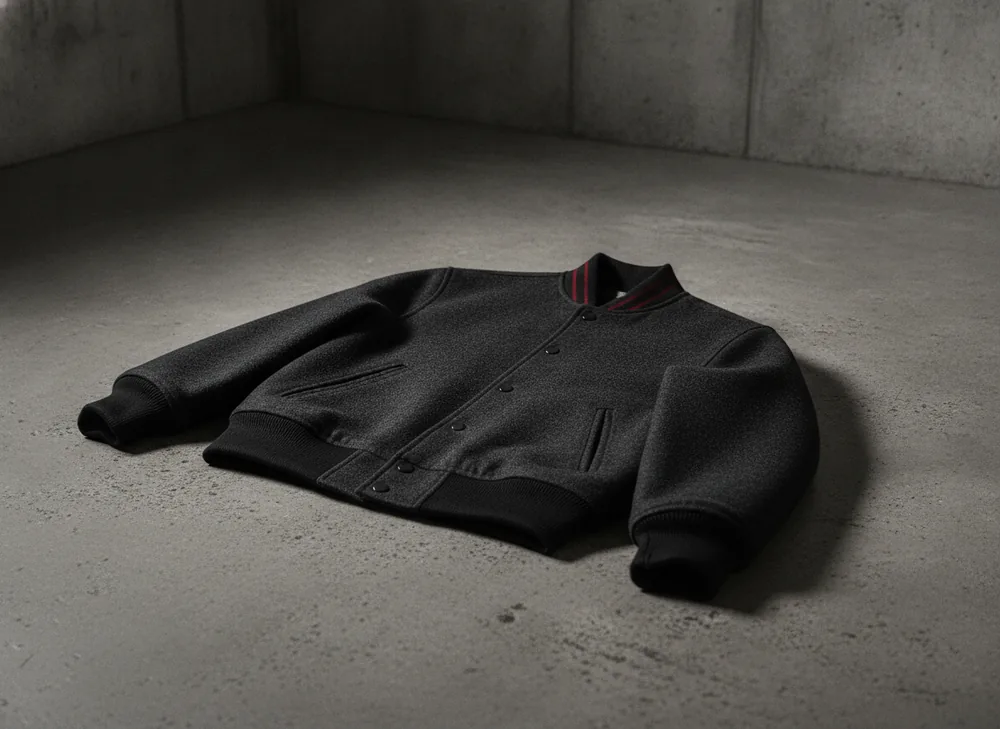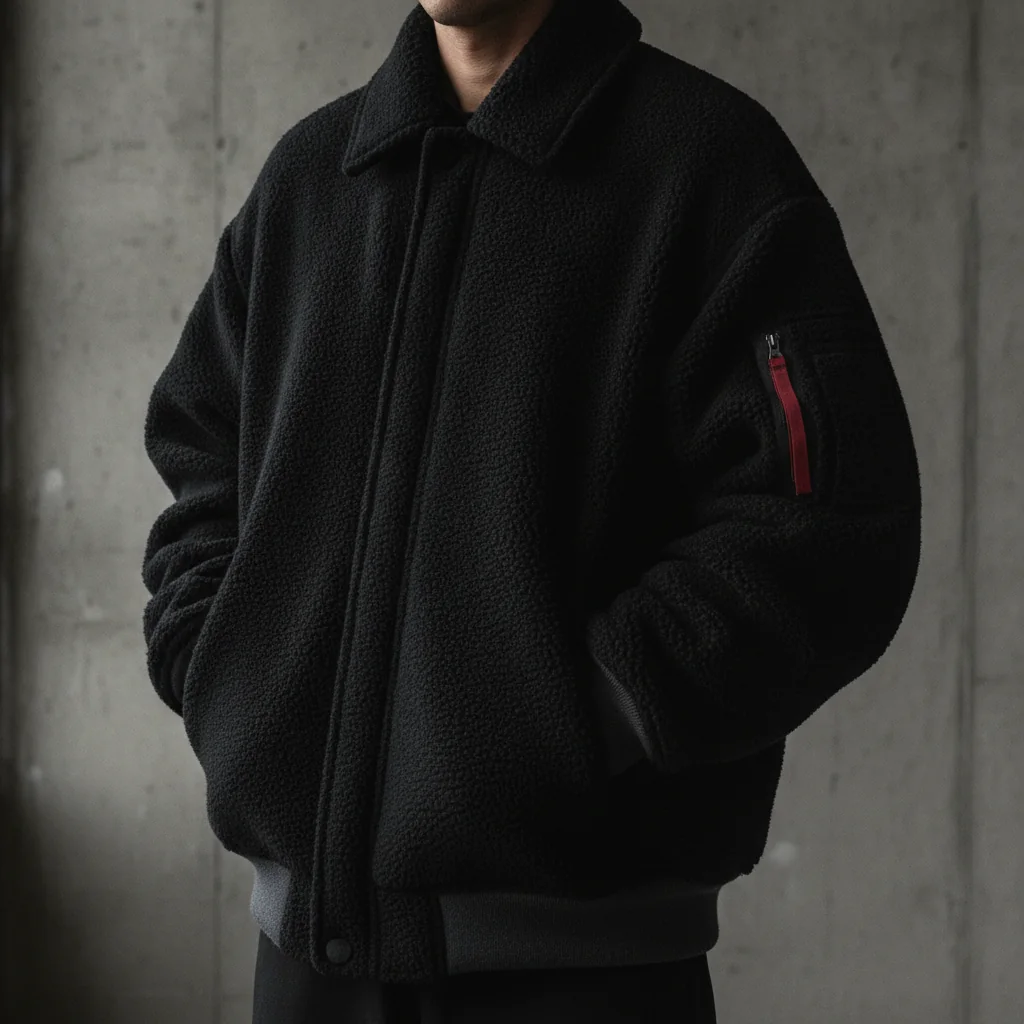
A premium custom jacket comes down to four factors: shell fabric weight and hand-feel, construction quality at stress points, decoration execution, and private label finishing – get these right and a jacket reads as premium regardless of price point. Minku Apparel builds each custom jacket to this standard, using 280 to 400+ GSM cotton fabric, in-house decoration, and full private label branding on each order from 50 pieces per design. None of these four factors work in isolation – a heavyweight shell paired with a weak label or sloppy embroidery still reads as an entry-level jacket, which is why Minku Apparel treats them as one connected standard rather than separate line items to check off.
Shell Fabric Weight and Hand-Feel
The first thing a customer notices when they pick up a jacket is weight and hand-feel, before they even look at the design. A shell built from 280 to 400+ GSM (grams per square meter) heavyweight cotton twill or canvas-style fabric holds structure, drapes with intention, and signals substance in a way a lightweight substitute cannot fake. Brushed fleece or French terry linings add a soft interior hand-feel that a customer notices the moment they put the jacket on. Fabric weight is the hardest-to-fake premium signal – a customer can sense the difference between a 400 GSM shell and a thin, lightweight one within seconds of handling the garment, regardless of how the design or branding looks.
Construction Details That Signal Quality
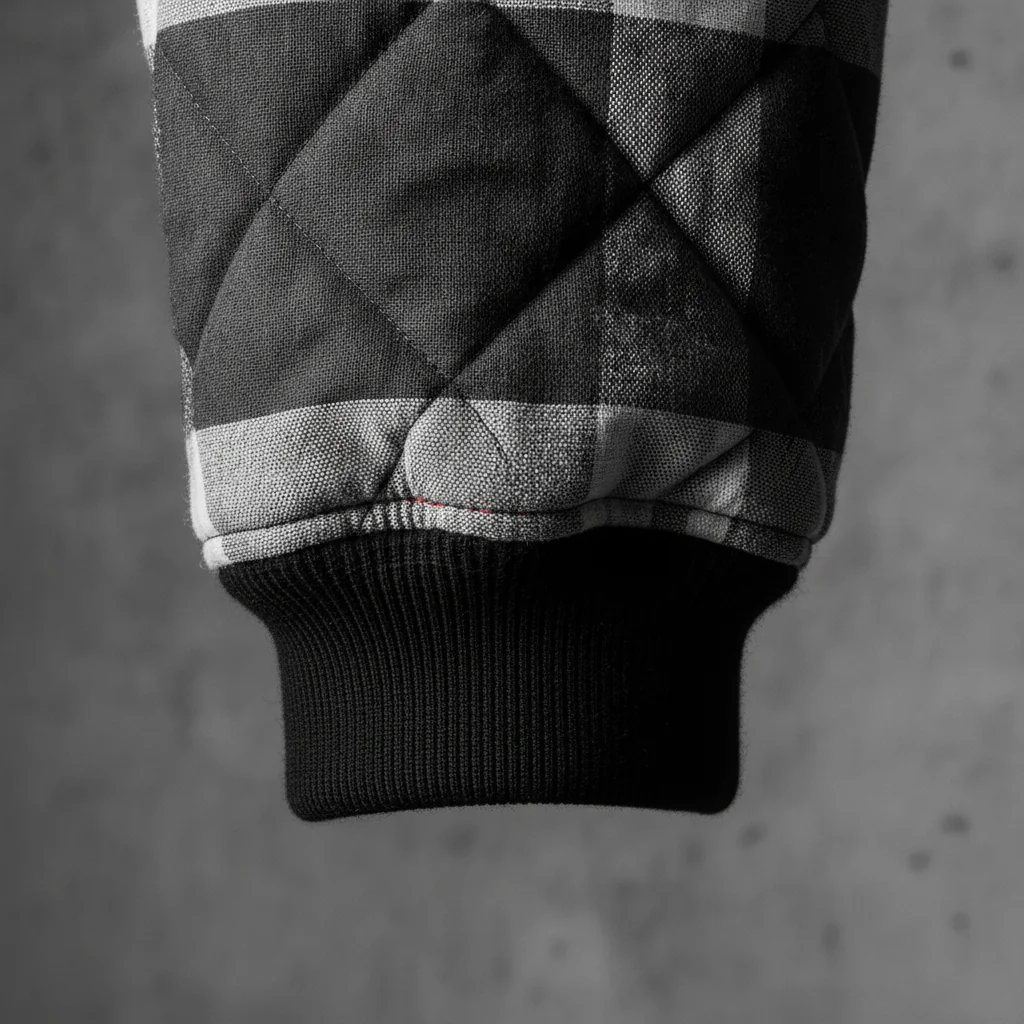
Bar tacking (reinforced stitching) at stress points – pocket corners, zipper ends, the base of a hood if present – keeps a jacket intact through repeated wear and signals that construction quality was a priority, not an afterthought. Clean, even ribbing at the collar, cuffs, and hem holds its shape wash after wash; loose or uneven ribbing is one of the fastest ways a jacket reads as an entry-level build. Straight, reinforced seams and a properly finished interior (no exposed raw edges) separate a factory-direct, quality-controlled build from one that skipped inspection steps to save time.
Decoration Execution: Embroidery, Puff, and Print Quality
Decoration is where premium and entry-level jackets diverge most visibly. Puff embroidery – raised, dimensional stitching with foam backing – reads as a premium finish on a chest logo or varsity-style lettering, but only when stitch density is tight and the foam backing is even; loose stitch density or an uneven puff profile undercuts the effect immediately. Flat embroidery needs clean digitizing so small text and fine detail do not blur into the fabric. Screen print needs even ink coverage and correct curing so it does not crack or fade after a handful of washes. Minku Apparel’s in-house decoration – screen print, DTG, puff and flat embroidery, acid wash, garment dye – is quality-checked at the placement stage specifically to catch these issues before a bulk run ships.
Lining and Interior Finishing
A jacket’s interior gets less attention in early design conversations than the exterior, but it is where a customer spends real time – putting the jacket on, checking the inside, feeling the lining. A brushed fleece lining, a printed satin lining graphic, or a clean, finished raw-edge-free interior all signal that the brand thought through the whole garment, not only the outward-facing panels. An unlined jacket can still read as premium if the interior seams are clean and finished; a lined jacket with a thin-feeling or poorly finished lining undercuts the exterior fabric investment.
Private Label Details That Elevate a Jacket
A woven neck label (rather than a printed one), a branded interior tag, and a well-designed hangtag all add perceived value at a modest per-unit cost. Full private label branding – your labels, tags, and packaging, not a generic factory label with your logo stuck over it – is what separates a brand’s own product line from a reskinned wholesale blank. Minku Apparel includes full private label branding on each custom jacket order as standard, not an upsell, because it is core to what makes a garment read as a brand’s own product rather than a decorated blank.
Fit and Silhouette
A premium jacket fits with intention – whether that intention is an oversized boxy cut, a cropped silhouette, or a tailored regular fit – rather than fitting like a generic, unconsidered pattern. Shoulder placement, sleeve length, and body proportion all need to match the brand’s stated silhouette; a boxy jacket with narrow shoulders or a cropped jacket with sleeves that run long reads as a fit that was not dialed in during sampling. This is exactly why sampling and fit approval before bulk production matter as much on a jacket as fabric choice does.
Packaging and Unboxing Experience
A jacket, as a higher price point hero product in a drop, benefits from packaging that matches its positioning – a branded box or printed mailer rather than a plain polybag, particularly for a limited-run piece a customer is likely to photograph unboxing. Packaging cost is a smaller share of a jacket’s total price point than it would be on a lower-cost basic, making it one of the more cost-efficient ways to reinforce premium positioning at the final touchpoint before the customer wears the garment.
How Climate and Market Affect Premium Jacket Construction
What reads as premium shifts slightly depending on the market a jacket is built for. A brand manufacturing for Chicago, Toronto, or Munich winters needs a heavier GSM shell and full quilted or brushed fleece lining to feel premium in that climate – a lightweight unlined jacket would feel undersized for the weather regardless of how clean the construction is. A brand manufacturing for Los Angeles, Miami, or Sydney can build a premium jacket at a lighter fabric weight, since the local climate does not demand heavy insulation, and an unlined or lightly lined build still reads as a considered, intentional choice rather than a cost-cutting one. Matching fabric weight to the market a jacket will actually be worn in is itself a premium signal – a heavyweight puffer sold into a warm-climate market signals the brand did not think through its own customer’s actual use case.
Testing Premium Perception: What to Check When Your Sample Arrives
When your pre-production sample lands, run it through a short but specific check rather than a general impression. Feel the shell fabric weight against a reference garment you already consider premium. Check ribbing at collar, cuffs, and hem for even tension – stretch it gently and confirm it returns to shape. Inspect embroidery or print placement against your tech pack spec with a ruler, not by eye. Turn the jacket inside out and check seam finishing and the woven label’s stitching. Try the jacket on to confirm shoulder placement and sleeve length match your intended silhouette. A sample that passes all five checks is ready to approve for bulk; a sample that fails even one is worth a revision round before you commit to 50-plus pieces at that specification.
Premium vs Entry-Level Jacket Manufacturing
Premium Build
280-400+ GSM heavyweight shell, bar-tacked stress points, clean ribbing, tight-density embroidery, woven labels, full private label, finished interior.
Entry-Level Build
Lightweight shell fabric, minimal reinforcement, loose or inconsistent ribbing, low-density print or embroidery, printed generic labels, raw unfinished interior seams.
Common Ways Brands Undercut Their Own Premium Positioning
The most frequent mistake is pairing a heavyweight, well-constructed jacket shell with an entry-level lining or a printed (rather than woven) label, which breaks the premium impression the moment the customer looks inside the garment. The second is choosing a decoration method that does not match the price point – a screen-printed logo on a 150-dollar jacket can read as under-decorated relative to price, where embroidery or a combination of methods would better match the positioning. The third is inconsistent quality across a bulk run – a hero jacket that photographs well in marketing but arrives with looser stitch density or shifted decoration placement on units further into the production run erodes the exact premium reputation the fabric and price point were meant to build. The fourth is skipping the sample stage to save time, which is the single most common way a brand discovers a quality issue only after 50 or more units have already shipped to it.
How Minku Apparel Builds Premium Custom Jackets
Each Minku Apparel custom jacket order runs through the same standard: heavyweight fabric sourcing, in-house decoration with placement quality checks, full private label branding, staged quality control through bulk production, and a pre-production sample before bulk cutting so fit and finishing are locked before your investment scales to 50-plus pieces. This is the same process whether a brand orders 50 pieces for a first drop or 500 pieces for a proven reorder, and it is why a first-time brand’s jacket can hold the same construction standard as one from a label with years of reorders behind it. See what else makes streetwear look premium beyond jackets, or Get Your Custom Quote to start your build.
What Makes a Premium Custom Jacket? — In Detail