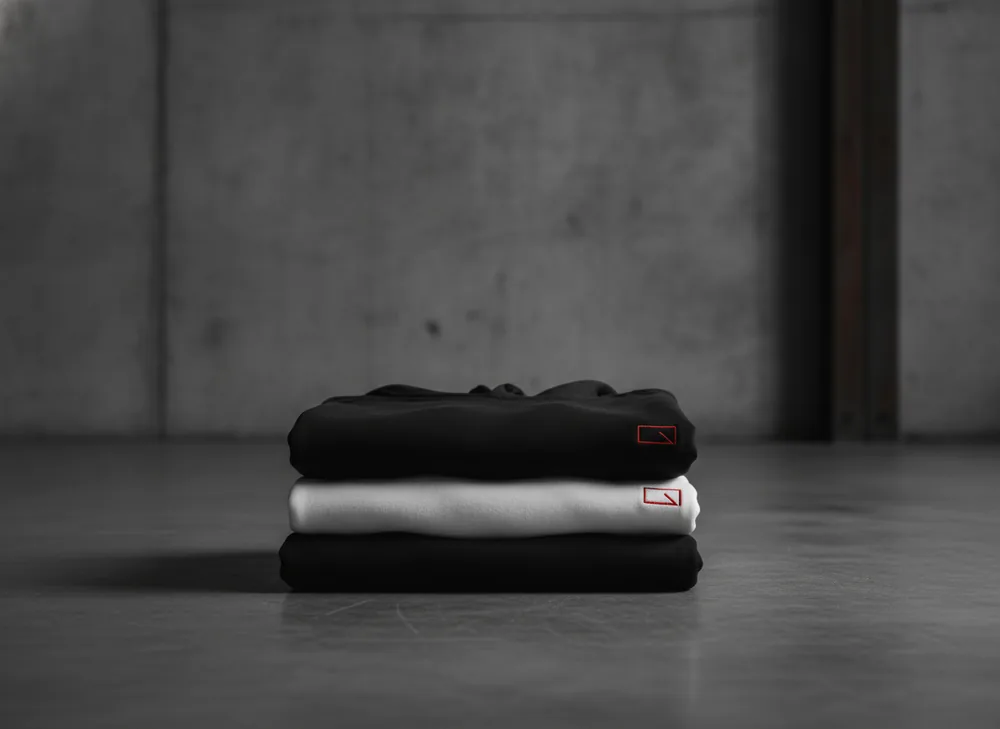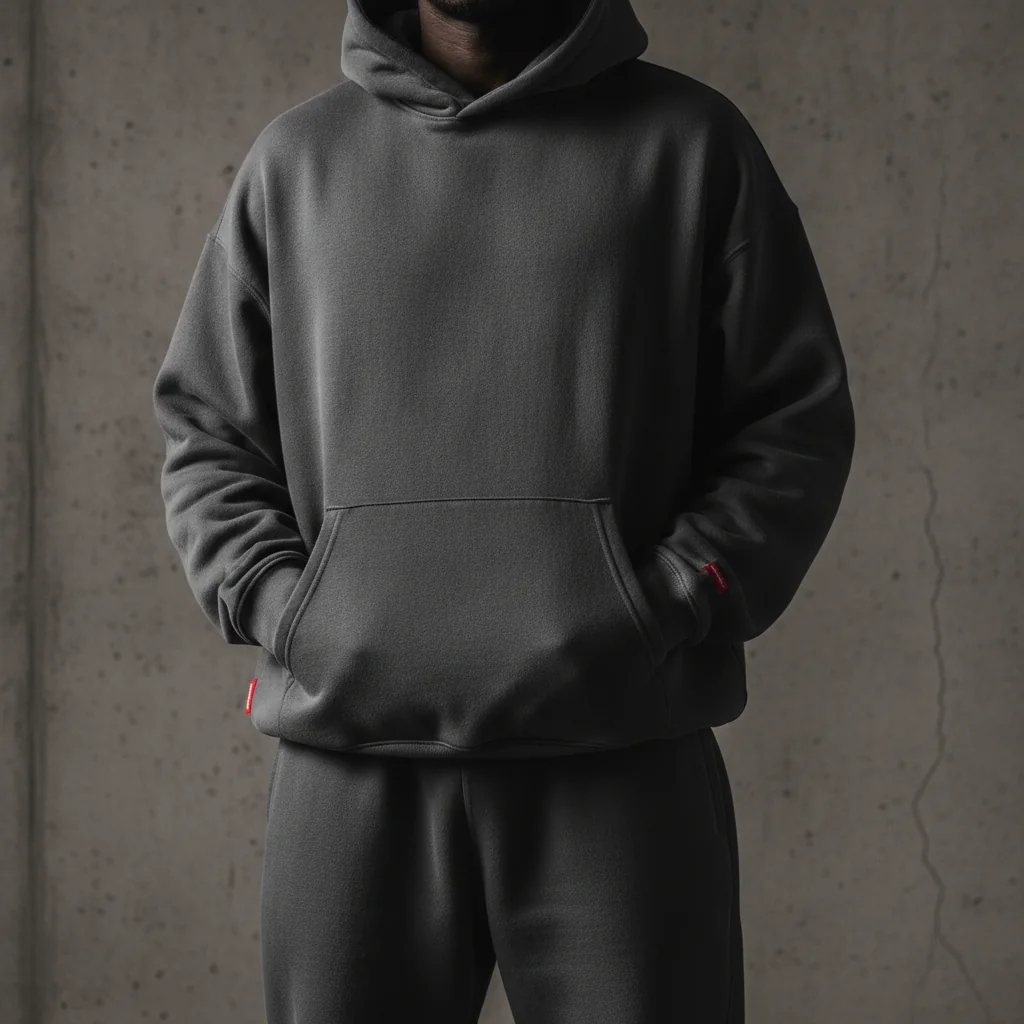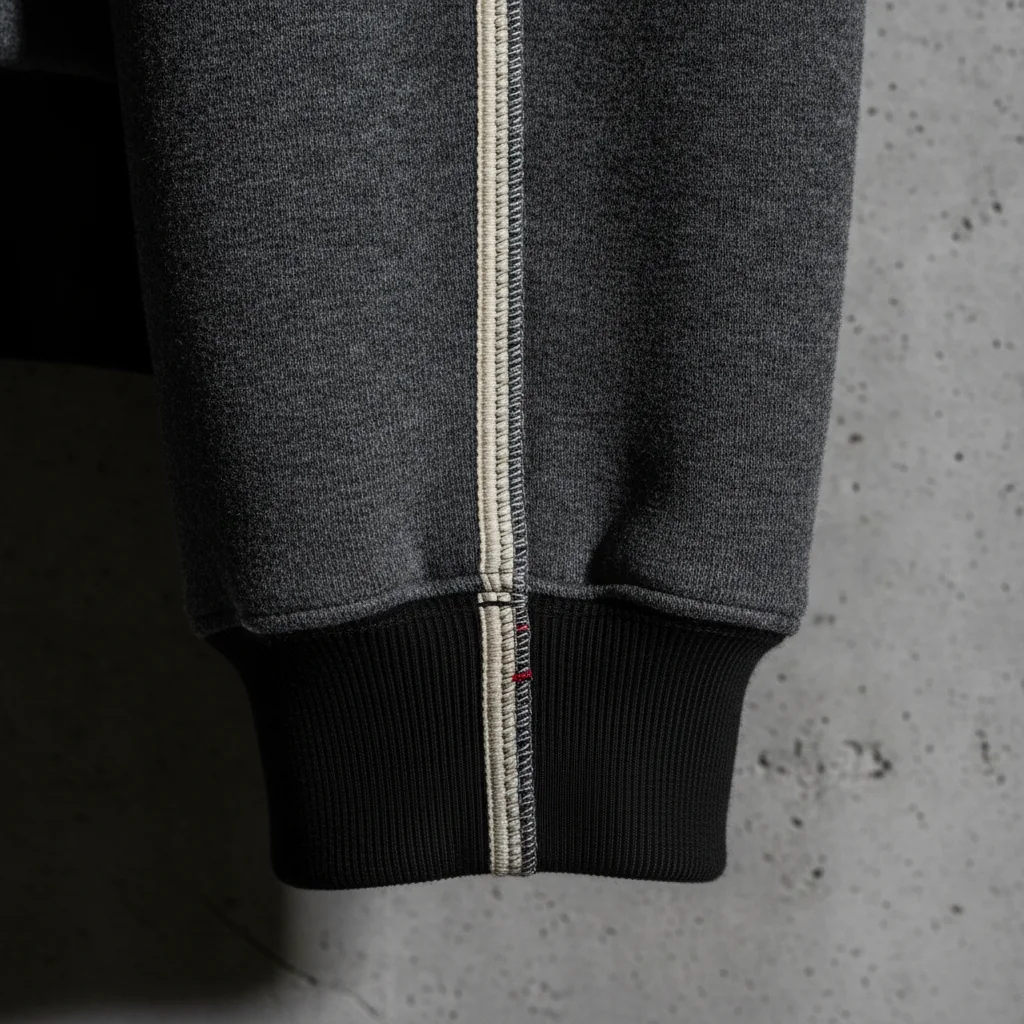
The MOQ for custom sweatsuits at Minku Apparel is 50 pieces per design, per colorway. That single number covers a full matching set – top and bottom, cut and sewn from 240 to 400+ GSM French terry or fleece, with your neck labels, woven tags, and packaging built in before the first unit leaves the factory floor.
For a brand launching its first sweatsuit drop, that minimum order quantity is the difference between testing a design and locking a warehouse full of dead stock. This page breaks down how the 50-piece MOQ works in practice, what pushes it higher, what a run costs at each quantity tier, and how Minku structures the process so a first-time label and an established one both get the same construction quality.
How the 50-Piece MOQ for Custom Sweatsuits Works
A sweatsuit is two garments sold as one unit – a crewneck or hoodie top, and a matching jogger bottom. When Minku quotes an MOQ of 50 pieces per design, that figure refers to 50 complete sets, not 50 individual garments. The top and bottom share a fabric roll, a dye lot, and a cutting marker, which is what keeps the minimum at 50 instead of the 150-300 pieces many overseas cut-and-sew factories require per style.
Fabric mills sell French terry and fleece in roll minimums, and a factory that insists on 300+ pieces is usually protecting its own fabric order, not serving your launch. Minku holds enough 240, 320, and 400+ GSM stock rolls in-house to release smaller cutting runs against a single design without opening a new mill order each time, which is the mechanical reason 50 pieces is achievable without sacrificing the heavyweight hand-feel a sweatsuit needs.
MOQ by Sweatsuit Style
The base 50-piece minimum applies across the core range, but a few style choices shift the number:
- Matching crewneck + jogger set: 50 pieces, one colorway, one print or embroidery placement.
- Matching hoodie + jogger set: 50 pieces – the hoodie’s extra components (drawcord, kangaroo pocket) don’t raise the minimum, only the unit price slightly.
- Oversized or boxy-cut sweatsuits: 50 pieces, same MOQ, though pattern grading for an oversized block takes an extra day in pre-production.
- Multiple colorways of the same design: 50 pieces per colorway is standard, though Minku can sometimes split a 100-piece order across two colors on a case-by-case basis once the fabric and trims are confirmed.
What Pushes the MOQ Higher
A handful of production choices raise the minimum past 50 pieces, and a brand should know these before submitting a tech pack:
All-Over Print
All-over sublimation printing requires fabric to be printed in continuous panel lengths before cutting, so the minimum roll length pushes the practical MOQ toward 100 pieces per design when the whole surface of the sweatsuit is printed edge to edge.
Custom Fabric Development
If a brand wants a fabric weight, blend, or color that Minku doesn’t already stock – for example a 450 GSM heavyweight fleece in a shade requiring a custom lab dip – the mill’s own minimum order (often 300-500 kg of fabric) sets the floor, not Minku’s factory minimum.
Multiple Sizes Skewed Small
A size run concentrated entirely in one or two sizes (all size Medium, for example) can affect fabric utilization on the cutting marker, occasionally nudging the minimum up by 10-20 pieces to keep per-unit cost stable.
Standard Sweatsuit
Screen print or embroidery placement, 1-2 colors, stock GSM, standard size curve. MOQ stays at 50 pieces.
Complex Sweatsuit
All-over print, custom fabric development, or a heavily skewed size run. MOQ typically rises to 100-150+ pieces.
Cost Per Unit at Each Quantity Tier
Unit cost drops as quantity rises because fixed costs – the pattern, the tech pack review, the sample, and the cutting marker setup – spread across more pieces. The table below shows how that curve typically behaves for a mid-weight (320 GSM) crewneck and jogger set with a one-color chest print and woven neck label.
| Quantity | Relative unit cost | What changes |
|---|---|---|
| 50 pieces (MOQ) | Highest per-unit | Sample + setup cost spread thinnest |
| 150 pieces | 10-15% lower | Setup cost absorbed, better fabric buy |
| 300 pieces | 18-25% lower | Full fabric roll used, tighter marker efficiency |
| 500+ pieces | 25-30% lower | Bulk fabric pricing, one continuous production run |
The takeaway: a brand should never treat the MOQ as the target quantity for a permanent price. Treat 50 pieces as the entry point to validate a design, then reorder at 150-300 pieces once the drop sells through, where the per-unit economics genuinely improve.
Sampling Before You Commit to the MOQ
Before any 50-piece order is cut, Minku produces a pre-production sample – a single physical sweatsuit built from the confirmed fabric, trims, and print or embroidery placement. A brand reviews fit, fabric hand-feel, and decoration quality on that sample and signs off before the cutting marker for the full 50-piece run is made. This step exists specifically so the MOQ commitment isn’t a leap of faith – it is a confirmed, physical product scaled up.
Sample turnaround typically runs 7-12 days depending on fabric availability and decoration method, and the sample cost is usually credited against the bulk order once the brand proceeds to production.
How Reorders Work Once You’ve Sold the First 50
Once a sweatsuit design has proven itself – sold through a first 50-piece drop, or presold via a pre-order campaign – Minku keeps the original tech pack, fabric spec, and pattern on file. Reorders don’t restart the sampling clock; they go straight into production planning, which is why a second run of the same design typically ships faster than the first. Brands scaling from a 50-piece test to a 300-piece reorder on the same design see both a faster turnaround and a lower unit cost, since the pattern and grading work is already paid for.
MOQ Traps to Watch For When Sourcing Overseas
Not all factories quoting a “low MOQ” for sweatsuits means the same thing. A few patterns worth checking before signing on:
- Per-garment vs per-set confusion: some factories quote 50 pieces per garment, meaning a brand actually needs 100 pieces to get 50 complete sweatsuit sets (50 tops + 50 bottoms).
- Blank MOQ vs decorated MOQ: a factory may offer a 50-piece blank minimum but require 200+ pieces once embroidery or all-over print is added.
- Color-locked minimums: some quotes bundle the 50-piece MOQ across colorways rather than per colorway, which limits how a brand can split a size or color run.
Always ask a factory to confirm, in writing, whether the MOQ is per design, per colorway, and per set – not per individual garment – before signing off on a tech pack.
How Minku Structures MOQ for New and Growing Brands
Minku’s factory in Pakistan runs on a model built for brands at two different stages: new labels validating a first design, and established labels reordering proven sellers. The 50-piece MOQ per design, per colorway serves the first group without penalizing the second – reorders at 150, 300, or 500+ pieces simply move down the cost curve on the same pattern and fabric spec. Each order, regardless of size, gets the same pre-production sample step, the same private-label finishing (custom neck labels, woven tags, hangtags, and packaging), and the same DDP door-to-door shipping to the USA, UK, or Europe.
A brand that starts at 50 pieces and reorders consistently typically moves to Minku’s standard production slot within two to three cycles, shortening lead time on each subsequent run.
How the Sweatsuit MOQ Compares Across Minku’s Product Range
The 50-piece, per-design MOQ is not unique to sweatsuits – it is the baseline across Minku’s full product range, including t-shirts, hoodies, sweatshirts, tracksuits, jackets, and shorts. What changes between product lines is not the piece count, it is what counts as “one piece”: a t-shirt or hoodie MOQ is 50 individual garments, while a sweatsuit or tracksuit MOQ is 50 matching sets, since two garments (top and bottom) are cut, dyed, and shipped together.
| Product line | MOQ | Unit definition |
|---|---|---|
| T-shirts | 50 pcs | Single garment |
| Hoodies | 50 pcs | Single garment |
| Sweatshirts | 50 pcs | Single garment |
| Sweatsuits | 50 pcs | Matching top + bottom set |
| Tracksuits | 50 pcs | Matching top + bottom set |
| Jackets | 50 pcs | Single garment |
| Shorts | 50 pcs | Single garment |
A brand launching across two product lines at once – a sweatsuit and a t-shirt, for example – places two separate 50-piece minimum orders, since the fabric, pattern, and cutting marker for each product line are entirely different production runs.
Typical First Orders: Real Numbers From New Brands
Most first-time sweatsuit brands order at or close to the 50-piece minimum, split across two to three sizes concentrated in Medium and Large, which cover the bulk of adult demand. A common first order looks like 10 Small, 20 Medium, 15 Large, and 5 XL in a single colorway with a one-color chest or back print – simple enough to keep decoration cost predictable while still testing the design against a real audience. Brands that presell through social media before committing to production often use that presale data to weight the size curve more precisely than a default even split.
Ready to lock a design in at 50 pieces? Get Your Custom Quote and send over your idea, and Minku will confirm fabric, decoration, and turnaround before a single unit is cut. For the full breakdown of fabric, fit, and pricing across the range, see the custom sweatsuit manufacturer page, compare routes on wholesale vs custom sweatsuits, or read the general MOQ explained guide and the low MOQ clothing manufacturer overview for how this compares across product lines.
What Is the MOQ for Custom Sweatsuits? — In Detail