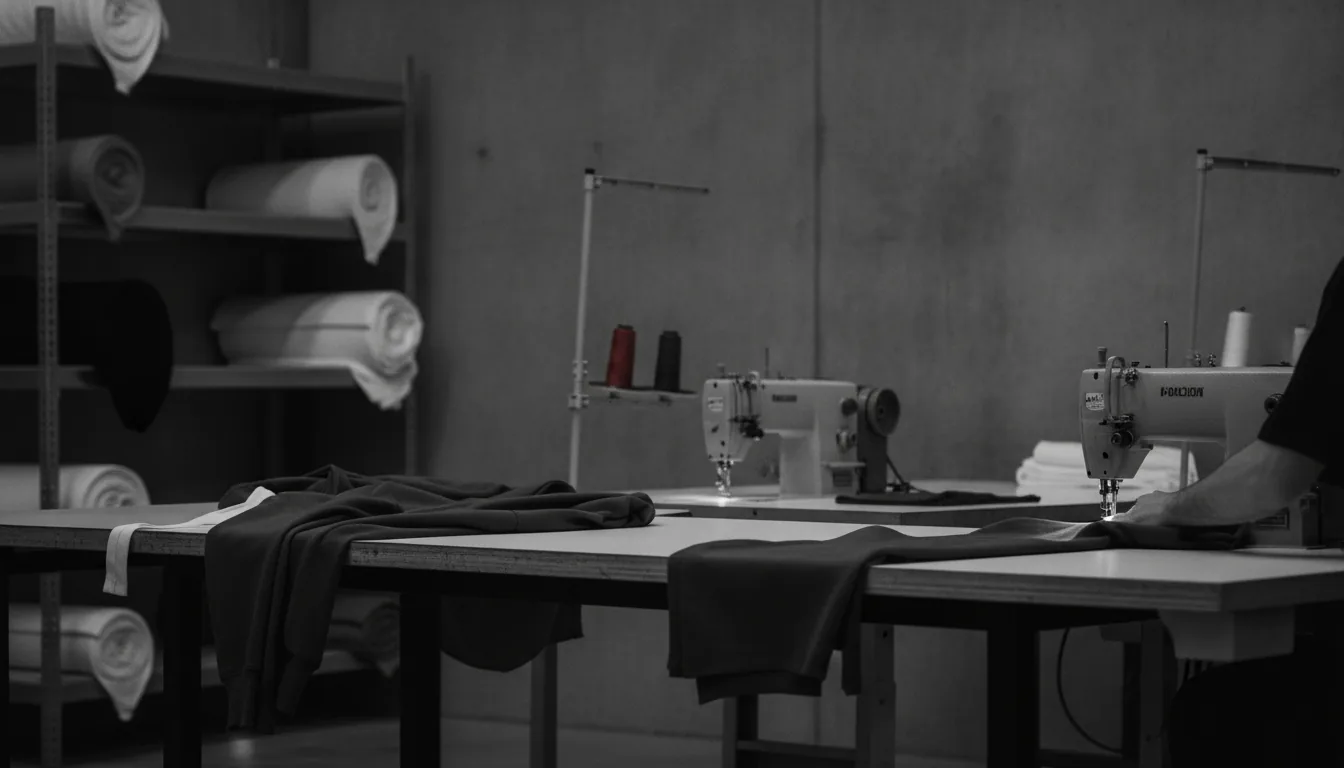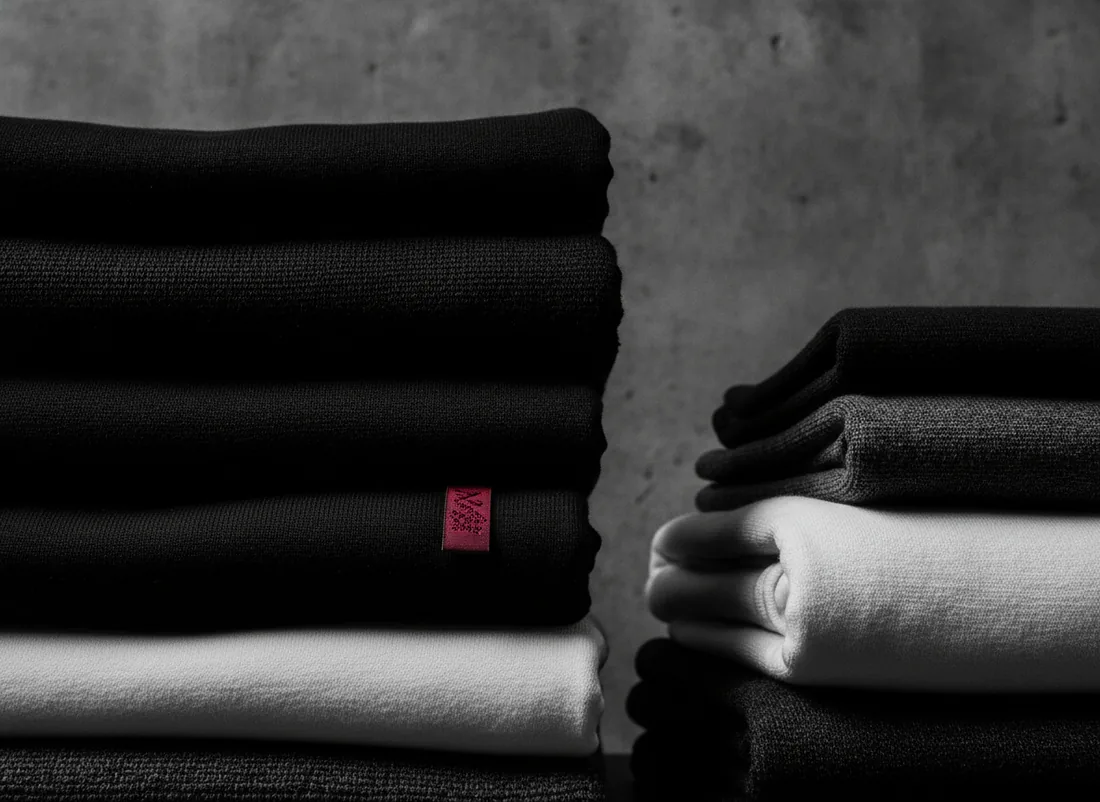
The most reliable way to check a clothing manufacturer’s quality is to inspect a physical pre-production sample before approving bulk, examining fabric weight, seam construction, print or embroidery durability, and sizing consistency against the tech pack. A photo, a mockup or a factory’s marketing claims tell you nothing about the actual garment; only a sample in hand does.
Quality in apparel manufacturing is measurable, not a matter of taste. GSM (grams per square meter) tells you fabric weight objectively, seam type and stitch density tell you construction durability, and wash and wear testing tells you whether print or embroidery survives real use. This guide covers exactly what to check on a sample, how to read a spec sheet, and the questions that separate a manufacturer who controls quality from one who hopes for the best.
Start with the fabric weight, measured in GSM
GSM is the objective measure of fabric weight, and it is the first number to verify because it drives how a garment drapes, holds shape and wears over time. A 180 GSM t-shirt jersey feels noticeably thinner and less structured than a 240 GSM jersey, and a 320-400+ GSM fleece hoodie holds its shape through repeated washing in a way a lighter fleece cannot.
Ask for the GSM spec on every fabric before the sample ships, then verify it against the physical piece, either by comparing hand-feel to a known reference garment or by requesting the mill’s fabric test report. A manufacturer that cannot state the GSM of the fabric they are cutting is not controlling one of the two or three most important quality variables in the garment.
Inspect seam construction and stitch density
Turn the sample inside out and look at the seams: stitch lines should be straight and even, with no skipped stitches, puckering, or loose thread ends. Seam type matters by garment area, a hoodie hem and cuff should use a coverstitch that resists unraveling, while side seams on a heavier fleece benefit from an overlock finish that reinforces the raw edge.
Stitch density, the number of stitches per inch, affects how a seam holds under stress; too loose and the seam opens over time, too tight and the fabric can pucker or the seam can weaken the fabric itself. A well-made sample shows consistent stitch density across every seam, including the ones that are not immediately visible.
Check decoration durability, beyond the first impression
Screen print, DTG, and embroidery all look correct on a fresh sample, so durability testing is what actually reveals quality. Wash the sample two to three times using the care instructions you intend to print on the label, then check for print cracking, fading, or embroidery thread pulling loose at the edges.
Puff embroidery in particular should hold its raised texture after washing, not flatten out, and screen print on heavyweight cotton should not crack along fold lines at the sleeve or hem. A manufacturer confident in their decoration process will encourage this wash test rather than discourage it.
| Check | What good looks like | Warning sign |
|---|---|---|
| Fabric GSM | Matches spec, consistent hand-feel | Feels thinner than stated GSM |
| Seams | Even stitch line, no puckering | Skipped stitches, loose threads |
| Print/embroidery | Holds after 2-3 washes | Cracks, fades, or thread pulls |
| Sizing | Matches tech pack measurements | Off-spec by more than 1cm |
| Color | Matches approved lab dip | Visible shade shift from approval |
Measure the sample against the tech pack, point by point
Lay the sample flat and measure chest width, body length, sleeve length and shoulder width against the exact numbers in your tech pack’s measurement chart. A tolerance of roughly half a centimeter to a centimeter is normal in garment production, but anything beyond that signals a pattern-grading problem that will repeat across the entire bulk run if not corrected at the sample stage.
If you have not yet built a full measurement chart, our guide on how to create a tech pack covers exactly what to specify so the sample has something precise to be measured against.
Verify color accuracy against the lab dip
A lab dip is a small fabric swatch dyed to your exact target color and approved before bulk fabric is dyed at scale. Comparing the sample garment’s color against the approved lab dip, ideally in natural daylight rather than under indoor lighting, confirms the dye process is controlled and repeatable.
Color consistency matters most on reorders: a manufacturer working from a documented, approved lab dip can reproduce the same shade months later, while one working from memory or a rough color reference cannot guarantee that consistency across multiple production runs.
Ask about the manufacturer’s own quality control process
A serious manufacturer inspects garments at multiple points, after cutting, after sewing, and before packing, rather than relying on a single check at the end of the line. Ask directly what their in-line and final inspection process looks like, and whether they can share inspection photos or a report for your specific order.
Our page on clothing manufacturing quality control details the checkpoints a factory should be running throughout production, not only at the sample stage.
Request a pre-shipment inspection before the balance is paid
Because payment terms typically hold back the balance until before shipping, this is the moment to request a final check, photos, a video walkthrough, or a formal pre-shipment inspection, before releasing that final payment. This confirms the bulk order matches the approved sample rather than drifting from it during a large production run.
Pairing this inspection step with staged payment terms is what actually protects a buyer; our guide on clothing manufacturer payment terms explains how the two work together.
Consistency across a reorder is a quality signal on its own
The truest test of a manufacturer’s quality control is not the first sample, it is whether the second and third production runs match the first, in fabric weight, color and fit, months apart. A manufacturer who retains the approved pattern, lab dip and fabric source for reorders is demonstrating real process control, not luck.
Our page on consistent sizing across reorders covers what to check specifically when a repeat order arrives, to confirm nothing has drifted from the original approval.
Red flags that signal a quality-control problem before you even see a sample
A manufacturer that cannot state the GSM of a fabric, refuses wash testing, resists sharing an inspection process, or pushes to skip sampling altogether is telling you something about how they will treat quality across your whole order, not only the first piece. These same signals often overlap with outright fraud; our guide on how to avoid clothing manufacturer scams covers the financial side of that same pattern.
Check the trims, not only the fabric and print
Zippers, drawcords, elastic waistbands and ribbed cuffs are where a corner-cutting manufacturer often saves cost, since these components are less visible in a first glance than fabric or print. Pull on a zipper repeatedly to check the slider and teeth hold, stretch a ribbed cuff to see if it recovers its shape, and check that a drawcord’s metal or plastic tips are securely attached rather than glued on loosely.
Private label components deserve the same scrutiny: a woven neck label should sit flat and not curl after washing, and a printed care label should stay legible rather than fading in the first wash cycle. Our page on custom labels, tags and packaging covers what a properly specified private label component looks like.
Understand the difference between a sample defect and a bulk-run risk
Not every issue found on a sample is equally serious. A single loose thread is a minor fix; a seam that opens under normal hand-stretching, a GSM that reads meaningfully lighter than spec, or a print that cracks after one wash are structural problems that will repeat across every unit in a bulk run if not corrected before you approve production.
When you find an issue, ask for a specific correction and a second sample rather than approving with a mental note to watch for it in bulk. A manufacturer that takes a correction request seriously and returns a fixed sample without pushback is showing you exactly how they will handle problems during the real production run.
How Minku handles quality control
Every order is sampled and approved before bulk cutting, with fabric GSM, seam construction and decoration durability checked against the tech pack at each stage, and a lab dip approved before bulk dyeing on color-critical styles. Inspection happens after cutting, after sewing and before packing, so nothing reaches shipping without being checked against the approved sample.
Our GSM range covers 240 to 400+ across cotton, French terry and fleece, giving you a documented starting point for comparing sample weight against spec on every product line. Want to see our sampling and inspection process on your own design? Send your tech pack or Get Your Custom Quote and we will walk you through it before any bulk decision is made.
How to Check a Clothing Manufacturer’s Quality — In Detail