Quality control in clothing manufacturing is a staged inspection system, and it runs at four points: incoming fabric intake, in-line checks during sewing, a pre-final review, and a final AQL inspection before shipping. Minku Apparel runs QC at every one of these stages, so defects are caught on the factory floor, long before an order reaches your customer.
Understanding how quality control works in clothing manufacturing tells you whether a factory can deliver consistency, which is what protects your brand on every reorder. QC is not a single check at the end; it is a chain of inspections from raw fabric to packed carton, each catching a different class of fault. Here is how each stage works and what it protects.
The four quality control checkpoints
Quality control begins before a single garment is sewn and ends before the cartons ship. The four checkpoints are fabric and trim intake, in-line inspection during production, a pre-final check as units come off the line, and a final random inspection on the finished, packed order. Each stage isolates faults that the others cannot see.
The logic is prevention over rejection. Catching a fabric flaw at intake costs a roll; catching it at final inspection costs a finished garment. Spreading QC across the whole process means problems are found at the cheapest, earliest point, which is exactly what keeps quality high and your order on schedule.
This staged system runs on every cut-and-sew order across our custom clothing range, from tees to heavyweight outerwear.
Stage 1: fabric and trim inspection
The first check is on incoming materials. Fabric is inspected for weight (GSM), shade consistency, weave or knit faults, holes and shrinkage behaviour, because a fault in the roll becomes a fault in every garment cut from it. Trims, zippers, labels and drawcords are checked against spec at the same time.
GSM verification matters especially for streetwear, where the promise is heavyweight. A tee speced at 240 GSM or a hoodie at 380 GSM has to actually hit that weight, so the fabric is measured rather than assumed. Shade is checked against the approved sample so colour stays consistent across the roll and across reorders.
Catching material faults here prevents the most expensive kind of failure: an entire run cut from flawed fabric. It is the checkpoint that protects the whole order at its root.
Stage 2: in-line inspection during sewing
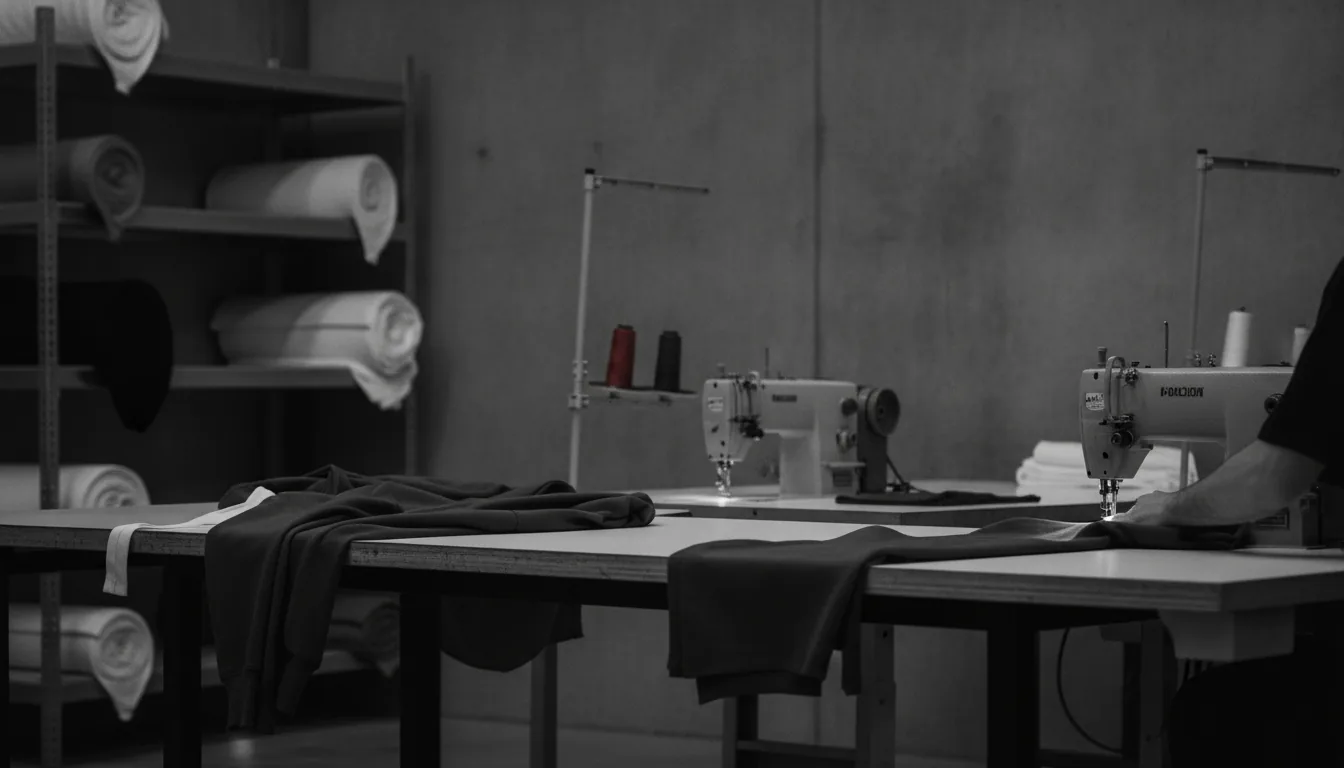
As garments move through the sewing line, in-line QC checks construction while it can still be corrected. Inspectors watch seam strength, stitch density (SPI), needle placement, and whether measurements are holding to the spec sheet, flagging drift before hundreds of units carry the same fault.
This is where consistency is built. A seam that puckers, a hem that rolls or a shoulder that measures off gets caught within a batch, not across the whole order. Correcting an operator or a machine setting mid-run is how a factory keeps a 500-piece order uniform rather than watching a small error multiply.
In-line inspection is also where decoration is checked, print registration, cure, embroidery density, so a branding fault is caught on the line rather than at the end.
Stage 3 and 4: pre-final and final AQL inspection
As finished units come off the line, a pre-final check reviews them before packing, then a final random inspection is run on the packed order using AQL sampling. AQL (Acceptable Quality Limit) is the international standard for inspecting a statistically valid random sample rather than every piece, giving a reliable read on the whole batch.
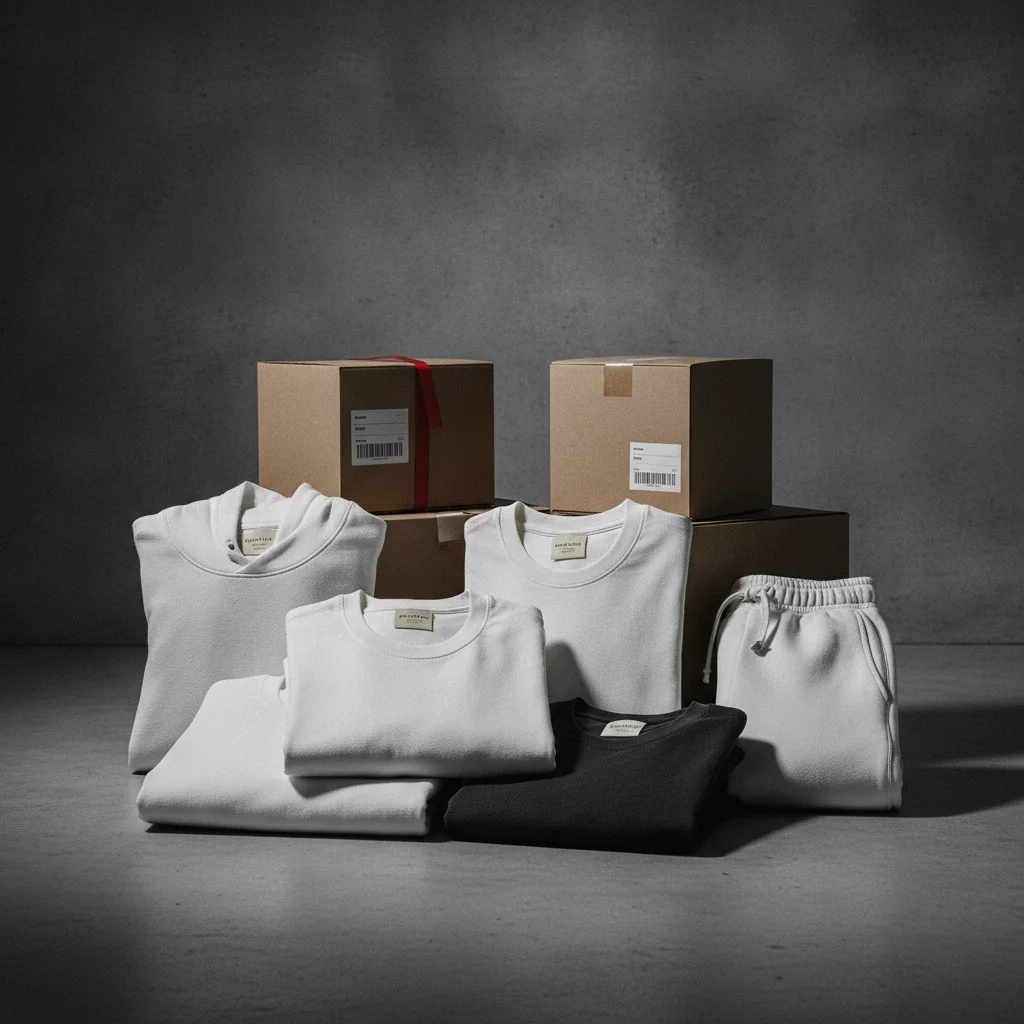
The final inspection checks measurements against the size spec, print and label placement, stitching, trims, colour, and packing accuracy. If defects exceed the agreed AQL threshold, the batch is reworked before it ships, which is the safeguard that stops a flawed order from ever leaving the factory.
Because your balance payment is due before shipping, this final QC stage is also where you confirm the goods meet spec, giving you leverage exactly when it counts.
What quality control actually checks
| Check | Stage | What it catches |
|---|---|---|
| GSM / fabric weight | Intake | Under-weight or wrong fabric |
| Shade / colour | Intake and final | Colour drift vs sample |
| Measurements | In-line and final | Fit and sizing errors |
| Stitching / SPI | In-line | Weak or loose seams |
| Print / embroidery | In-line and final | Placement, cure, registration |
| Packing | Final | Wrong counts, labelling |
Common defects and how they are caught
The defects QC exists to catch fall into predictable groups: fabric faults like holes and shade variation, construction faults like broken stitches, skipped seams and measurement drift, decoration faults like misplaced or cracked prints, and packing faults like wrong quantities or missing labels. Each is targeted at the stage best placed to see it.
Measurement drift is the one that hurts brands most, because a hoodie that runs half a size large across a batch reads as a quality failure to the customer even if the fabric and print are perfect. In-line and final measurement checks against the graded spec are what hold sizing true, which is the foundation of consistency across reorders.
For a deeper look at judging a factory before you commit, see our guide on how to check a clothing manufacturer’s quality.
How AQL sampling works
AQL sampling defines how many pieces are inspected and how many defects are acceptable for a batch to pass. Inspectors pull a random sample sized to the order, then classify any faults as critical, major or minor, with tighter limits on the serious ones. It is the same framework used across professional apparel production worldwide.
The value of AQL is objectivity. Rather than a vague we checked it, you get a defined standard, a sample size and a pass or fail threshold, which turns quality from a promise into a measurable result. Reputable factories inspect to a recognised AQL level and can share the result before goods ship.
Sampling before bulk feeds this too: the approved pre-production sample is the benchmark every AQL inspection measures against, tying the whole system back to the garment you signed off.
QC and consistency across reorders
Quality control is what makes a reorder match the first run. By holding the approved sample as the reference and inspecting every batch against the same spec, a factory reproduces the same garment months later, from GSM to measurements to print placement. Without that discipline, reorders drift and a brand loses the trust it built.
This is why QC and record-keeping go together. Retaining your spec, pattern and approved sample means the standard is fixed, and every future inspection checks against it. We cover the specifics of holding sizing steady in our guide on consistent sizing across reorders.
Third-party inspection and certified factories
Beyond a factory’s own QC, buyers can add a third-party inspection, where an independent agency runs the final AQL check and reports before goods ship. For a first order with a new manufacturer, this is a reasonable safeguard, and a factory confident in its work welcomes it rather than resisting it.
Certification is the other trust signal. A certified, audited factory has been assessed against production and, often, ethical and social compliance standards, which tells you the QC system is real and documented rather than improvised. Working with a certified factory means the quality process is built into how the floor operates, not bolted on for one order.
Combining internal QC, optional third-party inspection and factory certification gives a brand layered assurance. Each layer catches what the others might miss, and together they are what let you scale reorders with confidence rather than re-checking everything from zero each season.
How Minku handles it
We run QC at fabric intake, in-line during sewing, pre-final and a final AQL inspection, all measured against your approved pre-production sample, so defects are caught on the floor and your order ships to spec. Fabric is verified to 180-400+ GSM, construction and decoration are checked in-line, and finished goods ship DDP door-to-door to the USA, UK and Europe under our quality guarantee.
Want to see our standard on your product? Start on the cut-and-sew page or Get Your Custom Quote.
How Quality Control Works in Clothing Manufacturing — In Detail