Custom jackets typically take 6 to 10 weeks total from an approved tech pack to a finished bulk order arriving at your door, with more construction-intensive builds like insulated puffers or multi-panel bombers running toward the longer end and simpler shells or coach jackets landing closer to 6 weeks. That window covers sampling, fabric sourcing, cutting, sewing, decoration, quality control and DDP shipping – not only production time on the factory floor.
Jackets are the most construction-intensive garment in a streetwear line – more panels, more trims, more finishing steps than a hoodie or tee – so their timeline has more moving parts to plan around. Here is exactly how the weeks break down, what jacket type does to the schedule, and how to plan a launch date around it.
The full timeline stage by stage
Tech pack review and fabric/trim sourcing typically takes 3 to 7 days once your spec is finalized, since jackets often use trims – zippers, snaps, drawcords, toggles – that need sourcing to match your exact hardware finish. A pre-production sample follows, taking 10 to 15 days to cut, sew and finish, longer than a hoodie sample because of the additional panels and trims a jacket construction requires.
After sample approval, bulk cutting and sewing runs 2 to 4 weeks depending on order size and jacket complexity, with decoration (embroidery, print or patches) worked in parallel where the construction sequence allows. Quality control and finishing add 3 to 5 days, then DDP shipping to the USA, UK or Europe adds 5 to 9 days transit depending on destination.
Timeline by jacket type
| Jacket type | Typical total timeline | Why |
|---|---|---|
| Coach jacket / windbreaker | 6-7 weeks | Simpler shell construction, fewer panels |
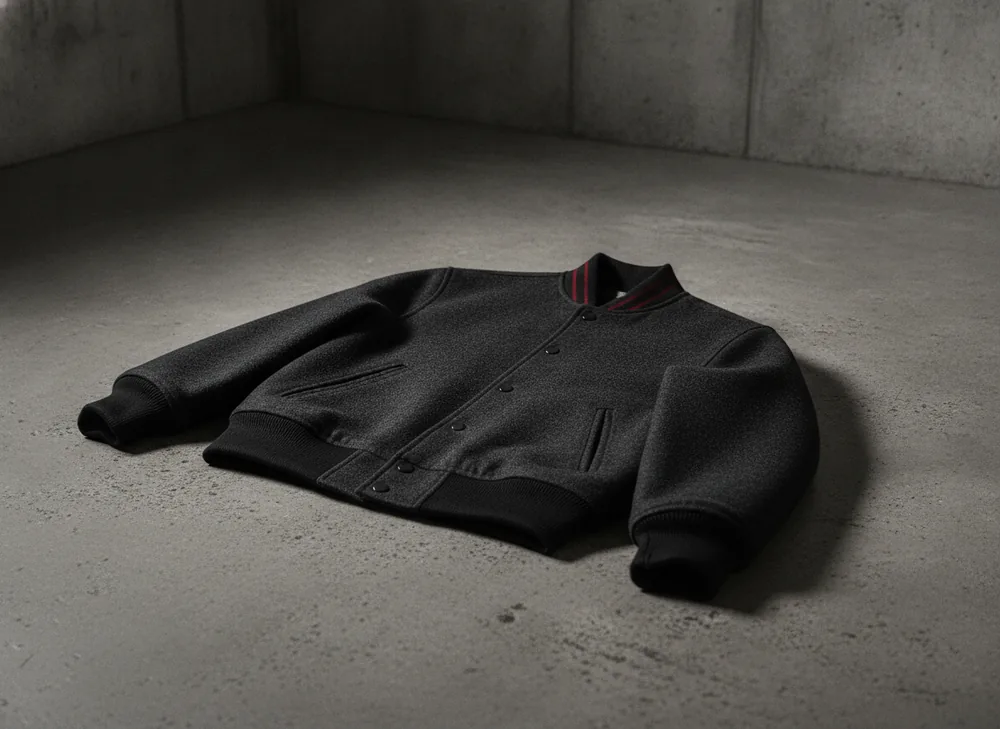
| Bomber / varsity jacket | 7-9 weeks | Ribbed trims, lining, multi-panel body |
| Denim jacket | 7-9 weeks | Fabric wash/treatment adds a processing step |
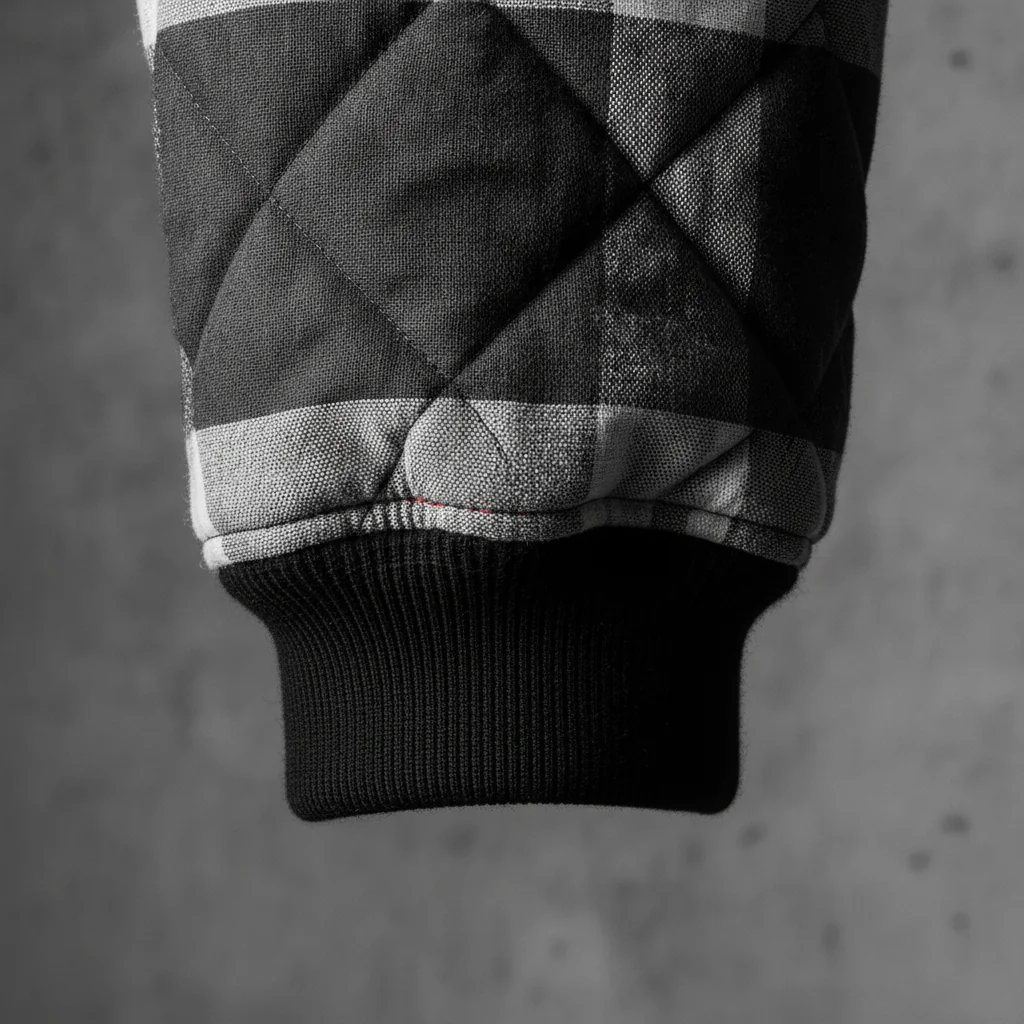
| Puffer jacket | 8-10 weeks | Insulation fill, quilting, baffle construction |
Our bomber jacket and puffer jacket pages break down construction detail specific to each build, which is what drives most of the timeline difference between jacket types.
Why sampling takes longer on jackets
A hoodie sample involves body panels, a hood and sleeves – four to six pattern pieces. A jacket sample can involve a shell, a lining, a collar, cuffs, a zipper placket, pockets and trims – often twelve or more pattern pieces that each need cutting, sewing and pressing in sequence. That added complexity is the main reason jacket sampling runs 10-15 days against a hoodie’s typical 7-10 days.
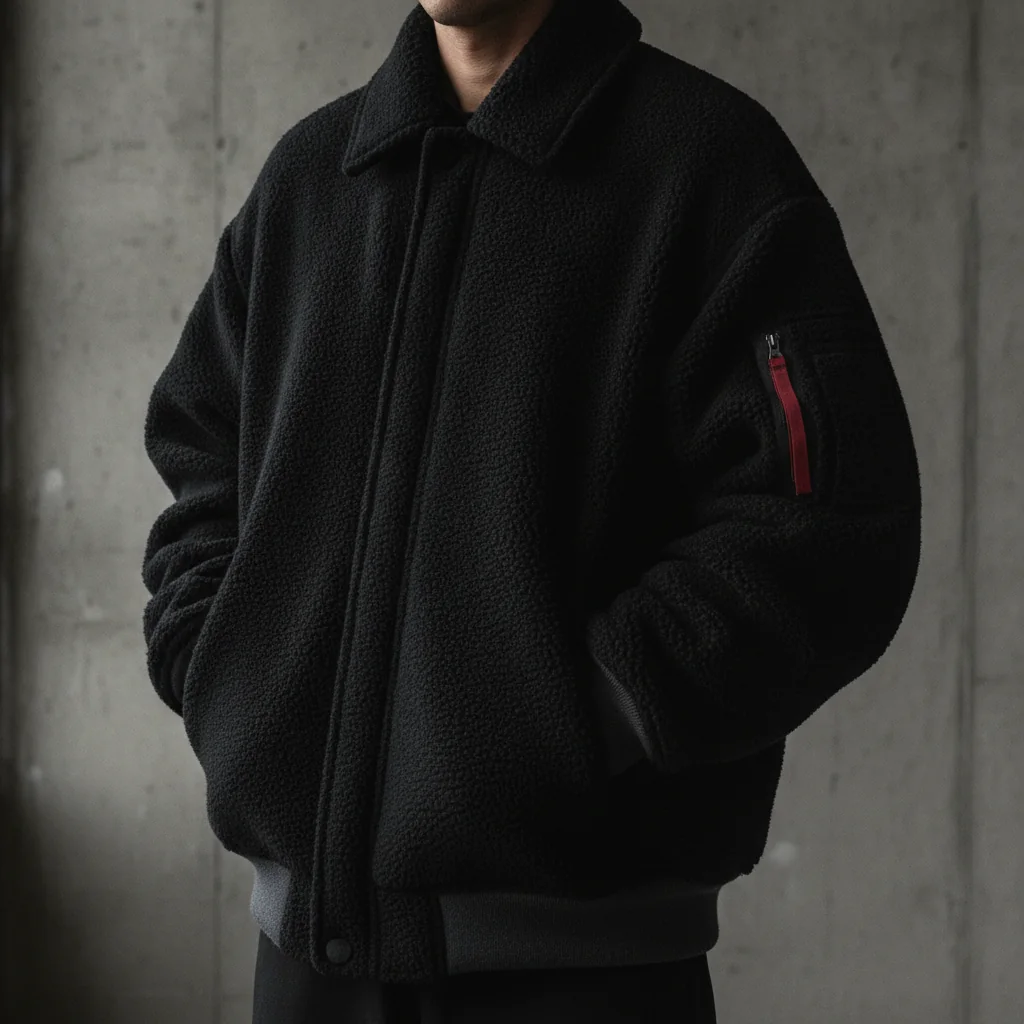
Trims add their own lead time. A branded zipper pull or a specific snap-button finish may need sourcing or custom tooling before the sample can be assembled, so confirming trim specs early in the tech pack stage prevents a delay once sampling is already underway.
What speeds up the timeline
A complete, unambiguous tech pack is the single biggest accelerant – when fabric, trims, construction and grading are fully specified upfront, we move straight into sourcing without back-and-forth clarification rounds that can add a week or more. Reorders on an already-approved pattern also skip the sampling stage almost entirely, cutting 2-3 weeks off the total timeline compared to a first order.
Simpler constructions move faster by nature – a single-layer coach jacket with no lining or insulation clears production quicker than a fully lined, quilted puffer, regardless of how efficient the sourcing and sampling stages are.
What slows down the timeline
Custom trims – a unique zipper pull casting, a specific hardware finish, a non-standard snap color – can add 1-2 weeks to sourcing if they are not stock items. Multiple sample rounds, common when a fit or fabric hand needs revision after the first sample, add 10-15 days per additional round.
Peak seasonal periods, when many brands are placing fall/winter jacket orders at the same time, can extend cutting and sewing queue time by a week or two – planning a jacket launch 3-4 months ahead of the intended season absorbs this variability comfortably.
Sampling vs bulk: separate clocks
It helps to think of the timeline in two blocks rather than one number. Sampling (tech pack review through sample approval) typically runs 2-3 weeks and can loop if revisions are needed. Bulk production (cutting through shipped goods) runs a further 4-7 weeks depending on order size and jacket type once the sample is locked.
Because sampling can loop, the biggest timeline risk is usually indecision at the sample-approval stage rather than production itself – a design that goes through three rounds of fit changes adds a month before bulk cutting even starts. Locking design decisions before submitting a tech pack is the most reliable way to protect your launch date.
Real example timeline
A brand submitting a complete tech pack for a 200-piece bomber jacket order with standard trims can expect roughly: 5 days sourcing, 12 days for a pre-production sample, 3-4 days for approval and any final tweaks, 3 weeks bulk cutting and sewing, 4 days quality control and finishing, and 6-8 days DDP shipping to the US – landing at close to 8 weeks door to door.
A simpler 100-piece coach jacket order with stock trims and a first-round sample approval can land closer to 6 weeks under the same process, since fewer panels and no lining or insulation shortens both the sample and bulk cutting stages.
Reorders move faster
Once a jacket pattern and sample are approved, reorders skip tech pack review and sampling entirely – the pattern, fabric spec and trims are already locked. A reorder typically moves straight to fabric sourcing and bulk cutting, cutting the total timeline to roughly 4-6 weeks including shipping, which is why brands that plan for repeat seasonal drops benefit from locking a strong pattern early.
Planning a launch date backward from your timeline
Work backward from the date you want stock in hand: subtract 5-9 days for DDP transit, then 4-7 weeks for bulk production, then 2-3 weeks for sampling, then a buffer week for tech pack review. A fall drop targeted for early September should have a tech pack submitted by early-to-mid June for a first order, or by late July for a reorder on an approved pattern.
Building in a one-week buffer beyond the calculated timeline is a sound habit for a first order, since first-time sampling occasionally needs one revision round even with a strong tech pack. Reorders rarely need that buffer once the pattern has already shipped once successfully.
Common causes of missed jacket deadlines
The most frequent cause of a missed deadline is an incomplete tech pack that requires clarification mid-sourcing – a missing hardware finish, an unconfirmed lining fabric, or a colorway left undecided. Each round of clarification can add several days, and multiple rounds compound quickly across a jacket’s larger number of components compared to a hoodie or tee.
A second common cause is underestimating trim lead time. Standard zippers and snaps ship from stock quickly, but a branded zipper pull, a specific matte hardware finish, or a non-standard color match can require a separate sourcing or tooling step that is easy to overlook when planning a launch date around garment production alone.
A third cause is compressing the sampling stage to protect a launch date, approving a sample with a known fit issue on the assumption it can be fixed during bulk cutting. Fit and construction issues carried into bulk production are far more costly to correct than a short delay at the sample stage, since correcting them after cutting means reworking or scrapping partially finished units.
Rush timelines: what is realistic
A compressed jacket timeline is possible for simpler constructions – a coach jacket or windbreaker with stock trims can sometimes move through sampling and bulk production in 5-6 weeks total if the tech pack is complete on the first submission and only one sample round is needed. Puffer and multi-panel bomber builds have less room to compress, since insulation, quilting and lining steps carry fixed minimum production times regardless of order priority.
We flag realistic rush options against your specific jacket type and trims at quoting stage, rather than promising a blanket rush timeline that construction complexity may not support.
How Minku manages jacket timelines
We confirm a realistic timeline against your specific jacket type, trims and order size before production starts, and flag anything – a custom hardware finish, a multi-round sampling risk – that could extend it. Each order includes DDP shipping, so the quoted timeline already accounts for door-to-door transit, not only factory-floor time.
See construction detail on our custom jacket manufacturing page, or read how long clothing sampling takes and how clothing manufacturing works for the full process. To get a timeline against your own tech pack, Get Your Custom Quote.
Reading a factory timeline quote correctly
When a manufacturer quotes a jacket timeline, confirm whether the number covers sampling through shipped goods or only bulk production, since the two figures can differ by three weeks or more. A quote covering only bulk cutting and sewing can look shorter than a competing quote that includes sampling, without actually being a faster path to product in hand.
Ask specifically whether the quoted timeline assumes a first-round sample approval or builds in a revision round, and whether DDP transit time is included or added afterward. A transparent timeline breaks each stage out separately, which is how we present ours against each jacket order so a launch date can be planned with confidence rather than guesswork.
How Long Does It Take to Manufacture Custom Jackets? — In Detail