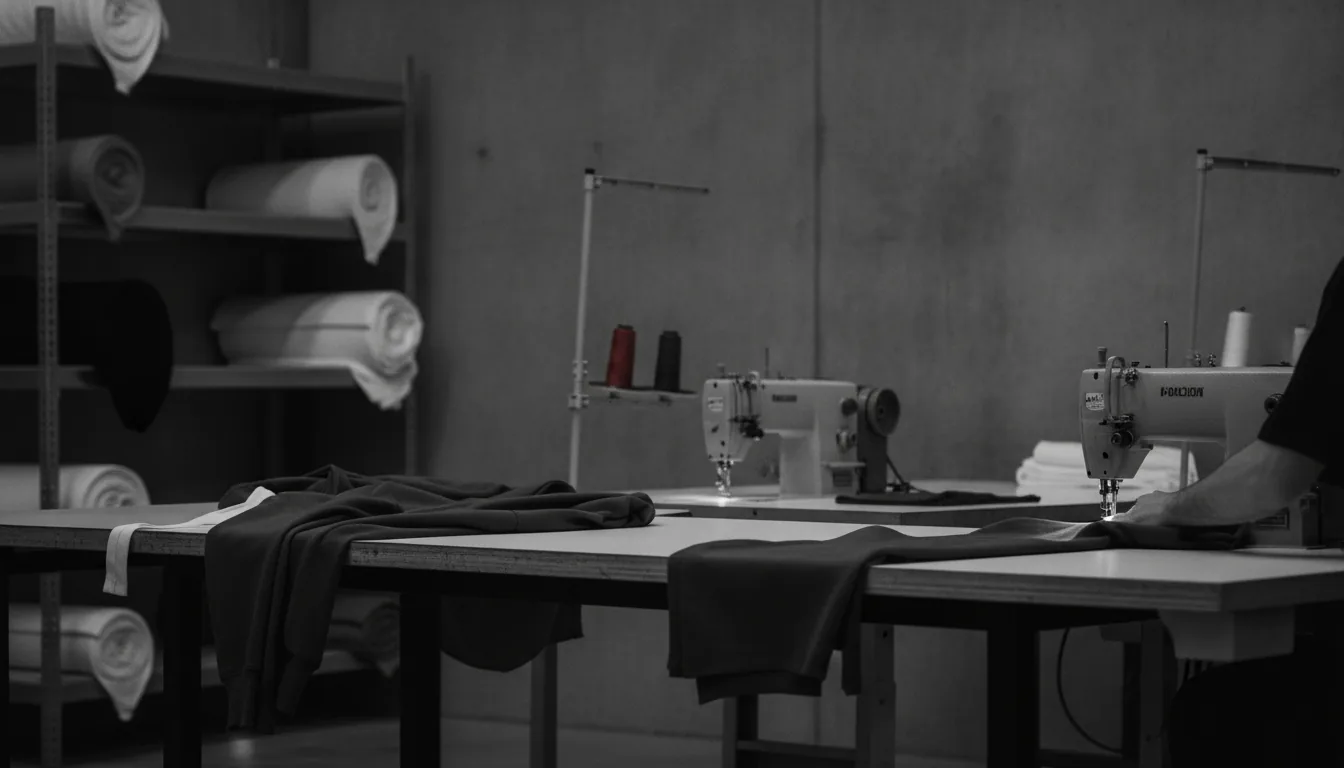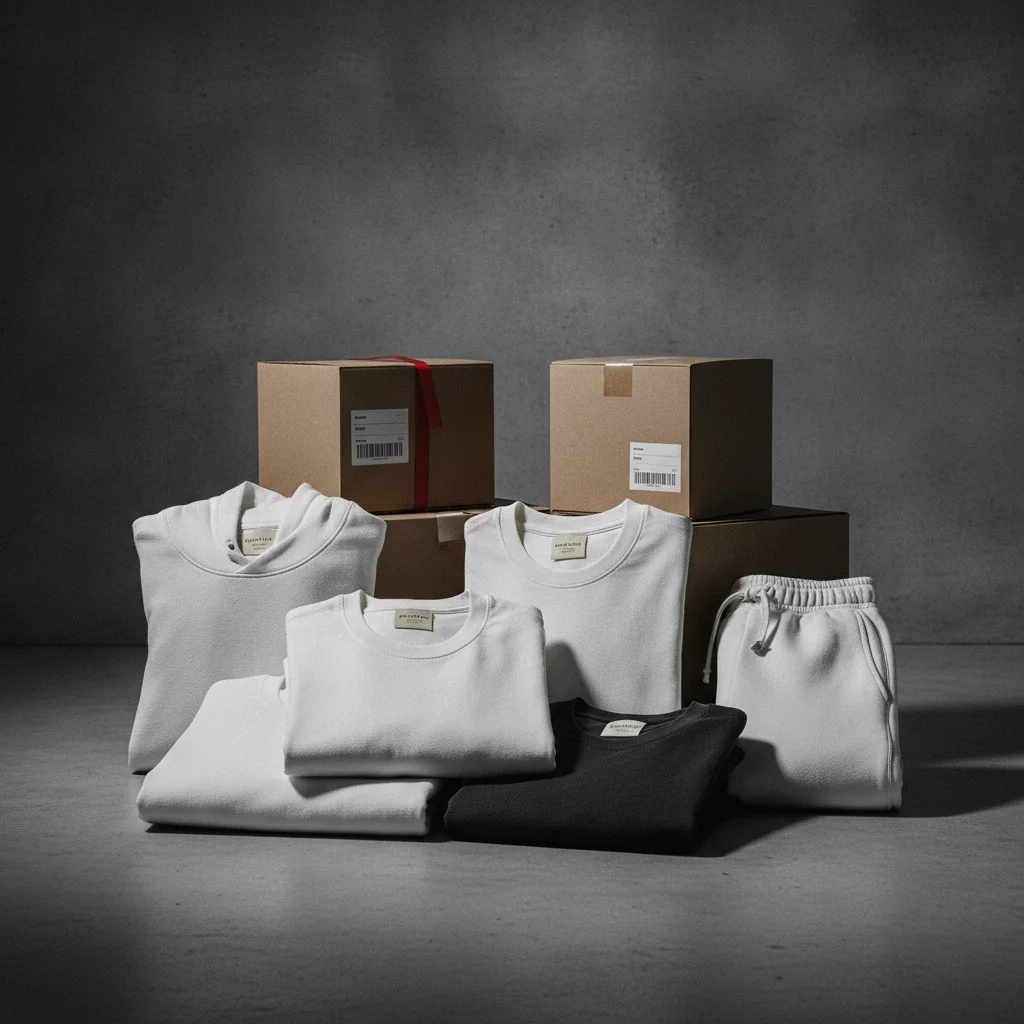
Clothing manufacturing works through seven stages: design and tech pack, pattern making, fabric sourcing, cutting, sewing, decoration, and quality control before shipping. Each finished garment passes through all seven before it reaches a brand’s door, and skipping or rushing any one of them is where most quality problems on a first order start.
This page walks through each stage in the order a real production run actually moves, with the decisions a brand makes at each point and how long each typically takes. If you are ready to start a run, get your custom quote and we will map your timeline against these stages.
Stage 1: Design and Tech Pack
Manufacturing starts with a design – a sketch, a reference garment, or a full tech pack specifying measurements, fabric, and construction. This stage decides all of it downstream: fabric weight, silhouette, decoration method, and cost all trace back to decisions made here. A tech pack is not mandatory to start pricing; see our page on whether you need a tech pack for a quote for what is actually required at this point.
This stage typically takes a few days to a couple of weeks depending on how developed the design already is when it reaches the factory.
Stage 2: Pattern Making and Grading
A pattern maker translates the design into flat pattern pieces – the individual panels that, sewn together, form the garment. For custom silhouettes, this happens from scratch against your measurements; for garments built on an established base, it may be a modification of an existing pattern. The pattern is then graded across your full size range, so a small and a 2XL both hold the same proportions and fit intent.
This is the stage that separates cut and sew manufacturing from decorating an existing blank – a blank skips pattern making entirely because the garment already exists.
Stage 3: Fabric Sourcing
Fabric is selected and sourced to the GSM (grams per square meter), fiber content, and finish specified for the design – typically 240-400+ GSM cotton, French terry, or fleece for streetwear. Fabric is tested for weight, shrinkage, and colorfastness before it reaches the cutting floor, since a fabric fault here carries through to each garment cut from that roll.
Lead time on fabric depends on whether it is a stock weight and color or a custom dye lot, with custom colors adding time for dye matching and lab dip approval.
Stage 4: Cutting
Fabric is laid in multiple layers and cut according to the graded pattern, either by hand with a cutting knife or by an automated cutter for higher-volume runs. Precision here matters directly – a pattern piece cut a few millimeters off grain can cause a garment to twist or hang unevenly once sewn, which is why cutting is checked against the pattern before panels move to sewing.
Stage 5: Sewing and Construction
Cut panels move through sewing, where skilled operators join them using the seam types and stitch details specified in the pattern – flatlock, overlock, double-needle, and so on depending on the garment and placement. This is the longest stage in most production runs, since each panel, seam, and finishing detail is assembled by hand at a sewing station.
A pre-production sample is sewn first and approved before bulk sewing starts, which is the checkpoint that prevents a fit or construction problem from repeating across an entire order. See how long clothing sampling takes for typical timelines at this checkpoint.
Stage 6: Decoration
Once garments are sewn (or, for blanks, once the stock garment is ready), decoration is applied – screen print, DTG, embroidery, puff print, acid wash, garment dye, tie-dye, or all-over print, depending on the design. Decoration can also happen on flat fabric panels before sewing, as with sublimation and some all-over print methods, which changes the order of stages 5 and 6 for those specific builds.
Decoration is where private label branding also happens – neck labels, woven tags, and hangtags are applied here or in the finishing step that follows, tying the garment to your brand rather than the factory’s.
Stage 7: Quality Control and Finishing
Finished garments are inspected against the approved sample – measurements, seam quality, print or embroidery placement and adhesion, fabric consistency, and trim placement are all checked before an order is cleared to ship. Garments are then pressed, folded or hung, and packed according to your specification, whether that is polybags, branded boxes, or bulk cartons for a warehouse.
| Stage | What Happens | Typical Duration |
|---|---|---|
| 1. Design/tech pack | Spec locked, fabric and construction decided | Days to 2 weeks |
| 2. Pattern making | Pattern drafted and graded | 3-7 days |
| 3. Fabric sourcing | Fabric tested and confirmed | 1-3 weeks (stock vs custom) |
| 4. Cutting | Fabric cut to pattern | 1-3 days per style |
| 5. Sewing | Garment assembled, sample approved | 1-3 weeks per run |
| 6. Decoration | Print, embroidery, wash applied | 3-10 days |
| 7. QC and finishing | Inspected, pressed, packed | 2-5 days |
Two Manufacturing Models: CMT vs Full Package
Not all brands run all stages through the same factory. Under CMT (cut, make, trim), a brand supplies its own fabric and the factory only cuts, sews, and trims. Under full-package production, the factory sources fabric, manufactures, decorates, and finishes the garment end to end. Minku runs full-package for most clients, since keeping each stage under one roof is what keeps quality consistent across reorders. See CMT vs full package production for a deeper comparison.
Where Delays Actually Happen
The most common delay is not in cutting or sewing – it is in the approval loop between stages 1 and 5, where a sample gets sent back for revision. Each round of sample revision adds one to two weeks, which is why a clear, detailed starting spec at stage 1 is the single biggest lever a brand has over total timeline, more than any efficiency gained on the factory floor.
Fabric sourcing is the second most common source of delay, particularly for custom colors requiring lab dip approval, which can add a week or more if the first dip is not approved on the first round.
Domestic vs Overseas Manufacturing: How the Process Differs
The seven stages are identical whether a garment is made domestically or overseas – the difference is cost structure and lead time on fabric and labor, not the manufacturing steps themselves. Overseas factories in regions with established textile industries, including Pakistan, typically offer a wider range of in-house decoration and lower per-unit labor cost at the volumes streetwear brands need, while domestic manufacturing can offer shorter shipping distance in exchange for a narrower service range and generally higher labor cost per unit.
Worldwide DDP (delivered duty paid) shipping closes most of the practical gap between the two – duties and customs clearance are handled before the order reaches your door, so an overseas order lands with a fixed cost rather than a surprise customs bill. See is Pakistan good for clothing manufacturing for a full breakdown of that comparison.
What a Brand Actually Controls at Each Stage
A brand’s real leverage sits almost entirely in stage 1: the spec, reference garment, and fabric choice. Once that is locked, stages 2 through 7 are largely the factory’s execution against the approved standard, with the brand’s remaining role being sample approval at the checkpoint between stages 2 and 5, and final QC sign-off before shipping.
This is why brands who invest time upfront in a clear spec, even an informal one, tend to move through the remaining six stages with fewer revision rounds than brands who arrive with only a vague concept and expect the factory to fill in each construction decision from scratch.
How the Process Repeats on a Reorder
A reorder skips stages 1 and 2 entirely, since the tech pack and graded pattern already exist from the first run – production restarts at fabric sourcing, moving straight to cutting, sewing, decoration, and QC against the same approved standard. This is the practical reason a locked pattern and an approved sample matter so much on a first order: they become the reusable foundation for each future order without a founder having to answer the same design questions again.
Consistent sizing across reorders depends on the factory keeping the same graded pattern, the same fabric source, and the same construction team on file – which is one advantage of running all seven stages through one facility rather than switching factories between orders. See consistent sizing across reorders for how we protect fit accuracy run after run.
How Minku Runs All Seven Stages In-House
Our Pakistan factory handles design support, pattern making, fabric sourcing, cutting, sewing, decoration, and QC under one roof, which is what lets us hold one quality standard from the first sample through each reorder. Nothing is subcontracted to a workshop that has not seen your pattern or your approved sample.
Send your design or reference garment and we will map out the stages above against your specific product and timeline, then get your custom quote to start. For the full product range this process builds, see the custom clothing manufacturing hub.
How Does Clothing Manufacturing Actually Work? — In Detail