Cut and sew builds a garment from raw fabric and a pattern to your exact spec; printing on blanks decorates a stock garment someone else already designed. Cut and sew wins on ownership and fit control, blank printing wins on speed and a lower starting cost – and the right pick depends on which stage your brand is at and what the drop needs to prove.
This page breaks down both routes in detail: what each one actually is, how cost and minimum order quantity (MOQ) compare, how long each takes, and where quality and reorder consistency diverge. If you already have a design ready, get your custom quote and we will recommend the route that fits it.
What Cut and Sew Manufacturing Means
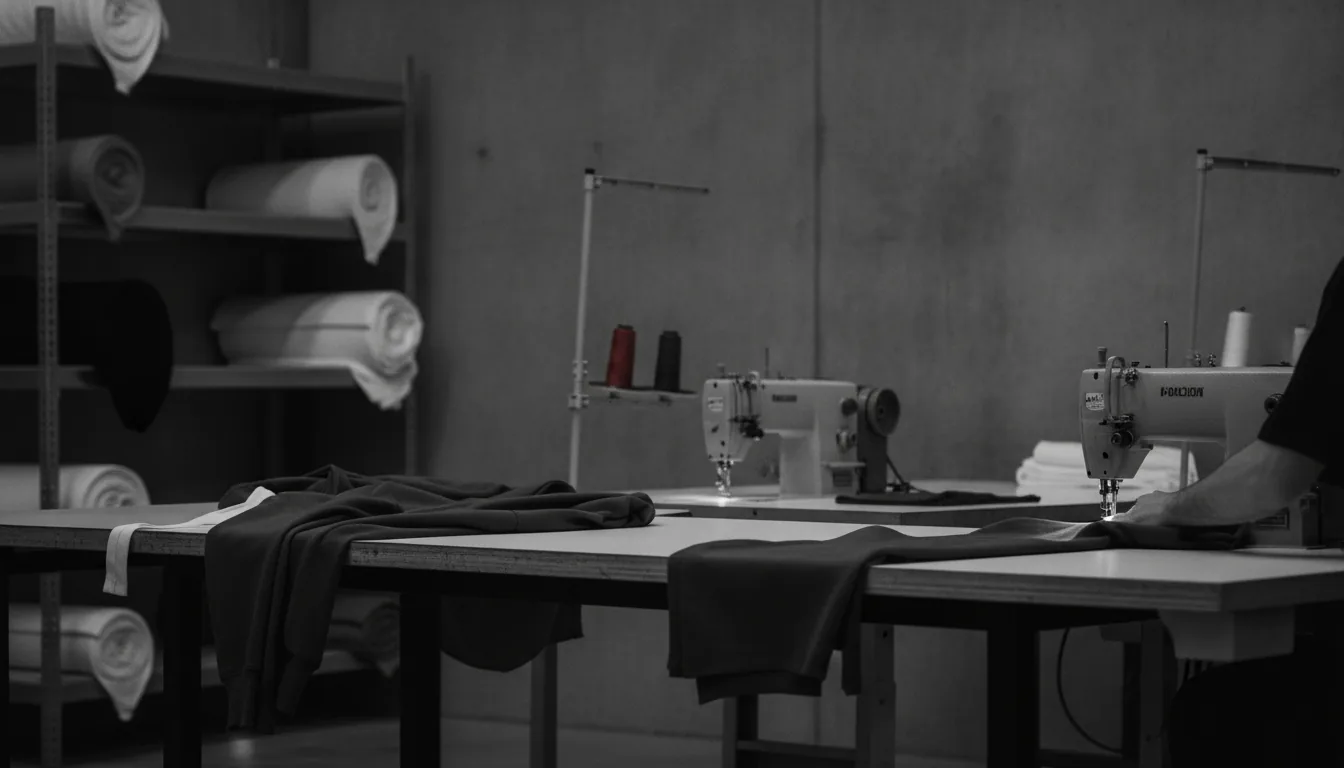
Cut and sew starts with a pattern, not a product. Fabric is cut into panels to your measurements and sewn into a finished garment built to your construction notes – seam type, cuff style, hood shape, pocket placement, all of it. Nothing about the garment existed before your tech pack.
This is full-package production: the factory sources or receives your fabric, drafts and grades the pattern, sews a pre-production sample for approval, then runs bulk against that approved standard. See our cut and sew manufacturing page for the full process breakdown.
Why Brands Choose It
A brand chooses cut and sew when the product itself is the differentiator – a signature boxy fit, a heavyweight fleece nobody else stocks, a drop-shoulder cut that becomes the label’s identity. The fabric weight, the fit, and the construction are all decisions the brand owns rather than inherits.
What Printing on Blanks Means
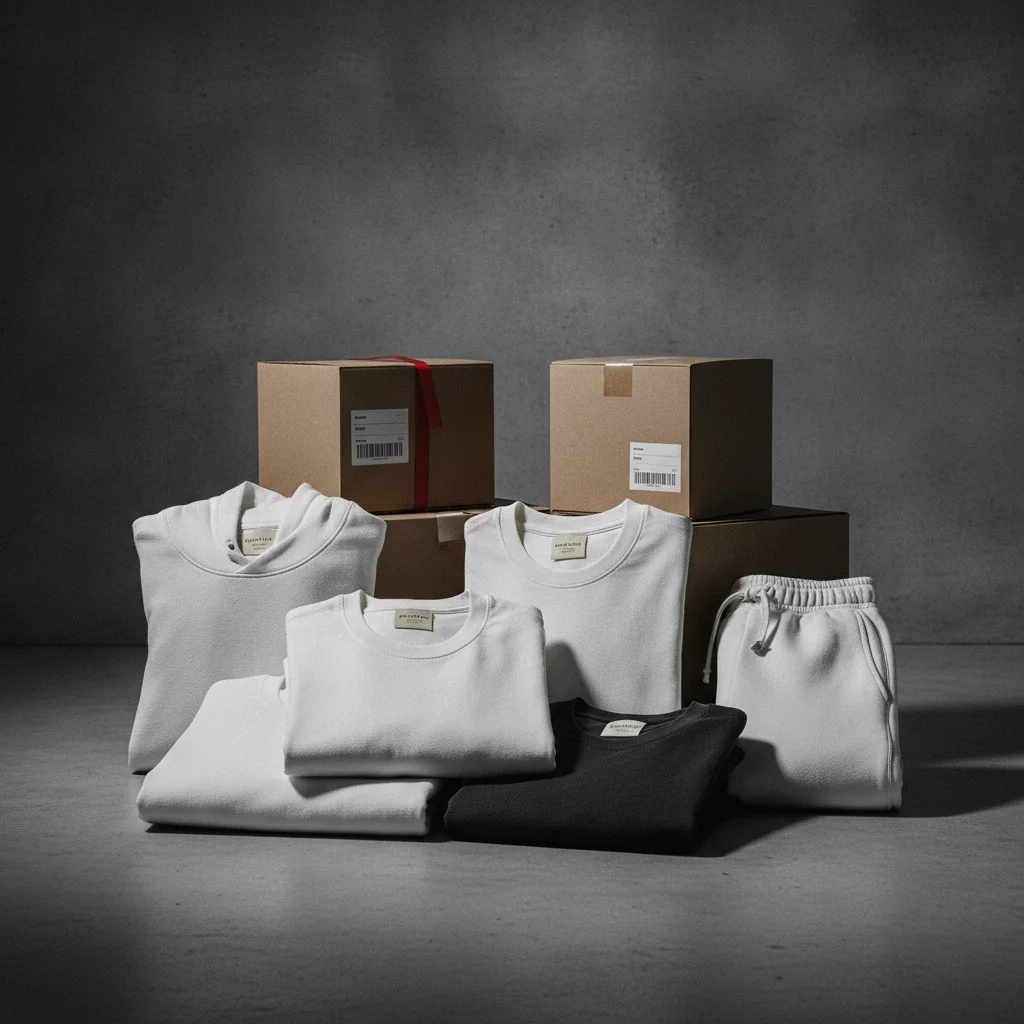
Printing on blanks means buying an existing garment – a stock hoodie, tee, or crewneck already cut and sewn – and adding your graphic on top using screen print, DTG, embroidery, or puff print. The garment’s fit, fabric, and construction are fixed before your design ever touches it.
This route is fast because the hardest part of manufacturing (patterning, cutting, sewing) is already solved. Your team focuses only on artwork, placement, and color matching. It is the route most new merch lines and early drops start with before moving to a custom-built product.
Where the Limits Show Up
Because the blank is fixed, two brands using the same stock garment end up with the same fit, the same fabric hand, and often the same neck label unless private label swaps are arranged separately. Differentiation lives entirely in the graphic, which caps how distinct the finished product can look on a rack next to a competitor’s.
Cut and Sew
Built from your pattern and fabric choice. Full control of fit, weight and construction. MOQ from 50 pieces per design. Best for a signature silhouette and long-term brand ownership.
Printing on Blanks
Decoration on a stock garment. Fit and fabric fixed by the blank. Faster setup, narrower per-unit range at low volume. Best for a fast graphic run or a first test drop.
Cost and MOQ Compared
Blank printing carries a lower entry cost per design because there is no pattern development, no grading, and no cutting – the factory only decorates and finishes an existing garment. Cut and sew carries pattern and sampling cost upfront, then per-unit cost improves as your run size grows and that setup work spreads across more garments.
| Factor | Cut and Sew | Blank Printing |
|---|---|---|
| MOQ | From 50 pcs / design | From 50 pcs / design |
| Setup cost | Pattern, grading, sample | Screen/file setup only |
| Fabric control | Full choice, 240-400+ GSM | Fixed by blank spec |
| Fit control | Full – your pattern | None – fixed silhouette |
| Best for | Signature product lines | Fast merch, test drops |
At Minku Apparel both routes share the same 50-piece MOQ per design, so the entry point is not what separates them – the ownership of the finished product is. For a full cost breakdown by product, see our custom clothing manufacturing hub.
Turnaround: Which Is Faster
Blank printing moves faster because the garment already exists in the factory’s stock program – sampling is limited to confirming print placement and color match, which can be approved in one round. Cut and sew adds pattern drafting and fit sampling before production starts, which typically means one to two additional rounds of sample review.
For a brand racing a launch date, blanks close that gap. For a brand building a line meant to reorder for years, the extra weeks spent on pattern and fit approval upfront save far more time across future reorders, because the pattern is locked once and does not need re-approval each season.
Quality and Durability Differences
Quality on a blank is capped by the blank itself – if the stock garment is a mid-weight 180 GSM tee, no amount of print quality changes the fabric hand or how it wears. Quality on a cut and sew garment is set by your own fabric and construction choices, which is why brands chasing a heavyweight, structured feel move to cut and sew.
Durability follows the same logic. A screen print or embroidery holds up equally well on either build, but the garment underneath it only lasts as long as its own fabric and seam quality allow. Our QC process checks both builds the same way – fabric, seams, print adhesion and wash performance – before a single unit ships.
Branding and Private Label Reach
Private label branding – your neck label, woven tag, hangtag and packaging – applies to both routes at Minku. A blank-printed hoodie can still carry your labels and packaging; it simply cannot carry your own fabric weight or fit decisions. Cut and sew extends private label all the way down to the fabric and construction, so the product itself, not only the tag, reads as yours.
Brands scaling past a first drop tend to migrate their hero styles to cut and sew while keeping fast seasonal graphics on blanks – a hybrid approach we run for several clients inside one production order.
Decoration Compatibility by Route
Both routes accept the same decoration methods, which surprises a lot of first-time founders. Screen print, DTG, embroidery, puff print, acid wash, garment dye, tie-dye and all-over print all run on a blank hoodie the same way they run on a cut and sew garment – the decoration process does not know or care where the underlying fabric came from.
What changes is placement and result. All-over print, for example, needs to be applied before the garment is fully sewn on a cut and sew build, which gives cleaner seam matching across panels. On a blank, all-over print is limited to whatever panel layout the stock garment already used, so pattern alignment across a side seam can be less exact. For a graphic-heavy design, that difference is worth weighing before you commit to a route. See all-over print manufacturing for how we handle panel matching.
A Real Example
A UK streetwear founder came to us wanting a heavyweight embroidered hoodie for a 150-piece launch. Blank stock hoodies topped out at 320 GSM with a regular fit; the brand wanted a boxier, 400 GSM fleece with a longer body. Blank printing could not deliver the fabric weight or silhouette, so we drafted a cut and sew pattern, sampled it in 400 GSM fleece, and ran puff embroidery on the finished garment. The extra two sample rounds added roughly ten days versus a blank build, and the founder now reorders the same pattern each season without re-sampling.
Common Mistakes Brands Make
The most frequent mistake is choosing blanks for a hero style meant to define the brand, then discovering months later that the fit and fabric were never fully theirs to own – a competitor sourcing the same stock blank can produce a near-identical base garment. The second mistake runs the other way: over-investing in a full cut and sew build for a one-off event tee that never reorders, when a blank would have covered the need at a fraction of the lead time.
A useful rule: if you expect to reorder a style more than twice, cut and sew earns its lead time back quickly. If a design is disposable by nature – a single drop, a collaboration capsule, a one-off collab tee – blank printing is the sounder call.
Which Route Fits Your Brand Stage
Choose blank printing for a first test drop, a limited seasonal graphic, or merch tied to an event date that cannot slip. Choose cut and sew once a style becomes a repeat seller and the brand is ready to lock in a fit and fabric that customers start to recognize as the label’s own.
A common path we see: a founder launches a first 100-piece drop on blank hoodies to validate demand, then moves the best-selling graphic to a cut and sew build once reorders confirm the style. Both stages run through the same factory, so the pattern and fabric history carries forward cleanly.
How Minku Runs Both Under One Roof
Our Pakistan factory handles cutting, sewing, and decoration in-house, so whichever route you choose, the same QC standard and the same private-label pipeline apply. We stock blanks for fast turnaround decoration and run full cut and sew patterning for brands ready to own their silhouette – and we will tell you honestly which one your design needs rather than pushing the higher-margin option.
Send your design or reference garment and we will confirm MOQ, fabric, and timeline for either build, then get your custom quote to lock the order.
Cut & Sew vs Printing on Blanks — In Detail