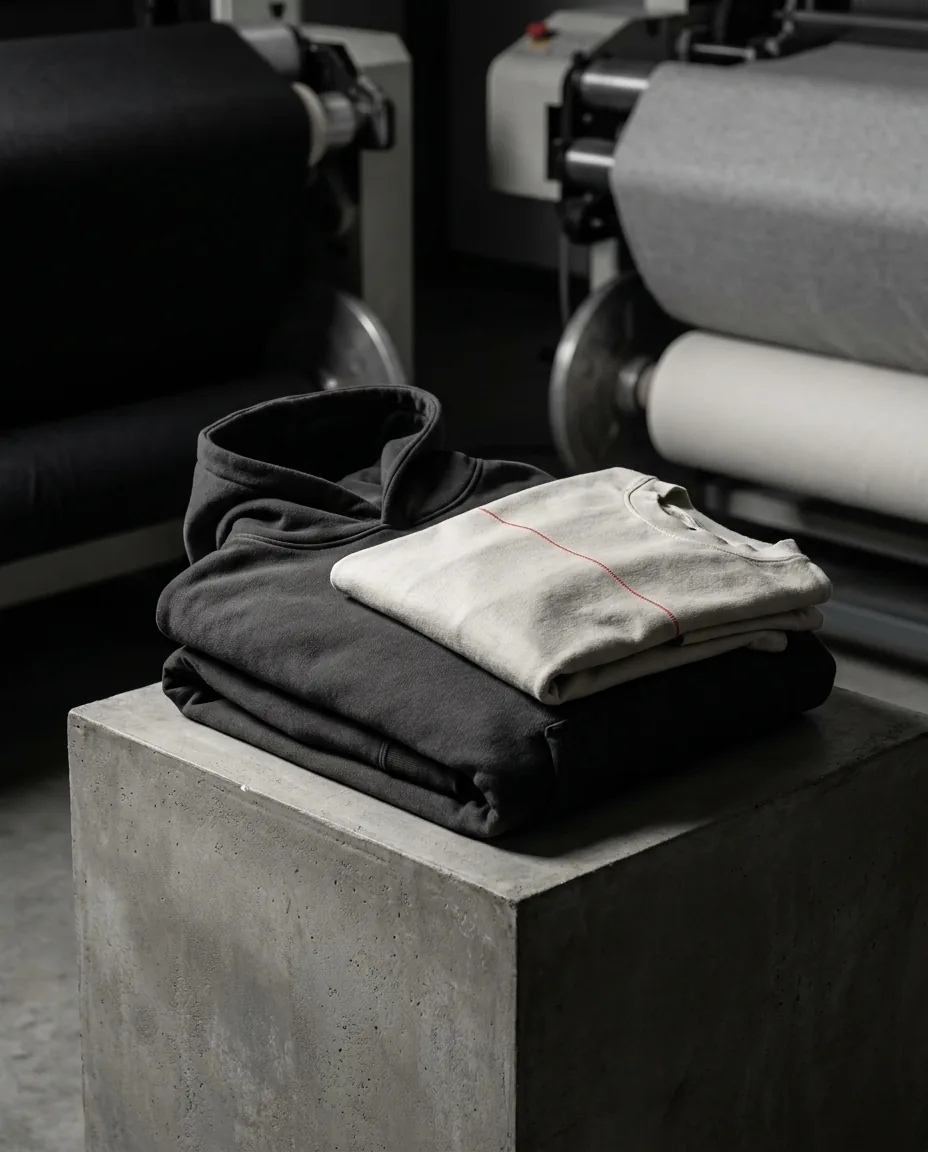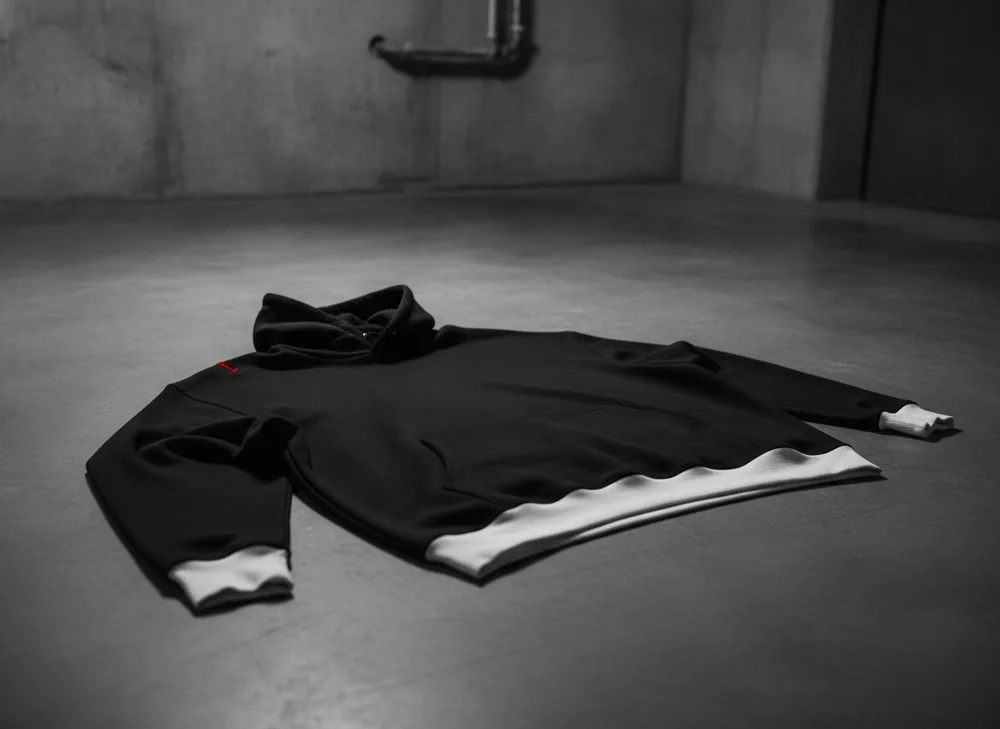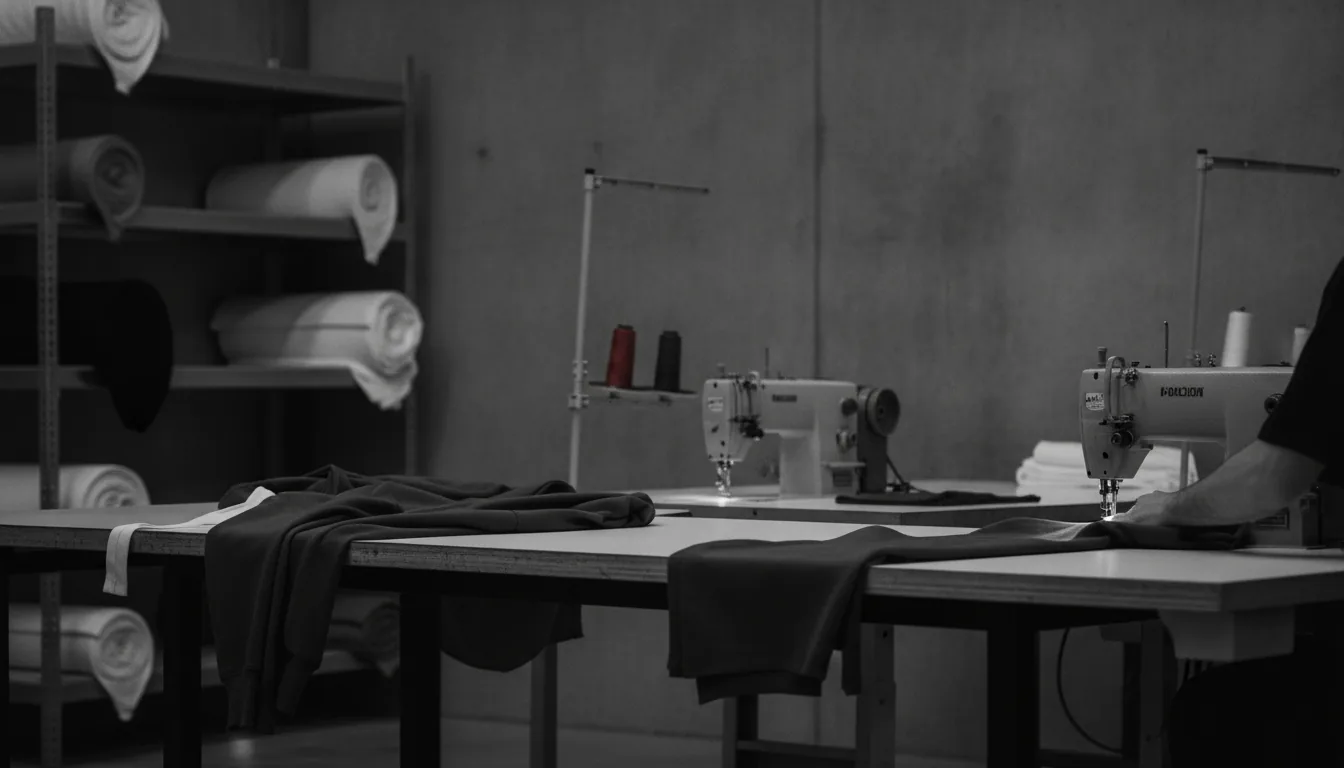
Yes, you can print custom clothing in small quantities. Minku Apparel manufactures custom clothing from around 50 pieces per design, so a new brand can launch a real, branded product without committing to a warehouse-scale order.
The question of whether you can print custom clothing in small quantities usually comes from founders who have been quoted 500 or 1,000 pieces elsewhere and cannot justify the outlay for a first drop. Our low MOQ exists to solve exactly that, letting you test designs, prove demand and build a brand in stages. Here is how small-quantity manufacturing works, which methods suit it, and how to make a short run pay off.
Our minimum order and why it is set there
Our standard MOQ is around 50 pieces per design and colourway, which is low enough for a founder to launch without overextending, yet high enough to run a proper cut-and-sew or print job at a quality we can stand behind. It is a threshold built for new and scaling brands rather than only for established labels with deep inventory budgets.
Fifty pieces lets you offer a full size run, hold some stock and still keep your first order manageable. For a streetwear label testing whether a graphic lands, that is enough to sell a drop and learn from real demand without a shelf full of unsold units. It is the number that keeps a brand moving instead of stalled at the quote stage.
This MOQ applies across our custom clothing range, from tees to heavyweight hoodies, so you can start small on the exact product your brand is built around.
Why minimum orders exist at all
MOQs are not arbitrary. Manufacturing a garment involves fabric sourcing, pattern making, cutting, sewing, decoration setup and finishing, and each of those steps carries a fixed cost that has to be spread across the run. Below a certain quantity the per-piece cost climbs steeply because that setup is shared among fewer garments.
Fabric is the biggest driver. Mills sell yarn and knit in minimums, and specific heavyweight weights or custom colours often require a floor order. This is why a plain colour in a standard weight is easier to run small than a bespoke garment-dyed fabric in a custom shade, which may push the minimum higher.
Decoration adds its own maths. A screen print carries a per-colour setup, so on a short run that setup weighs more per piece, while a method like DTG has no colour setup and scales down more gracefully. Understanding these levers is what lets you keep a small order efficient.
Which print methods suit small runs
Not every decoration method behaves the same at low quantity. DTG printing has no per-colour setup, so it is the most forgiving for small, detailed graphic runs and quick tests. Screen printing still works at 50 pieces, especially with one to three colours, but its cost advantage grows as volume rises, so it rewards you more on the reorder.
Embroidery is priced by stitch count rather than quantity, which makes it well suited to small runs of logo pieces, caps and chest hits. Puff and high-density prints follow screen-printing economics, so they are available on short runs with the setup factored in. The right choice depends on your artwork and how the piece should feel.
We break down the trade-offs fully in our best printing method for streetwear guide and on the screen printing page.
MOQ and method at a glance
| Method | Suits small runs? | Setup | Best small-run use |
|---|---|---|---|
| DTG | Yes, strongly | None per colour | Detailed graphic tests |
| Screen print | Yes | Per colour | 1-3 colour drops |
| Embroidery | Yes | Per design digitise | Logo pieces, caps |
| Puff / high-density | Yes | Per colour | Premium logo hits |
| All-over print | Higher floor | Cut-and-sew setup | Statement pieces |
Small quantity vs bulk: the trade-offs
A small run costs more per piece than a large one, and that is the honest trade. What you buy with a short run is lower risk and faster learning: you commit less capital, test the market and reorder only what sells. For most new brands that is the smarter first move, even at a higher unit cost.
The gap narrows fast as you scale. Moving from 50 to 300 pieces typically brings a meaningful drop in unit price, because the same setup spreads across six times the garments. This is why many brands run a small first drop to validate a design, then reorder in volume once demand is proven, capturing the better economics on the run that matters.
Thinking in these stages, test small then scale, is how a label grows without gambling its budget on unproven designs. It also keeps your cash free for marketing the drop rather than tied up in stock.
How to make a small run count
A short run works best when it is focused. Rather than spreading 50 pieces across five designs, most successful first drops concentrate on one or two strong pieces in a full size range, which gives every style enough units to actually sell through and read the market clearly.
Use the small run to test the variables that matter: the graphic, the fit, the fabric weight and the price your audience will pay. The data from a tight first drop tells you what to scale, so your bulk reorder is a decision backed by sales rather than a hopeful guess.
If budget is the main constraint, we cover practical ways to stretch it in our manufacture clothing on a small budget guide.
Sampling before your small run
Even on a short run, we sample before bulk. A pre-production sample proves the fabric, fit, print placement and label on an actual garment, so you approve the exact piece before we cut the 50. That step removes the risk of a small order coming back not quite right, which matters even more when every unit counts.
Sampling on a small run also sets you up for the reorder. Once a sample is approved, we retain the spec and pattern, so scaling to 300 or 500 pieces later reproduces the same garment without re-sampling from scratch.
Fabric and blanks on a short run
Small quantities are easiest to run in standard heavyweight weights and stock colours, because those fabrics are already within reach and do not trigger a mill minimum. A 240 GSM cotton tee or a 340 GSM fleece hoodie in a core colour can be produced at 50 pieces without the fabric floor pushing your order up.
Custom garment-dye shades, specialty weaves or unusual blends can carry a higher fabric minimum, since the mill needs a base quantity to knit or dye them. When a design calls for a bespoke fabric, we tell you the realistic floor up front, so there are no surprises, and we suggest close stock alternatives when they get you the same look at your target quantity.
This is why the fabric conversation happens early. Choosing a weight and colour that suit a short run keeps your first order lean, and once a design proves itself you can move to fully bespoke fabric on the scaled reorder.
Turnaround on small orders
Short runs move through production quickly because there is less to cut, sew and decorate, so a small drop typically clears the floor faster than a bulk order once your sample is approved. That speed helps a new brand get a product to market and start learning from real sales sooner.
The sampling stage is the part worth not rushing, since approving the right sample is what protects the whole run. Once that is locked, the actual 50-piece production is a fast, controlled job, and we confirm the timeline with you at quote stage so a drop date is realistic.
How Minku handles it
We manufacture custom clothing from around 50 pieces per design, match the decoration method to your artwork and budget, sample before bulk and ship finished goods DDP door-to-door to the USA, UK and Europe. Fabric runs 180-400+ GSM in cotton, terry and fleece, with full private-label branding available on every short run.
Tell us the product, quantity and design, and we will quote your small run and recommend the method that fits. Start on the custom clothing hub or Get Your Custom Quote.
Can You Print Custom Clothing in Small Quantities? — In Detail