The best streetwear manufacturer for a startup is the one that offers a low MOQ from 50 pieces per design, a pre-production sample before bulk, and full private label support – not the factory with the biggest client list. Startups have a narrow set of needs a wholesale-scale manufacturer is rarely built to serve, and picking the wrong partner at this stage is one of the more expensive mistakes a new brand can make.
This page sets out the criteria that separate a startup-friendly manufacturer from one built for big-box wholesale accounts, plus how to spot red flags before a deposit is sent.
Why Most Manufacturers Aren’t Built for Startups
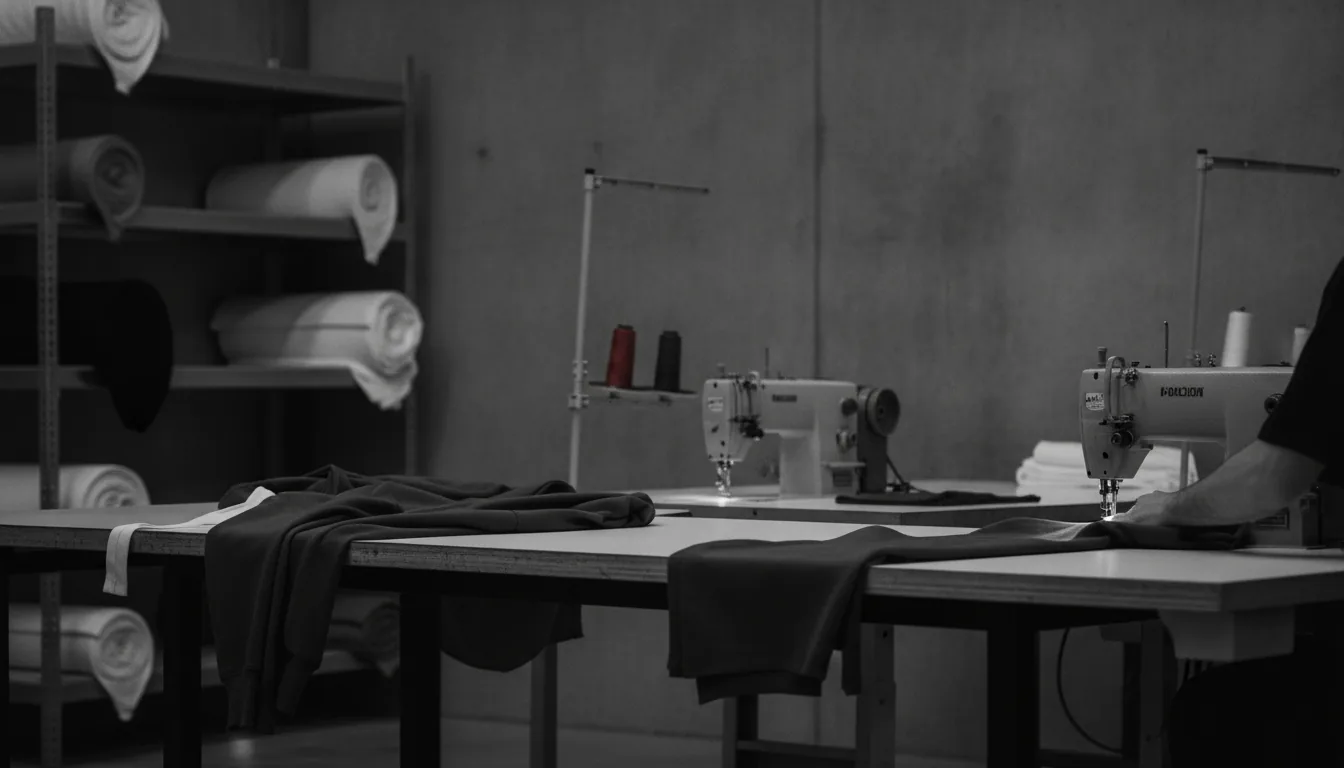
Large factories are structured around volume – a 1,000 to 5,000-piece minimum per style is common when a manufacturer’s line planning assumes a wholesale buyer, not a founder testing a first design. That minimum alone rules out most new streetwear brands, whose first drop rarely needs more than a few hundred units across several designs. A manufacturer built for startups instead structures its production runs around small-batch cutting, sampling capacity, and a MOQ that matches a founder’s actual order size rather than the factory’s own efficiency target.
Criterion 1: Minimum Order Quantity (MOQ)
MOQ is the first filter. A manufacturer offering 50 pieces per design, like Minku, lets a founder test two or three designs in a first drop without over-committing capital to a single graphic. A factory requiring 500 or 1,000 pieces per style forces a startup to either bet its entire budget on one unproven design or walk away entirely.
Criterion 2: Sampling Before Bulk Production
A pre-production sample is non-negotiable for a first-time brand. Without one, a founder is committing capital to a design, fit, and fabric they have never physically held. Manufacturers built for startups build a sampling round into the standard process, not as a paid add-on – Minku includes a sample approval step before any bulk cutting on each custom order.
Criterion 3: Fabric Quality & GSM Range
A startup-friendly manufacturer should offer a documented GSM range across product types – 240-280 GSM cotton for tees, 300-400+ GSM fleece for hoodies – rather than a single undisclosed “standard” fabric. Ask for the GSM in writing before ordering; a manufacturer that cannot answer this directly is a warning sign, not a minor gap.
Criterion 4: In-House Decoration Options
Screen print, DTG, puff or flat embroidery, acid wash, garment dye, tie-dye, and all-over print should all sit under one roof. Outsourced decoration adds a subcontractor, an extra shipping leg, and a second point of quality failure a founder cannot inspect directly. In-house capability keeps quality control and turnaround inside a single factory relationship.
Criterion 5: Private Label & Branding Capability
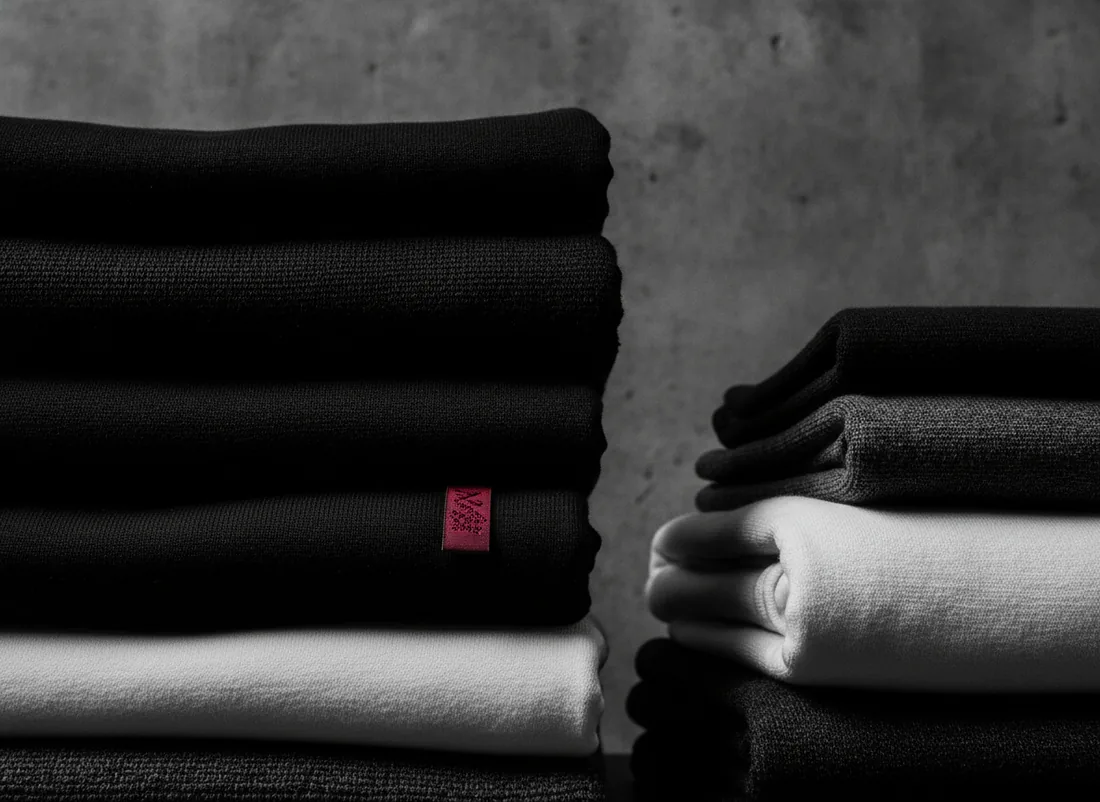
Custom neck labels, woven tags, hangtags, and branded packaging are what make a garment read as a brand’s own product rather than a decorated blank. A manufacturer that only offers a printed tag swap is not equipped for a brand planning to scale past its first drop.
Criterion 6: Communication & Tech Pack Support
First-time founders rarely arrive with a finished tech pack, and a manufacturer worth working with should be able to build one from a sketch, reference image, or rough measurement set rather than rejecting the inquiry outright. Clear, direct communication in the founder’s own time zone and language also matters more at this stage than at any later reorder, since early misunderstandings compound into fit and fabric problems a founder cannot afford on a first production run.
Criterion 7: Shipping & Landed Cost Transparency
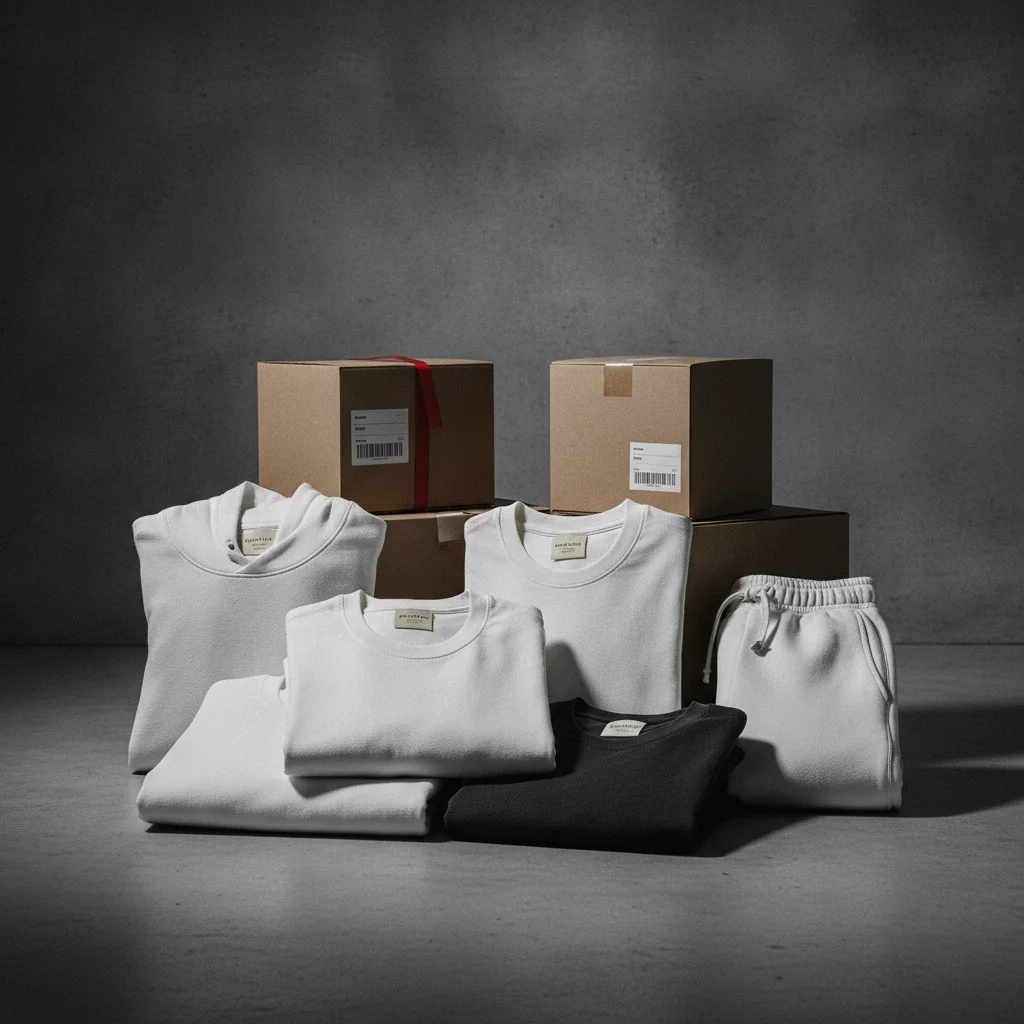
A startup budget cannot absorb a surprise customs bill after an order has already shipped. Worldwide DDP (Delivered Duty Paid) shipping bundles freight, duty, and customs clearance into one quoted landed cost, so a founder knows the exact number their goods will cost door to door before committing. Manufacturers that quote factory-gate pricing only, leaving freight and duty as a founder’s problem to solve later, push real risk onto a business that has the least room to absorb it.
Red Flags: How to Avoid Manufacturer Scams
- No willingness to provide a pre-production sample before a bulk deposit
- Vague or shifting pricing that changes after a deposit is paid
- No documented fabric GSM or composition
- Pressure to commit to a large first order “to get better pricing”
- No verifiable factory address, photos, or video call option
See how to avoid clothing manufacturer scams for a full checklist before wiring a deposit.
Startup-Friendly vs Wholesale-Only Manufacturer
Wholesale-Only Factory
- 500-5,000+ piece MOQ per style
- No sampling, or sampling as a paid extra
- Single undisclosed fabric option
- Outsourced decoration methods
- Factory-gate pricing only, duty handled by the buyer
Startup-Friendly Manufacturer (Minku)
- 50 pieces per design
- Pre-production sample included before bulk
- Documented GSM range, cotton to fleece
- In-house screen print, DTG, embroidery, washes
- Worldwide DDP – landed cost quoted up front
A Typical Onboarding Timeline With a Startup-Friendly Manufacturer
A founder reaching out for the first time can generally expect a rough sequence: an initial quote request with product, quantity, and design references; a tech pack draft returned for approval within a few business days; a pre-production sample produced and shipped for physical review; sample revisions if the fit or fabric needs a change; and finally a bulk production run once the sample is signed off. Knowing this sequence in advance helps a first-time founder set realistic expectations for how long a first drop takes from initial inquiry to finished garments landing at their door, and gives them a clear point at which to flag a manufacturer moving too slowly or skipping steps. Founders working across time zones from the USA, UK, or Europe should also confirm response-time expectations up front, since a manufacturer that answers within one business day keeps a first production run on schedule far more reliably than one that goes quiet between milestones.
Quality Control Expectations for a First Order
Ask any shortlisted manufacturer how quality is checked before a bulk shipment leaves the factory – a startup-friendly partner should describe a defined inspection process covering stitching, print placement, and fabric consistency across the full run, not a one-line assurance that “quality is good.” A factory that inspects a sample percentage of each production batch and flags issues before packing catches problems while they are still fixable, rather than after a founder has already received and paid for a flawed shipment. See clothing manufacturing quality control for the checks a founder should expect to see documented.
Overseas vs Domestic Manufacturing for a Startup Budget
Domestic manufacturing can offer shorter shipping times and a factory visit without a long flight, but it typically comes with a higher unit cost and a higher MOQ, since most domestic cut-and-sew facilities are structured around larger production runs. An overseas factory with a startup-appropriate MOQ, transparent DDP shipping, and sampling before bulk can outperform a domestic option on both cost and design flexibility for a founder’s first several drops. The right choice depends on how a founder weighs speed against unit economics at the earliest stage of the business – see overseas vs domestic clothing manufacturer for a full comparison.
Payment Terms a Startup Should Expect
A manufacturer built for new brands should offer a reasonable deposit-plus-balance structure – commonly a percentage down to confirm the order and the remainder due before shipment – rather than demanding full payment up front with no sample checkpoint in between. Requesting a written breakdown of payment milestones tied to sample approval and production stages protects a founder’s capital at the stage where it is hardest to replace. See clothing manufacturer payment terms for what a standard structure looks like.
How to Choose Between Shortlisted Manufacturers
Once a founder has narrowed a list to two or three candidates that pass the criteria above, the decision usually comes down to communication speed, sample turnaround time, and whether the factory can speak to a founder’s specific fabric and decoration questions in detail rather than generic marketing language. Requesting a video call with the actual production floor, not only a sales representative, is a reasonable ask at this stage and one a manufacturer confident in its own process should accommodate. See how to choose a clothing manufacturer for a deeper walkthrough of the vetting process.
How Minku Fits a First-Time Brand Founder
Minku Apparel manufactures custom streetwear from 50 pieces per design out of its factory in Pakistan, with sampling built into each order before bulk cutting begins. Fabric ranges from 240 GSM combed cotton to 400+ GSM fleece, decoration is handled in-house across screen print, DTG, embroidery, and wash finishes, and each order ships worldwide DDP with duty and customs already covered in the quote. Founders send a tech pack, a reference image, or a rough sketch, and the team builds the sample from there.
Ready to see whether Minku fits your first drop? Get Your Custom Quote or browse the full private label clothing manufacturer and custom streetwear manufacturer pages for the complete product range.
Best Streetwear Manufacturers for Startups (What to Look For) — In Detail