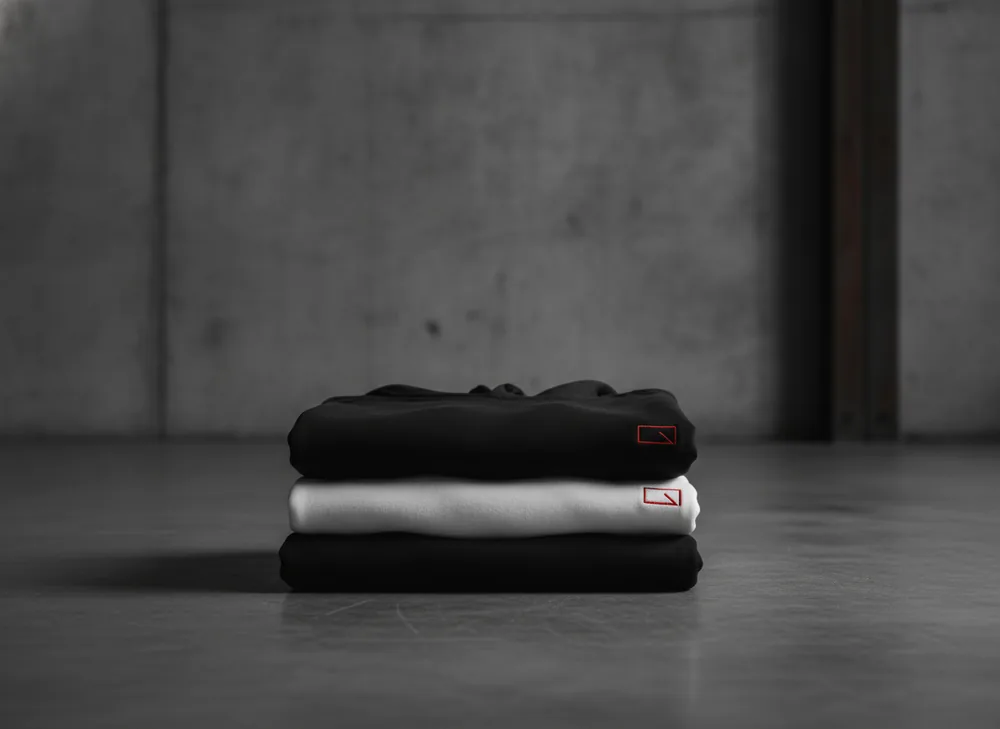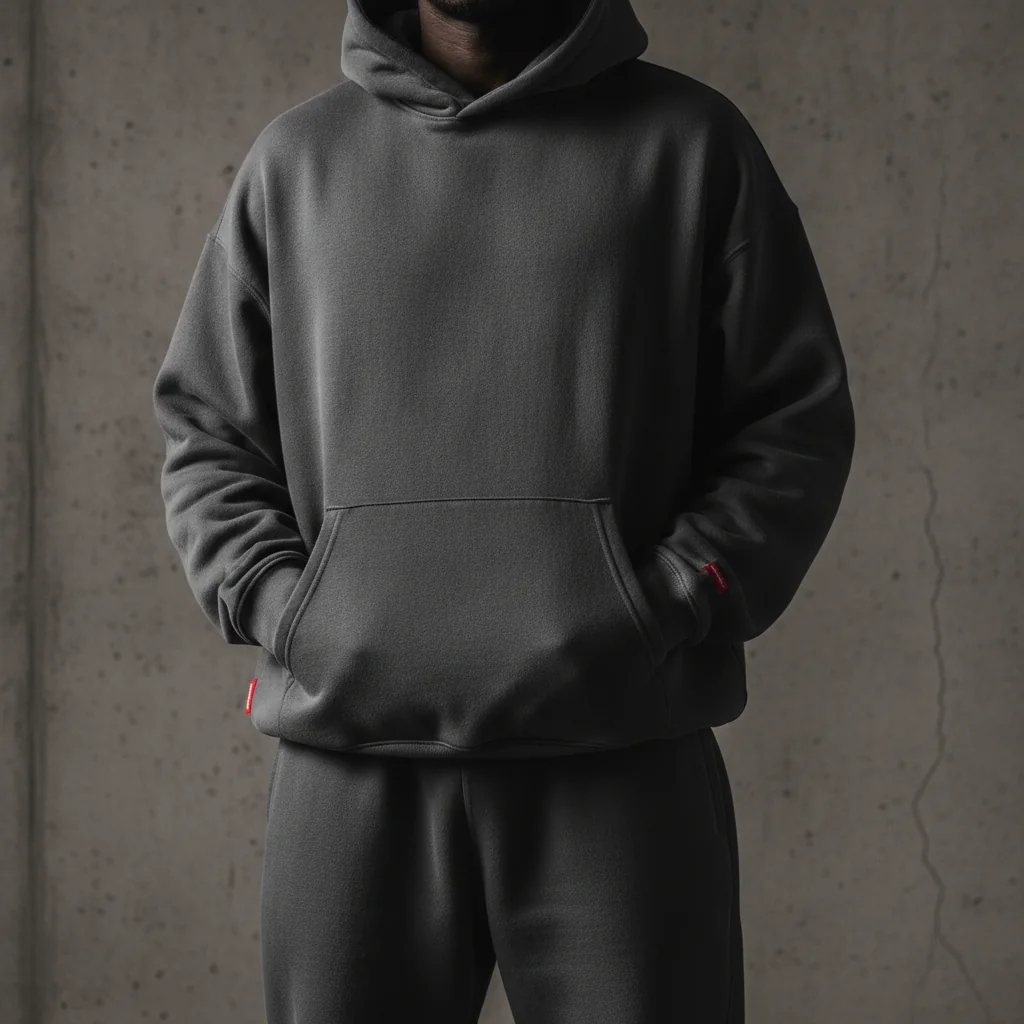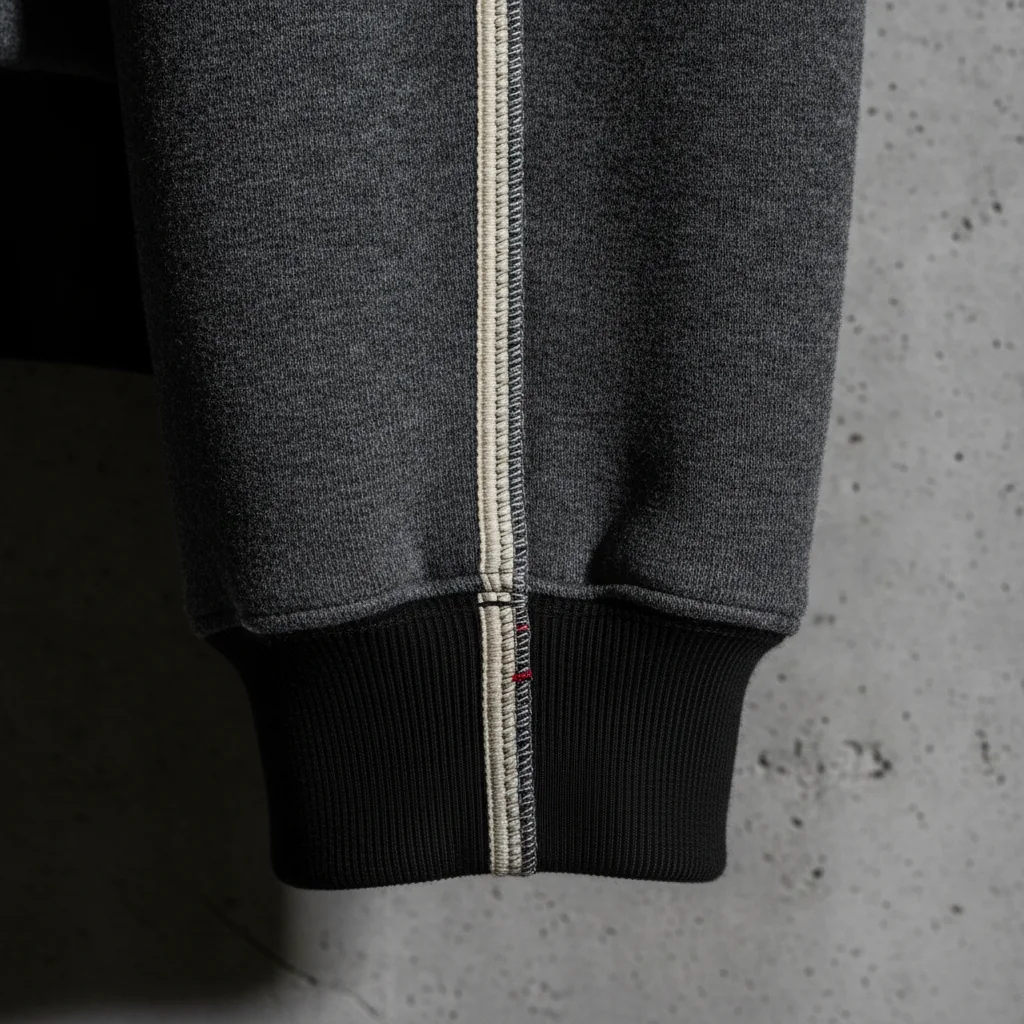
Wholesale sweatsuits win on speed and upfront cost; custom sweatsuits win on brand equity and margin. Wholesale means buying an existing blank or lightly branded design from a distributor’s catalog, while custom means Minku Apparel manufactures the fabric, fit, and decoration from your own design, private-labeled, from 50 pieces per design.
The right answer depends on what stage a brand is at and what it’s actually trying to build. This page breaks down the real differences in cost, ownership, timeline, and long-term brand value, so a founder can pick the route that matches the business, not only the immediate order.
Wholesale Sweatsuits
Buy an existing blank or catalog design, add a heat-press logo or hang tag. Fast, low commitment, no design ownership.
Custom Sweatsuits
Minku manufactures your fabric weight, fit, and decoration from a tech pack, private-labeled, from 50 pieces.
What “Wholesale Sweatsuits” Actually Means
Wholesale sweatsuits come from a distributor’s existing catalog – a pre-made blank crewneck-and-jogger set in a handful of stock colors and a single fit. A brand buys into that catalog, adds a printed or embroidered logo (often through the distributor itself, or a local print shop), and resells it. The garment’s fabric weight, fit block, and construction were decided by the wholesaler, not the brand – any other label buying from that same catalog is selling a near-identical base product.
What “Custom Sweatsuits” Actually Means
Custom manufacturing starts from the brand’s own tech pack – fabric weight, fit block (boxy, oversized, standard), decoration method, and trims are all specified by the brand and built by the factory. Minku’s process runs a pre-production sample before bulk cutting, so the brand confirms fit and fabric before committing to the 50-piece minimum. No other brand is selling the exact same garment, because the pattern and spec are proprietary to that order.
Cost Comparison
| Factor | Wholesale | Custom (Minku) |
|---|---|---|
| Minimum order | Often none or 12-24 pcs per style/color | 50 pcs per design/colorway |
| Unit cost at low volume | Lower entry cost | Higher entry cost, drops fast on reorder |
| Fabric control | Fixed by distributor | Brand chooses GSM, fiber, weave |
| Fit control | Fixed, one block | Brand’s own graded fit block |
| Design exclusivity | None – shared catalog | Proprietary to the brand |
| Private label depth | Logo/hang tag only, typically | Full – neck label, woven tags, packaging |
| Lead time | Days (in stock) | 3-5 weeks including sampling |
Why the MOQ Gap Matters Less Than It Looks
A 50-piece custom MOQ looks steeper than a 12-piece wholesale minimum on paper, but the comparison isn’t apples to apples. Wholesale minimums are per stock color of an existing blank; a brand still needs to buy several colors and sizes to build a real assortment, and each unit carries the same fabric and fit as any competing brand buying from that catalog. Minku’s 50-piece custom minimum builds a brand’s own fabric spec, fit, and private label into the first unit, meaning the brand isn’t paying twice – once for the blank, once for decoration – the way wholesale-plus-print routes often work out.
Brand Equity: The Factor Most Founders Underweight
A wholesale sweatsuit with a heat-press logo builds recognition for the logo, not the garment. A customer who feels the fabric, tries the fit, and notices the woven neck label is building trust in the product itself – and that trust is what supports a reorder, a price increase, or a wholesale-to-retailer pitch down the line. Brands that stay on wholesale blanks past their first year often find they’ve built an audience for a logo that could be printed on any factory’s stock garment, which caps how much pricing power the brand can ever claim.
When Wholesale Is the Right Call
- Testing a niche or audience before committing to design and tooling costs.
- Merch drops for events, teams, or influencer collaborations with a short shelf life.
- Extremely tight timelines where in-stock availability outweighs fit or fabric control.
When Custom Is the Right Call
- The brand has a defined fit, fabric weight, or silhouette it wants to own.
- The sweatsuit is a flagship or hero product in the line, not a side item.
- The brand plans to reorder the same design repeatedly and wants unit costs to improve over time.
- Retail or wholesale accounts expect distinct, non-catalog product.
Real Example: The Same Founder, Two Routes
A streetwear founder launching a debut collection ran a 24-piece wholesale-blank test with a printed logo to gauge demand – selling out in ten days but at a margin that barely covered ad spend. For the second drop, the same founder moved to a custom 320 GSM oversized crewneck-and-jogger set through Minku at the 50-piece MOQ, with puff embroidery and a private label. The second drop’s per-unit margin roughly doubled, and the brand could finally point to a garment competitors couldn’t simply reorder from the same catalog.
Sampling: The Step Wholesale Skips Entirely
Wholesale buying has no sampling stage – the product already exists, take it or leave it. Custom manufacturing includes a pre-production sample specifically so a brand can catch fit or fabric issues before 50 pieces are cut. That step adds roughly 7-12 days to the front of the timeline but removes the risk of discovering a fit problem after the full order has shipped.
Turnaround: Realistic Expectations
Wholesale product can ship within days because it’s already sitting in a warehouse. Custom production, including sampling, fabric sourcing, cutting, sewing, and decoration, typically takes 3-5 weeks for a first order and often faster on repeat orders of the same design, since the pattern and fabric spec are already confirmed.
How Minku Bridges the Gap
Minku’s 50-piece MOQ exists specifically to close the distance between wholesale’s low commitment and full custom’s brand value. A brand gets its own fabric weight, fit block, and private label finishing without needing to commit to the 150-300 piece minimums many overseas cut-and-sew factories require, and DDP shipping to the USA, UK, or Europe means the landed cost is fixed before the order ships.
Capital Required: A Realistic Cost Comparison
A 24-piece wholesale test order with a printed logo typically requires a modest upfront spend, most of it going to the blank garments themselves rather than product development. A 50-piece custom sweatsuit order through Minku requires a higher upfront number, but that spend covers tech pack development, the pre-production sample, fabric, cutting and sewing, decoration, and full private label finishing – work that on the wholesale route either does not exist or gets paid for again each time the brand wants to change fabric or fit. Brands comparing the two routes on a pure per-unit basis without accounting for what’s actually included often conclude wholesale is the lower entry route, when in practice the custom route is paying once for assets – the pattern, the fabric spec, the approved sample – that keep reducing cost on each future reorder.
Quality Control: Who’s Responsible
On the wholesale route, quality control sits with the distributor, and a brand has limited ability to change a stitching defect, a fabric weight complaint, or a shrinkage issue – the product is what it is. On the custom route, Minku runs quality control internally at multiple stages: fabric inspection on arrival, in-line checks during cutting and sewing, and a final inspection before private label finishing is applied. A brand also has direct input into the spec from the start, meaning quality issues get caught and corrected in the sample stage, before 50 pieces are committed to production rather than after a wholesale shipment has already arrived.
Scaling Path: From First Order to a Full Line
Brands that start with custom manufacturing from day one typically follow a predictable scaling path: a 50-piece first design to validate fit and fabric, a 150-300 piece reorder once the design proves it sells, and eventually a multi-design seasonal line built on the same fabric and trim relationships established in that first order. Brands that start on wholesale and move to custom later often describe the switch as a reset – the wholesale audience doesn’t automatically transfer expectations to the new custom product, since the fabric, fit, and price point usually shift meaningfully. Starting custom from the first drop, even at the 50-piece minimum, avoids that reset entirely.
What Retail and Wholesale Accounts Expect
A boutique or multi-brand retailer evaluating a new label almost always asks what’s exclusive about the product, and “sourced from the same wholesale catalog as several other labels” is a difficult answer to give a buyer. Custom manufacturing, even at a 50-piece minimum, gives a founder a straightforward answer: the fabric weight, fit, and decoration were specified by the brand and aren’t available from any competing label sourcing from the same wholesale distributor.
The Reorder Advantage Wholesale Doesn’t Have
Wholesale unit pricing rarely changes with volume in any meaningful way – a distributor’s catalog price is close to fixed whether a brand orders 24 pieces or 240. Custom manufacturing behaves differently: unit cost on a proprietary design drops meaningfully between the 50-piece MOQ and a 300-piece reorder, since the fixed costs (pattern development, sample, cutting marker setup) are already paid off. This means the gap between wholesale and custom pricing narrows, and often reverses, once a brand moves past its first reorder.
Ready to move from wholesale blanks to a garment your brand owns? Get Your Custom Quote and send your reference or tech pack. Learn more on the custom sweatsuit manufacturer page, check MOQ for custom sweatsuits, or see what makes a premium custom sweatsuit.
Wholesale vs Custom Sweatsuits: Which Is Right for Your Brand? — In Detail