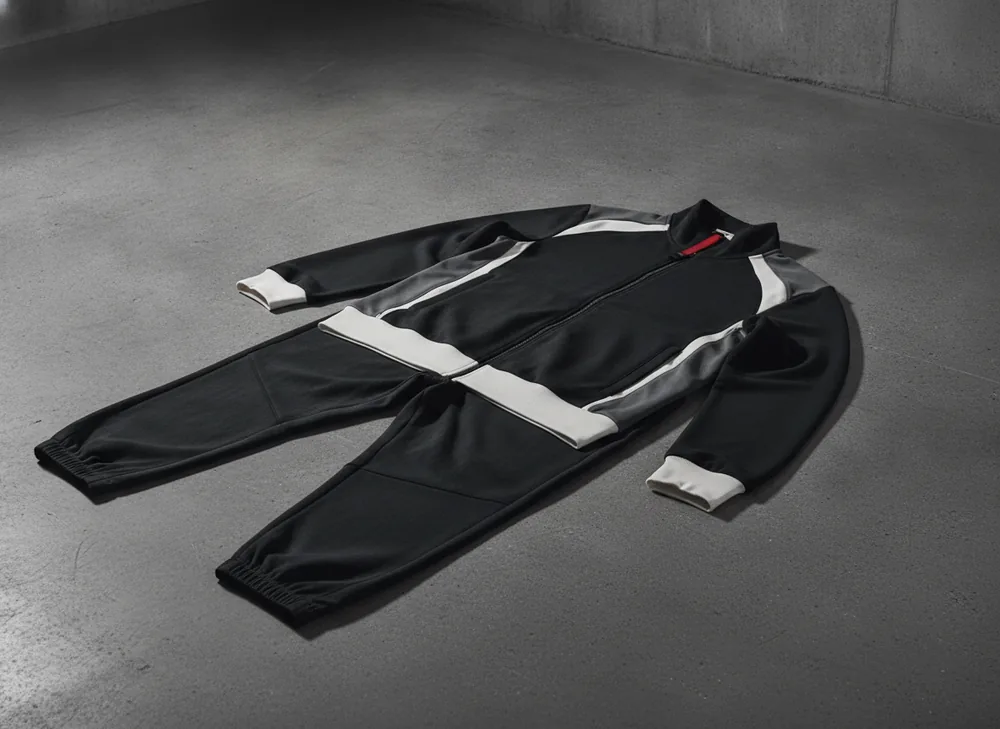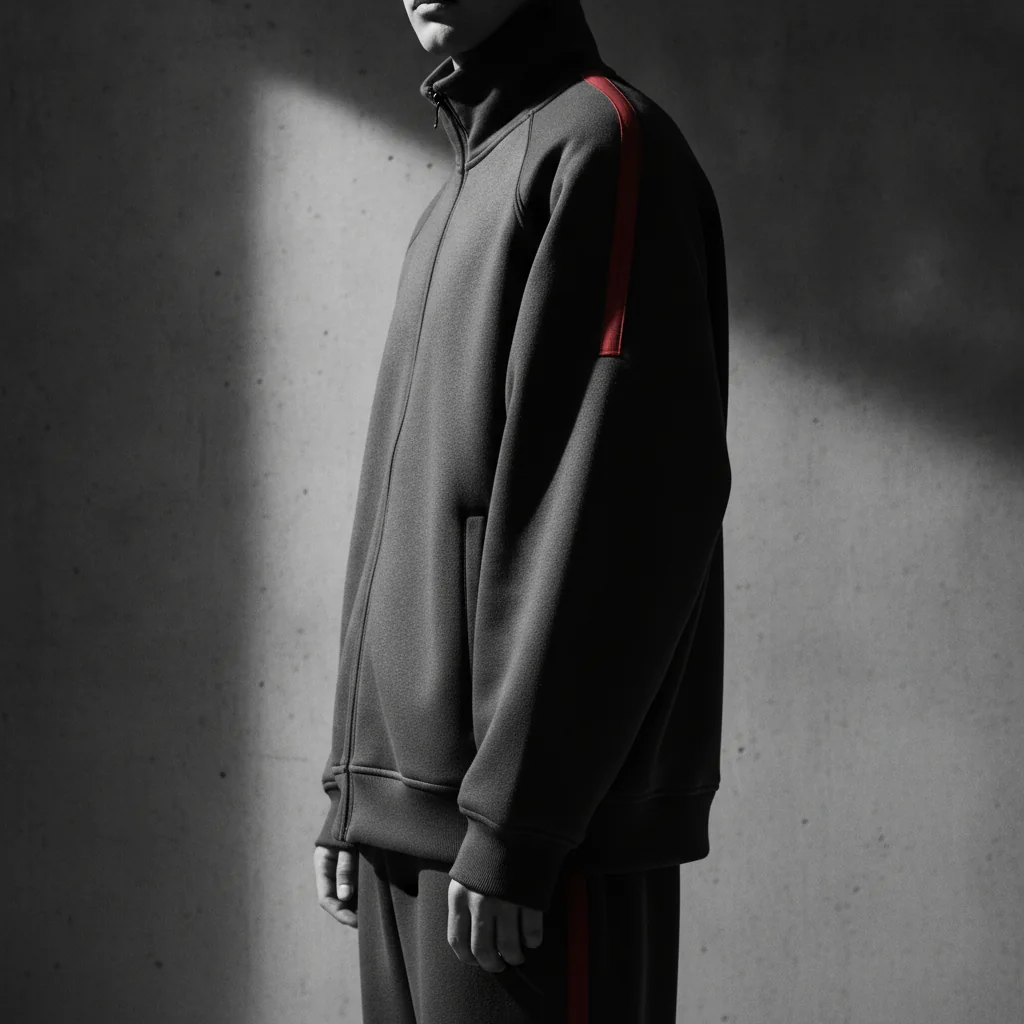
A premium custom tracksuit is defined by fabric weight, matched-set construction, and finish detail – not by the logo alone. Minku Apparel builds premium tracksuits from 260 GSM brushed-back fleece or French terry upward, with dye-matched trims, reinforced seams, and full private-label detail carried across both the jacket and the pant, so the set reads as one considered product rather than two garments that happen to share a colorway.
Brands sourcing their first tracksuit run often assume premium is a marketing label rather than a spec. It is not. This page walks through the fabric threshold, construction choices, and finishing detail that separate a tracksuit that reads premium on the rack from one that reads like a basic matching set – and how each choice is built into a Minku production run.
The Fabric Threshold for Premium
Fabric weight is the first signal a customer’s hand picks up before they read a single label. Below 240 GSM, a fleece tracksuit tends to feel thin and drapes loosely – fine for a basic matching set, but not the substantial hand a premium brand needs. We treat 260 GSM as the entry point for a premium build, running up to 320 GSM brushed-back fleece for a heavyweight set, or 240-280 GSM French terry when a brand wants the same premium hand in a lighter, warmer-climate garment.
Composition matters alongside weight. A cotton-rich fleece with a tight knit face holds its shape through repeated washes better than a low-cotton blend, and it takes screen print, embroidery, and puff print more cleanly. Velour, run at 300-360 GSM, delivers the plush retro hand that reads premium in a different register – softer to the touch, with more visual depth in the color.
Construction Details That Separate Premium From Basic
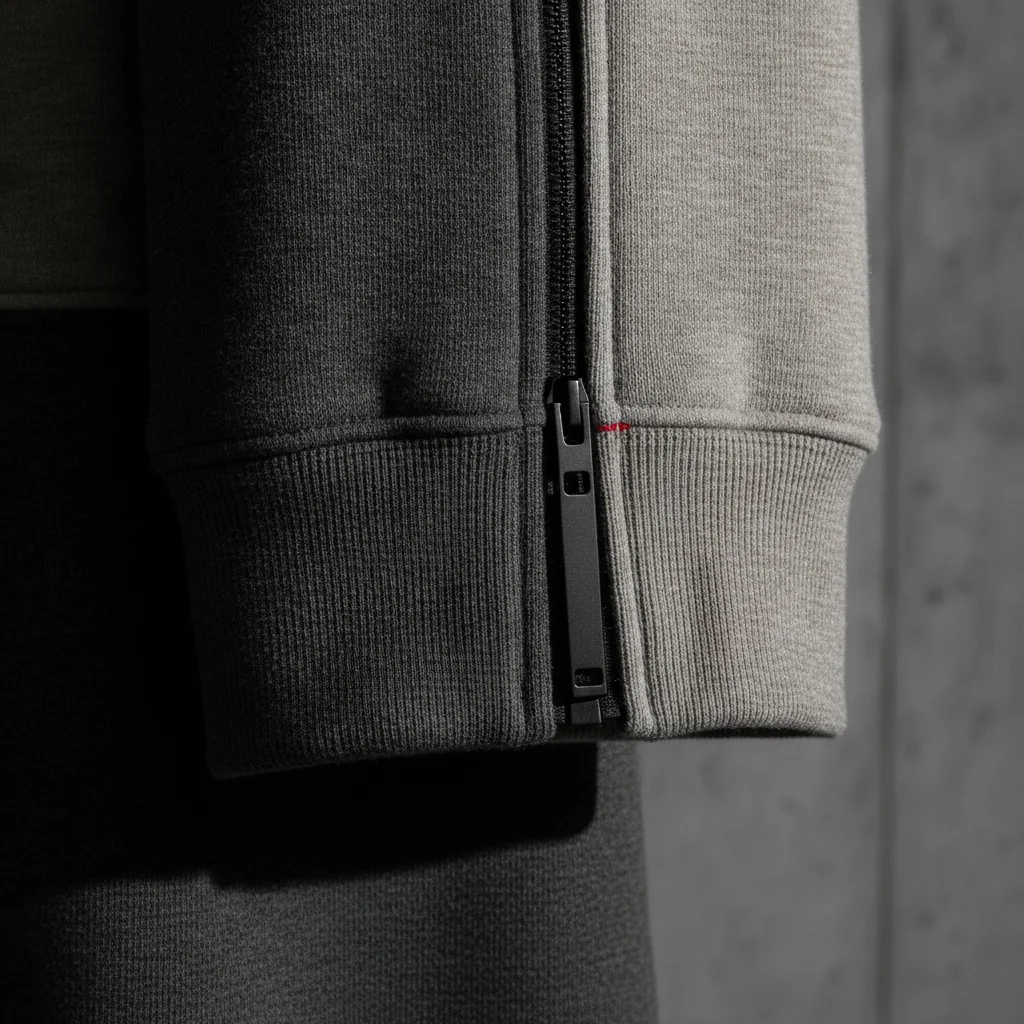
Fabric weight sets the foundation; construction is where premium shows in the details a customer notices after the first wear. Flatlock or overlock seams that lie flat against the skin, double-needle stitching at stress points like the underarm and crotch, and a ribbed cuff, hem, and collar knit tight enough to hold shape after repeated washing all separate a considered build from a basic one. Zipper quality on the jacket – a smooth-running zip with a matched-color tape – is one of the first things a customer’s hand tests.
Drawcords at the hood or waistband, toggle finishes stamped to the brand, and a ribbed waistband on the pant that keeps its shape through wear are the small specs that compound into a premium feel. None of these are visible in a product photo the way a print is, which is precisely why they matter – they show up on the body, in the store dressing room, and in daily wear.
Fit and Silhouette Choices
Premium is not one fit – it is a fit decision executed with discipline. A regular fit tracksuit, cut close to the body without being tight, reads clean and considered when the proportions are graded carefully across the size range. An oversized set, with a dropped shoulder and wider body, reads premium when the width is intentional and consistent rather than a loose approximation of oversized. A retro tapered silhouette, narrower through the leg with a fuller jacket body, plays into archive and heritage streetwear codes.
Whichever silhouette you choose, the jacket and pant have to be graded together as one set so the proportions read as coordinated – a jacket cut for an oversized fit paired with a narrow-leg pant looks unintentional rather than styled. We grade both pieces from the same block so the set holds its silhouette across each size.
Decoration That Reads Premium
How a design is applied matters as much as the design itself. Puff embroidery and flat embroidery both carry a dimensional, tactile finish that reads premium on a chest logo or a small back mark, especially against a heavyweight fleece base. Screen print delivers bold, opaque graphics for larger chest or back placements, while tonal prints – a design printed close to the fabric’s own color – carry a considered, fashion-led look rather than a loud logo drop.
Placement discipline matters too: a premium tracksuit rarely stacks multiple competing graphics across one set. A single chest mark on the jacket, a matching small placement on the pant leg or pocket, and restraint elsewhere reads considered. Acid wash and garment dye finishes, applied after construction, add a worn-in premium character that a straight-off-the-loom fabric cannot match.
Private-Label Detail
The inside of a tracksuit carries as much premium signal as the outside. A woven neck label rather than a printed one, a stamped drawcord toggle, matched printed care instructions, and a hem tag on both jacket and pant all read as intentional branding rather than an afterthought. Custom hangtags and branded packaging finish the impression before the customer even opens the poly bag.
These details cost little relative to the garment itself, but they are what separates a private-label product from a decorated blank. Each Minku tracksuit ships with full private-label detail as standard – see our private-label manufacturing program for the complete branding menu.
| Spec | Entry Tracksuit | Premium Tracksuit |
|---|---|---|
| Fabric weight | 200-240 GSM | 260-360 GSM |
| Seams | Standard overlock | Flatlock / reinforced stress points |
| Trims | Basic zipper, unmatched dye | Matched-color zipper, dye-matched trims |
| Decoration | Single large print | Embroidery, tonal print, considered placement |
| Labeling | Printed label | Woven label, stamped toggle, hangtag |
Matching Consistency Across the Set
A tracksuit is judged as a pair, and the fastest way to undercut a premium build is a visible mismatch between the jacket and the pant – a shade difference from separate dye lots, a rib knit on the cuff that does not match the waistband, or a print color that reads slightly off between the chest and the pant leg. We dye the fabric for both pieces from the same lot and source trims together specifically to prevent this, and the pre-production sample checks the pairing side by side before bulk is cut.
A Real Example
A founder-led streetwear label building its second collection moved from a 220 GSM entry-level fleece set with a single printed logo to a 300 GSM heavyweight build with puff-embroidered chest branding, a woven neck label, and a stamped drawcord toggle – keeping the same silhouette but rebuilding the fabric and finish. Sell-through on the reorder outpaced the original run, and the brand credited the shift in wholesale buyer interest directly to the hand-feel difference customers noticed on the rack.
MOQ and Sampling for Premium Builds
Premium specs do not raise the minimum – the floor stays at 50 sets per design and colorway, the same as an entry-level build. What changes is the sampling conversation: a heavier fabric, matched trims, and considered decoration placement take a slightly closer look at the pre-production sample stage, since there are more coordinated details across the jacket and pant to confirm before bulk cutting starts. See our full breakdown of MOQ for custom tracksuits for how the minimum is structured.
Cost Factors Behind a Premium Build
Four variables move the cost of a premium tracksuit relative to an entry-level set: fabric weight, trim quality, decoration method, and private-label detail. Fabric weight is the largest single factor – heavier fleece and velour cost more per yard than a lighter entry-weight fleece, and that cost carries through the jacket and pant together since both pieces are cut from the same fabric. Trims come next: a matched-color zipper and dye-matched rib knit cost more than an unmatched, off-the-shelf equivalent, but the visual payoff on a coordinated set is direct and immediate.
Decoration method is the third factor – embroidery generally costs more per unit than a single-color screen print, though it carries a premium finish that a customer feels as well as sees. Private-label detail is the smallest line item of the four but the one most brands underspend on: a woven label, a stamped toggle, and a branded hangtag add a modest amount to the unit cost while contributing directly to how premium the finished set feels in hand.
Where Brands Overspend Without Gaining Premium Perception
Not each upgrade reads as premium to a customer, and it pays to know where the return diminishes. Stacking three or four decoration methods on one set – embroidery, screen print, and puff print all on the same jacket – tends to read as cluttered rather than considered, and it adds cost without adding perceived value. Similarly, pushing fabric weight past 360 GSM on a warmer-climate market brings diminishing returns, since the customer feels the garment as heavy rather than premium if it does not suit local wear conditions.
The stronger path is concentrating the budget on the details a customer’s hands and eyes register first – fabric hand, matched color across the set, and a clean, restrained decoration placement – rather than adding features that compete with each other for attention on the same garment.
How Minku Builds Your Premium Tracksuit
We start with your tech pack and lock the fabric weight, trims, decoration, and private-label detail against your target price point. A pre-production sample confirms the full set – fit, fabric, matched colorway, and finish – before bulk cutting begins, and each unit passes quality control against that approved sample. Finished sets ship worldwide Delivered Duty Paid, so import duty and customs handling are already built into your landed cost.
See our custom tracksuit manufacturing program for the full spec menu, or compare a considered custom build against buying stock sets on our wholesale versus custom tracksuits guide. Ready to spec your build? Get your custom quote and we will cost the fabric and finish your brand needs.
What Makes a Premium Custom Tracksuit? — In Detail