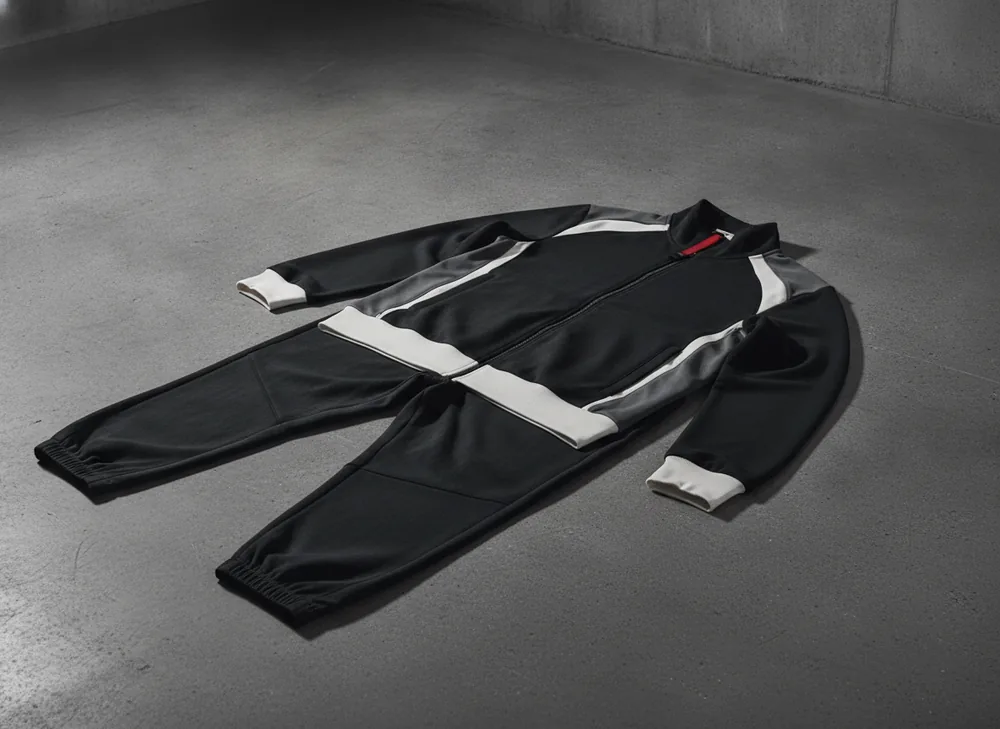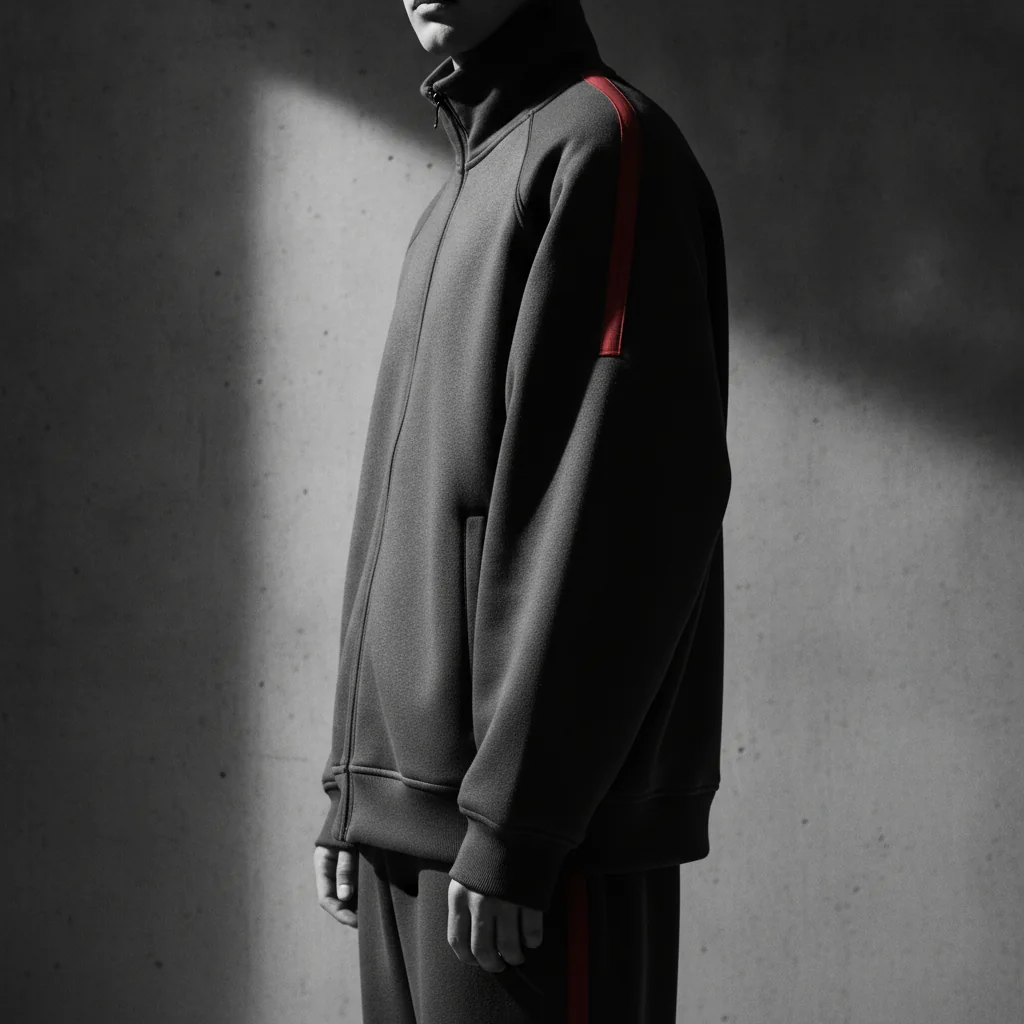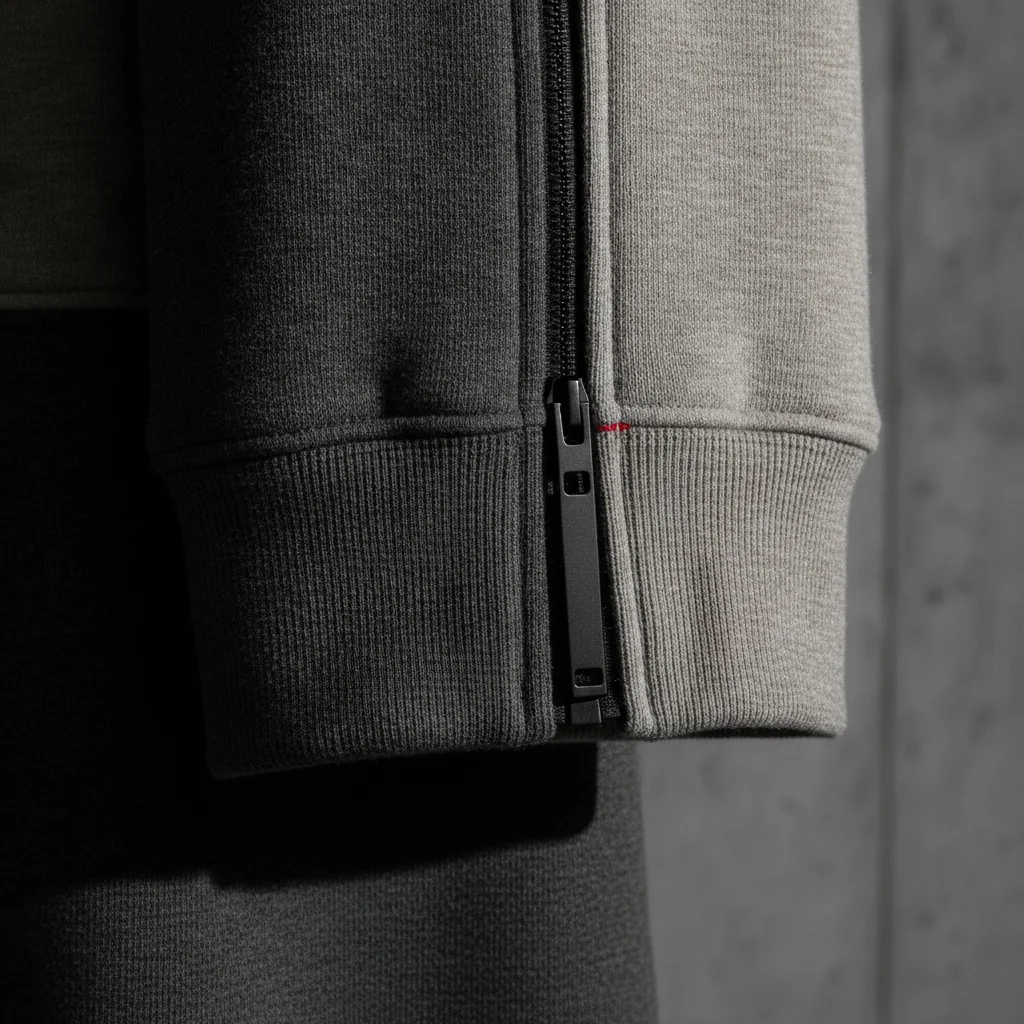
Minku Apparel’s MOQ for custom tracksuits is 50 pieces per design – a matched jacket-and-pant set, built in one fabric and one colorway, sampled and approved before bulk cutting starts. That number buys a full coordinated two-piece look, not a solo garment, so a minimum order is 50 complete sets, not 50 loose pieces of fabric cut on their own.
For a brand planning a first tracksuit drop, that minimum decides whether the numbers work before a single roll of fleece is cut. This page breaks down what the 50-piece minimum covers, what pushes it higher, and how to plan a capsule that clears the floor without tying up capital in stock you have not sold yet.
What the 50-Piece Minimum Actually Buys
The MOQ applies per design and per colorway, and it covers the jacket and the pant cut together as one matched set. Fifty pieces means fifty complete sets – fifty jackets paired with fifty pants, in the same fabric lot, the same colorway, and the same trims – not fifty of one garment and a smaller run of the other. Decoration is counted in that same order: if your spec calls for an embroidered chest logo and a printed back graphic, both are built into the 50-piece run, not treated as a separate order.
Private-label detail is included at the floor too. Woven neck labels, printed care tags, a drawcord toggle stamped to your brand, and custom hangtags and packaging all ship as standard on a minimum order – there is no separate branding minimum layered on top of the garment MOQ. Design work and a pre-production sample sit ahead of that count and are not counted against the 50 pieces; they are the step that confirms the set before bulk is cut.
Why a Matched Set Carries Different Math Than a Single Garment
A tracksuit order is two garments manufactured to match, and that changes how a factory sets a floor. The jacket and the pant must come from the same fabric dye lot so the colorway reads identically across both pieces – a mismatched lot shows up as a visible shade difference the moment a customer holds the jacket next to the pant. Trims have to be sourced to match too: the same rib knit for cuffs and waistband, the same zipper tape color, the same drawcord and toggle finish across the whole run.
Because of that coordination, most manufacturers treat a tracksuit set as a single production unit rather than two independent garments, and the 50-piece floor reflects that. It is set to cover the minimum fabric yardage, matched trims, and cutting-table efficiency needed to produce a coordinated set – not the smaller minimum that a single hoodie or a single pair of joggers might clear on its own. Ordering a jacket-only or pant-only run outside a matched set is possible, but it is quoted and MOQ’d as a separate single-garment program.
How Fabric Choice Changes the Minimum
The 50-piece floor holds across each fabric option we run for tracksuits, but the fabric you choose still shapes how a first order should be planned. Brushed-back fleece from 260 to 320 GSM is the standard base for a matching set – a heavyweight knit that holds structure through both the jacket and the pant and takes screen print and embroidery cleanly. French terry runs lighter, 240 to 280 GSM, with a looped inner face that suits warmer-climate markets or a softer hand than fleece.
Nylon shell tracksuits, built for a retro track-jacket silhouette, and velour sets, with their plush retro finish, both clear the same 50-piece minimum at Minku – we hold one floor across fabric types rather than raising it for specialty builds. What does change is colorway math: running a nylon shell design across five colorways multiplies total units to 250 sets even though each individual colorway clears the 50-piece floor on its own, since each colorway is priced and produced as its own minimum run.
| Fabric | Typical GSM | Best For |
|---|---|---|
| Brushed-back fleece | 260-320 | Day-to-day matching sets, screen print and embroidery |
| French terry | 240-280 | Lighter warm-weather sets, softer drape |
| Cotton-poly blend | 240-300 | Reorder color consistency |
| Nylon shell | Woven, not knit | Retro track-jacket silhouettes |
| Velour | 300-360 | Plush retro two-piece sets |
A First-Drop Example
Consider a founder building a debut tracksuit capsule. The brand orders one design – a fleece set with an embroidered chest logo on the jacket and a screen-printed back graphic on the pant – in a single core colorway of washed black, at the 50-set minimum. That single run clears the floor in one colorway and one fabric lot, keeps the tech pack and sample simple, and lets the brand test the set at retail before committing to more colorways.
A second brand, further along, plans a three-colorway launch of the same design – black, sand, and olive – at 50 sets each, for a total order of 150 sets. Because the pattern and trims are already locked from the first colorway’s sample, adding colorways two and three moves faster through production than the original sample-and-approve cycle, since only the dye lot and print color change.
Sampling Before Your MOQ Run
Each tracksuit order runs through a tech pack and a pre-production sample before bulk cutting starts, and that sample covers the jacket and pant together as one set. You are not approving two garments separately – you are approving the pairing: does the jacket length sit right against the pant rise, does the colorway match across both pieces, does the embroidery placement on the chest read correctly next to the printed back graphic on the pant.
This step exists specifically because a mismatched set is the most visible flaw a tracksuit can carry. Approving both pieces together, side by side, before we cut the full 50-piece run is what keeps the finished product looking like one considered design rather than two garments that happen to ship in the same box.
Scaling Past the Minimum: Reorders and Colorways
Once the sample is approved and your first colorway is in production, scaling gets faster and, at volume, less costly per unit. A second or third colorway on the same locked pattern skips most of the sampling cycle since the fit, trims, and construction are already confirmed – only the fabric dye lot and decoration color need to be matched. Per-set pricing typically steps down as total order volume rises across a season, which is why many brands plan a first drop at the 50-set floor in one colorway, then place a larger reorder once sell-through data comes in.
Consistency across reorders matters as much as the size of the run. We log the approved fabric weight, dye standard, and trims to the original tech pack, so a reorder placed months later produces a set that matches the first drop exactly – not a close approximation.
Planning Capital Around the Minimum
Fifty sets is a real cash commitment, and it pays to plan against sell-through rather than against the floor alone. A matched fleece set at the entry weight and finish typically requires a smaller upfront spend per unit than a heavyweight velour or nylon shell build, since fabric cost and trims scale with the fabric choice, not the piece count. Brands new to tracksuit manufacturing often start at the fleece end of the range specifically because it clears the same 50-set floor at a lower fabric cost than velour or a woven nylon shell.
A useful way to budget a first order is to price the sample first, confirm the landed cost per set on the full 50-piece run including DDP shipping, then set a retail or wholesale price that clears that cost with enough margin to fund a second colorway once the first sells through. Treating the MOQ as a floor to plan sell-through against, rather than a number to simply clear, is what keeps a first tracksuit drop from tying up more capital than the brand can move.
Common Mistakes When Ordering Near the Minimum
The most frequent misstep is splitting the 50-piece floor across too many colorways before any of them have sold – five colorways at ten sets each is not a workable order, since 50 sets is the floor per colorway, not a total to divide up. A second common mistake is skipping the pre-production sample to save time, which on a matched set is where a jacket-to-pant mismatch would otherwise surface for the first time in the bulk run rather than on a single approved sample.
A third is choosing a specialty fabric like velour or a nylon shell for a first-ever order without first confirming the fit and proportion on a lower-cost fleece sample, since the pattern and grading carry over once confirmed. Locking the fit on a fleece sample first, then applying the same confirmed pattern to a specialty fabric reorder, reduces the risk of committing 50 sets to an unproven silhouette.
How Minku Apparel Handles Your First Tracksuit Order
We build each tracksuit order the same way regardless of size: lock the tech pack, produce a matched pre-production sample covering both the jacket and the pant, get your sign-off, then cut the 50-piece minimum run under quality control. In-house decoration – screen print, DTG, and puff or flat embroidery – is applied to both pieces to spec, and full private-label detail ships as standard: your labels, your tags, your packaging.
Finished sets ship worldwide on a Delivered Duty Paid basis, so import duty and customs handling are already built into your landed cost with no bill waiting at the border. See our full custom tracksuit manufacturing program for the complete spec menu, or compare the numbers against buying stock sets on our wholesale versus custom tracksuits guide. When you are ready to lock a design, get your custom quote and we will cost your exact spec.
What Is the MOQ for Custom Tracksuits? — In Detail