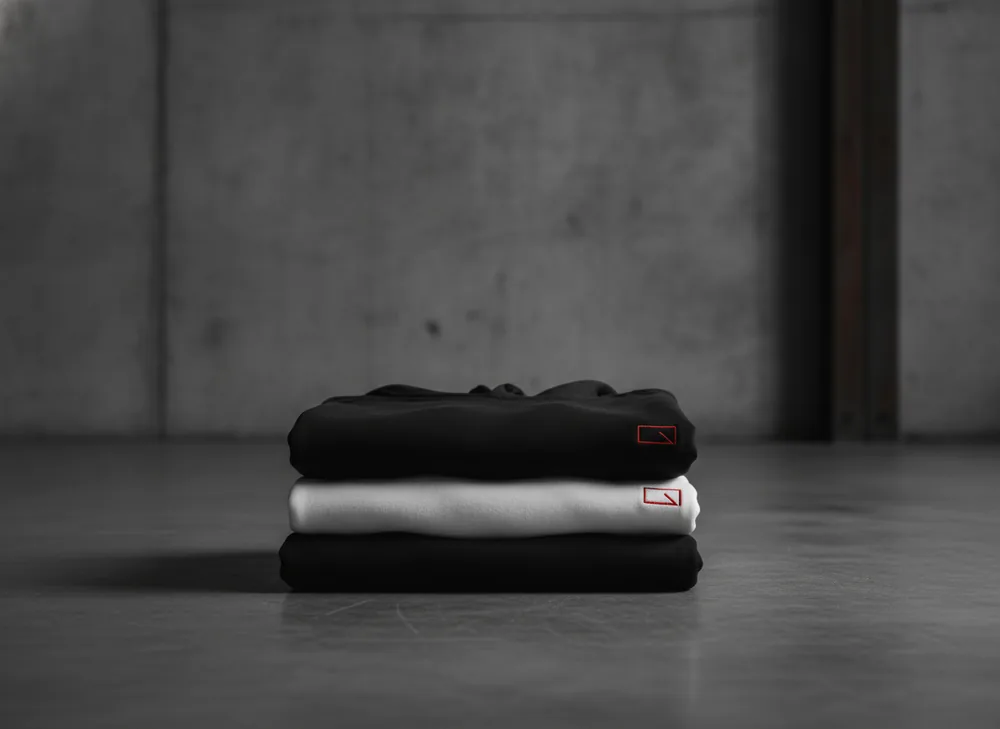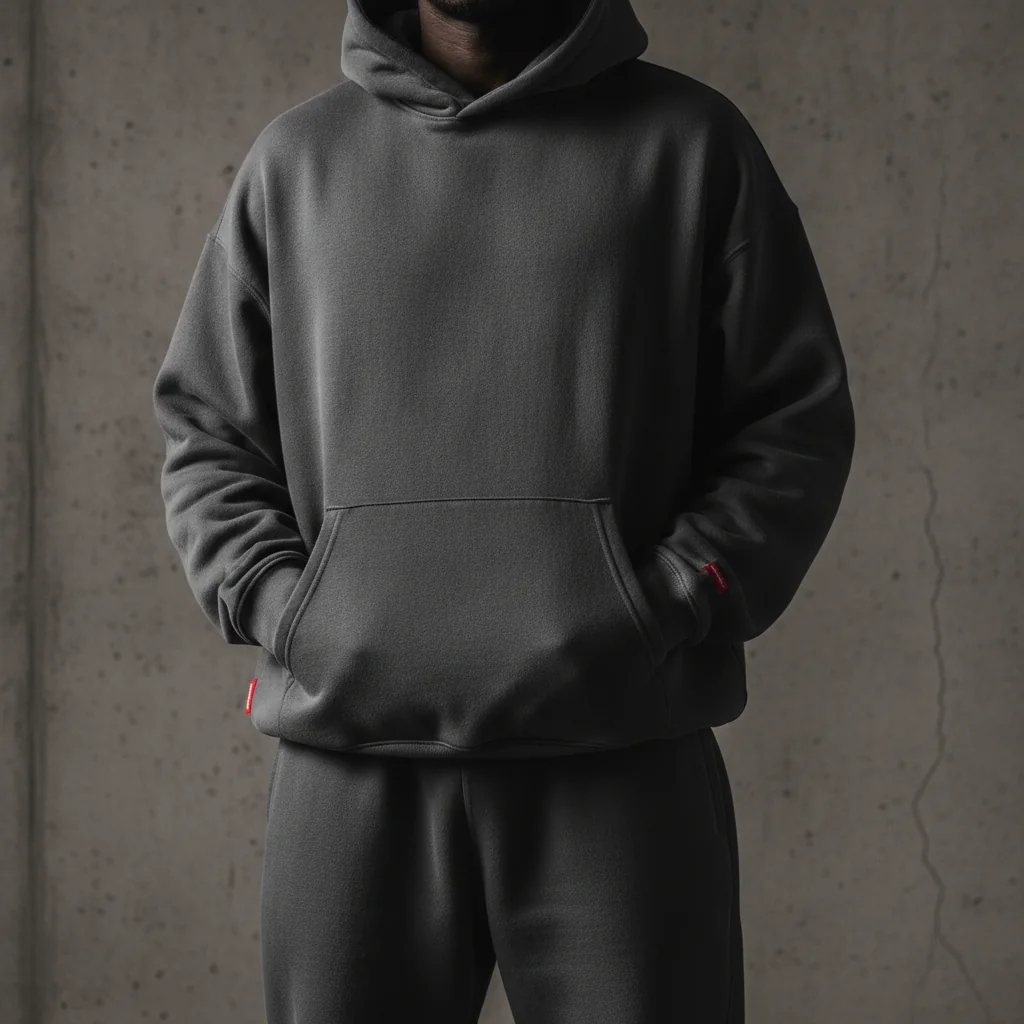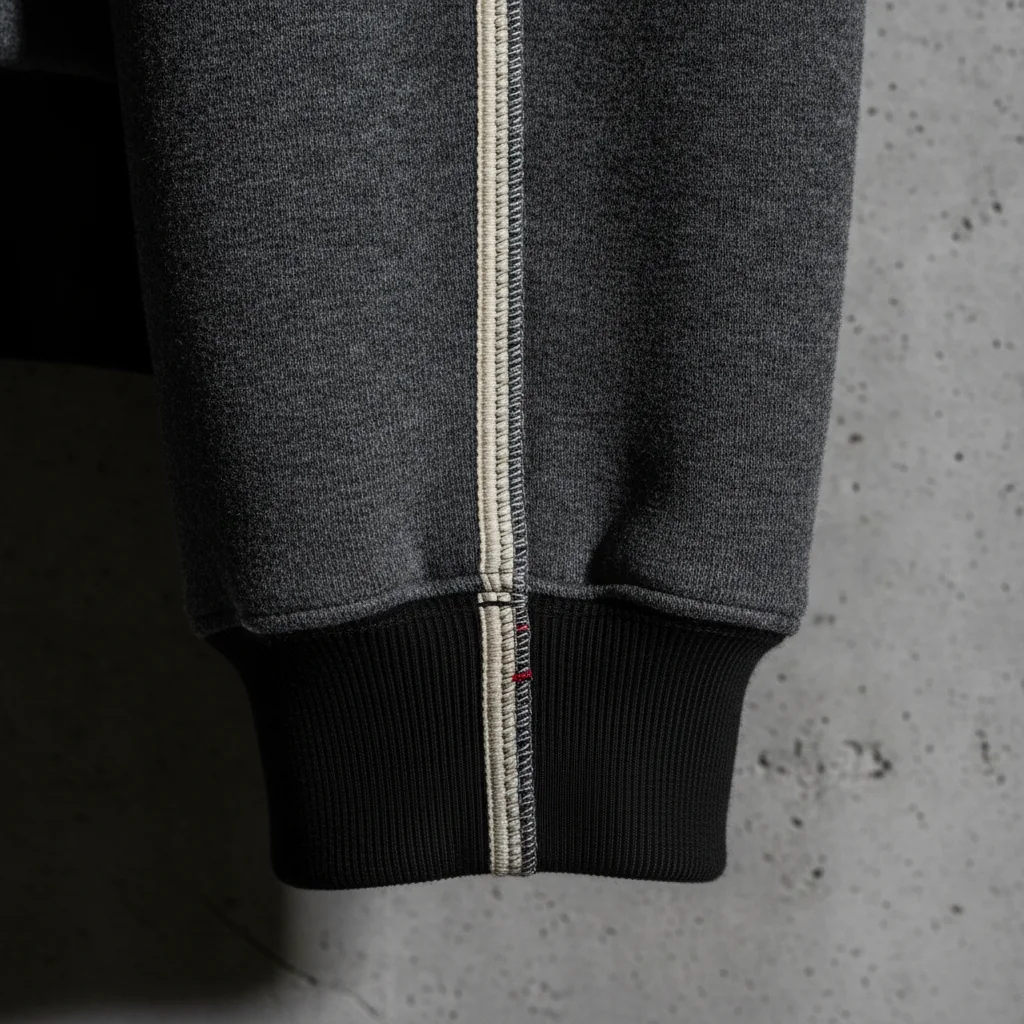
A premium custom sweatsuit is defined by 320+ GSM fabric, a matched dye lot, reinforced construction, and full private-label finishing working together. Strip out any one of those four and the garment reads as mid-range no matter how clean the print looks.
Brands often assume “premium” is a marketing word applied after the fact. In manufacturing, it’s a specification decided before a single yard of fabric is cut. This page walks through exactly what separates a premium sweatsuit from a standard one – fabric, construction, decoration, fit, and finishing – and how Minku Apparel builds that standard into each 50-piece minimum run.
Fabric Weight Is the First Signal
GSM (grams per square meter) measures fabric density, and it’s the single biggest driver of how a sweatsuit feels in hand and holds up over a wash cycle. Entry-level sweatsuits run 180-220 GSM – light, prone to pilling, and thin enough to show seam puckering under a print. Premium sweatsuits start at 320 GSM and commonly run to 400+ GSM in fleece, giving the garment structure, drape, and a heavyweight hand-feel that reads as considered rather than mass-produced.
Minku sources French terry for a lighter, looped-back premium feel suited to warmer climates, and brushed fleece for maximum weight and warmth in the 350-400+ GSM range. Both are cut from the same premium cotton-blend base, so the choice comes down to end use, not quality tier.
Construction Details That Separate Premium From Standard
Matched Dye Lots
A crewneck and jogger cut from two different dye batches can look mismatched under daylight even when both are labeled the same color name. Premium production locks the top and bottom to a single dye lot, confirmed against a lab dip before bulk cutting, so the set reads as one garment rather than two separately sourced pieces.
Reinforced Seams and Bar-Tacking
Pocket corners, drawcord eyelets, and the crotch seam on joggers take repeated stress. Premium construction reinforces these points with bar-tack stitching and double-needle seams, which is the difference between a sweatsuit that survives 100 wash cycles and one that frays at the pocket within a season.
Rib Knit Cuffs and Waistbands
Standard sweatsuits often use a thin, single-layer rib that loses its stretch-back after a handful of washes. Premium builds use a heavier ribbed cuff and waistband with better elastane rebound, so the fit at the wrist, ankle, and waist holds its shape rather than sagging.
Decoration Method Changes the Premium Read
The decoration on a sweatsuit is where “premium” becomes visible at a glance:
- Puff embroidery: raised, dimensional logo work that reads as premium immediately – the go-to for a sweatsuit brand’s flagship drop.
- Screen print with high-density ink: a thicker ink deposit than standard flat screen print, giving a soft-hand raised texture without embroidery’s cost.
- Garment dye: the entire cut-and-sewn sweatsuit is dyed after construction, producing a color depth and slight vintage softness standard piece-dyed fabric can’t replicate.
- Acid wash or tie-dye: distressed, one-of-one finishes that carry a premium price point in retail specifically because each piece is genuinely unique.
Minku produces all of the above in-house, meaning a brand can combine, for example, puff embroidery on the chest with a garment-dyed base, without routing the order through a third-party decorator that adds cost and turnaround risk.
Fit Engineering
A premium sweatsuit fit is graded, not guessed. Minku builds a size run from a confirmed sample block – oversized, boxy, or standard – and grades each size up and down from that block so a Small and an XXL share the same proportions and drape, rather than simply scaling a single pattern uniformly (which distorts sleeve and rise proportions at the size extremes). That grading discipline is what makes a size run feel intentional across the whole curve instead of only fitting well in the sample size.
Private Label Finishing Is Non-Negotiable
A sweatsuit with a factory-blank tag sewn in is a wholesale blank no matter how heavy the fabric is. Premium private label finishing includes a custom woven or printed neck label, a brand tag at the hem or hip, care and content labels compliant with destination-market requirements, and retail-ready packaging (polybag, hangtag, and often branded tissue or a branded mailer box). Minku builds all of this into each order from 50 pieces, so the smallest test run still ships looking like a finished retail product, not a sample.
Cost of Building Premium vs Standard
| Spec | Standard sweatsuit | Premium sweatsuit |
|---|---|---|
| Fabric weight | 180-220 GSM | 320-400+ GSM |
| Dye lot control | Not guaranteed matched | Locked, lab-dip confirmed |
| Seam reinforcement | Single needle, minimal bar-tack | Double needle + full bar-tack |
| Decoration | Standard flat print | Puff embroidery / high-density print / garment dye |
| Finishing | Generic or no label | Full private label + retail packaging |
| Relative unit cost | Lower | 15-30% higher, reflected in retail price |
How a Founder Brand Used This to Position a Launch
One label Minku produced for launched a five-piece capsule at 400 GSM brushed-back fleece with tone-on-tone puff embroidery and a garment-dyed washed black colorway. The founder’s brief was explicit: no flat screen print, no unmatched dye lots, and full private label from the first 50-piece run. The capsule sold through its first drop in under three weeks at a price point roughly double a standard sweatsuit, and the brand’s second order scaled to 300 pieces on the same spec – proof that the premium build earned the retail price rather than simply inflating cost.
Real Examples: What a 320 GSM Set Feels Like vs a 400 GSM Set
A 320 GSM French terry set drapes with movement, suits warmer-climate markets, and works for a brand targeting a year-round streetwear look. A 400 GSM brushed fleece set has structure and weight from the moment it’s picked up, holds a boxy or oversized silhouette without needing an internal lining, and suits cold-climate markets or a flagship “hero piece” positioning. Neither is objectively better – the choice depends on the brand’s target market and price point, which is exactly the conversation Minku has with a brand before the tech pack is finalized.
How Minku Builds Premium Into Each Order
Each sweatsuit order at Minku – from the 50-piece minimum to a 500-piece reorder – runs through the same pre-production sample, fabric lab dip, and construction spec review. Premium isn’t an upgrade tier bolted onto a base product; it’s the default build standard, with fabric weight, decoration method, and finishing chosen by the brand at the tech pack stage.
Trims and Hardware That Signal Premium
Small components carry outsized weight in how premium a sweatsuit reads. Metal-tipped drawcords instead of plain fabric cord, sturdy zippers on a zip-through hoodie top, and flat-lock stitching at the inseam instead of a visible overlock seam are all details a customer notices in the first thirty seconds of handling a garment. Minku sources these trims to spec rather than defaulting to whatever the factory has on the shelf, so a brand’s hardware choices carry through from the tech pack to the finished piece.
Packaging as Part of the Premium Experience
A premium sweatsuit that arrives folded into a plain poly bag undercuts all the work the fabric and construction were meant to signal. Minku builds packaging into the private label finishing step – a branded polybag, a hangtag carrying the brand’s story or care instructions, and for brands wanting a full unboxing moment, tissue paper or a branded mailer box. None of this changes the 50-piece MOQ; it’s priced into the per-unit cost at the tech pack stage so there’s no surprise packaging bill once production is already finished.
Common Premium Positioning Mistakes
- Heavy fabric paired with a thin, unlined hood: a 400 GSM body with a flimsy single-layer hood breaks the premium read the moment a customer puts the hood up.
- Premium fabric with a generic printed neck label: a rubberized or printed-only neck label undercuts a heavyweight garment – a woven label reads as considered, a printed one reads as an afterthought.
- Skipping the pre-production sample to save time: a brand that approves a premium spec from a photo rather than a physical sample risks a fabric hand-feel or dye-lot mismatch it can’t catch until 50 pieces are already cut.
- Inconsistent GSM across a multi-piece drop: a hoodie at 400 GSM sitting next to a matching jogger at 260 GSM breaks the “matching set” premise a sweatsuit is built on.
Maintaining Premium Consistency Across Reorders
A brand’s first 50-piece run establishes the premium baseline – fabric lot, dye shade, and construction spec all get locked at that stage. Minku keeps that exact spec on file for reorders, so a 300-piece second run matches the original approved sample rather than drifting toward a slightly lighter fabric or a different dye shade sourced from spot-market fabric. This consistency is what lets a brand promise the same feel and fit run after run, which matters more for premium positioning than any single feature of the first order.
Want the full spec sheet built around your design? Get Your Custom Quote and Minku will confirm fabric weight, decoration, and private label options before cutting a single sweatsuit. See the full range on the custom sweatsuit manufacturer page, check MOQ for custom sweatsuits, or compare sourcing routes on wholesale vs custom sweatsuits.
What Makes a Premium Custom Sweatsuit? — In Detail