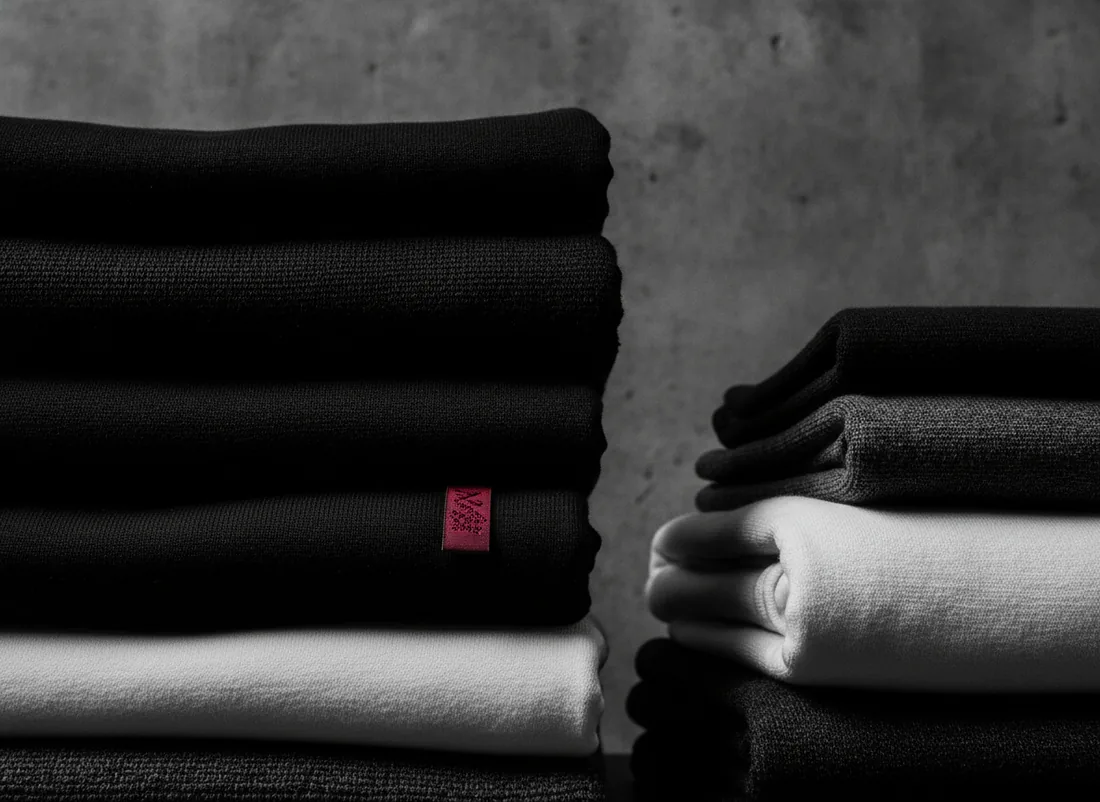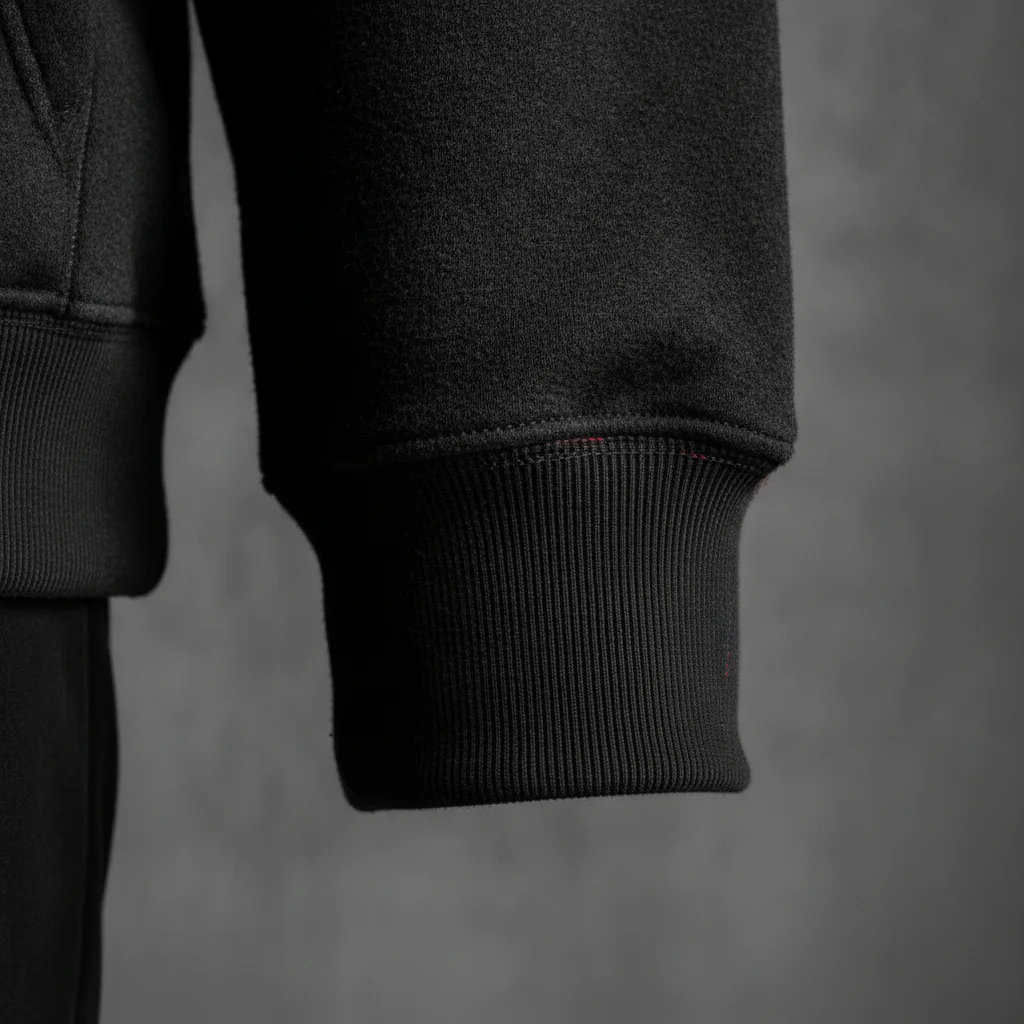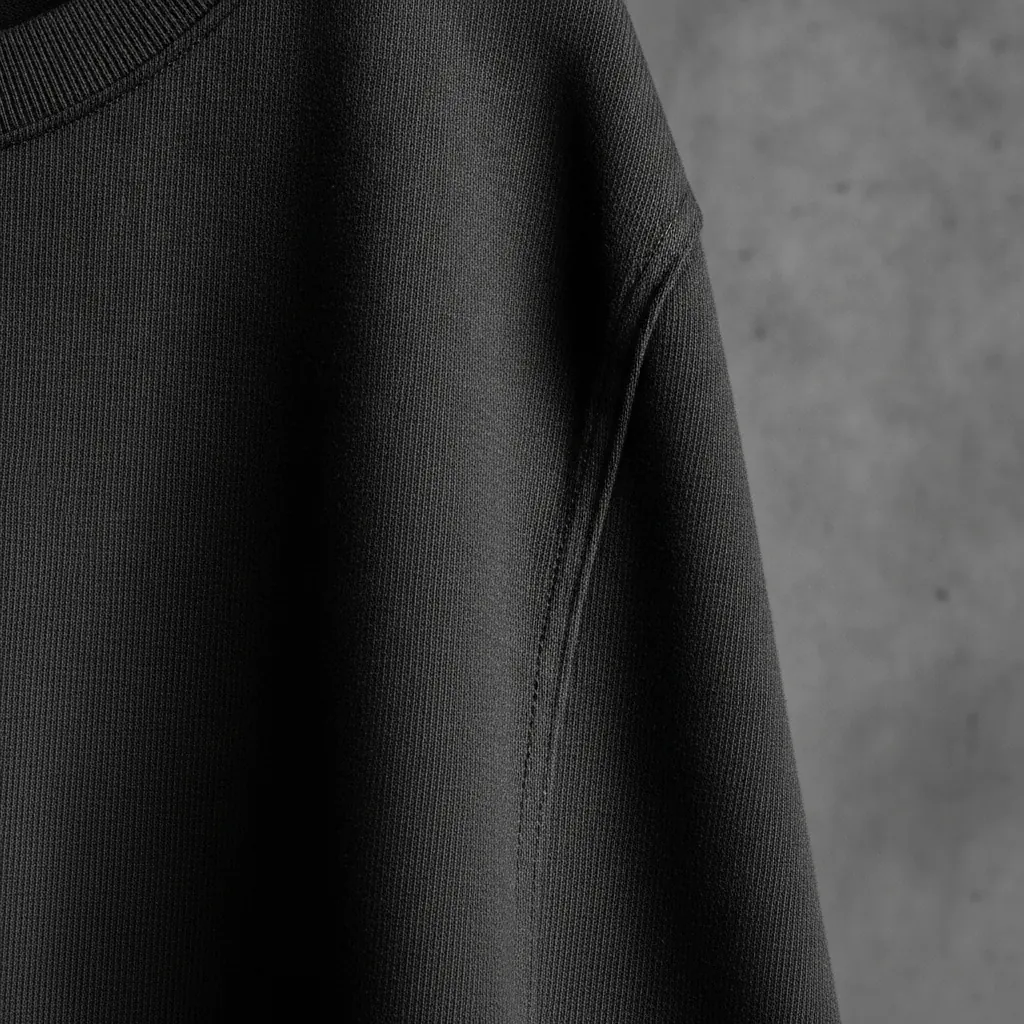
French terry fabric is a two-sided cotton knit – a smooth jersey face on the outside and small, uncut loops on the reverse – built for warmth without the brushed-fleece weight. It is the lightest and most breathable of the three main hoodie and sweatshirt fabrics, sitting under fleece and above plain jersey, which is why streetwear brands reach for it on mid-season hoodies, joggers and crewnecks. At Minku Apparel we run French terry at 240 to 320 GSM from our Pakistan factory, cut and sewn to your spec with full private label from 50 pieces per design.
If you are choosing a base fabric for a hoodie, sweatshirt or sweatsuit line, understanding what French terry actually is – not what it is loosely called across supplier catalogs – decides whether your garment drapes, breathes and holds shape the way your design intends. Below is the full picture: how it is made, how it compares to fleece and jersey, what changes its cost, and how we manufacture it at scale.
How French terry fabric is made
French terry is knitted, not woven, on a circular knitting machine that forms two distinct faces in a single pass: a flat, smooth jersey stitch on the technical face and a row of uncut loops on the back. Those loops trap air against the body, giving the fabric its insulation without the density of a brushed fleece.
The name traces to European hosiery and toweling mills, where the word terry describes any looped-pile construction – the same family as a bath towel, knitted at a finer gauge and left uncut on one side instead of two. Cotton or cotton-poly yarn is spun, knitted into the loop structure, then finished, dyed and cut into panels for construction.
Because the loops are not brushed or sheared, French terry keeps more of its natural cotton texture than fleece, which is why it feels closer to a heavyweight t-shirt than a blanket. That structural difference is the entire reason it exists as its own fabric category rather than a lighter version of fleece.
French terry vs fleece vs jersey
French Terry
Smooth face, looped uncut reverse. 240-320 GSM. Breathable, structured drape, holds print and embroidery cleanly. Best for three-season hoodies and joggers.
Fleece
Brushed and sheared reverse for a soft, fuzzy hand. 320-400+ GSM. Warmer, heavier drape. Best for winter hoodies and heavyweight crewnecks.
Jersey sits below both – a single-face knit with no loop or brush at all, typically 140-220 GSM, used for t-shirts rather than fleece-family garments. The three fabrics form a weight ladder: jersey for tees, French terry for mid-weight fleece pieces, brushed fleece for maximum warmth. Picking between them comes down to season and silhouette rather than one being a lesser version of another.
Where French terry belongs in a product line
French terry works hardest on crewneck sweatshirts, joggers, zip-ups and hoodies meant for year-round wear rather than cold months alone. Its lighter hand also drapes better on oversized and boxy cuts, where a heavier brushed fleece can look stiff and boxy in a less flattering way.
Brands building a year-round core collection often anchor it in French terry, then add a brushed fleece capsule for a winter drop. That two-fabric structure lets one design work across seasons without redesigning the block, since French terry and fleece garments are usually cut from the same or a closely related pattern.
Sweatpants and joggers built from French terry also hold a cleaner leg line than a brushed fleece bottom, since the smoother face resists the pilling that shows first at the inner-thigh contact points on a legging-style fit. Brands running a matching sweatsuit line frequently pick French terry for the pant even when the hoodie runs in a heavier fleece.
GSM range and what it changes
Within French terry, GSM (grams per square meter) still moves the fabric a good deal. At 240-260 GSM you get a lighter hoodie that layers well and prints cleanly on thinner artwork. At 280-320 GSM the fabric gains structure and drape, holding its shape on oversized cuts and standing up better to puff print and embroidery without the garment reading thin under the decoration.
| GSM | Hand-feel | Best for |
|---|---|---|
| 240-260 | Light, breathable | Three-season hoodies, layering pieces |
| 270-300 | Balanced weight and drape | Core hoodie and crewneck lines |
| 300-320 | Structured, substantial | Oversized fits, heavier embroidery/puff |
Decoration on French terry
French terry’s smooth outer face takes screen print, DTG and embroidery cleanly because it lacks the raised nap that can soften print edges on brushed fleece. Puff print also reads well since the flatter surface lets the raised ink sit clearly above the fabric rather than sinking into loft.
Acid wash and garment dye both work on French terry, though the finished hand shifts slightly softer than on a woven or jersey base because the looped reverse absorbs dye and wash treatment a little differently than a flat knit. We test each finish on a lab dip and pre-production sample before bulk so the color and hand you approve is what ships.
All-over print performs less predictably on French terry than on a flat jersey, since the loop structure on the reverse can show through as a faint texture under a full sublimation print. Brands set on an all-over graphic on a French terry hoodie should confirm the effect on a lab dip first, which we build into the sampling stage rather than treating it as an afterthought.
Durability and care
Because the loops are uncut, French terry resists pilling better than a brushed fleece, where the raised fibers can mat down with repeated washing. A cotton-heavy French terry (85%+ cotton) will shrink slightly on its first wash like any natural-fiber knit, which we account for in pattern grading so the finished garment holds its intended fit after the customer’s first laundering.
Cotton-poly blends (typically 80/20 or 70/30) reduce shrinkage and pilling further and hold color longer through repeat washes, at a small cost to the natural cotton hand-feel. Which blend fits your line depends on whether your customer prioritizes a pure-cotton feel or wash-after-wash consistency across reorders. Neither blend needs special home laundering instructions beyond a standard cold-wash, tumble-low care label, which keeps your finishing simple for the end customer.
How French terry compares on price
Three variables move the per-piece cost on a French terry run: GSM (heavier fabric uses more raw material), fiber blend (100% cotton typically costs more than cotton-poly), and order quantity (unit price improves as volume increases past the 50-piece MOQ). Decoration adds a separate line – a one-color chest print costs less than a puff-and-embroidery combination across multiple placements.
Compared to brushed fleece at an equivalent GSM, French terry is usually priced within a close range rather than a meaningfully different tier, since the knitting process for both fabrics shares much of the same yarn and machine setup. The bigger cost driver tends to be GSM and blend, not which of the two fabric families you pick.
Specifying French terry correctly in a tech pack
A tech pack calling for French terry should state GSM, fiber blend and any wash or dye treatment, since the word French terry alone leaves room for interpretation across suppliers. A spec of 280 GSM, 80% cotton / 20% polyester, raw (undyed) leaves nothing open to guesswork when the fabric is sourced.
Color matching also needs a reference – a Pantone code or an approved lab dip swatch – since French terry takes dye a shade differently than a flat jersey of the same nominal color, owing to the extra surface area the loop structure exposes to the dye bath. We confirm color against a physical lab dip before bulk dyeing rather than trusting a digital swatch alone.
Common misconceptions about French terry
A frequent misunderstanding is treating French terry as simply a lighter fleece rather than its own construction. Because both fabrics start from a similar knitting process, brands sometimes assume French terry can be brushed later to create a fleece effect – it cannot, since brushing removes the smooth technical face that defines French terry in the first place.
Another common assumption is that a higher GSM always means a better fabric. Past roughly 320 GSM, French terry starts to lose the lighter drape that makes it distinct from fleece, so pushing GSM too high on a French terry order can produce a fabric that behaves like a heavier, less breathable fleece anyway, undermining the reason to choose French terry at all.
How Minku manufactures French terry pieces
We source and knit French terry in the 240-320 GSM range in cotton and cotton-poly blends, cut and sewn in-house with your labels, tags and packaging built into the same run as the garment. Each order runs a pre-production sample and lab dip before bulk cutting, so fabric hand, GSM and color are confirmed before your investment scales to a full drop.
Our fleece hoodie manufacturing line covers both French terry and brushed fleece builds, and our broader custom hoodie manufacturing page details each fabric, fit and decoration option we run. To lock your GSM and fabric spec, Get Your Custom Quote.
What Is French Terry Fabric? — In Detail