A drop-shoulder fit is a t-shirt construction where the shoulder seam sits below and beyond the natural shoulder line, rather than at it. The dropped seam widens the top of the garment and creates a relaxed, squared silhouette that has become a core fit in streetwear, distinct from both a fitted regular cut and a fully oversized tee. Here is exactly how the fit is built, where it came from, and how to decide if it suits your next drop. See Custom T-Shirt Manufacturer for the full range of fits Minku manufactures alongside this one.
Drop-Shoulder Fit Explained
On a regular-fit t-shirt, the shoulder seam sits at the edge of the wearer’s natural shoulder bone. On a drop-shoulder tee, that seam is shifted outward and down the arm, sometimes by one to three inches depending on how pronounced the drop is designed to be. This shift widens the chest and shoulder area of the garment without requiring an oversized body length or a boxy hem.
The result reads as relaxed rather than sloppy when the pattern is cut correctly – the sleeve typically narrows slightly toward the cuff to balance the wider shoulder, so the garment does not look shapeless from the side profile.
History – Where the Drop-Shoulder Silhouette Came From
The drop-shoulder construction traces back to workwear and military garments, where a wider armhole and looser shoulder made a jacket or shirt easier to move in during physical labor. Streetwear absorbed the silhouette through skate and hip-hop culture in the 1990s and 2000s, where a relaxed, non-fitted top became a signature look distinct from the fitted athletic-cut tees dominant at the time.
Contemporary streetwear brands standardized the drop-shoulder cut through the 2010s as a house silhouette, and it remains one of the most requested custom fits for new brands entering the market today because it reads instantly as streetwear rather than as a basic tee.
Drop-Shoulder vs Regular Fit vs Oversized
Drop-Shoulder
Shoulder seam past the natural shoulder line. Relaxed through the chest and shoulder, sleeve often narrows toward the cuff. Reads as streetwear-specific.
Regular Fit
Shoulder seam at the natural shoulder line. Close through the body, classic silhouette. Reads as a basic or athletic tee.
An oversized fit is a separate variable from drop-shoulder – an oversized tee is simply cut larger in body width and length at any shoulder construction, while a drop-shoulder tee specifically moves the seam placement. The two are often combined, but a drop-shoulder tee can be cut close to true-to-size in the body while still carrying the wider shoulder seam. See Boxy Fit vs Regular Fit T-Shirts for how a boxy body cut compares, and Custom Oversized T-Shirt Manufacturer for full oversized specs.
Construction – How a Drop-Shoulder Pattern Is Cut Differently
The pattern change starts at the shoulder point and armhole. A pattern-maker extends the shoulder seam outward, which widens the armhole and requires the sleeve cap to be reshaped so it sets in cleanly at the new, lower seam position. Getting this wrong is the most common construction fault in a copied drop-shoulder pattern – an armhole that is too large or too small at the new seam position causes the sleeve to twist or pull when the arm moves.
The body of the garment is usually cut with a small amount of extra width through the chest to balance the wider shoulder line, so the tee does not look narrow-bodied under a wide shoulder seam. This is a construction detail that separates a well-executed drop-shoulder tee from one where the pattern was scaled up from a regular-fit block without reshaping the shoulder geometry to match.
Fabric Choices That Work Best with Drop-Shoulder
A midweight to heavyweight fabric in the 220-320 GSM range holds the drop-shoulder silhouette better than a lightweight fabric, since the added structure keeps the wider shoulder line from collapsing or looking limp on the body. Combed cotton jersey and French terry are common choices for a drop-shoulder tee because both hold shape at rest and in motion.
A fabric that is too light for the pattern can cause the dropped shoulder seam to slide further down the arm than intended as the day goes on, which is why fabric weight and pattern design should be chosen together rather than treated as two separate decisions.
Who Should Choose a Drop-Shoulder Fit
A drop-shoulder fit suits brands building a streetwear identity around a relaxed, non-athletic silhouette, and it works well for graphic-forward designs since the wider chest and shoulder area gives a larger flat surface for a print or embroidery placement. It is a reasonable default for a first streetwear tee if you are unsure which fit direction best represents your brand.
Brands positioned around athletic or fitted silhouettes, or brands targeting a formal or business-casual crossover market, typically find a regular fit serves their customer better, since a drop-shoulder cut reads specifically as streetwear rather than as a neutral, universally wearable tee.
Decoration Considerations for Drop-Shoulder Tees
The wider chest panel on a drop-shoulder tee accommodates a larger front graphic than a regular-fit tee at the same body size, which is why many streetwear brands pair this fit with an oversized front print or an all-over design. Embroidery placements near the shoulder seam need extra care in a drop-shoulder pattern, since the seam position itself has shifted from where a regular-fit tech pack would normally place a shoulder-adjacent mark.
Confirm your placement measurements against the actual drop-shoulder pattern, not a standard tech pack template built for a regular-fit block, to avoid a logo or graphic landing awkwardly close to the repositioned seam. Request a placement mock-up on the sample garment itself rather than approving a flat digital mock-up alone, since a print that looks centered on a flat rendering can sit off-center once the fabric is on a body.
Sizing and Grading Challenges
Grading a drop-shoulder pattern across a full size run is more complex than grading a regular-fit block, because the shoulder drop, armhole depth, and sleeve taper all need to scale proportionally rather than simply widening the body measurements at each size. A factory experienced in this fit will grade the shoulder point and armhole independently from the chest width to keep the silhouette consistent from small through extra-large.
A poorly graded drop-shoulder run often shows the problem first at the largest sizes, where an under-scaled armhole can pull tight across the upper arm even though the body width measures correctly on a spec sheet.
Drop-Shoulder Across Product Categories
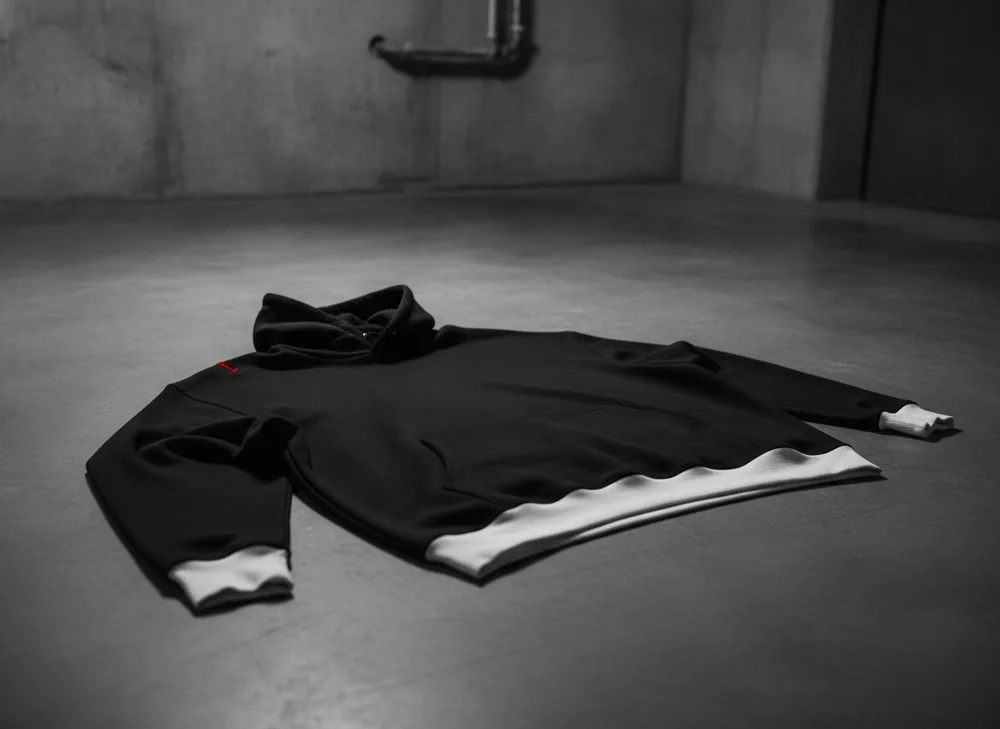
The drop-shoulder construction is not limited to t-shirts – the same shoulder-seam logic applies to hoodies, crewneck sweatshirts, and even jackets, and many streetwear brands carry the fit as a house silhouette across an entire product line rather than on a single style. A drop-shoulder hoodie needs the same independent grading of shoulder, armhole, and sleeve as a tee, with the added complexity of a hood and ribbed cuff that also need to scale correctly.
See Custom Drop-Shoulder T-Shirt Manufacturer for full specs on how Minku builds this fit specifically for t-shirts, from pattern through sampling.
Styling and Market Positioning
A drop-shoulder tee photographs well on a lookbook or product page because the wider shoulder line reads clearly even in a flat lay or a loosely posed model shot, which is one reason the fit remains popular for brands building a visual identity around lifestyle photography rather than studio product shots alone. Pairing a drop-shoulder tee with a slightly tapered short or jogger is a common styling choice that balances the wider top half of the silhouette.
For a brand entering the US, UK, or European market, the drop-shoulder fit tends to perform consistently across all three regions, since the silhouette is now established in mainstream streetwear rather than tied to one specific local scene. Brands launching a debut collection often choose a drop-shoulder tee as the anchor piece precisely because it carries broad, cross-market recognition without requiring a customer education effort around an unfamiliar cut.
Common Mistakes Brands Make with Drop-Shoulder Fits
The first mistake is approving a sample in one size only and assuming the fit holds across the full size range – drop-shoulder grading errors typically surface at the size extremes, not the sample size. The second is choosing a fabric too light to support the pattern’s structural intent, which leaves the finished tee looking undefined rather than intentionally relaxed.
The third mistake is placing a large graphic without confirming the print does not cross directly over the repositioned shoulder seam, which can cause registration or durability issues at a stress point of the garment.
How Minku Manufactures Drop-Shoulder T-Shirts
Minku Apparel manufactures custom drop-shoulder t-shirts from 50 pieces per design, in 220-320 GSM cotton and French terry, with in-house screen print, DTG, and embroidery, plus full private label. A pre-production sample confirms fit and seam placement before bulk cutting begins.
Send your reference design or tech pack and we will confirm pattern, fabric, and grading before your first sample is cut. Get Your Custom Quote to start.
What Is a Drop-Shoulder Fit? — In Detail