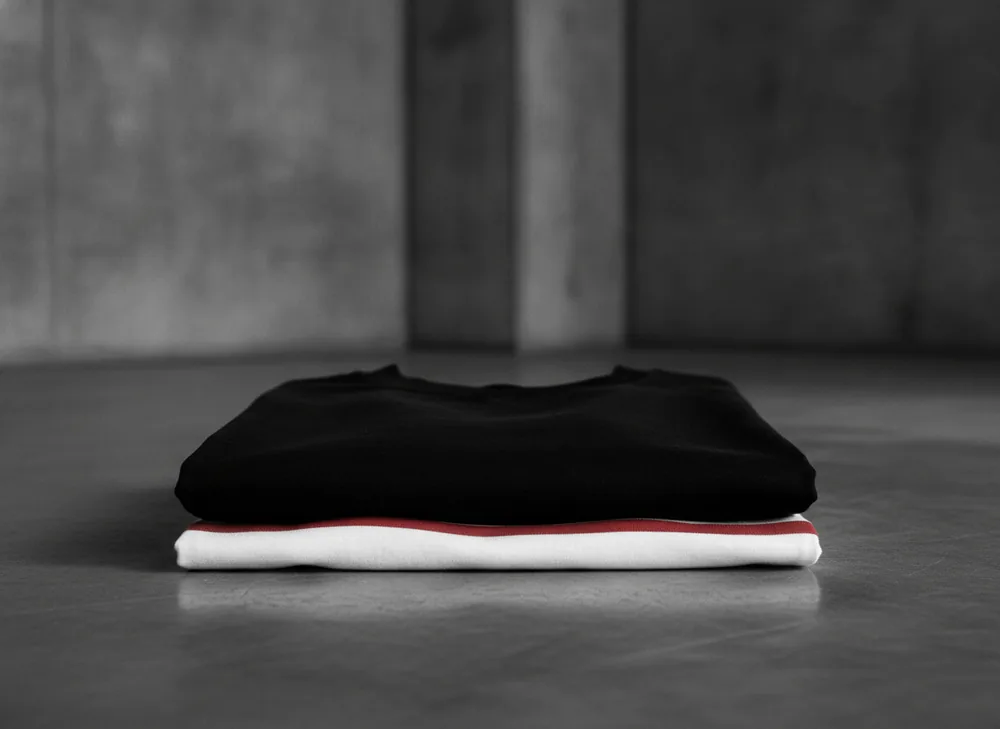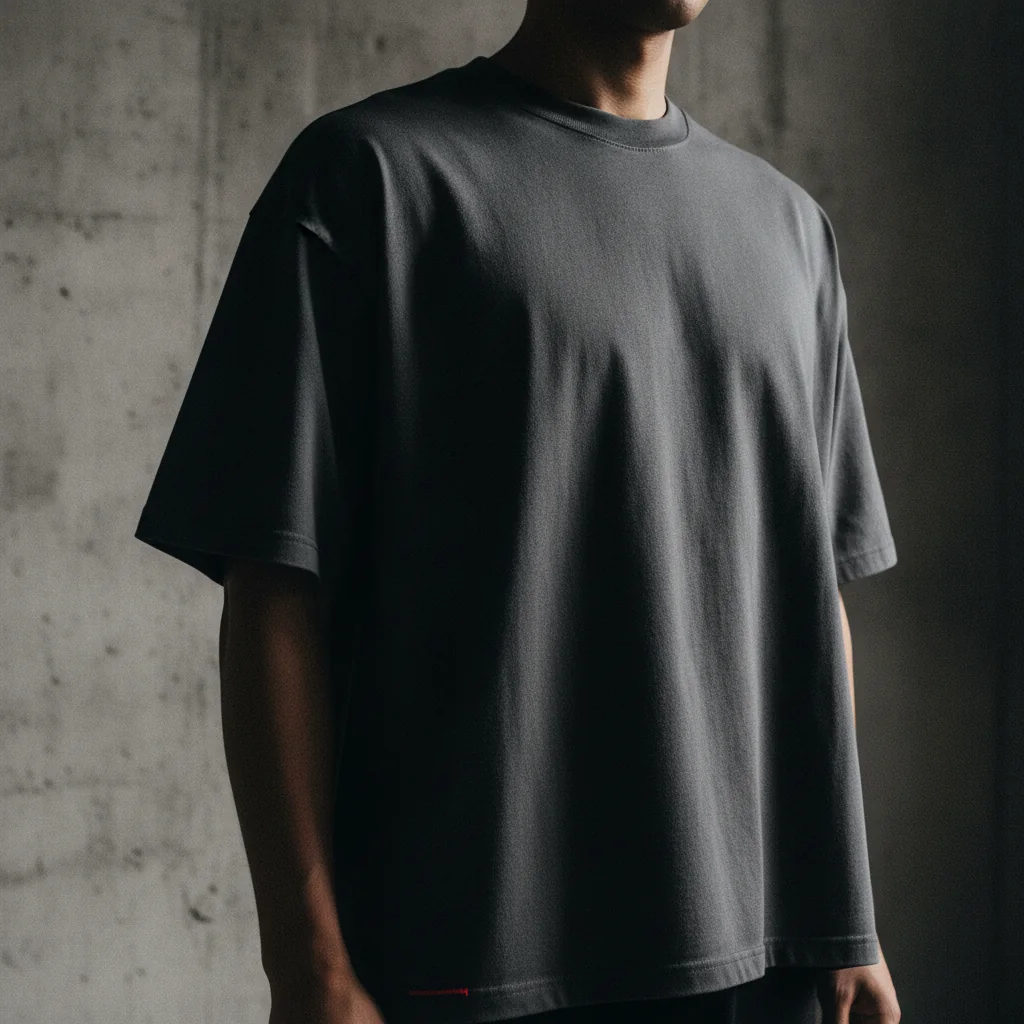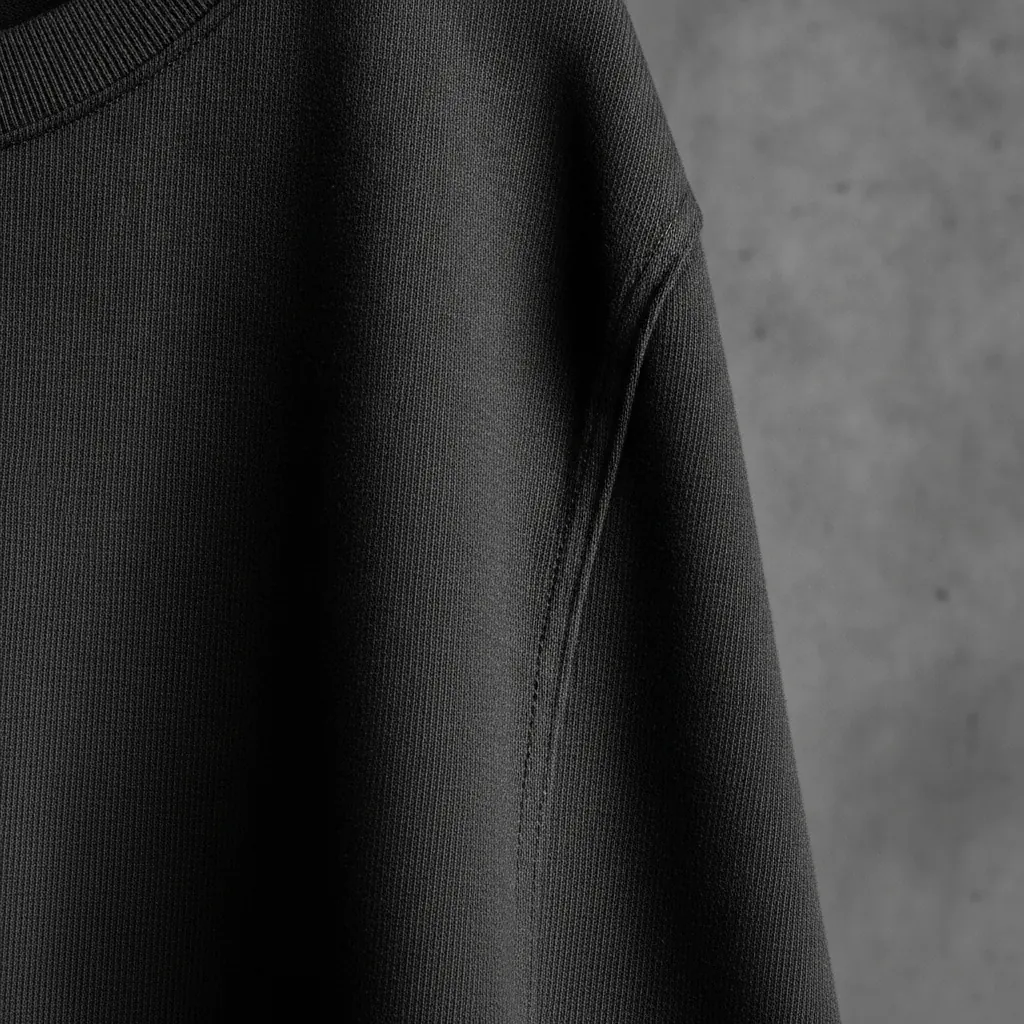
Boxy fit t-shirts use a wider chest block that drops straight to the hem with minimal waist taper, while regular fit t-shirts follow the body’s natural taper from chest to waist. The difference sounds small on paper but changes the entire silhouette, the fabric weight that suits each cut, and the market a brand is speaking to.
Both fits are core to streetwear manufacturing, and most brands eventually offer both. This page breaks down the pattern differences, fabric pairing, decoration considerations, sizing logic, and cost factors for each, so a brand can choose – or spec both – with a clear reason rather than a guess.
Boxy Fit
Wider chest block, dropped shoulder seam, minimal waist taper, straight hem. Reads oversized-adjacent without full oversized proportions.
Regular Fit
Natural chest-to-waist taper, set-in shoulder seam, standard hem length. Reads classic and works across broader retail contexts.
The Pattern Difference, Explained
A regular fit t-shirt pattern follows the body’s natural taper – the chest measurement is close to the body, the pattern narrows slightly at the waist, and the shoulder seam sits at the natural shoulder point. A boxy fit pattern widens the chest measurement by 2-6 inches beyond a regular fit at the same size, removes most of the waist taper so the side seam runs nearly straight from armpit to hem, and often drops the shoulder seam an inch or more past the natural shoulder point for a dropped-shoulder look.
The result: a regular fit shirt skims the torso, while a boxy fit shirt sits away from the body in a rectangular block, which is why boxy fit is the dominant silhouette in modern streetwear graphic tee drops.
Fabric Weight Pairing
Fit and fabric weight are linked. A boxy fit shirt in an ultra-lightweight cotton can look shapeless and collapse rather than hold structure, so boxy fit typically pairs with 220-280+ GSM heavyweight cotton, which gives the block enough body to hold its silhouette away from the frame. A regular fit shirt works across a wider GSM range, from 160 GSM lightweight basics to 240+ GSM heavier options, because the pattern’s own taper does more of the shaping work.
Who Wears Which Fit
Boxy Fit
Boxy fit dominates streetwear, graphic-tee, and drop-culture brands targeting a younger, trend-forward customer. It photographs well for social content because the straight silhouette reads clearly in flat-lay and on-body shots, and it layers cleanly under jackets or over long-sleeve tees.
Regular Fit
Regular fit remains dominant for brands selling into broader retail, corporate merch, or a customer base that skews older or more classic in taste. It’s also the safer default for brands unsure of their audience’s fit preference, since it reads as “normal” across the widest range of body types without a strong style statement either way.
Decoration Considerations
A boxy fit’s wider, flatter chest panel gives more usable surface area for large-format prints, all-over prints, or oversized embroidery placements – a graphic that would crowd a regular fit’s tapered chest has room to breathe on a boxy block. Regular fit suits smaller, left-chest logo placements and classic centered graphics better, since the tapered silhouette keeps a smaller print proportionate to the garment.
Sizing and Grading Differences
Boxy fit shirts are frequently sold in a compressed size range (commonly S-XL, sometimes one-size-fits-most in the oversized-boxy hybrid style) because the block’s own width already accommodates a range of body sizes at each labeled size. Regular fit requires a fuller size curve (XS-3XL or beyond) with tighter grading increments between sizes, since the fit is meant to track the body more closely at each size point.
| Factor | Boxy Fit | Regular Fit |
|---|---|---|
| Chest width vs body | +2 to 6 inches beyond body | Close to body measurement |
| Waist taper | Minimal to none | Natural taper |
| Shoulder seam | Often dropped | Set at natural shoulder |
| Ideal fabric weight | 220-280+ GSM | 160-240+ GSM |
| Best print placement | Large-format, all-over | Left-chest, centered classic |
| Typical size curve | S-XL, compressed | XS-3XL, full range |
Cost Factors
Boxy fit patterns use more fabric per shirt due to the wider chest block, which raises the fabric cost per unit by roughly 5-10% compared to a regular fit shirt at the same GSM. Regular fit’s tighter fabric utilization on the cutting marker can offset that difference, though the gap narrows once heavier fabric weights are involved on either fit. Decoration cost is comparable across both fits unless the boxy fit’s larger surface area is used for an all-over print, which shifts the cost structure toward the print method rather than the fit itself.
A Real Example: Same Design, Two Fits
A brand launched the same chest-graphic design in both a boxy and a regular fit as an A/B test across its first 100-piece order – 50 pieces per fit. The boxy fit outsold the regular fit roughly 2:1 within the first month among a customer base skewing 18-28, while the regular fit moved steadily among a slightly older repeat-customer segment. The brand’s conclusion, echoed by several Minku clients running similar tests, was to keep both fits as standing SKUs rather than picking one.
Which Fit Should a New Brand Choose First?
For a brand targeting core streetwear and drop-culture retail, boxy fit is the stronger first move – it’s the fit customers expect from a graphic-tee brand, and it gives more room for the kind of bold, large-format artwork that defines a launch drop. For a brand targeting a broader or older customer, or building a basics line meant to sit under other layers, regular fit is the safer starting point. Many brands eventually run both, using boxy fit for graphic hero pieces and regular fit for tonal, minimal basics.
How Minku Builds Both Fits
Minku develops a graded pattern block for both boxy and regular fit from a brand’s tech pack or reference garment, with a pre-production sample confirming the exact chest width, shoulder drop, and hem length before bulk cutting. Both fits are available from the standard 50-piece MOQ, in the same 160-280+ GSM cotton range, with full in-house decoration and private label finishing.
Shrinkage and Long-Term Care Differences
Because boxy fit already builds in extra room beyond the body, minor shrinkage after washing (commonly 3-5% for cotton jersey without a pre-shrink treatment) has less practical effect on how the garment fits – a boxy shirt that shrinks slightly still reads as intentionally loose. A regular fit shirt, cut closer to the body from the start, shows shrinkage more noticeably, since even a small reduction in chest or body length changes how the garment sits against the frame. Minku pre-shrinks fabric for both fits before cutting to keep this variance minimal, but the margin for error is naturally wider on a boxy silhouette.
Styling and Merchandising: How Each Fit Pairs
Boxy fit tees are commonly styled and photographed loose or untucked over joggers, cargo shorts, or wide-leg denim, reinforcing the streetwear silhouette a brand is usually selling into. Regular fit tees photograph well tucked into fitted or tailored bottoms and layer more predictably under a jacket without adding visible bulk. Brands building a full lookbook or product photography set often shoot both fits differently for this reason – a boxy tee styled the way a regular fit is worn can look accidental rather than intentional, and the reverse is also true.
Testing Both Fits Without Doubling Your Budget
A brand unsure which fit its audience prefers doesn’t need to commit to two full 50-piece orders to find out. Splitting a single 50-piece order into 25 boxy and 25 regular fit units of the same graphic, in the same colorway, gives a genuine side-by-side read on customer preference at close to the cost of a single design. Minku treats this as two separate patterns under one production slot, so the tech pack and sampling stage covers both fits without materially extending the timeline of a standard single-fit order.
Common Fit Complaints and How Grading Prevents Them
The most frequent complaint on an ungraded boxy fit is a shirt that fits fine at the sample size but balloons or feels tight at the size extremes, because the pattern was scaled uniformly rather than graded. The most frequent complaint on a poorly graded regular fit is a sleeve or shoulder that twists under the arm at larger sizes. Minku’s process grades each size from the approved sample block individually rather than applying a flat scaling factor, which is the direct fix for both issues.
Regional and Climate Considerations
Boxy fit’s extra room and heavier fabric pairing tend to perform better in cooler-climate markets, since the block accommodates a long-sleeve or hoodie layered underneath without looking bulky. Regular fit’s closer cut suits warmer-climate markets where a brand wants a shirt that doesn’t add visual bulk in the heat. Neither rule is absolute, but it’s a factor worth weighing alongside the audience-based reasoning covered above when deciding which fit to lead with in a specific market.
Blending Both Fits Into One Product Line
Many established streetwear brands eventually run a hybrid strategy – boxy fit as the standing default for graphic and logo tees, with regular fit reserved for a smaller basics or “essentials” sub-line sold at a slightly different price point. This lets a brand serve its core trend-forward customer with the boxy silhouette that defines the category, while still capturing the segment of buyers who want a closer-cut tee for layering or a more classic look. Minku supports this structure directly, since both fits share the same fabric sourcing and decoration setup and can be produced in the same production slot without treating them as entirely separate supply chains.
Building a graphic-tee line and deciding between fits? Get Your Custom Quote and Minku will grade both blocks from your reference. See the full range on the custom t-shirt manufacturer page, explore the custom boxy fit t-shirt manufacturer line, or check custom oversized t-shirt manufacturer for the more dramatic silhouette.
Boxy Fit vs Regular Fit T-Shirts — In Detail