Starting a clothing brand from scratch takes six core steps: define your niche and customer, design one focused first product, find and vet a manufacturer, build a tech pack, sample and approve before bulk, then launch with a tight first drop. Most first-time founders move from idea to a live launch in 8 to 12 weeks once a manufacturer and product are locked.
Step 1: Define Your Niche and Customer
A clothing brand is not “streetwear” in general – it is a specific point of view for a specific customer. Before a single design gets sketched, decide who the brand is for, what occasion or identity the garment serves, and what makes it different from the dozens of similar labels already competing for the same customer’s attention. This decision drives each choice that follows: fabric weight, fit, price point, and decoration style all flow from who the brand is actually dressing.
Spend real time here rather than rushing to product. A clear niche – a specific city’s scene, a subculture, a sport, a shared aesthetic – gives a manufacturer, a photographer, and eventually a customer something concrete to respond to. “Premium streetwear for skaters in a cold climate” designs a different hoodie than “minimalist basics for a design-led audience.”
Step 2: Design Your First Product, Not a Full Collection
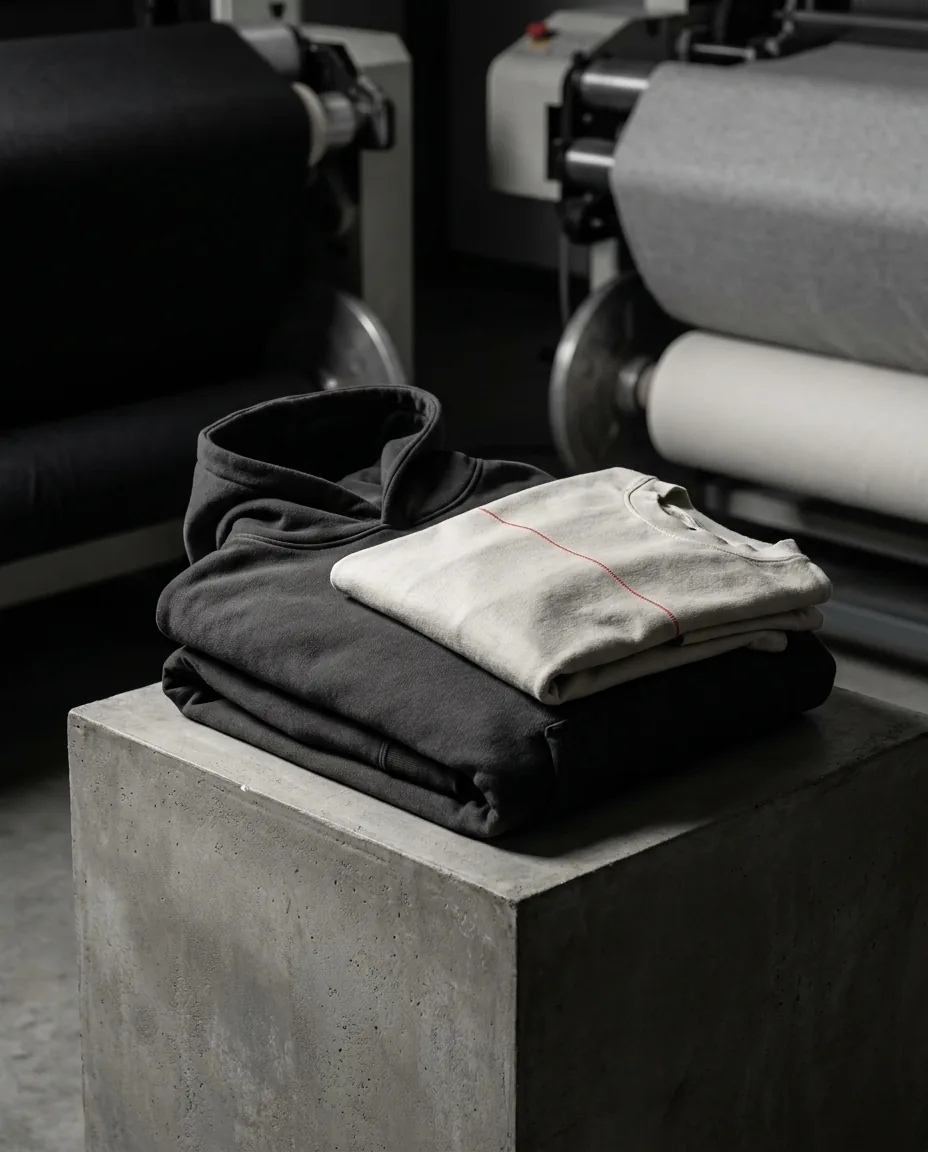
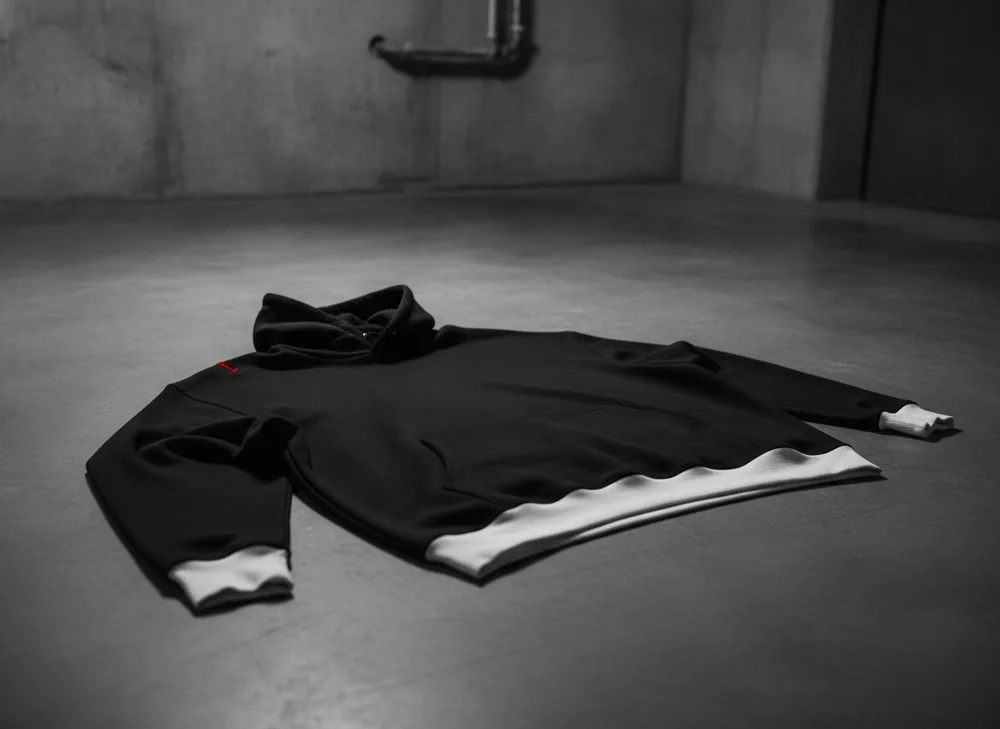
New brands consistently overreach on product count before validating demand. One hero product – a hoodie, a boxy tee, or a matching sweatsuit – designed properly, sampled carefully, and launched with real photography will outperform a five-piece collection where budget and attention are spread thin across each item. Pick the single garment your customer wears most and put full effort into getting it right.
At the design stage, lock fabric weight (GSM), fit block (oversized, boxy, regular), and decoration method (screen print, DTG, embroidery, puff print, or all-over print) before approaching a manufacturer. These three decisions are what a manufacturer needs to quote and sample accurately.
Step 3: Find and Vet a Manufacturer
A manufacturer relationship is the backbone of the whole process that follows, so vetting matters more than finding the first factory that responds to a message. Look for a manufacturer with a defined MOQ that fits your budget, transparent fabric specifications in GSM (not vague terms like “quality cotton”), in-house decoration rather than outsourced subcontracting, and a sampling process before bulk. Our how to choose a clothing manufacturer and how to avoid clothing manufacturer scams guides cover the specific red flags to check before committing.
Overseas manufacturers, including factories based in Pakistan, are a proven route for new brands specifically because low MOQ and heavyweight fabric are more available there than through domestic small-batch cut-and-sew shops built for higher minimums. See overseas vs domestic clothing manufacturer for the full comparison.
Step 4: Build a Tech Pack
A tech pack is the specification document a manufacturer builds your garment from: measurements by size, fabric and GSM, decoration placement and colors, label and tag placement, and construction notes. It does not need to be professionally drafted software output for a first order – a clear document with a flat sketch, a measurement chart, and reference photos is enough for most manufacturers to quote and sample from. See what is a tech pack and how to create a tech pack for templates and structure.
If you do not have a tech pack yet, a manufacturer that also handles design support, like Minku, can build one from a reference garment and your written notes – see do I need a tech pack to get a quote before assuming this step blocks you from starting.
Step 5: Sample and Approve Before Bulk
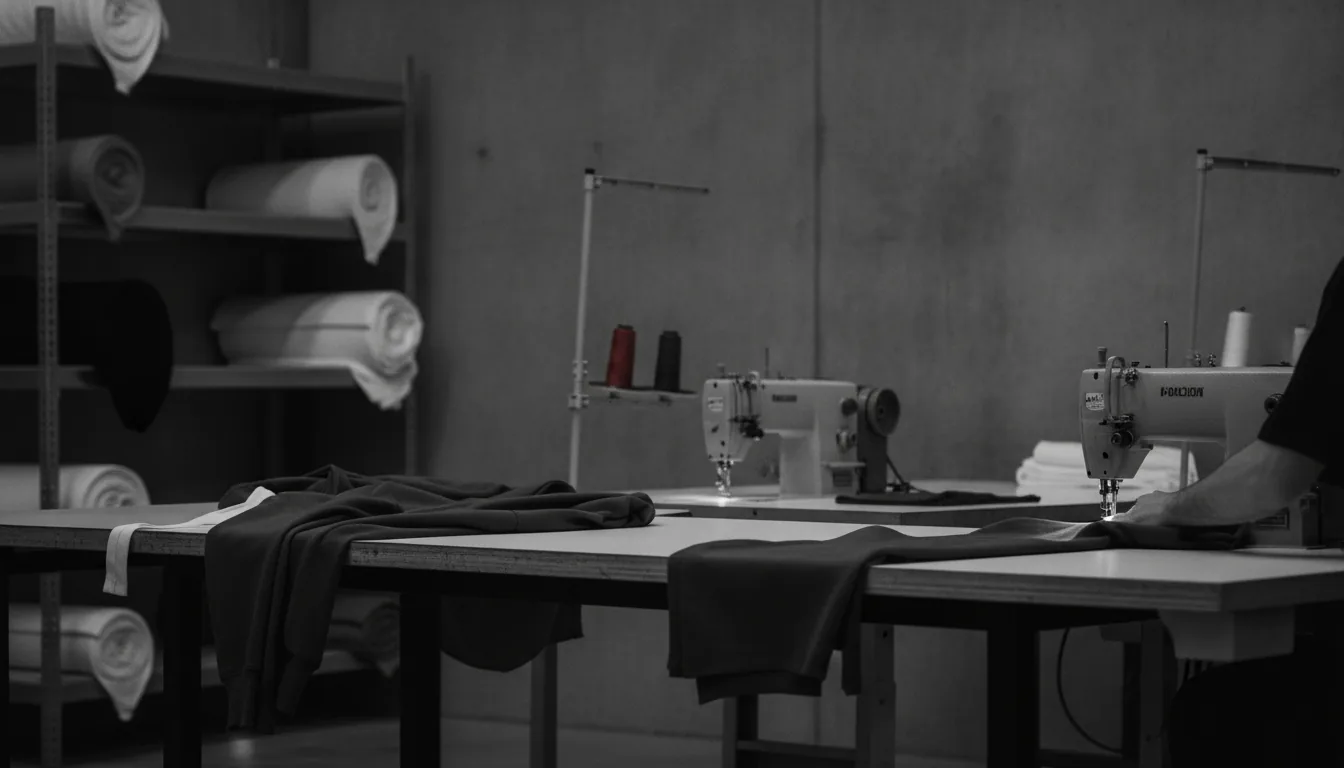
Each new style needs a pre-production sample before bulk cutting starts. This is where fabric weight, fit, print placement, and label placement get physically confirmed rather than assumed from a tech pack on paper. Skipping this step to save a week is one of the more expensive mistakes a first-time founder can make, because a fit or fabric problem discovered after bulk production cannot be fixed on already-cut garments. Full detail is in our how to get samples from a clothing manufacturer guide.
Step 6: Launch With a Focused First Drop
Launch day performs best when it is built around one product, real photography on real bodies, and a clear story about why this garment exists for this customer. A focused drop of 100-150 units in one or two colorways creates scarcity and urgency that a broad, thin catalog cannot – and it sets up a clean reorder decision once the first units sell through.
Timeline From Idea to Launch
| Stage | Typical Timeline |
|---|---|
| Niche, product & tech pack | 1-3 weeks |
| Manufacturer quote & sampling | 1-2 weeks |
| Bulk production | 3-6 weeks |
| DDP shipping | 5-9 days |
| Launch prep (photography, content) | Runs in parallel |
Running launch prep – photography, website, marketing content – in parallel with production rather than after arrival is what compresses total idea-to-launch time down to the 8-12 week range rather than stretching it toward six months.
What a First Order Should Include
- A locked tech pack with measurements, fabric spec, and decoration placement.
- An approved pre-production sample matching that tech pack exactly.
- Private-label branding – woven neck label, care tag, hang tag, and packaging.
- A quantity between 50-150 units in one or two colorways for a first run.
- A confirmed DDP shipping quote covering freight and duty to your address.
Legal and Business Basics to Handle Before Launch
Alongside product development, a few business fundamentals are worth locking before units land: registering the business entity in your home country, setting up a business bank account separate from personal finances, and confirming any labeling requirements for your target market (country of origin, fiber content, and care instructions are commonly required on apparel sold in the USA, UK, and EU). None of this needs to be complex for a first small run, but it does need to be handled before selling begins rather than as an afterthought once inventory has already arrived.
Building a Brand Story Before the Product Arrives
Content and story work can run alongside production rather than starting after garments arrive. Photography direction, brand messaging, and a launch sequence for social channels should be planned while the factory is cutting and sewing, so the moment stock clears customs, a brand is ready to sell rather than scrambling to build a launch plan from nothing. Brands that treat content as a parallel workstream to manufacturing, not a step that starts after arrival, consistently launch faster and with more momentum.
Naming, Trademark, and Domain Basics
Before a tech pack goes to a manufacturer, confirm the brand name is actually available to use – a quick trademark database search in your home country and a check that a matching domain and social handles are open saves a rebrand later, after labels, tags, and packaging have already been printed with a name that turns out to be in use elsewhere. This check takes a day and protects the private-label investment that comes later, since neck labels and hang tags are printed against a specific name and cannot be quietly swapped once bulk is cut.
A registered trademark is not required to place a first manufacturing order, but reserving the name early – even before formal registration completes – avoids the scenario where a brand builds momentum around a name it later has to abandon.
Common Mistakes First-Time Founders Make
The most common mistake is designing a full collection before validating demand on a single product. The second is choosing a manufacturer on unit price alone without checking fabric GSM, MOQ flexibility, or sampling process. The third is skipping the sample stage to compress the timeline, which risks the entire first-order budget on an untested fit or fabric. The fourth is underestimating how much launch content – photography, brand story, product pages – matters relative to the product itself; a well-manufactured garment still needs a clear presentation to sell.
How Minku Apparel Supports New Brands
Minku Apparel is built around first-time founders specifically: a 50-piece MOQ, sampling before any bulk commitment, full private-label finishing from unit one, and DDP shipping so a first order’s total landed cost is known up front rather than discovered at customs. We help build a tech pack from a reference garment if you do not have one yet, and our sampling team confirms fit and fabric before your budget goes into a full production run.
Ready to design your first product? Get your custom quote or read how many units for a first drop to size your launch correctly.
Related Reading
For the manufacturing partner this whole process depends on, see our custom clothing manufacturer overview and private label clothing manufacturer page. Once you are past launch, how to scale a clothing brand with your manufacturer covers what comes next.
How to Start a Clothing Brand From Scratch — In Detail