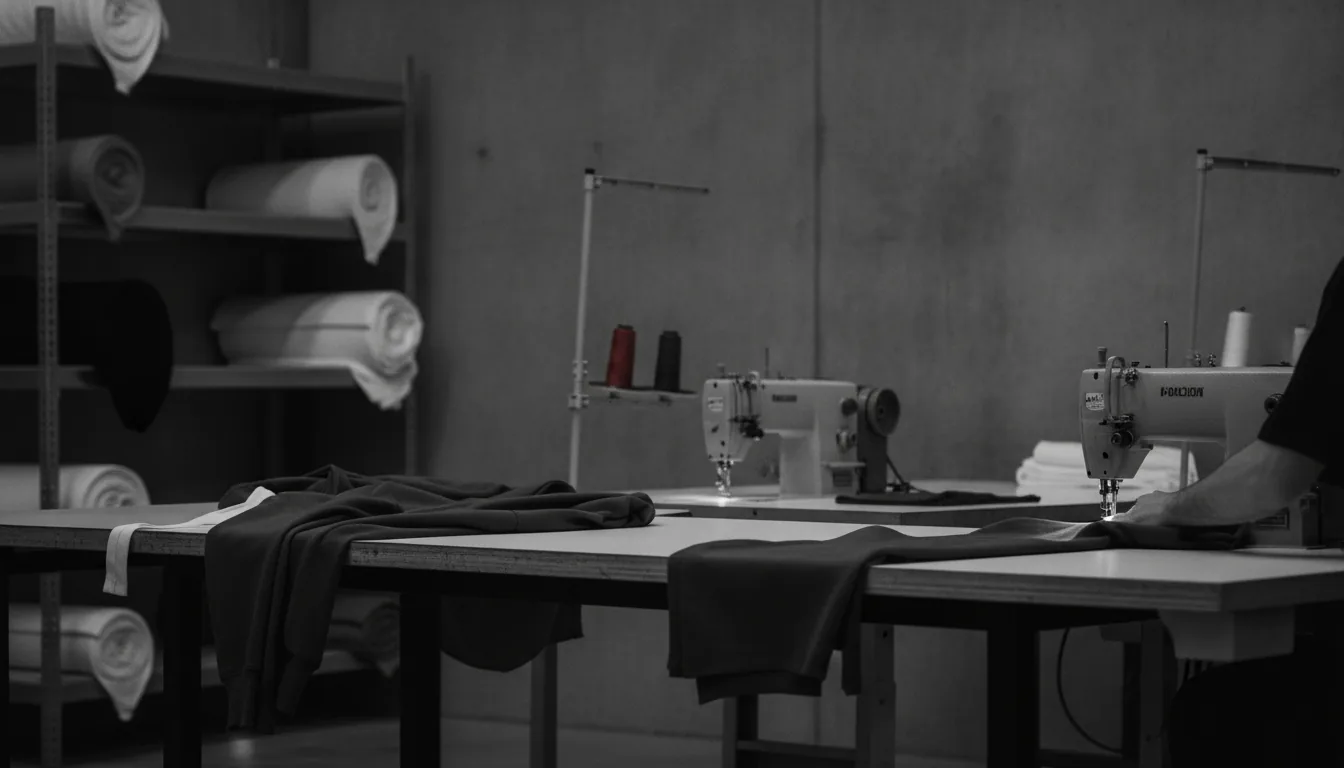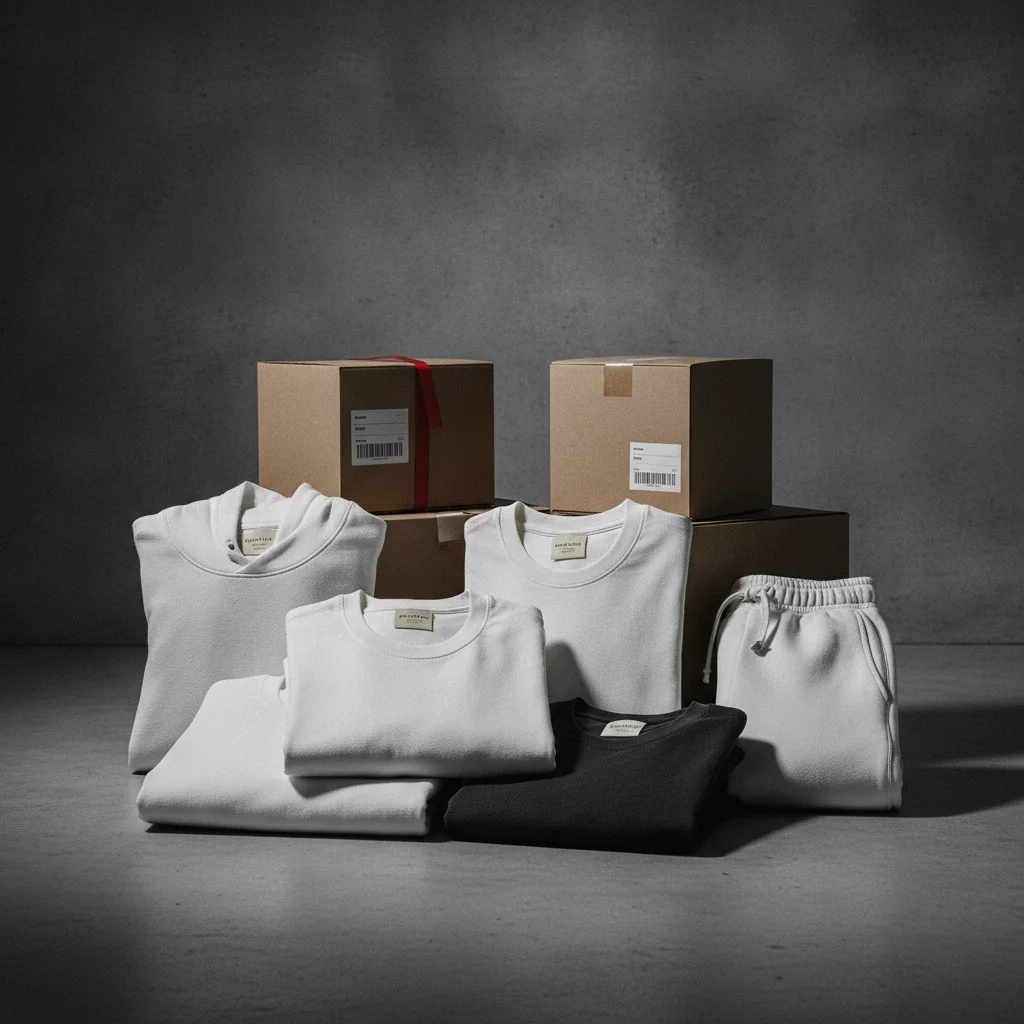
Getting samples from a clothing manufacturer takes three steps: send a tech pack or reference garment, confirm a written quote that locks fabric and decoration, then approve a pre-production sample before a single unit of bulk gets cut. At Minku Apparel, that full sequence – from your first message to an approved sample in hand – typically runs 7 to 15 days once fabric weight, fit, and artwork are confirmed.
Why a Sample Always Comes Before Bulk Production
A sample is the only way to confirm that a fabric, fit, and print actually match what you pictured before hundreds of units get cut. Photos and swatches on a screen do not show how a 320 GSM fleece drapes on a body, how a puff print feels against the hand, or whether a boxy tee sits square across the shoulders. A physical, wearable sample removes that guesswork entirely.
Manufacturers that skip this step, or rush a brand straight into bulk quoting, are usually optimizing for their own speed rather than the brand’s outcome. A reputable factory builds a sampling stage into each new style precisely so a mistake gets caught on one garment instead of a full production run. It is the single biggest safeguard between a design and a customer’s closet.
Step 1: Send Your Design Information
The process starts with whatever design information you have. A finished tech pack – measurements, fabric spec, artwork placement, colorways – is best because a manufacturer can quote and cut a first pattern right away. If you do not have one yet, a clear reference garment, a flat sketch, or a detailed written description of fit and print is enough to start a conversation.
At this stage, be specific about the fabric weight you want (GSM), the decoration method (screen print, DTG, embroidery, puff print, all-over print, acid wash, or garment dye), and your target quantity. The more precise this brief is, the closer the first sample lands to what you need, which shortens the whole cycle.
Step 2: Confirm the Quote and Fabric
Once a manufacturer has your brief, they should return a written quote covering fabric, decoration, per-unit cost at your target quantity, and a sample lead time. This is the moment to confirm fabric weight and composition in writing – “320 GSM brushed fleece, 80/20 cotton-poly” is a specification; “heavyweight hoodie fabric” is not. Ask for a fabric swatch if the manufacturer offers one before cutting a full sample.
This step also covers payment terms for the sample itself. Most manufacturers, including Minku, charge a sample fee that covers fabric, pattern cutting, and labor, separate from the bulk order price. Confirm whether that fee is credited against your first bulk order – many manufacturers apply it as a credit once you place production.
Step 3: Approve the Pre-Production Sample
The pre-production sample (PP sample) is the garment you sign off on before bulk cutting starts. It should match your tech pack in fabric, measurements, stitching, print or embroidery placement, and label placement. Try it on, check each seam, wash it once if durability matters to your use case, and compare it directly against your original reference or spec sheet.
Do not approve a sample you have not physically inspected – photos hide shrinkage, off-shade dye lots, and thread tension issues that only show up in hand. Once you sign off, that exact sample becomes the benchmark the factory measures the bulk run against, so any discrepancy at this stage costs far less to fix than after 200 units are cut.
The Different Types of Samples in Clothing Manufacturing
Not each sample serves the same purpose, and knowing which one you are looking at avoids confusion mid-process.
- Proto sample – a rough first build used to test pattern and construction, often in a substitute fabric.
- Fit sample – built in the correct fabric to confirm measurements and drape on a body or form.
- Pre-production sample (PP sample) – the final approval sample in exact fabric, print, and labeling before bulk starts.
- Top sample / sealed sample – a reference garment held by the factory during bulk production to check consistency against.
Some brands only need a fit sample and a PP sample; others request a proto sample first if the construction is unusual, like an all-over print cut-and-sew piece or a multi-panel varsity jacket.
How Long Each Stage of Sampling Takes
| Stage | Typical Timeline | What Happens |
|---|---|---|
| Brief & quote | 1-3 days | Tech pack reviewed, fabric confirmed, quote issued |
| Pattern & cutting | 2-4 days | Pattern drafted or graded, fabric cut for sample |
| Sewing & decoration | 3-6 days | Garment assembled, print or embroidery applied |
| Shipping to you | 2-5 days | Sample couriered for physical inspection |
Complex builds – multi-color puff embroidery, all-over sublimation print, or a new pattern block – sit at the longer end of each range. A blank hoodie in a stock fabric with a single screen print can move through the shorter end and land in your hands closer to a week.
What a Sample Costs – and Why It Is Not Free
A sample carries the same fabric, cutting, sewing, and decoration labor as a bulk unit, plus pattern-making work that only happens once. That is why manufacturers charge for samples rather than giving them away: it is a real garment, not a mock-up. Expect the sample fee to sit above your eventual per-unit bulk price, since none of the volume efficiency of a full run applies at this stage.
The number that matters more than the fee itself is whether it converts into credit. At Minku, sample costs are credited toward your first production order once you move to bulk, so the sampling stage functions as a paid trial rather than a sunk cost.
How to Evaluate a Sample Before You Approve Bulk
- Check each seam and stitch line under light for skipped stitches or puckering.
- Measure chest, length, sleeve, and shoulder against your tech pack’s exact spec sheet.
- Confirm decoration placement, color match, and print or embroidery durability with a hand test.
- Check label placement – neck label, care label, and any hang tag position.
- Wash the sample once if the garment will see regular washing, and check for shrinkage or color bleed.
What to Do When a Sample Needs a Revision
A sample rarely arrives perfect on the first attempt, and that is normal rather than a warning sign. If the fit runs long in the body, the print sits a centimeter off, or the fabric feels lighter than the GSM specified, flag it in writing against the tech pack rather than describing the problem in general terms. A specific note – “shorten body length by 2cm, reduce chest width by 1 inch” – lets the factory cut a corrected sample fast without another round of guessing.
Plan for one additional revision round as a default, especially on a first order with a new manufacturer. Two rounds – an initial sample and one corrected version – is a realistic expectation; anything beyond that usually points to a communication gap on the brief rather than a manufacturing problem.
Sampling Costs by Garment Type
| Garment | Typical Sample Range | Why |
|---|---|---|
| T-shirt | Lower end | Simple pattern, single fabric panel |
| Hoodie / sweatshirt | Mid range | Multi-panel construction, ribbing, drawcord |
| Tracksuit / sweatsuit | Higher end | Two garments, matched fabric and colorway |
| Jacket | Highest | Lining, zippers, hardware, multiple panels |
These ranges scale with construction complexity rather than brand size – a jacket with a lining and metal hardware always carries more sampling labor than a single-panel tee, regardless of who manufactures it.
Mistakes Brands Make When Requesting Samples
The most common mistake is sending a vague brief and expecting the manufacturer to fill in the gaps – a factory will make reasonable assumptions, and those assumptions rarely match what a founder had in mind. Be exact about GSM, colorway, and print placement rather than leaving it open.
The second mistake is approving a sample from photos alone, without a physical check. The third is skipping the sample stage to save a week, then discovering a fit or fabric problem across a full bulk order. A week of sampling protects the four to six weeks of production that follow.
How Minku Apparel Handles Sampling
Minku Apparel builds a pre-production sample for each new style before bulk starts, in the exact fabric, GSM, and decoration method your tech pack specifies. Sample requests move through our sampling team in Pakistan, with a fabric swatch confirmed first, a proto or fit sample where the build is new, and a final PP sample shipped for your physical approval before we cut anything at scale.
If you are starting from a reference garment rather than a full tech pack, our team can build one from your photos and measurements – see what a tech pack is for what we need. Ready to move? Request a sample or get your custom quote to start the sampling cycle.
Related Reading
For the full production sequence after a sample is approved, see cut and sew manufacturing and our complete custom clothing manufacturer overview. If you are deciding whether you need a full tech pack before this stage, read do I need a tech pack to get a quote, and if you want to compare sampling timelines across order sizes, see how long clothing sampling takes.
How to Get Samples From a Clothing Manufacturer — In Detail