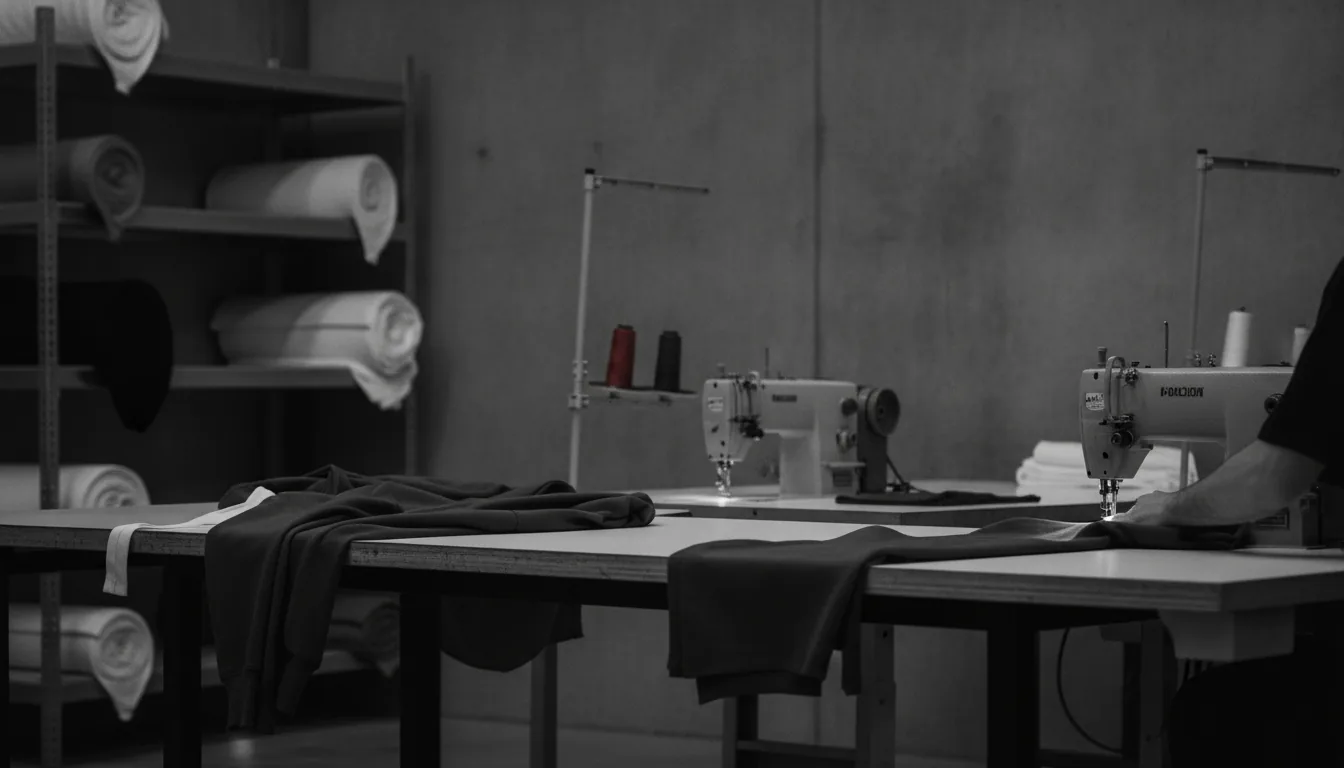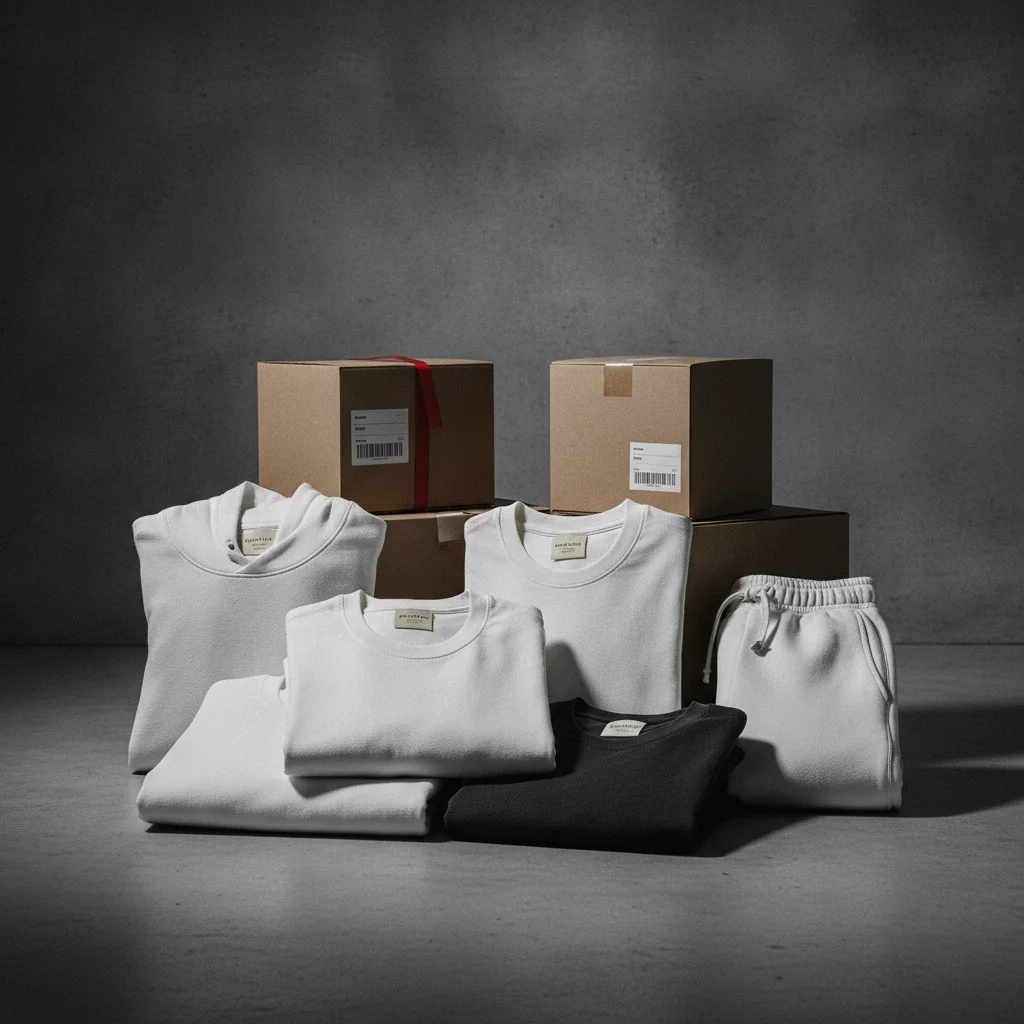
Reordering from a clothing manufacturer means resubmitting your approved tech pack and sample reference rather than restarting design and pattern development, which is why a reorder typically moves 30 to 40% faster than a first production run. As long as fabric, fit, and decoration files stay on record with the same factory, most of the sampling stage can be skipped entirely.
Why a Reorder Moves Faster Than a First Production Run
A first order carries pattern development, a pre-production sample, and quote negotiation – all work that happens once. A reorder against an approved style skips straight to bulk cutting because the pattern is graded, the fabric spec is confirmed, and the decoration files are already set up. That is the entire reason reorders exist as a faster lane in manufacturing: the design risk was already resolved on order one.
This only holds if the original factory kept your production file. Switching manufacturers between orders means starting the sampling stage again from scratch, even if the design itself has not changed – a new factory has not cut your pattern before and has to prove it can match the original.
What a Manufacturer Needs on File to Reorder Cleanly
A clean reorder depends on the manufacturer holding four things from your first run: the graded pattern, the approved pre-production sample or a written spec sheet from it, the fabric source and lot reference, and the decoration files (print separations, embroidery digitizing files, or dye recipe). Confirm these are on file with your manufacturer after each first order, not assumed.
Step 1: Confirm the Tech Pack Has Not Changed
Before submitting a reorder, check your tech pack against what actually shipped in the last run – sizing tweaks, a color change, or a print placement shift all turn a reorder into a partial resample. If nothing has changed, tell the manufacturer explicitly that this is a repeat of the exact previous specification, referencing the order number or sample approval date.
Step 2: Decide Whether You Need a New Sample
An identical reorder in the same fabric, fit, and print usually does not need a fresh sample – the previous approved sample still stands as the reference. If you are changing fabric weight, adding a colorway, or altering fit even slightly, request a fit sample for that specific change before bulk, since a small tweak to a pattern can shift drape more than expected.
Step 3: Confirm Quantity and Colorway Changes
Reorders rarely repeat the exact quantity and color split of the first run – usually a brand scales up total units, adds a colorway that sold through fastest, or drops one that did not. State the new breakdown clearly by size and color, since a manufacturer builds a fresh cut plan against your original graded pattern rather than assuming the same ratio as before.
Step 4: Lock Payment Terms and Lead Time
Payment terms on a reorder are often more flexible than a first order, since the manufacturing relationship and trust are established – some manufacturers offer better deposit terms or net payment windows to returning brands. Confirm the lead time in writing too; reorders are faster, but production capacity still varies by season, so get a firm ship date before committing to a launch or restock date on your end. See clothing manufacturer payment terms for typical structures.
Reorder Timeline vs First Order Timeline
| Stage | First Order | Reorder |
|---|---|---|
| Pattern development | 3-7 days | Skipped – pattern on file |
| Sampling | 7-15 days | Skipped, unless spec changed |
| Bulk production | 3-6 weeks | 3-5 weeks |
| Shipping (DDP) | 5-9 days | 5-9 days |
The shipping stage stays the same regardless of order history, since DDP transit time depends on the freight lane, not on how many times a brand has ordered before.
How to Keep Sizing Consistent Across Reorders
Sizing drift between production runs is the most common reorder complaint, and it comes from a manufacturer not referencing the exact original pattern and sample. Ask your manufacturer to confirm they measure the bulk cut against the original approved sample, not against a fresh interpretation of the tech pack numbers. See consistent sizing across reorders for what to check before approving a reorder’s first pulled units.
When a Reorder Needs a Fresh Sample
A new sample is worth the time whenever the fabric supplier changes (even at the same GSM), a new colorway is added that has not been dyed before, decoration method changes, or more than six months have passed since the last production run. Fabric mills can shift shade and hand-feel between lots, so a repeat reorder after a long gap benefits from a quick fabric check even if the pattern itself has not moved.
Common Reorder Mistakes
The most common mistake is assuming a reorder needs zero oversight and skipping a pre-shipment inspection, which is where sizing or shade drift gets caught before a full shipment lands. The second is not communicating a quantity change clearly, leading to a cut plan that does not match the actual size-and-color breakdown needed. The third is switching manufacturers mid-line to chase a marginally better quote, which resets the entire sampling clock and risks a fit or shade mismatch against units already in market.
Reordering Across Multiple Product Lines
Once a brand carries more than one style with the same manufacturer, reordering gets easier to manage by grouping styles onto a shared production and shipping schedule rather than triggering a separate order for each product as it dips low on stock. Combining a hoodie reorder with a t-shirt or sweatshirt reorder on the same shipment spreads the fixed cost of a DDP freight run across more units, and keeps a single shipment window to plan a restock around rather than several staggered arrivals.
Cash Flow Benefits of a Reorder Versus a First Order
A reorder costs less to finance than a first order in ways that go beyond the unit price. Because the sample is already approved, there is no sample fee to budget for, no sampling lead time tying up cash before production starts, and often improved deposit terms once a manufacturer has a payment history with your brand. That combination means a reorder of the same size as a first order typically needs a smaller upfront cash commitment relative to the total order value.
This is also where reordering earlier – before stock fully runs out – pays off. A brand that reorders while two to three weeks of inventory remains avoids a stockout gap during the 3-5 week reorder production window, whereas a brand that waits until shelves are bare loses sales momentum during the wait. Building a reorder trigger point into inventory tracking, rather than reacting to a stockout, keeps a growing brand supplied without overordering into excess stock.
Reorder Red Flags to Watch For
A few signals suggest a reorder needs closer attention rather than a routine repeat. If a manufacturer cannot confirm they still hold your graded pattern and fabric lot reference, treat the reorder like a first order and request a fresh fit sample. If a quoted price has shifted significantly from the last run without a fabric or fabric-cost change explained, ask for a breakdown before committing. And if lead times quoted for the reorder match or exceed the first order’s timeline, that is worth questioning – a genuine reorder advantage should show up in a shorter production window, not an identical one.
How Minku Apparel Handles Reorders
Each approved tech pack, pattern, and decoration file at Minku Apparel stays on record after your first production run, so a reorder moves straight to a bulk quote rather than back through sampling. We flag automatically if more than six months have passed since your last run or if any spec has changed, and recommend a quick fabric or fit check only where it is genuinely warranted – not as a default extra charge.
Ready to reorder or scale your next run? Get your custom quote, or read how to scale a clothing brand with your manufacturer for what comes after a proven first reorder.
Documentation to Request After Each First Order
Before a first order closes out, request written confirmation of what the manufacturer is keeping on file for future reorders: the final graded pattern measurements, the exact fabric name and supplier lot, the decoration files used (print separation, embroidery digitizing file, or dye formula), and photos of the approved pre-production sample from multiple angles. Having this documentation in your own records, not only the manufacturer’s, protects a brand if a factory relationship ever needs to change and a new manufacturer has to match an existing style from scratch.
This is a five-minute request that most first-time founders skip because the first order feels complete once units ship. It becomes valuable the moment a reorder conversation starts months later and a founder needs to confirm exact specifications without digging through old email threads.
Related Reading
For the production process a reorder builds on, see cut and sew manufacturing and the full custom clothing manufacturer overview. If you have not placed a first order yet, how to get samples from a clothing manufacturer covers that starting stage.
How to Reorder From a Clothing Manufacturer — In Detail