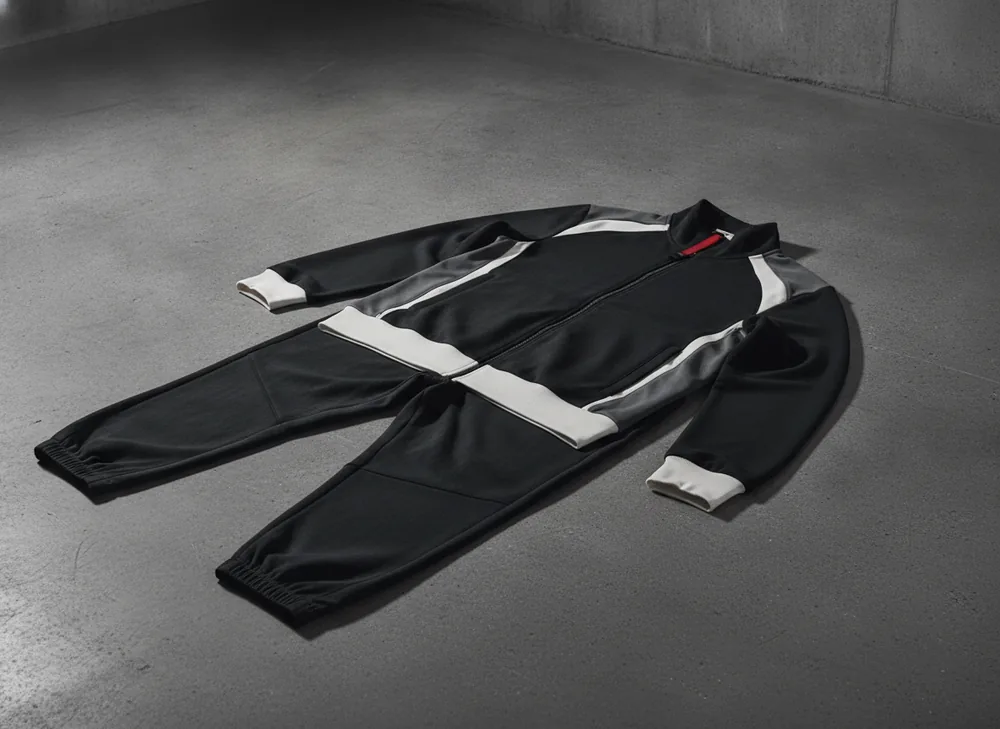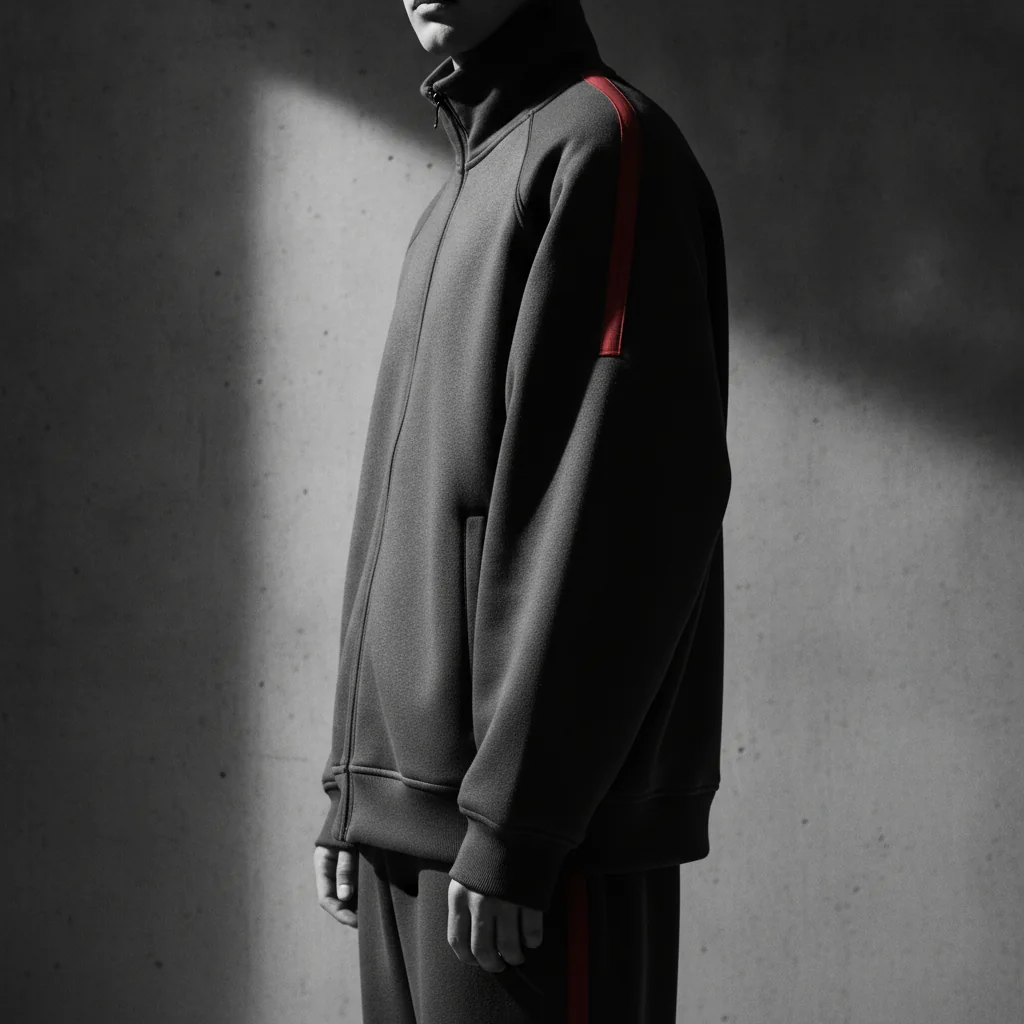
Custom tracksuits typically take 6 to 9 weeks from tech pack approval to a completed bulk order, split across sampling, fabric sourcing, cutting and sewing, decoration, and quality inspection, plus 5 to 10 days of worldwide DDP shipping on top. A brand that skips sampling can shave one to two weeks off that window, but at the cost of catching fit or fabric problems after bulk cutting instead of before it.
The Full Timeline, Stage by Stage
A tracksuit is a two-piece garment – jacket and pant – built from heavier fabric (fleece, French terry, or nylon) with more construction detail than a single-layer tee, so its timeline runs longer than a t-shirt or hoodie order. The stages below are typical for Minku Apparel’s process on a first order; a repeat reorder of an already-approved design moves faster because sampling and pattern grading are already complete.
Tech pack review and confirmation: 2 to 4 days. Fabric sourcing and lab dip (if a custom color is specified): 5 to 10 days. Pattern making and pre-production sample: 7 to 14 days. Sample review and revision (if needed): 3 to 7 days. Bulk cutting, sewing, and decoration: 15 to 25 days depending on order size. Quality inspection and packing: 3 to 5 days. Worldwide DDP shipping to the USA, UK, or Europe: 5 to 10 days.
Why Tracksuits Take Longer Than a T-Shirt or Hoodie
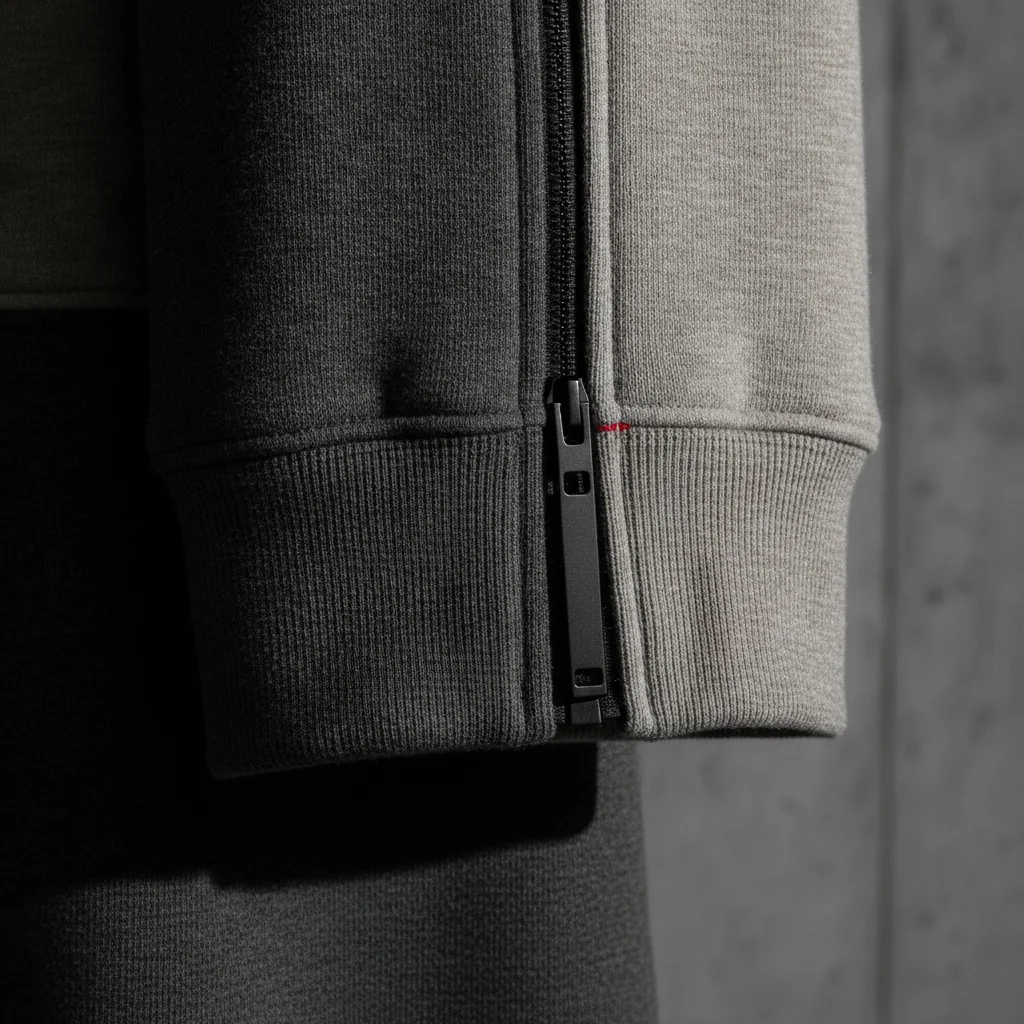
A tracksuit doubles the garment count per unit – a jacket and a matching pant, each with its own pattern, cutting, and sewing line – which extends both the sampling stage and bulk production compared with a single-piece order of the same quantity. Jackets typically carry a zipper, ribbed or elastic cuffs, and sometimes a hood or collar construction, each adding assembly steps a t-shirt does not have. Matching pants require elastic or drawcord waistbands, side seams, and often ribbed ankle cuffs, all of which need their own construction review during sampling.
Color and fabric matching across the two pieces adds another checkpoint: a jacket and pant cut from different fabric rolls can show a visible shade difference once dyed, so factories run lab dips and bulk dye lots together for a tracksuit set rather than treating jacket and pant as separate items.
Fabric Choice and Its Effect on Timeline
Fleece and French terry tracksuits (240-400+ GSM) use heavier, thicker fabric that takes longer to cut accurately at scale and adds sewing time on thicker seams, particularly around cuffs and waistbands. Nylon or polyester tracksuits used for a technical or retro athletic look involve different sewing equipment (bonded or taped seams in some constructions) and can add a few days if the factory needs to switch machine setups from a fleece run.
Garment-dyed or acid-wash tracksuits add a wash and dye stage after construction rather than before, which extends the schedule by 3 to 7 days compared with a piece-dyed or blank fabric order, since the wash step happens on finished, sewn garments and needs its own drying and inspection pass.
How Order Size Changes the Timeline
A 50 to 100-piece first order runs on the shorter end of the bulk production window (15 to 18 days) since fewer cutting and sewing lines are needed to complete it. A 500-piece or larger order extends bulk production toward 25-30 days, not because any single step is slower, but because more units move through cutting, sewing, and decoration in sequence. Reorders of an already-sampled design skip pattern making and the first sample round entirely, cutting 10 to 14 days off the total timeline compared with a first order of the same size.
Typical Timeline by Order Type
| Order Type | Sampling | Bulk Production | Shipping | Total |
|---|---|---|---|---|
| First order, 50-100 pcs | 15-25 days | 15-18 days | 5-10 days | 6-8 weeks |
| First order, 500+ pcs | 15-25 days | 25-30 days | 5-10 days | 8-9 weeks |
| Reorder, approved design | Skipped | 15-25 days | 5-10 days | 3-5 weeks |
What Can Extend a Tracksuit Timeline
Late tech pack changes after sampling has started push the schedule back the furthest – a fit or fabric change requested mid-sample means a second sample round, adding 7 to 14 days. Custom colorways needing a lab dip approval add 5 to 10 days if the first dip does not match the target Pantone reference on the first try. Complex decoration – all-over print, multi-panel embroidery, or a heavyweight puff print across a large chest and back area – adds curing and drying time that a simple screen print or small embroidery hit does not require.
Peak season ordering (brands placing bulk orders ahead of a fall or holiday drop window) can also add a few days to factory queue time, since cutting and sewing lines run at capacity across many brands’ orders simultaneously.
What Can Shorten a Tracksuit Timeline
Reordering a design already sampled and approved is the single largest time saver, since pattern making, sampling, and the first review round are complete. Choosing a standard, in-stock fabric color rather than a custom lab dip removes the dye-matching step entirely. Simpler decoration (a single-color screen print or a small embroidered logo) cures and dries faster than a large multi-color or all-over design, shaving days off the bulk production stage.
A Real-World Timeline Example
Consider a brand submitting a tech pack for a 150-piece fleece tracksuit set in one colorway, screen printed on the jacket back and embroidered on the pant hip. Tech pack confirmation lands within 3 days. Fabric sourcing on a standard in-stock fleece color takes 6 days, no lab dip needed. Pattern making and the first pre-production sample take 12 days, and the brand approves it on the first round with no revision requested. Bulk cutting, sewing, screen print, and embroidery for 150 sets take 18 days. Inspection and packing take 4 days. Shipping to the USA under DDP terms takes 7 days.
Total: 3 + 6 + 12 + 18 + 4 + 7 = 50 days, roughly 7 weeks from tech pack to the finished order landing at its US destination – within the typical 6 to 9-week range, on the faster side because the fabric was a standard color and the sample was approved without revision.
Communication and Response Time Matter as Much as Production Speed
A meaningful share of delay on an overseas tracksuit order comes from the brand side rather than the factory floor: slow turnaround on sample approval, late tech pack revisions, or unclear feedback on a fit issue that requires the factory to guess at the fix. A brand that reviews a sample within 2 to 3 days of receiving photos or the physical piece, and gives specific, measurable feedback (add 1 inch to the pant inseam, move the print 2cm higher on the chest) keeps the schedule on track. A brand that takes two weeks to respond to a sample review request adds that same two weeks directly onto the total timeline, regardless of how fast the factory itself works.
Time zone difference between Pakistan and the USA, UK, or Europe is manageable with async communication (photos, video calls scheduled in advance, written measurement changes) but a brand expecting same-hour replies during its own working day should plan feedback windows accordingly rather than treating a slow reply as a factory delay.
Overseas Manufacturing Timeline vs a Local Print Shop
A local print shop can turn around a blank tracksuit with a screen print in 1 to 2 weeks, faster than the 6 to 9-week window for a fully custom-manufactured set. The trade-off is control: a local print shop is decorating an existing blank tracksuit, not building one to a brand’s own fabric weight, fit block, and construction spec, and it cannot sew in a private label at the neck or waistband the way a manufacturer can during construction.
For a brand willing to trade a shorter timeline for a stock fit and fabric, a local decorator remains a reasonable option for a single small test run. For a brand building a signature fit and fabric it plans to reorder across multiple drops, the longer overseas manufacturing timeline is the cost of getting a garment built to its own specification rather than a decorated stock item.
How Minku Apparel Manages Tracksuit Timelines
Minku Apparel runs tracksuit orders through the same sampling-first process regardless of size: tech pack confirmation, fabric sourcing, a pre-production sample for jacket and pant together, then bulk cutting, sewing, decoration, and inspection before worldwide DDP shipping to the USA, UK, and Europe. A brand planning a drop date should build in the full 6 to 9-week window from tech pack approval, plus shipping, rather than counting only bulk production time.
Brands mapping a launch date against this timeline can also check what a custom tracksuit costs to manufacture, review how custom tracksuits get made stage by stage, or see the full custom tracksuit manufacturer overview before submitting a tech pack. Brands ready to lock in a production slot can start with a custom quote that includes a timeline estimate for their specific design.
How Long Does It Take to Manufacture Custom Tracksuits? — In Detail