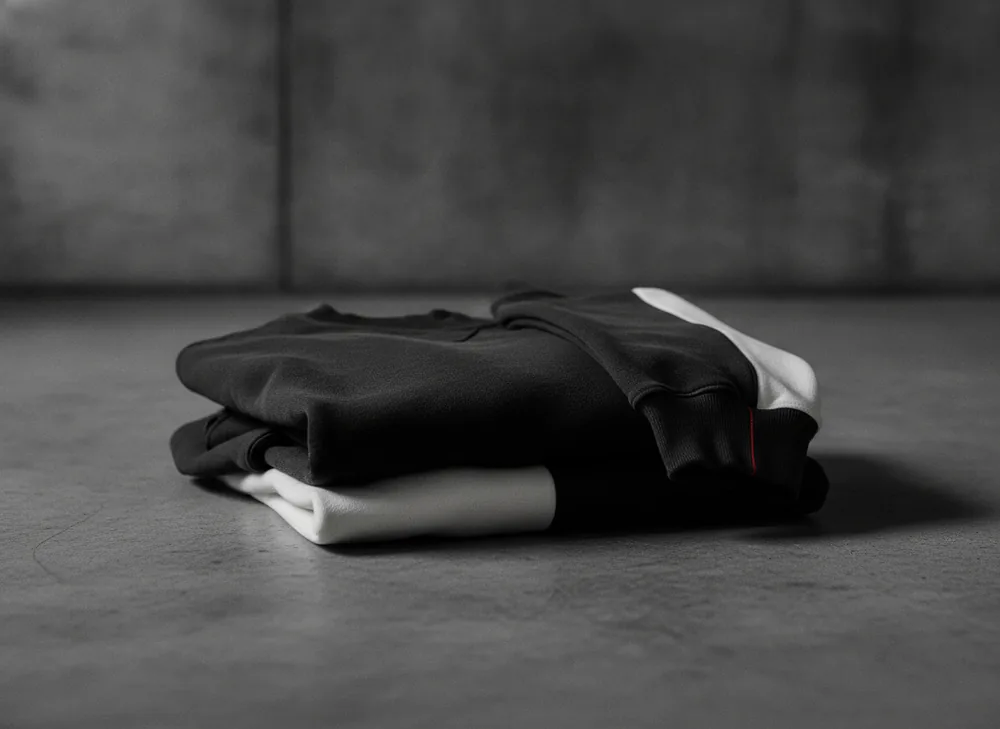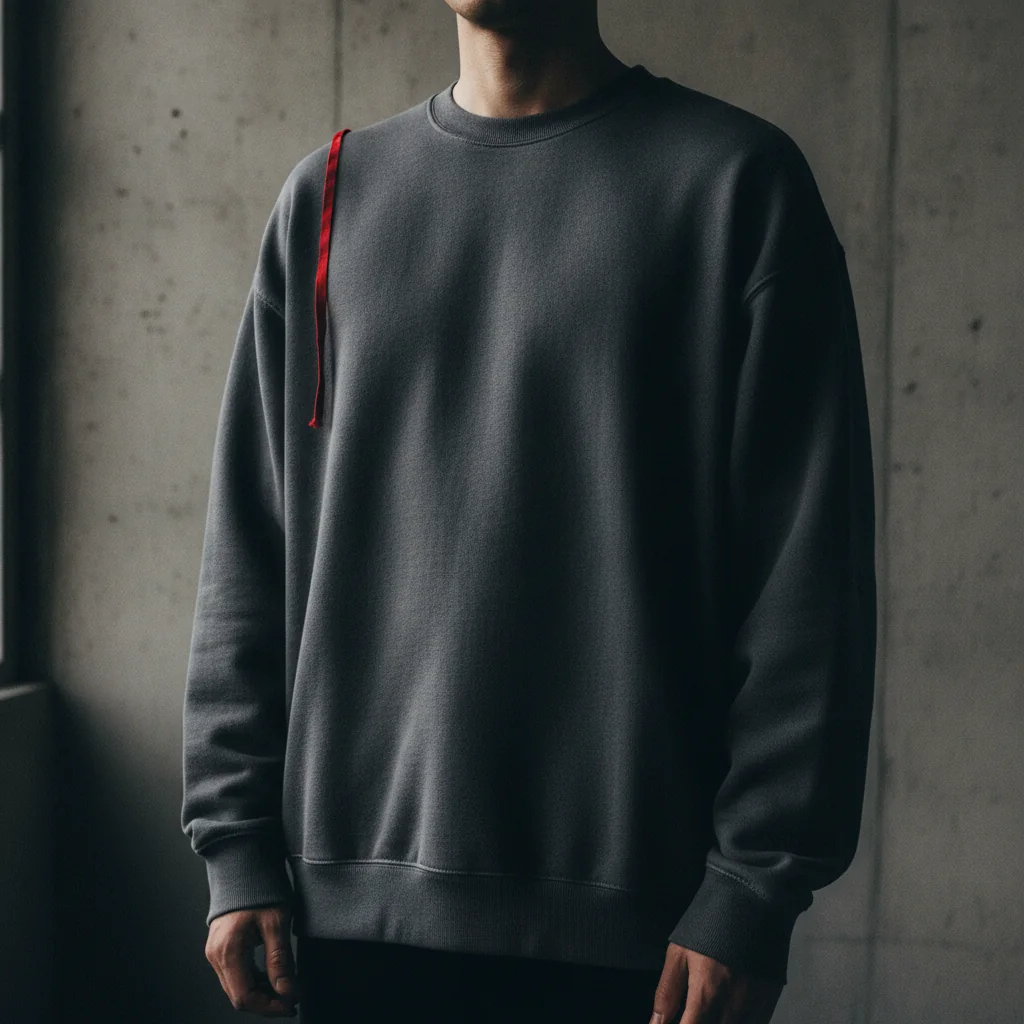
Minku Apparel manufactures custom heavyweight sweatshirts for streetwear brands from 50 pieces per design – 400+ GSM brushed cotton fleece cut for structure and drape, sampled and approved before bulk, and finished with a brand’s own private label. We ship worldwide DDP door to door from our Pakistan factory to labels across the USA, UK and Europe.
A heavyweight sweatshirt is defined by fabric weight above 380 to 400 GSM – dense enough to hold its shape on a hanger, resist pilling through repeat washes, and carry a graphic or embroidered design without the fabric shifting under the decoration. This page covers what qualifies as genuinely heavyweight construction, the fabric and finishing choices that separate a hard-wearing hero piece from a mid-weight garment marketed as heavyweight, and how Minku manufactures the style to a brand’s exact spec.
What Qualifies as Genuinely Heavyweight
GSM – grams per square meter – measures fabric density, and the streetwear market treats 320 GSM as the entry point for heavyweight branding, though a fabric only reads as substantial in hand and on the body once it clears 380 to 400+ GSM. Below that threshold, a sweatshirt marketed as heavyweight often performs closer to a mid-weight garment once washed a handful of times, losing loft and structure faster than the weight claim suggests.
We build our heavyweight range from 400 to 450 GSM brushed cotton fleece, dense enough to hold a squared silhouette on a hanger and resist the pilling that lighter blends develop within the first few washes. A brand can request a lab-dip and fabric swatch before committing a design to this weight range, confirming hand feel and drape ahead of sampling.
Fabric Construction and Brushing
Heavyweight fleece is brushed on the interior face – a mechanical process that raises the fiber to create the soft, insulating hand associated with premium sweatshirts. Brushing quality varies significantly by mill: an under-brushed heavyweight fabric feels stiff and board-like despite its GSM number, while an over-brushed fabric sheds fiber and pills faster than expected. We work with mills producing a consistent mid-range brush finish, giving the fabric loft without sacrificing durability across repeat washes.
Cotton content also affects hand feel at this weight – a fabric blended with a small percentage of polyester holds its shape marginally better across washes, while a higher cotton percentage gives a softer, more premium hand. We spec both blends depending on a brand’s priority between structure and softness.
Construction Details That Support Heavyweight Fabric
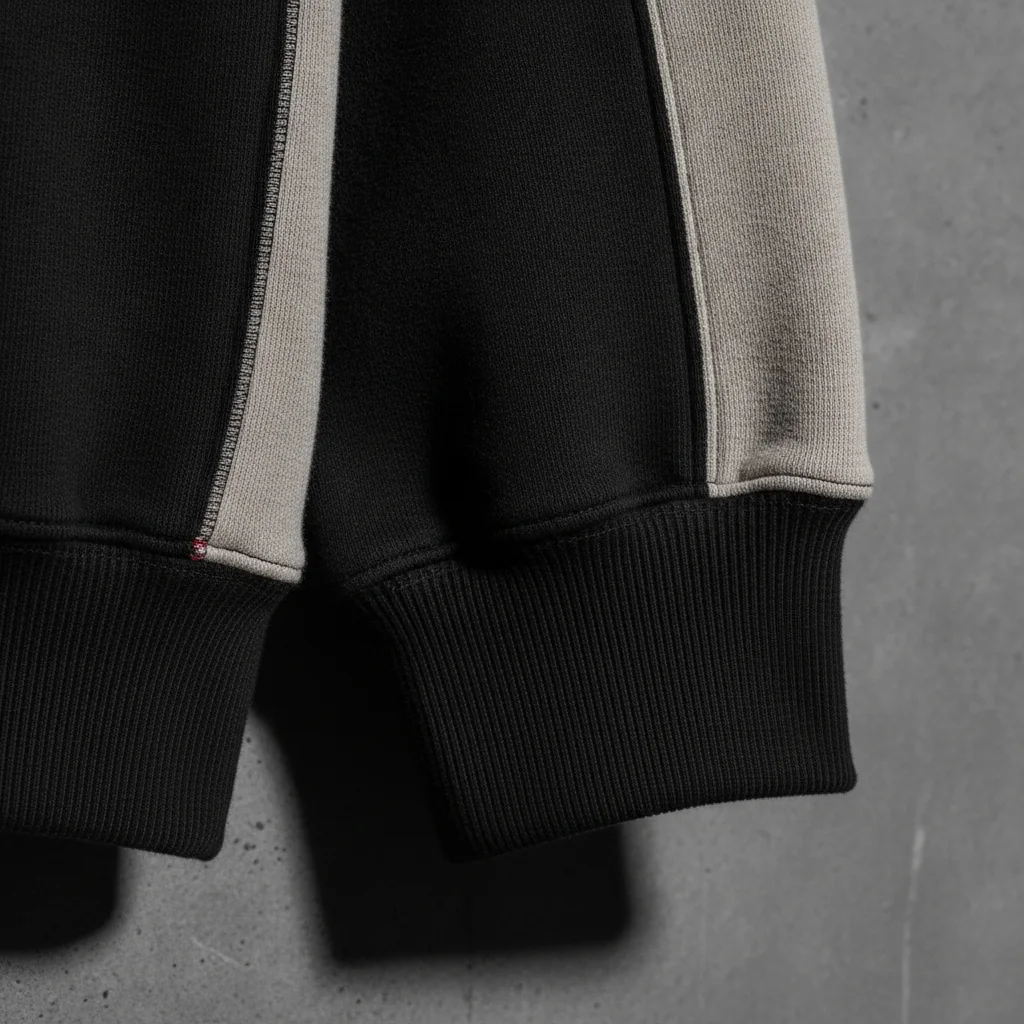
Heavier fabric changes how a garment needs to be constructed. Seams carry more stress at 400+ GSM, so we reinforce shoulder and side seams with taping on our heavyweight builds rather than relying on a single stitch line. Rib trims at the collar, cuff and hem are specified in a denser knit to match the body fabric’s weight – a lighter rib on a heavyweight body stretches out of proportion within weeks of regular wear.
Drawcords, if the design includes a hood, are sized and reinforced to match the fabric’s weight as well, since a standard cord and eyelet can pull loose under a heavier hood’s weight if not upgraded alongside the fabric.
Decoration on Heavyweight Fabric
Heavyweight fleece is the best-performing base for puff embroidery, since the dense fabric resists the puckering that lighter constructions develop under raised stitching. Screen print also performs well at this weight, with ink sitting cleanly on the brushed surface without the fabric distorting under a large graphic. Garment dye and acid wash both work at this weight too, though dye uptake runs slightly slower on denser fabric, which we account for in processing time.
DTG is the one method that suits heavyweight fabric less well – the brushed surface can affect ink absorption and detail sharpness compared to a smoother mid-weight fabric, so we typically recommend screen print or embroidery for heavyweight builds carrying detailed graphics.
MOQ and Pricing
Heavyweight sweatshirt orders start at 50 pieces per design. Per-unit cost runs above mid-weight fleece due to higher fabric consumption per garment and the reinforced construction the weight requires, with decoration method and quantity further adjusting the final price. A 50-piece run in 400 GSM fleece with a single screen print location prices below a 300-piece run at the same weight with puff embroidery and an all-over print liner.
Because heavyweight fabric carries a higher base cost, brands frequently position it as a hero or capsule piece within a drop rather than the entry-level item, pairing it with a lighter-weight companion piece at a lower price point.
How Minku Manufactures Your Heavyweight Sweatshirt
Every order starts with a tech pack review confirming fabric weight, brush finish, seam reinforcement and decoration placement. We produce a pre-production sample in the actual 400+ GSM fabric for approval – not a mid-weight proxy – so a brand feels the true hand and drape before bulk cutting begins. Once approved, bulk production, decoration and private-label finishing run in sequence, followed by a quality inspection checking seam strength and colorfastness before the order ships DDP to your door.
Turnaround from approved sample to shipped bulk order typically runs three to five weeks, slightly longer than mid-weight builds given the additional reinforced seam work.
A brand’s first heavyweight order also includes a fabric lab-dip round if a custom color is requested, since dye uptake behaves differently on denser fleece than on a lighter mid-weight fabric – a step we build into the production timeline up front rather than treating as an unplanned delay.
Heavyweight vs Mid-Weight: Choosing the Right Fabric
400+ GSM Heavyweight
Structured drape, low pilling, higher fabric cost, best for cold-climate markets and hero drop pieces.
240-300 GSM Mid-Weight
Lighter hand, lower fabric cost, suits warm-climate markets and everyday basics, less structured drape.
A brand shipping into a cold-climate market like Toronto, Chicago or Stockholm typically leans toward the heavyweight end of the range, while a brand focused on Miami, Houston or a year-round warm market often builds its core line at mid-weight and reserves heavyweight fabric for a single seasonal capsule.
Fabric Weight Comparison Table
| GSM Range | Feel | Best Use |
|---|---|---|
| 240-280 GSM | Light, soft drape | Warm-climate basics, everyday layers |
| 300-360 GSM | Balanced weight and structure | Year-round core styles, most markets |
| 400-450 GSM | Dense, structured, low-pill | Cold-climate hero pieces, capsule drops |
Fabric weight is one of the first specs we confirm on a tech pack, since it affects sizing, drape and even how a print or embroidery design should be scaled – a graphic proportioned for a 280 GSM garment often needs adjustment when moved to a 400+ GSM construction.
Quality Control on Heavyweight Builds
Heavyweight fabric is checked at three points before an order ships: incoming fabric inspection for consistent GSM and brush quality across the roll, in-line checks during cutting and sewing for seam strength at the reinforced points, and a final pre-shipment inspection sampling a percentage of finished units for colorfastness, pilling resistance and measurement accuracy against the approved sample’s spec sheet.
Because heavyweight fabric shows construction flaws more visibly than lighter fabric – a loose seam or uneven brush finish stands out more on a substantial garment – this weight class receives closer inspection scrutiny than our mid-weight product lines by default.
Real Examples From Production
A cold-climate streetwear label built its entire winter capsule in 420 GSM brushed fleece with a puff-embroidered chest logo and reinforced hood drawcord, running 300 pieces across three colorways and reordering the full quantity again the following season once sell-through confirmed demand. A separate brand tested a 400 GSM heavyweight crewneck against a 280 GSM standard version of the same design at 50 pieces each, using customer feedback on hand feel to decide which weight to scale into a full production run.
Why Brands Choose Minku for Heavyweight Builds
A heavyweight sweatshirt only performs as advertised if the fabric, brush finish and construction are matched correctly – a fabric labeled 400 GSM from an inconsistent mill can still feel thin or pill within weeks. Minku sources brushed fleece from mills producing a consistent finish, reinforces construction to match the fabric weight, and samples in the actual production fabric before bulk – the standard needed once a heavyweight piece becomes a brand’s signature product.
Ready to spec your heavyweight sweatshirt? Get your custom quote or see our full custom sweatshirt manufacturer overview for the complete fabric and decoration range.
Related Sweatshirt Builds
Heavyweight fabric pairs naturally with several other builds in our range. Our embroidered sweatshirt manufacturer page covers the puff-embroidery detail that performs best on this fabric weight, our oversized sweatshirt manufacturer page covers the dropped-shoulder cut many heavyweight hero pieces are built on, and our what GSM is best for hoodies page covers how the same fabric-weight principles apply across the hooded side of our range.
Custom Heavyweight Sweatshirt Manufacturer | Minku Apparel — In Detail