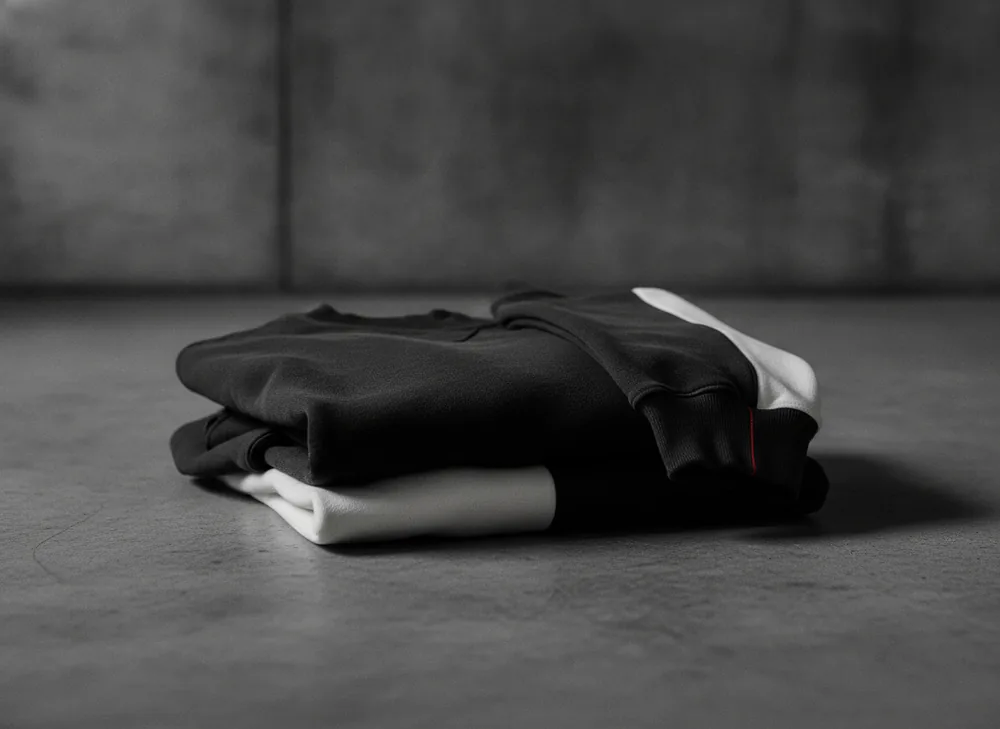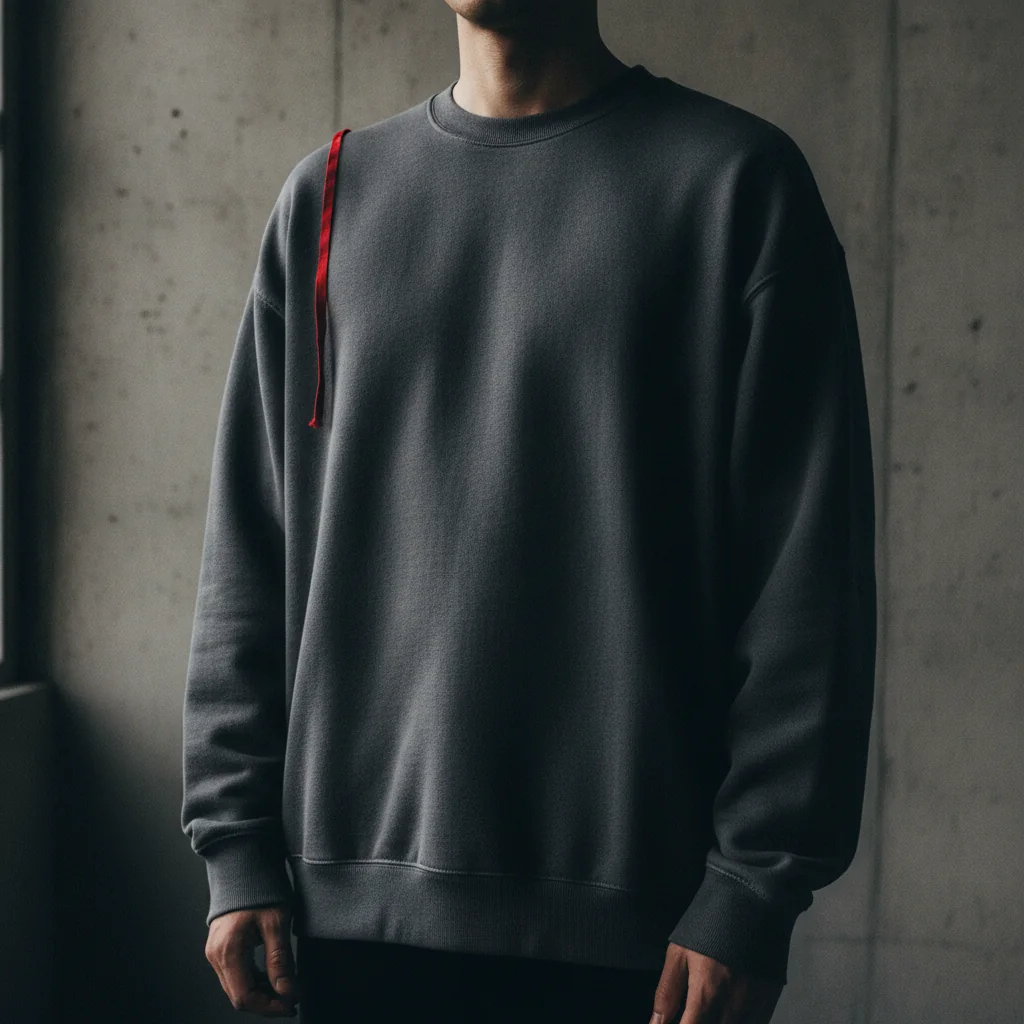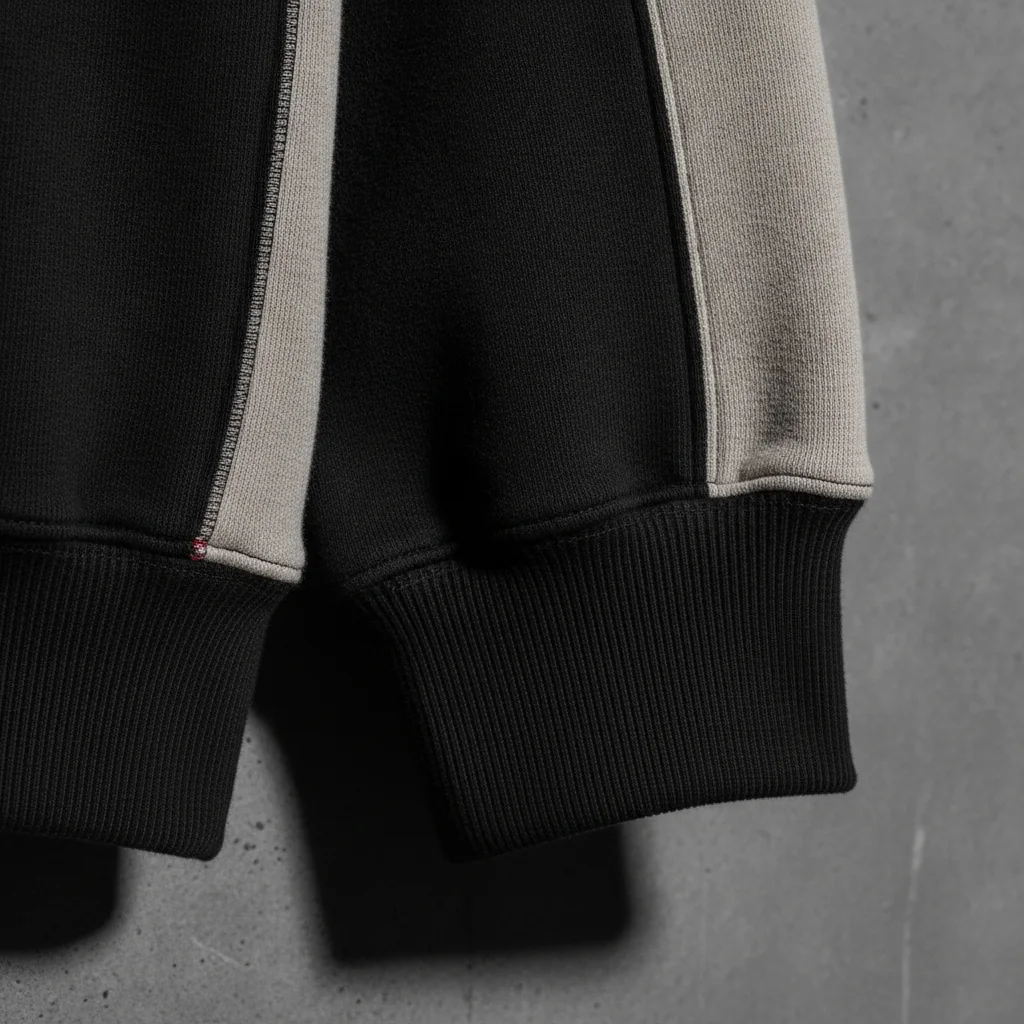
Wholesale sweatshirts are pre-made blanks sourced from a distributor and decorated afterward, while custom sweatshirts are manufactured to your exact fabric, fit, and branding specification from the start. For a brand building a distinct identity beyond a decorated blank, custom manufacturing is the stronger long-term choice – wholesale suits a brand testing a graphic concept fast with minimal upfront commitment. The right answer depends on where a brand is in its growth, not on one option being categorically better than the other.
Wholesale
Pre-made blank sweatshirt, decorated after purchase. Fast to source, limited fabric and fit options, no private label control, generic sewn-in tag stays in place.
Custom manufactured
Built to your fabric, GSM, fit, and decoration spec from 50 pieces per design. Full private label – your neck label, hang tags, packaging. Sampled and approved before bulk.
What wholesale sweatshirts actually are
A wholesale sweatshirt is a blank garment produced in bulk by a supplier to a standard, generic specification, then sold to multiple buyers who decorate it independently with their own graphics. Because the same blank ships to dozens of unrelated buyers, a brand has no control over fabric sourcing, GSM weight, fit changes, or trim – the sweatshirt a brand’s customer receives is functionally identical to what a competitor could buy from the same distributor.
What a custom-manufactured sweatshirt actually is
A custom sweatshirt starts from a brand’s own specification – chosen GSM (typically 240-400+), fiber content, fit and silhouette, decoration method, and private label details – and is cut-and-sewn to that spec from 50 pieces per design. Nothing about a custom order is shared with another buyer; the fabric, construction, and finishing are built around a single brand’s approved sample.
Fabric and fit control
Wholesale blanks are locked to whatever GSM, fiber blend, and fit the distributor stocks – a brand cannot request a heavier 380 GSM fleece or a boxier cut if the supplier does not carry it. Custom manufacturing puts fabric weight, fiber content, and fit entirely in the brand’s hands, with a pre-production sample confirming the exact hand-feel and drape before a bulk cut is made. This matters most for brands with a signature oversized, boxy, or cropped fit that a generic blank cannot replicate. A brand that has spent months dialing in a specific drop-shoulder pattern has no way to reproduce it on a wholesale blank, since the underlying pattern block belongs to the supplier, not the brand.
Private label and brand identity
A wholesale sweatshirt keeps its original sewn-in tag, or at most allows a printed label added after the fact – the garment never carries a woven neck label made for that brand alone. Custom manufacturing builds private labeling into the base order: a woven neck label, custom hang tags, printed care labels, and branded packaging, all specified before production starts. For a brand trying to build repeat-customer recognition, this difference shows up the moment a customer checks the inside collar.
Decoration options and quality
Wholesale sweatshirts are typically decorated after purchase through a separate print shop, limiting a brand to whatever that shop offers and adding a coordination step between blank supplier and decorator. Custom manufacturing keeps decoration in-house – screen print, DTG, puff print, puff embroidery, acid wash, garment dye, and tie-dye are all applied as part of the same production run, on fabric chosen specifically to hold that decoration well.
Minimum order quantity and cost structure
| Factor | Wholesale | Custom manufactured |
|---|---|---|
| Typical MOQ | Often no design minimum, but per-unit cost rises fast at low volume | 50 pieces per design |
| Fabric control | Fixed to supplier stock | Chosen GSM, fiber, and construction |
| Private label | Not included, or added after purchase | Included from first order |
| Lead time | Immediate (in-stock blanks) | Sampling plus production cycle |
Wholesale can look attractive on a per-unit basis at low volumes because the blank is already produced – but that cost advantage narrows quickly once a brand adds decoration, private labeling, and packaging as separate steps. Custom manufacturing consolidates those steps into one production run, which is where the total cost comparison often shifts in favor of custom once a brand orders more than a handful of units.
Consistency across a growing product line
A brand relying on wholesale blanks is exposed to the distributor’s own sourcing changes – a fabric swap, fit change, or discontinued style on the supplier’s side can alter a brand’s product without warning. Custom manufacturing locks a specification to a documented, approved sample, so a reorder six months later matches the original fabric weight, fit, and finish. This becomes more important as a product line scales past a first small drop.
When wholesale still makes sense
Wholesale remains a reasonable choice for testing an unproven graphic concept with close to zero upfront lead time, or for a one-off event or collaboration piece where building a full private-label specification is not proportionate to the order. A brand planning a repeatable, scalable product line – one it intends to reorder and build reputation around – outgrows wholesale blanks quickly once private labeling and fabric consistency start to matter to its customers.
How the two paths perform over a brand’s first year
A brand starting on wholesale blanks typically spends its first several drops learning what fabric weight and fit its audience responds to, without the ability to change those variables directly since they belong to the supplier’s catalog. A brand starting on custom manufacturing from day one locks in a fabric and fit signature earlier, which shortens the runway to a recognizable product but requires more upfront decision-making before the first sample is even cut. Neither path is wrong, but a brand that plans to still be selling sweatshirts in two years benefits more from the custom route sooner rather than later, since each season spent on wholesale blanks is a season without a defensible product signature.
Quality control differences worth understanding
Wholesale blank suppliers run quality control against their own internal standard, which a buying brand never sees and has no say in – a batch that passes the supplier’s own bar may still fall short of what a specific brand considers acceptable for its own name. Custom manufacturing ties quality control to a brand’s own approved sample, so inspection happens against a reference the brand itself signed off on, not a generic factory standard set for an anonymous buyer pool. This becomes especially relevant for a brand building a reputation around consistent fit and fabric feel, since a wholesale supplier has no obligation to flag a change in its blank before shipping the next batch.
How marketing and storytelling differ between the two models
A brand selling a decorated wholesale blank has limited material to talk about beyond the graphic itself, since the underlying garment is shared with other sellers and carries no unique manufacturing story. A brand on custom manufacturing can talk credibly about fabric weight, sourcing, private label detail, and a documented sampling process – content that supports a premium positioning and gives customers a reason beyond the graphic to choose one brand’s sweatshirt over a visually similar one. This difference compounds over time as a brand builds a content and marketing library around its own manufacturing choices rather than a shared blank it does not control.
A practical checklist before choosing either path
Brands weighing the two options benefit from answering a short set of questions before committing: how many designs need testing before the first real drop, how important is a signature fit to the brand’s identity, is there budget and lead time for a proper sampling cycle, and does the brand plan to reorder the same design repeatedly or move on to a new graphic each cycle. A brand answering “several designs to test,” “not yet critical,” “limited lead time,” and “one-off graphics” leans toward wholesale for now. A brand answering “one core design to perfect,” “central to the brand,” “lead time available,” and “planning repeat reorders” leans toward custom manufacturing from the outset.
Hybrid approaches some brands use
A number of streetwear brands do not pick one model exclusively – they run a wholesale-sourced basic tee line for volume and margin, while reserving custom manufacturing for flagship hoodies and sweatshirts where fit, fabric, and private label detail carry more weight in the customer’s buying decision. This hybrid approach lets a brand allocate its manufacturing budget deliberately: lower-stakes items stay simple and fast to source, while the pieces expected to define the brand’s identity get the full custom treatment, sampling cycle, and private label finish.
How Minku Apparel supports the move from wholesale to custom
We manufacture custom sweatshirts from 50 pieces per design, in 240-400+ GSM cotton, French terry, and fleece, with full private label finishing and in-house decoration – built specifically for brands ready to move beyond decorated wholesale blanks. Each order is sampled and approved before bulk production, so the first custom batch a brand receives matches the specification it signed off on. See custom sweatshirt manufacturer for the full product range, or private label clothing manufacturer for how private labeling works across our product lines. Ready to move off wholesale blanks? Get Your Custom Quote.
Wholesale vs Custom Sweatshirts: Which Is Right for Your Brand? — In Detail