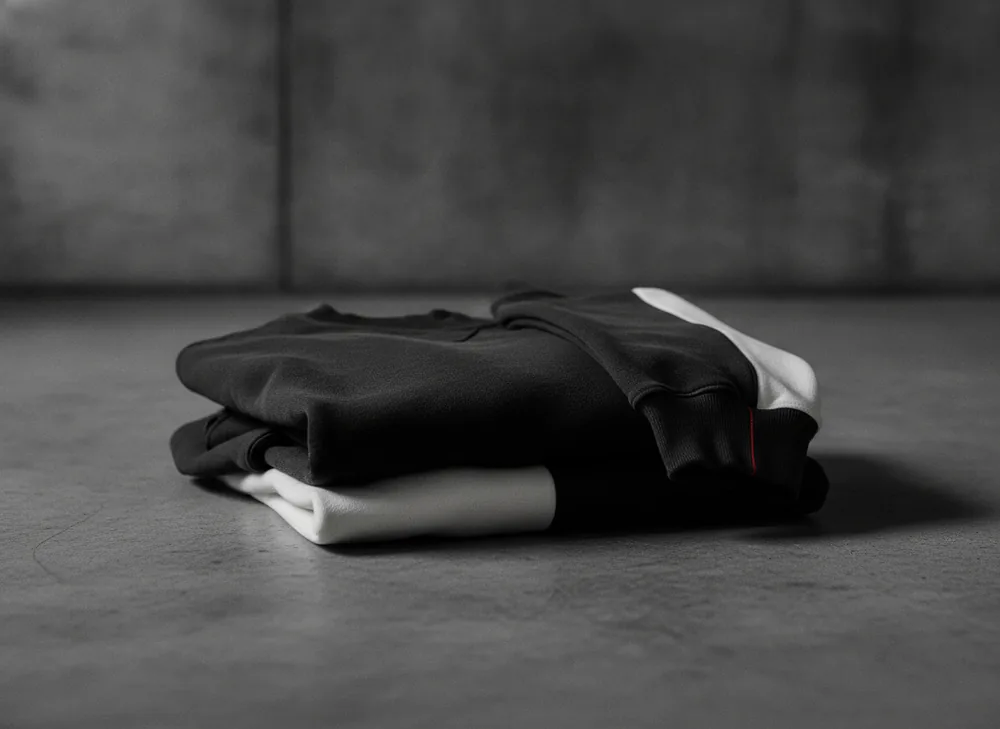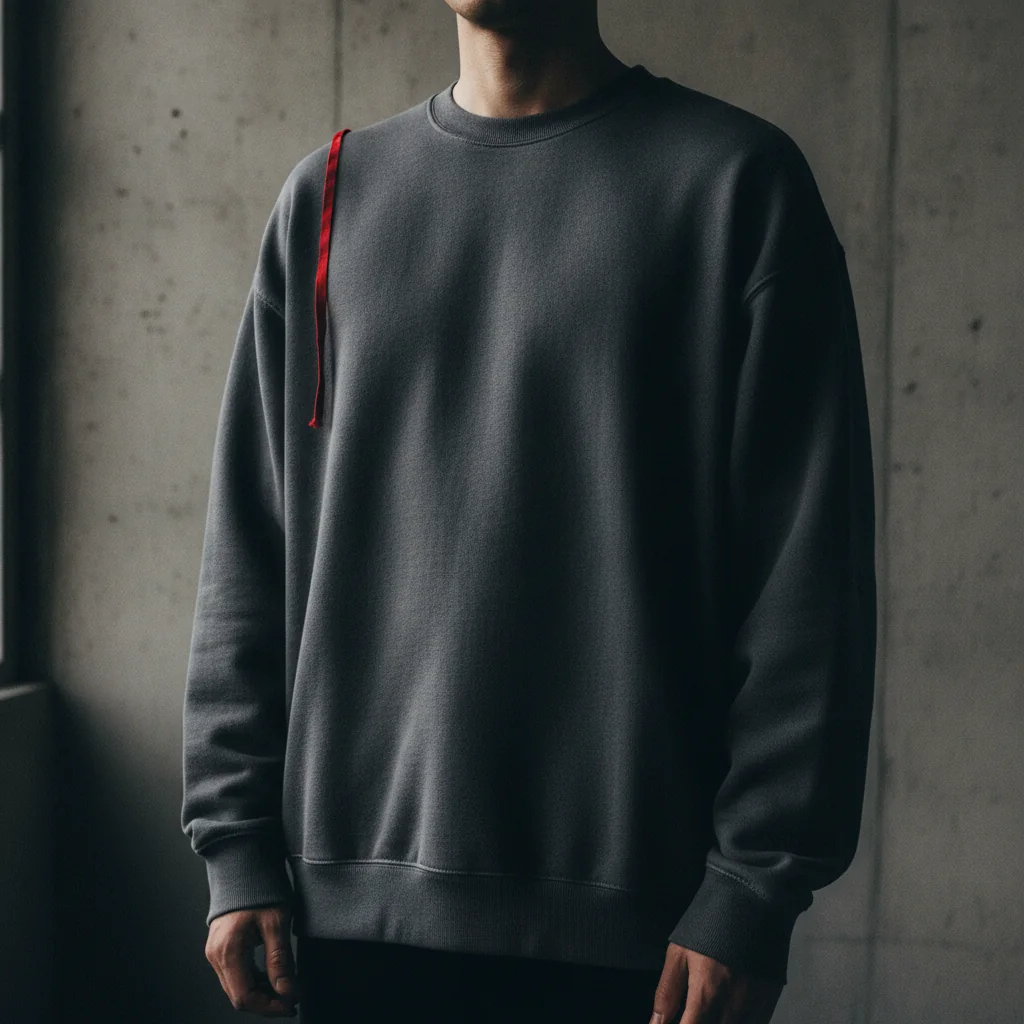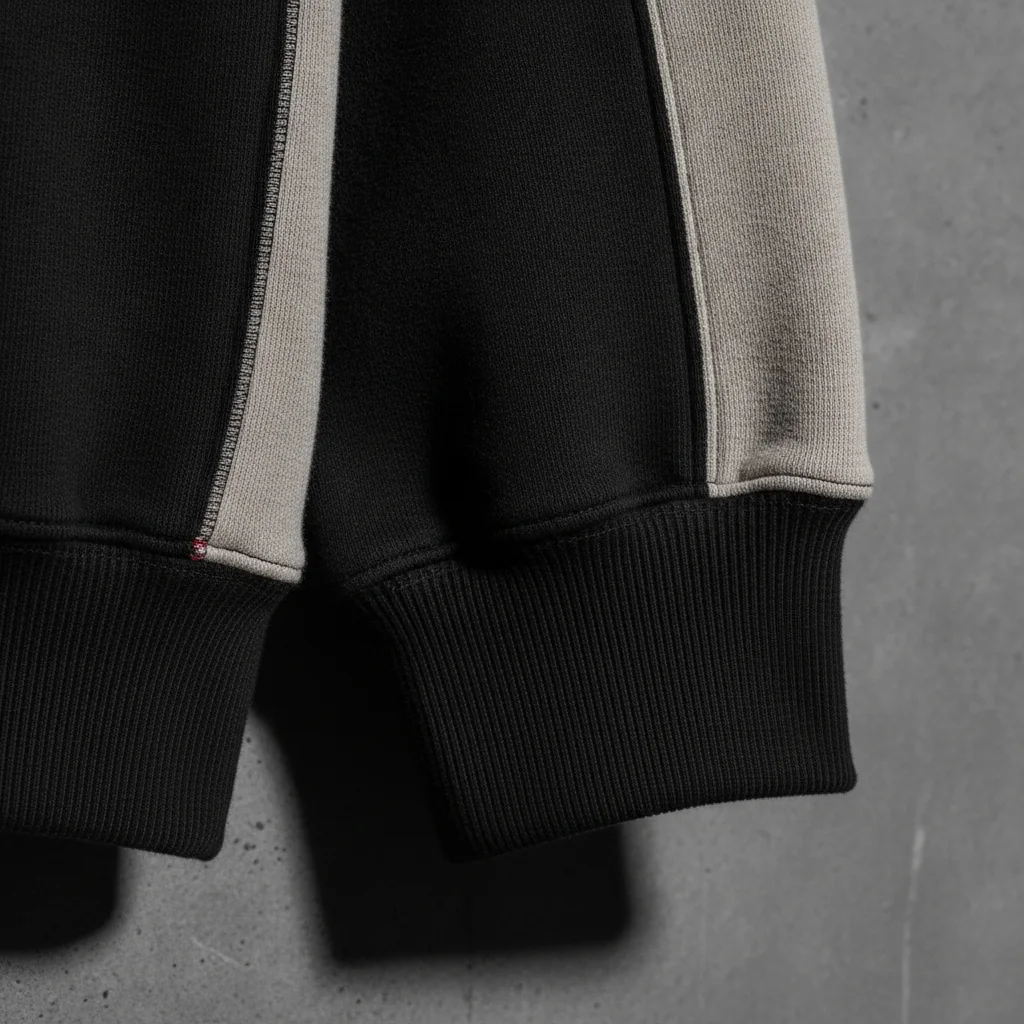
What makes a premium custom sweatshirt is a combination of four factors working together: fabric weight and fiber content, construction quality, decoration technique, and private label finishing. A sweatshirt built above 320 GSM in ring-spun cotton or a cotton-poly fleece blend, cut-and-sewn with reinforced seams and finished with your own woven neck label, is what separates a premium piece from a blank pulled off a wholesale rack. At Minku Apparel, each custom sweatshirt manufacturer decision – fabric sourcing, decoration method, trim – is made to hit that standard from 50 pieces per design.
Fabric weight and fiber content set the foundation
Weight is the first thing a buyer feels when they pick up a sweatshirt, and it is the biggest driver of perceived quality. Sweatshirts under 260 GSM read as thin and closer to a t-shirt in hand-feel, while fabric in the 320-400+ GSM range holds its shape on a hanger and carries a substantial drape once worn. Ring-spun cotton gives the softest hand-feel and the most even surface for print and embroidery; a cotton-poly fleece blend (commonly 80/20) adds shape retention across repeated washes, at a small trade-off in breathability.
Fiber content also determines how a garment responds to wash and dye finishing. A high-cotton fleece takes garment dye and acid wash predictably, since these processes depend on a natural-fiber reaction, while a heavier poly blend resists that same finish unevenly. Brands should confirm fiber percentage on the tech pack rather than leaving it to the factory’s default stock, since a small shift from 80/20 to 60/40 cotton-poly changes both hand-feel and dye response noticeably.
Construction details that signal quality before anyone reads a label
Premium construction shows up in details most buyers cannot name but instantly notice: double-stitched hems, a reinforced set-in or raglan shoulder seam, a ribbed cuff and waistband that hold their shape after a wash cycle, and a collar finish that does not fray in the first month of wear. A sweatshirt manufactured with a CMT-only approach, with no quality control between cutting and finishing, is where these details tend to slip – which is why full package production with in-line inspection matters more than most first-time brand founders expect.
Seam placement on a crewneck sweatshirt also affects how a large-format print or embroidery panel sits once the garment is worn, not only how it looks flat on a table. A side-seam or raglan construction changes drape at the shoulder in a way that a boxy, drop-shoulder pattern needs to account for, particularly on oversized silhouettes where the shoulder seam sits away from the natural shoulder line.
Decoration technique changes the perceived value
Screen print delivers the boldest, most opaque color on a heavyweight sweatshirt and is the standard for large logo or graphic placements. DTG (direct-to-garment) suits detailed, multi-color, or photographic artwork in smaller runs. Puff print and puff embroidery add a raised, tactile texture that reads as a more finished, premium detail than a flat print – particularly on chest logos and small placements. Combining two methods on one garment, such as an embroidered chest logo with a screen-printed back graphic, is a common way premium brands differentiate a piece from a single-decoration basic.
Matching decoration to fabric weight
Puff print and heavier embroidery need a stable, heavyweight base fabric to hold their raised texture – a thin sweatshirt under 260 GSM can pucker or distort under a dense embroidery panel, while 320+ GSM fleece holds the stitch pattern flat and even.
Fit and silhouette signal premium positioning
An oversized or boxy fit needs a heavier fabric to hold its shape rather than collapsing into a shapeless drape – this is why premium streetwear crewnecks default to 320+ GSM fleece rather than a lighter weight. A cropped or slim-cut sweatshirt can carry a lighter fabric since the pattern itself contributes more of the shape. Getting this pairing wrong – a light fabric on an oversized pattern – is a common mistake new brands make when their first sample comes back looking baggy rather than intentionally oversized.
Private label finishing turns a blank into a brand
A premium sweatshirt carries your woven neck label, not a generic factory tag – along with custom hang tags, printed care labels, and polybag or branded packaging matched to your identity. Private label finishing is what makes a garment read as a real brand product rather than a decorated blank, and it is included as standard on each Minku order regardless of order size. See our custom labels, tags and packaging page for the full private label build-out.
Wash, dye, and surface finishes
Garment dye, acid wash, and tie-dye each give a sweatshirt a distinct, worn-in character that a plain-dyed fabric cannot replicate – garment dye in particular produces a soft, slightly irregular tone from piece to piece that reads as intentional and premium rather than inconsistent. These finishes work most reliably on 100% cotton or high-cotton-blend fleece, since the dye reacts with the natural fiber. A brand planning a wash-finish sweatshirt line should confirm fiber content with their manufacturer before locking a fabric spec.
Trims, hardware, and finishing touches
Beyond the neck label, a handful of smaller trim decisions add up to a premium finish: a metal aglet on a drawcord instead of a plastic tip, a woven size label sewn into the side seam rather than a printed tag that fades after washing, and a reinforced bar-tack at stress points like the hem corners and pocket edges. None of these details cost much individually, but skipping all of them at once is what makes a sweatshirt feel like a decorated blank rather than a finished brand product. A tech pack that specifies trim hardware alongside fabric and fit gives a manufacturer no room to default to whatever generic trim happens to be on hand.
Consistency across reorders is a premium trait too
A sweatshirt that feels premium once is not the same as a sweatshirt line that feels premium on each reorder. Fabric weight, dye lot, and construction specification all need to be documented and reproduced batch after batch – a manufacturer that logs GSM, fiber source, and trim specs protects this consistency, while one sourcing loosely from whatever fleece is available at the time risks a second batch that feels noticeably different from the approved first sample. See consistent sizing across reorders for how this is managed in practice.
What drives the cost of a premium sweatshirt
| Factor | Standard approach | Premium approach |
|---|---|---|
| Fabric weight | 220-260 GSM | 320-400+ GSM |
| Fiber | Cotton-poly blend (low cotton %) | Ring-spun cotton or high-cotton blend |
| Decoration | Single flat screen print | Puff print or embroidery, combined methods |
| Finishing | Generic sewn-in tag | Woven neck label, hang tag, branded packaging |
Each step up this table adds a measurable but proportionate cost per unit – the value sits in fabric hand-feel, decoration durability after repeated washing, and brand presentation, not in unnecessary markup. Our MOQ and pricing page breaks down where cost concentrates across a typical order.
How premium positioning affects retail price
A brand that manufactures to the premium standard described above earns the right to price meaningfully higher than a decorated wholesale blank, because the fabric hand-feel, construction, and finishing are visible and felt the moment a customer opens the package. Pricing a premium 380 GSM garment-dyed, embroidered sweatshirt at the same retail point as a 220 GSM basic undersells the more expensive product and confuses a brand’s own line positioning. Most premium streetwear crewnecks retail at a multiple of landed cost that reflects the fabric and decoration investment, not an arbitrary number picked to match a competitor’s basic tee.
Real examples from production
One streetwear label launching a 300-piece crewneck drop chose 380 GSM cotton fleece with a puff-printed chest logo and garment-dyed finish – the fabric weight and dye combination gave the piece a hand-feel and worn-in tone that matched a retail price point roughly double their previous 240 GSM supplier’s output. A second brand running a reorder of embroidered sweatshirts specified the identical thread count and stitch density as their first 200-piece batch, and received a third batch that matched the original sample on inspection – the outcome of documented specifications rather than a fresh sourcing decision each time. A third brand testing puff print on a 260 GSM fabric found the texture flattened after a handful of washes, then moved to 340 GSM fleece for the reorder and saw the raised texture hold its shape for the life of the garment.
How Minku Apparel builds premium custom sweatshirts
We manufacture custom sweatshirts in 240-400+ GSM cotton, French terry, and fleece, with in-house screen print, DTG, puff print, puff embroidery, acid wash, garment dye, and tie-dye, and full private label finishing on each order from 50 pieces per design. Each fabric and decoration choice is confirmed on a pre-production sample before bulk cutting, so the premium standard you approve is the standard that ships. Explore the custom sweatshirt manufacturer hub for the full product range, or compare heavyweight and embroidered options on custom heavyweight sweatshirt manufacturer and custom embroidered sweatshirt manufacturer. Ready to lock a spec for your next drop? Get Your Custom Quote.
What Makes a Premium Custom Sweatshirt? — In Detail