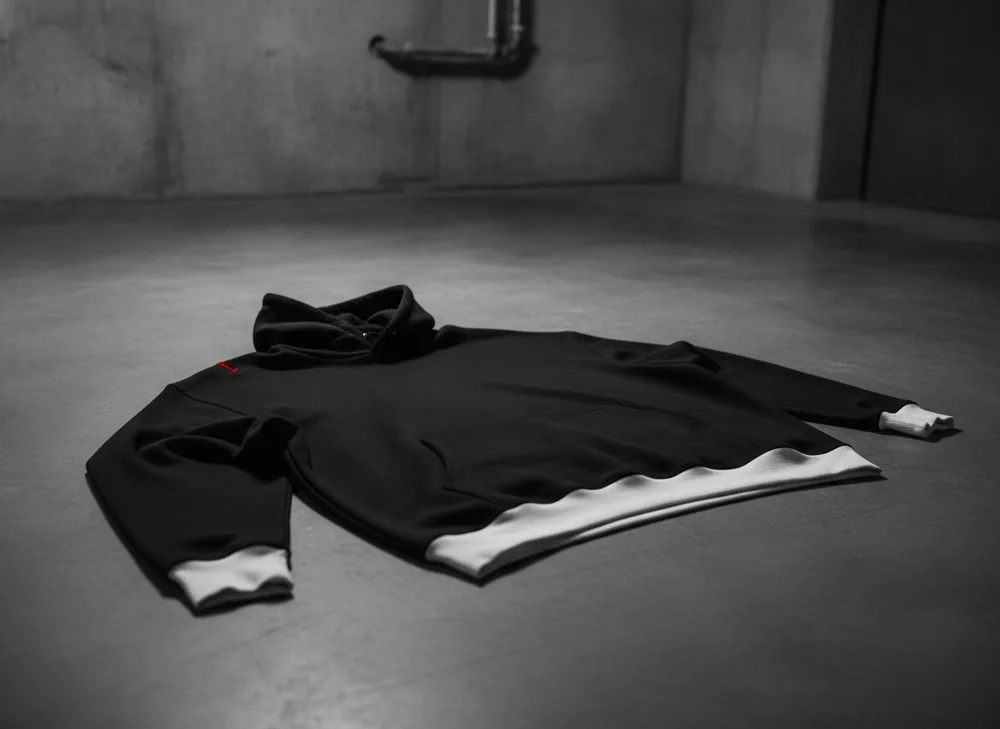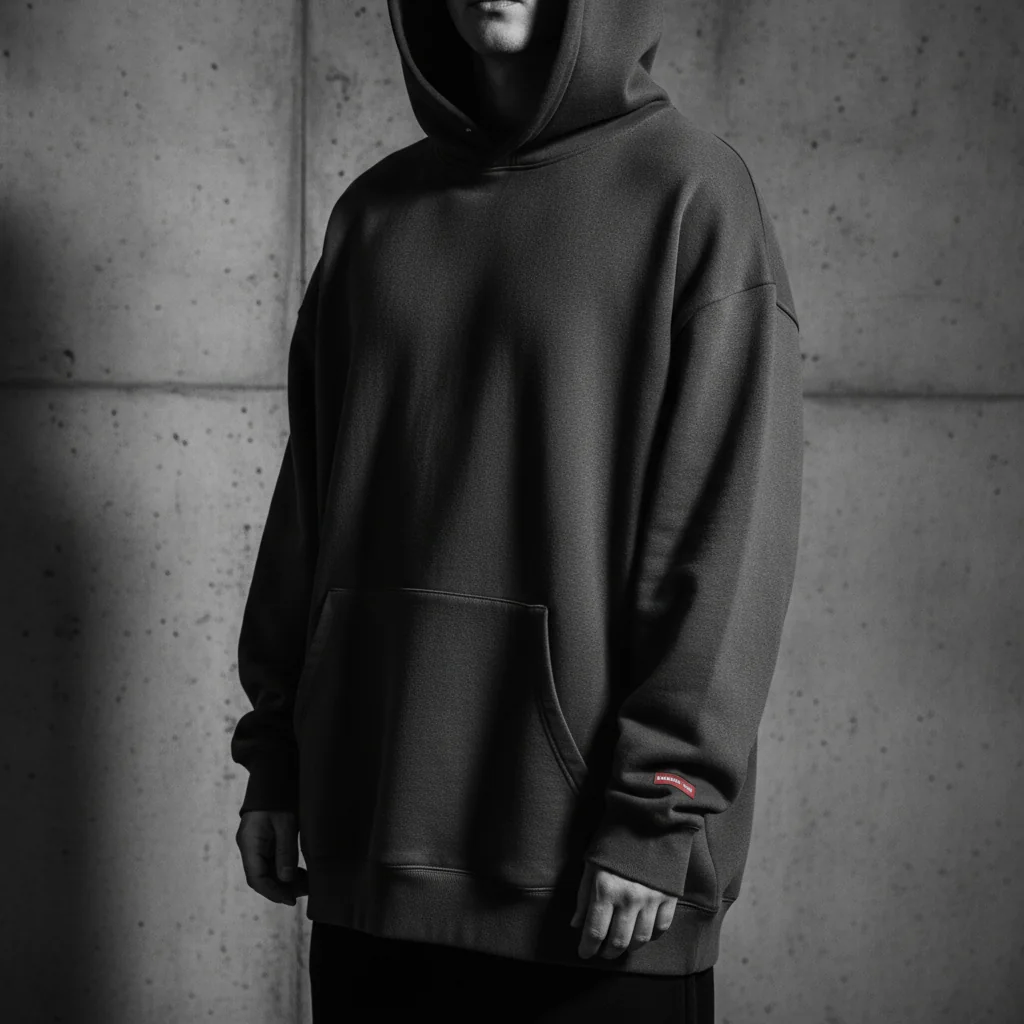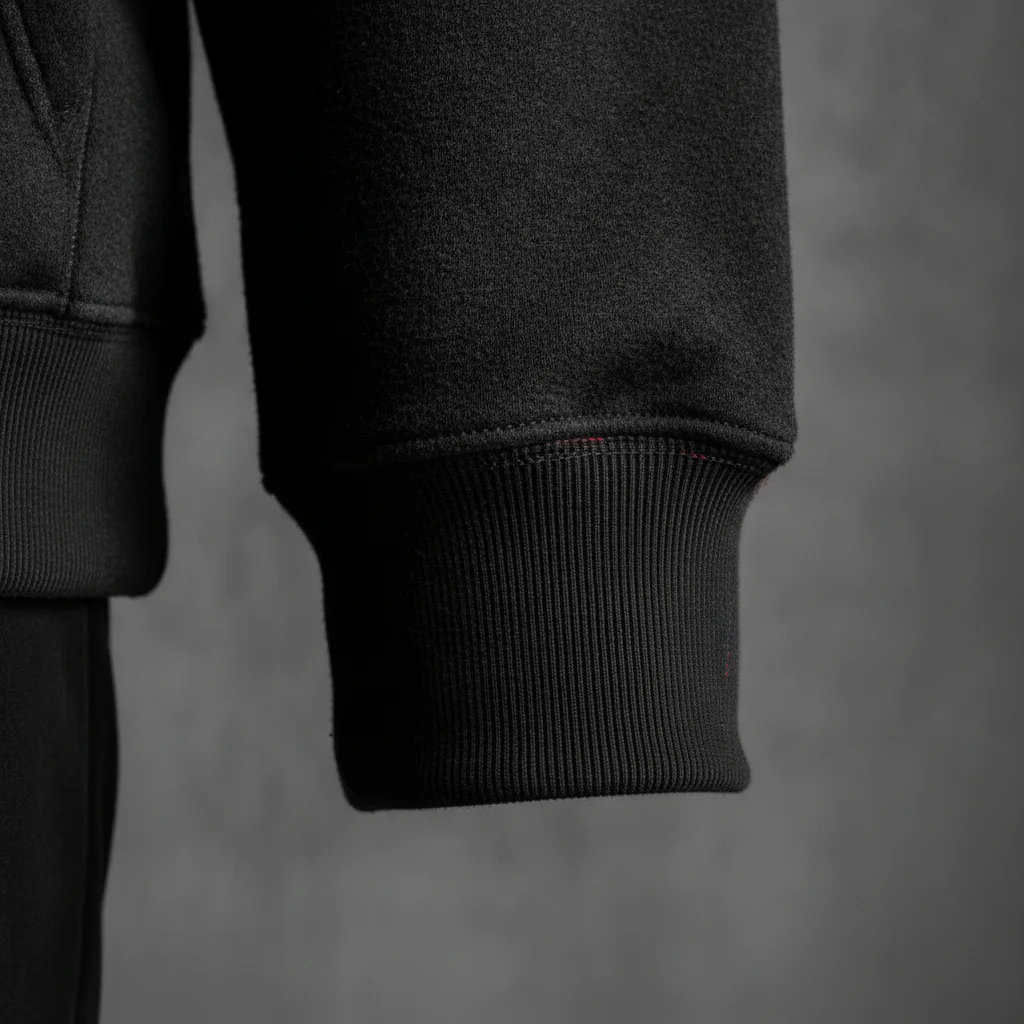
What makes a hoodie oversized is the pattern block, not the size label – a widened body, a dropped shoulder seam that sits past the natural shoulder point, and a sleeve cut long and roomy through the bicep, all built into the base pattern rather than achieved by ordering a size up. Sizing up a regular-fit hoodie makes it bigger; it does not make it oversized, because the proportions between chest, shoulder and sleeve stay the same, only scaled.
Streetwear’s oversized silhouette is one of the category’s defining shapes, and getting the block right – or wrong – is the difference between a hoodie that reads intentional and one that reads like a mistake. Here is exactly how an oversized fit is engineered, what fabric and construction it demands, and how we grade it at Minku Apparel.
The pattern block is what defines oversized
A regular-fit hoodie pattern is drafted so the shoulder seam sits at the natural shoulder point, the sleeve tapers close to the arm, and the body skims the torso with a few inches of ease. An oversized pattern changes all three measurements at once: the shoulder seam is moved outward and down the arm, the sleeve is widened and often kept straight rather than tapered, and the body is cut with several extra inches of ease at the chest and hem.
Because these changes happen in the pattern itself, an oversized medium is not the same shape as a regular-fit large scaled up – it has a genuinely different silhouette, with a boxier drop through the shoulder that a simple size increase cannot replicate. This is the detail that separates an intentional oversized design from a hoodie that only runs big.
The drop-shoulder seam explained
The dropped shoulder is the single most visible marker of an oversized hoodie. Instead of the seam sitting at the top of the shoulder bone, it is moved 1 to 3 inches down the arm, which visually widens the shoulder line and gives the garment its characteristic slouched, boxy hang.
How far the seam drops changes the read entirely – a 1-inch drop looks relaxed but still wearable in most settings, while a 2.5 to 3-inch drop reads as a maximalist streetwear silhouette, closer to a statement piece than a daily layer. We build this into the pattern to your exact spec rather than offering only one drop measurement, since brands use different drop depths as a signature across their line. Our drop-shoulder fit guide breaks the construction down further.
Sleeve length and body proportion
An oversized hoodie’s sleeve is cut longer than a regular fit’s, often extending past the wrist bone by an inch or two, and wider through the bicep and forearm to match the roomier body. Sleeve width and length have to scale together – a wide body paired with a narrow, short sleeve looks unbalanced rather than intentionally oversized.
Body length also grows, typically extending 2 to 4 inches past a regular-fit hem to keep the silhouette proportional when the shoulders and chest are widened. Get body length wrong relative to width and the garment reads shapeless rather than street-shaped – proportion, not only size, is what makes an oversized cut look designed.
Fabric weight matters as much as pattern
Oversized silhouettes need fabric substantial enough to hold structure through the extra ease, or the garment collapses into a shapeless drape instead of the clean, boxy hang the pattern intends. This is why oversized hoodies typically run 320 to 400+ GSM in brushed fleece rather than the lighter 240-260 GSM French terry used for slimmer, three-season cuts.
A heavier fabric also carries the dropped shoulder seam better, since a lighter knit can sag or twist at that seam under the extra width. If your design calls for an oversized silhouette, we recommend locking fabric weight before finalizing the pattern, because the two decisions are not independent of each other.
Oversized vs boxy vs regular fit
Oversized
Dropped shoulder (1-3in), wide sleeve, extended body length, roomy through chest and waist. Reads slouched, streetwear-signature.
Boxy
Squared body silhouette, cropped-to-standard length, minimal waist taper. Reads structured and cropped rather than slouched.
Both differ from a regular fit, which keeps the shoulder seam at the natural point and tapers the sleeve and body for a fitted silhouette. Some brands blend the two – an oversized body with a slightly boxier hem – which is why we grade each pattern to a brand’s own spec rather than one standard template. See our dedicated boxy hoodie manufacturing page for that construction specifically.
Decoration considerations on oversized cuts
The wider chest and back panels on an oversized hoodie give large-format prints more room to breathe, which is one reason oversized silhouettes and big back-graphic drops pair so often in streetwear. All-over print, oversized puff logos and large embroidered graphics all read stronger on the wider surface area than they would on a regular-fit block.
Placement still needs testing on the actual pattern, though, since a graphic sized for a regular-fit chest can sit off-center or too small on an oversized body. We map decoration placement to the exact oversized pattern during sampling, not to a generic size chart.
Grading oversized sizes correctly
Grading – how a pattern scales across sizes S through XXL – gets more complex on an oversized block because the shoulder drop, sleeve width and body ease all need to increase proportionally at each size rather than growing at the same flat rate as a regular fit. Get the grade rule wrong and an XL oversized hoodie can end up looking close to a large, or a small can look barely oversized at all.
We build a dedicated grade rule for oversized patterns rather than reusing a regular-fit grade, confirming the size curve on graded samples before bulk so each size in your run reads unmistakably oversized, not only the sample size.
Choosing between French terry and fleece for an oversized build
French terry can still work on an oversized silhouette at the top of its GSM range, around 300-320 GSM, provided the pattern includes enough structure in the shoulder and hem to hold the drape. Below that weight, an oversized cut in French terry tends to lose its shape after a few washes and can start to sag at the hem line.
Brushed fleece at 340 GSM and above is the more forgiving choice for a first oversized design, since the added loft holds the dropped shoulder and wide sleeve without needing as precise a pattern-and-fabric match. We can sample both fabrics on the same oversized block so you can compare hand-feel and drape before committing to bulk.
Common oversized-fit mistakes to avoid
The most frequent mistake is sizing the graphic to a regular-fit chest width, then applying it to an oversized pattern where the panel is meaningfully wider. A logo or graphic proportioned for a regular fit ends up looking small and off-center on an oversized body, so decoration placement should always be mapped to the oversized pattern’s actual measurements, not to a generic size chart shared across fits.
A second mistake is choosing a fabric weight below 280 GSM for a heavily dropped shoulder (2.5 inches or more). Lighter fabric cannot hold that much shoulder drop without sagging within a handful of washes, which is why we recommend matching fabric weight to drop depth rather than choosing them independently.
A third mistake is skipping a graded sample run across the full size range. Confirming fit only at a single sample size (commonly a medium or large) can hide grading errors that only show up at the smallest and largest sizes in the run, leaving a portion of your size curve looking inconsistent with the rest.
Oversized fit across different garment types
The same shoulder-drop and body-ease principles that define an oversized hoodie carry across to oversized crewneck sweatshirts, tees and sweatsuit tops, though the ideal drop measurement can shift slightly by garment. A crewneck typically carries a smaller shoulder drop than a hoodie of the same silhouette family, since there is no hood weight to balance at the neckline.
Brands building a full oversized collection – hoodie, crewneck, tee – benefit from locking one consistent drop-shoulder measurement and ease percentage across the line, so the silhouette reads as a unified design language rather than each piece looking oversized to a different degree.
How Minku builds oversized hoodies
We pattern oversized hoodies to your specified shoulder drop, sleeve width and body length, in 320-400+ GSM brushed fleece or heavyweight French terry, with a pre-production sample confirming silhouette before we cut bulk. MOQ starts at 50 pieces per design, with full private label and DDP shipping worldwide.
Explore the full build on our custom oversized hoodie manufacturer page and the wider custom hoodie manufacturing hub, or read our full oversized fit guide for pattern specs. To start your block, Get Your Custom Quote.
What Makes a Hoodie Oversized? (Fit Guide) — In Detail