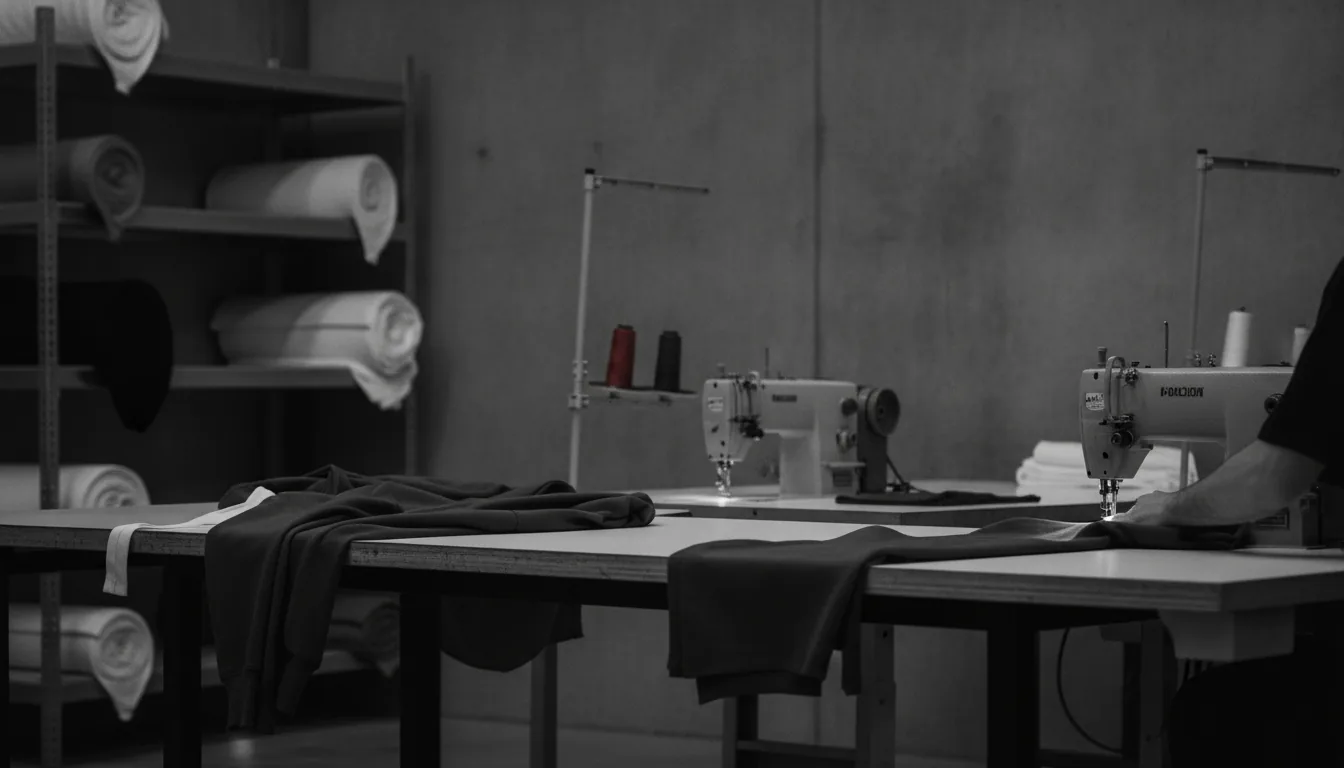
Minku Apparel manufactures custom streetwear for Melbourne brands from 50 pieces per design – heavyweight cotton, French terry and fleece, full private label, sampled before bulk production starts. Melbourne’s laneway-culture, design-led streetwear scene and its cooler climate relative to the rest of Australia shape a distinct product mix, and Minku ships DDP door-to-door from its Pakistan factory in 7 to 10 days with Australian GST and import duty already handled in the quoted price.
Why Melbourne Brands Manufacture Overseas
Australia’s domestic cut-and-sew industry is small relative to its retail market, and most Melbourne-based decorators work from imported stock blanks rather than building a garment to a custom fit or fabric spec. A label wants control over its own construction, not the same base hoodie any other laneway brand is printing from the same supplier catalog.
An overseas cut-and-sew factory solves that directly: Minku builds the garment from fabric selection through construction, decorates in-house, and ships with full private label – neck tag, woven label, hangtag and packaging – from a 50-piece MOQ per design, workable for a Melbourne label’s first drop without the freight cost and minimum-order barriers many Australian founders hit when sourcing through a domestic agent instead of direct from a factory.
Melbourne’s Streetwear Scene
Melbourne’s identity centers on its laneway and arts culture – graffiti-lined alleys, independent galleries, and a design-forward creative scene that shows up in more considered, typography- and archive-driven streetwear than the beach-and-surf-influenced aesthetic common in Sydney. The city’s cooler, more changeable climate compared to the rest of Australia keeps demand for hoodies, jackets and layering pieces strong across a longer part of the year.
Melbourne also inverts the seasonal calendar most northern-hemisphere manufacturers are used to – its winter runs June through August, meaning a heavyweight fleece drop timed for the northern autumn season needs to land in Melbourne roughly six months out of step with a UK or US equivalent launch.
Product Range for Melbourne Labels
Minku manufactures the full streetwear range for Melbourne brands, cut and finished to spec rather than decorated on imported stock blanks:
- Custom hoodies – 280-400+ GSM fleece for Melbourne’s cooler, layering-driven climate
- Custom t-shirts – boxy, oversized and drop-shoulder fits in combed cotton
- Custom jackets – bomber, coach and puffer styles for a cooler climate
- Custom tracksuits, shorts, sweatshirts and sweatsuits, all sampled before bulk
Fabric & Specs for Melbourne’s Climate and Seasons
Melbourne hoodie and crewneck orders typically run 300 to 400+ GSM fleece to cover a cooler climate and a longer layering season than most Australian cities. Tee orders run 200-220 GSM combed cotton, used as often for layering under a jacket as for standalone warm-weather wear.
Because Melbourne’s winter sits opposite the northern hemisphere’s calendar, Minku recommends a Melbourne label plan a heavyweight fleece production run roughly five to six months ahead of the target season – accounting for the 7-to-10-day DDP transit plus sample-approval time – rather than assuming a UK or US drop calendar will land at the right moment locally.
Decoration & Private Label for Melbourne Labels
Screen print and DTG cover most graphic and photographic artwork; puff and flat embroidery suit the tonal, typography-driven logo work common in Melbourne’s design-led scene; acid wash, garment dye and tie-dye give an archive-inspired, worn-in finish. Each order ships with full private label – neck label, woven or printed care tag, hangtag and packaging – so a Melbourne label’s product carries no trace of the factory that built it.
Shipping, DDP & Duty to Melbourne
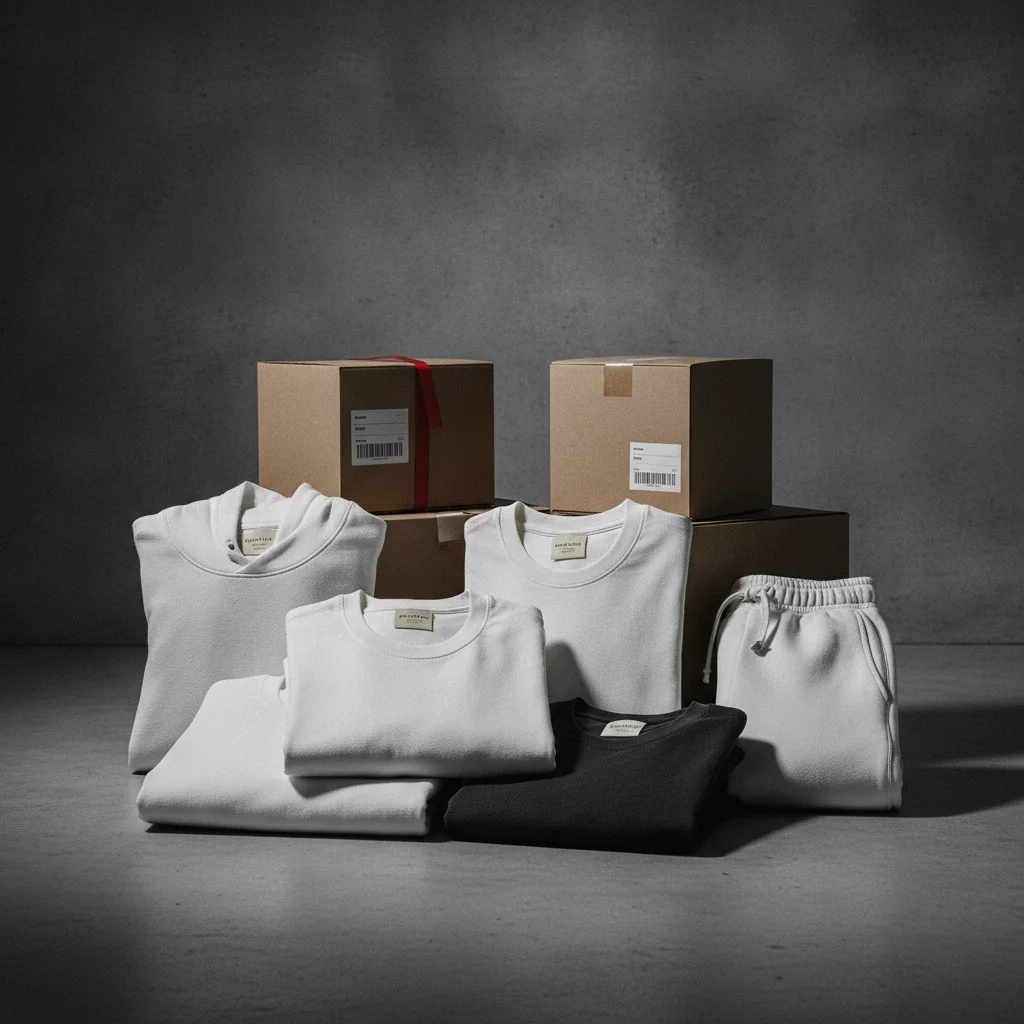
Minku ships to Melbourne DDP – Delivered Duty Paid – by air, landing in 7 to 10 days, the longest transit window among Minku’s core markets due to distance from Pakistan. DDP terms cover Australia’s 10% GST and import duty, so the price agreed before production is the price landed at a Melbourne address, with no separate GST bill from a courier on arrival.
That fixed landed cost matters most when a Melbourne founder is planning a launch six months ahead of the southern-hemisphere winter season and needs a locked budget rather than a variable customs charge disrupting a fixed retail price point.
MOQ & Pricing for a Melbourne Label
A 50-piece MOQ per design lets a Melbourne brand launch 2-3 designs in a first collection without over-committing inventory in a market smaller than the US or UK. Per-unit pricing tracks fabric GSM, decoration method and order volume, and Minku prices around fabric weight and construction quality rather than competing on being the lowest number, since a Melbourne label’s laneway customer is design-literate and notices construction shortcuts quickly.
Cost Factors on a Melbourne Order
| Factor | Lower Cost Direction | Higher Cost Direction |
|---|---|---|
| Fabric GSM | 220-260 GSM combed cotton | 320-400+ GSM heavyweight fleece |
| Decoration | Single-location screen print | Multi-location DTG + embroidery combo |
| Order quantity | 300+ units per design | 50-unit minimum run |
| Private label | Printed care tag | Woven neck label + hangtag + branded box |
A Melbourne founder planning a first winter drop typically starts with a single decoration location on a mid-weight fleece to control cost, then moves to a heavier 400+ GSM fabric and additional embroidery detail once a design proves out with a second production run.
Common Mistakes Melbourne Brands Make When Sourcing Overseas
The most common mistake is timing a heavyweight fleece order against a northern-hemisphere production calendar without adapting it for Melbourne’s reversed seasons – a founder plans a launch for what would be autumn in the UK, only to find it lands in Melbourne during its warmest months. Planning backward from Melbourne’s actual June-to-August winter avoids stock landing out of season.
The second common mistake is skipping the physical sample round to save time – a founder approves a design off a flat mockup and receives a fit or fabric weight that does not match expectations once the full order is cut. Minku will not proceed to bulk production without a signed-off pre-production sample precisely to prevent this.
A third mistake is ordering a single mid-weight fleece spec to cover both a Melbourne and a Sydney customer – a 260 GSM hoodie that suits Sydney’s milder winter often reads as underweight for Melbourne’s cooler conditions, leaving stock that undersells in one city or the other. Speccing fabric weight to the specific city, not a blended Australian average, keeps sell-through consistent across both markets.
Reorders & Scaling for Melbourne Labels
Once a design sells through at a Melbourne market stall or independent store, Minku locks fabric specification and construction detail against the original tech pack and sample, so a reorder months later matches the GSM, hand-feel and fit of the first run. Scaling from a first 100-to-150-unit collection to a 400-to-600-unit wholesale order typically happens over two to three production cycles as a Melbourne label adds stockists across Victoria and into Sydney.
Melbourne vs Sydney: Sourcing for an Australian Label
Sydney’s streetwear market leans on a beach-and-surf-adjacent aesthetic and a warmer, more consistent climate that favors tees and shorts most of the year. Melbourne’s cooler, more changeable weather and its laneway-and-arts identity favor a heavier, more layered product mix and a more considered, typography-driven design language. Both markets can source from the same overseas factory without either giving up its distinct character, since Minku builds each label’s garment to its own tech pack rather than a shared regional template.
Freight and DDP terms are identical whether a label ships to Melbourne or Sydney, so the deciding factor for an Australian founder is rarely logistics – it is matching fabric weight and design language to the specific city’s climate and customer rather than assuming a single Australian spec covers both markets equally well.
Local Melbourne Decorator
Works from imported stock blanks. No control over fleece weight, fit or construction. Private-label neck tags rarely available below large minimums.
Minku Apparel
Builds the garment from fabric selection through cut-and-sew, decorates in-house, ships with private label from 50 pieces per design.
An Illustrative Melbourne Launch
A Melbourne-based label building a typography-driven archive line ordered two hoodie designs at 60 pieces each in 350 GSM fleece with a tonal embroidered logo and a printed neck label, timed to arrive in May ahead of the June winter season. The pre-production sample flagged a hood-cord length issue, corrected before bulk cutting, and the 120-unit order landed in Melbourne nine days after sample approval – in time for the start of the cold season. The founder placed a 300-unit reorder across three designs the following winter, adding a woven neck label ahead of a stockist placement in two Fitzroy shops.
Why Melbourne Brands Choose Minku
Melbourne founders come to Minku after finding local decorators limited to imported blanks and needing a genuine private-label product to hold up against the city’s design-literate laneway customer base. Heavyweight fabric, in-house decoration, sample-before-bulk production and DDP shipping with GST and duty handled give a Melbourne label the manufacturing foundation to build a real line timed correctly to its own reversed seasonal calendar.
Melbourne is one of several markets Minku manufactures for directly – see the full custom streetwear manufacturer overview, or read the broader streetwear manufacturer in Australia guide covering the same MOQ and DDP terms across Sydney and the rest of the country.
Get your custom quote and send a tech pack or reference sketch to start your Melbourne production run.
Streetwear Manufacturer in Melbourne – Custom Apparel for Melbourne Brands | Minku Apparel — In Detail