OEM clothing manufacturing builds your own design to your own specification, while ODM clothing manufacturing starts from a design the factory already owns and offers to multiple brands. For a streetwear label built on a proprietary silhouette, print, or fit, OEM (Original Equipment Manufacturer) is the model that protects the design, while ODM (Original Design Manufacturer) suits a brand that wants an existing product branded quickly without building the design from scratch.
At Minku Apparel we run an OEM and full private-label model: your design, your tech pack or reference garment, your labels and packaging, cut and sewn from 50 pieces per design in 240-400+ GSM cotton, French terry, and fleece.
The short verdict
Streetwear brands building an identity around a specific fit, print, or construction almost always need OEM, since the whole point of a proprietary silhouette is that no other brand is selling the same garment. ODM has a place for a brand moving quickly on a category it does not want to design from zero, but it inherently means the base design is not exclusive to that brand.
Both models can include full private-label branding, custom neck labels, woven tags, hangtags, and packaging, so the distinction is about who owns and originates the garment’s design, not about whose name appears on the label.
What OEM clothing manufacturing means
OEM stands for Original Equipment Manufacturer, a term that originated in hardware manufacturing but is used across apparel to describe a factory that builds a product to a client’s own specification. In an OEM arrangement, the brand supplies (or works with the factory to build) a tech pack, reference garment, or detailed design brief, and the factory manufactures exactly that: cutting patterns for your fit, sourcing the fabric weight and color you specify, and applying the decoration and labels you provide.
The garment produced under OEM belongs, in design terms, entirely to the brand that commissioned it. No other client of the factory is selling that same silhouette, print placement, or construction, because it was built specifically against that one brand’s specification. This is the model almost any streetwear brand with a distinct product identity needs.
What ODM clothing manufacturing means
ODM stands for Original Design Manufacturer, describing a factory that develops its own garment designs, patterns, and sometimes even print concepts, then offers that existing design to multiple brands to select from and apply their own branding to. In an ODM arrangement, a brand is choosing from a factory’s design catalog rather than commissioning a new pattern, and the factory may sell a similar or identical base design to several different labels.
ODM speeds up time to market because no new pattern development or design brief is required, the brand is selecting and branding an already-proven product. The tradeoff is that the underlying garment design is not exclusive, since the same factory can offer the same base pattern to a competing brand.
OEM vs ODM side by side
OEM
Your design, built to your spec. Full pattern and fit control. Design is exclusive to your brand. Needs a tech pack or reference garment. Longer setup, higher ownership.
ODM
Factory’s existing design, you brand it. Limited fit and construction control. Design may be offered to other brands too. Faster to launch, no pattern development needed.
Comparing OEM and ODM directly
| Factor | OEM | ODM |
|---|---|---|
| Design origin | Brand’s own spec | Factory’s existing catalog |
| Design exclusivity | Exclusive to the commissioning brand | May be shared across brands |
| Time to first sample | Longer, needs spec or reference garment | Faster, design already exists |
| Fit and construction control | Full control | Limited to factory’s existing pattern |
| Best for | Brands building a proprietary identity | Brands entering a category quickly |
| Private label branding | Full custom labels, tags, packaging | Usually still available on top |
Why streetwear brands lean toward OEM
Streetwear as a category is built on distinct fits, oversized proportions, boxy cuts, drop shoulders, and distinct decoration, tie-dye, puff print, acid wash, garment dye, that a brand uses to signal its identity. An ODM catalog design, by definition, is available to other brands as well, which works against the exclusivity that gives a streetwear label its edge in a crowded market.
OEM lets a brand lock in the exact fit, fabric weight, and decoration method that defines its product line, and because the resulting tech pack and sample become the brand’s own reference, that same specification carries forward cleanly into each future reorder, unaffected by whether the factory later offers something similar to another client.
Where ODM still makes sense
ODM has a legitimate role for a brand entering a fast-moving trend category where speed matters more than exclusivity, or for a smaller supporting item in a line, a basic accessory or a simple blank that is not central to the brand’s design identity. Choosing an existing, proven pattern for a non-core item can free up design development time for the pieces that actually define the brand.
A brand might also start with an ODM-style base pattern, then request modifications, a different sleeve length, a wider body, a specific label placement, moving the arrangement toward a hybrid that sits between pure ODM and full OEM as the relationship matures.
OEM, ODM, and private label together
Private label refers to whose brand name and packaging appear on the finished product, and it applies on top of either OEM or ODM. A brand can commission a fully custom OEM garment and still call it private label once its own neck tags, woven labels, hangtags, and packaging are applied, and equally, a brand selecting an ODM base design can still have that garment private labeled with its own branding. See private label clothing manufacturing and private label vs white label for how that branding layer works independent of the design model.
How sampling differs between the two
OEM sampling starts from your tech pack or reference garment and typically goes through one or more rounds of fit and construction revision before approval, since the pattern is being built or refined specifically for your brand. ODM sampling is usually faster, since the base pattern already exists and proven, the sample stage mainly confirms your chosen fabric, color, and decoration on an already-established construction.
Either way, no bulk cutting should start before a physical sample is approved, this is standard practice regardless of which design model an order is running under.
A real-world example of each path
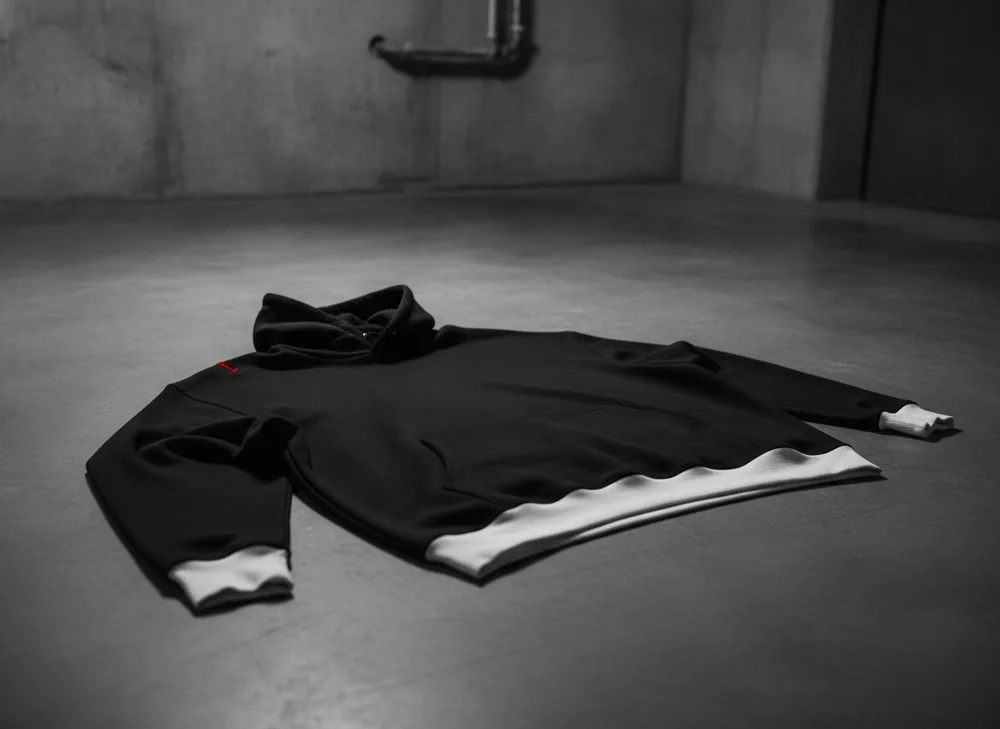
A brand building a boxy, oversized hoodie with a specific drop-shoulder cut and a chest-and-back print placement is a clear OEM case: no factory catalog holds that exact combination of fit and print layout, so the pattern has to be built or refined against the brand’s own reference garment or tech pack, and once approved, that pattern becomes the brand’s own asset for each future reorder.
A brand entering the basics category with a simple crewneck sweatshirt in a standard regular fit, where the goal is a quick, well-made staple rather than a distinctive silhouette, could reasonably start from an ODM-style base pattern the factory already runs, applying its own color, decoration, and labels on top without commissioning a new pattern from zero. The tradeoff is that the same base construction may sit in other brands’ lines too, which matters less on a supporting basic than it would on a brand’s signature piece.
How the two models affect design protection
OEM gives a brand stronger practical grounds to treat its garment as proprietary, since the pattern, fit, and often the print or wash technique were commissioned specifically for that brand and documented in a tech pack the brand controls. ODM, because the design originates with the factory and can be offered elsewhere, gives a brand far weaker grounds to claim exclusivity over the base construction, even if the branding and labels on top are unique to that brand.
For brands concerned about a design being copied or reused, working through a factory that documents ownership clearly and keeps OEM tech packs tied to the commissioning brand is worth confirming upfront, alongside the broader steps covered in protecting your designs with a manufacturer.
It is worth noting that OEM protection is practical rather than legal, a factory agreeing not to reuse your pattern is a business relationship and a documented tech pack, not a registered trademark or design patent. Brands with a signature silhouette that is central to their identity should still pursue formal design protection where it matters, alongside choosing a manufacturer that treats commissioned patterns as belonging to the brand that paid for them.
How Minku handles it
Our standard model is OEM with full private label: you bring a design, tech pack, or reference garment, we build the pattern, source 240-400+ GSM cotton, French terry, or fleece, apply your chosen decoration, screen print, DTG, embroidery, acid wash, garment dye, tie-dye, or all-over print, and finish with your neck labels, woven tags, hangtags, and packaging, from 50 pieces per design.
Tell us your product and design and we will confirm the OEM path and timeline for your first sample. See our full custom clothing manufacturing service or start with Get Your Custom Quote.
OEM vs ODM Clothing: What’s the Difference? — In Detail