Yes, you can manufacture clothing without a formal tech pack, provided the manufacturer is willing to build one for you from a reference garment, sketch, or detailed description. A tech pack is the technical blueprint a factory cuts and sews from, so skipping it does not remove the need for that information, it shifts who assembles it, from you to the factory’s own product development team.
At Minku Apparel we build a working tech pack from your reference garment or design brief as part of onboarding a first order, from 50 pieces per design, so a first-time brand founder without design software or pattern-making experience can still get a properly specified garment cut and sewn.
What a tech pack normally provides
A tech pack is a document that specifies exactly how a garment is built: flat sketches from the front and back, a full measurement chart by size, fabric and trim specifications including GSM and fiber content, stitch and seam types, label and placement details, and color codes for print or dye. It is the reference sheet a factory’s pattern maker, cutter, and sewing line all work from so the finished garment matches the intended design consistently across each unit produced.
Without a tech pack, none of that information disappears from the process, it simply has not been documented yet in a form a factory can cut from directly. That gap has to be closed somehow before cutting starts, and that is the real work involved in manufacturing without one.
What happens when you do not have one
Brands without a tech pack typically arrive with one of three things: a reference garment they like the fit or construction of, a hand sketch or mood board showing the design intent, or a verbal or written description of what they want the piece to look and feel like. Any of these can become the starting point for a working tech pack, but each requires a different amount of translation work on the factory’s side.
A reference garment is the fastest path, because a pattern maker can measure it directly, point by point, and reverse-engineer a working pattern and spec sheet from something that already fits the way the brand wants. A sketch or description requires more back-and-forth, since measurements, fabric weight, and construction details have to be proposed by the factory and confirmed by the brand before cutting can start.
The risk of skipping documentation entirely
The danger is not manufacturing without a formal tech pack file, it is manufacturing without any documented specification at all. If fit, fabric weight, seam type, and label placement are agreed only verbally and never written down anywhere, there is no shared reference to check the finished sample against, and no record to work from on a reorder six months later when memories of the original conversation have faded.
A properly run factory will not skip this step even when a brand has no tech pack of its own, it will simply create the missing documentation internally, from measurements taken off a reference garment or from the details a brand provides, and confirm it back with the brand before cutting.
How Minku builds a tech pack from your reference garment
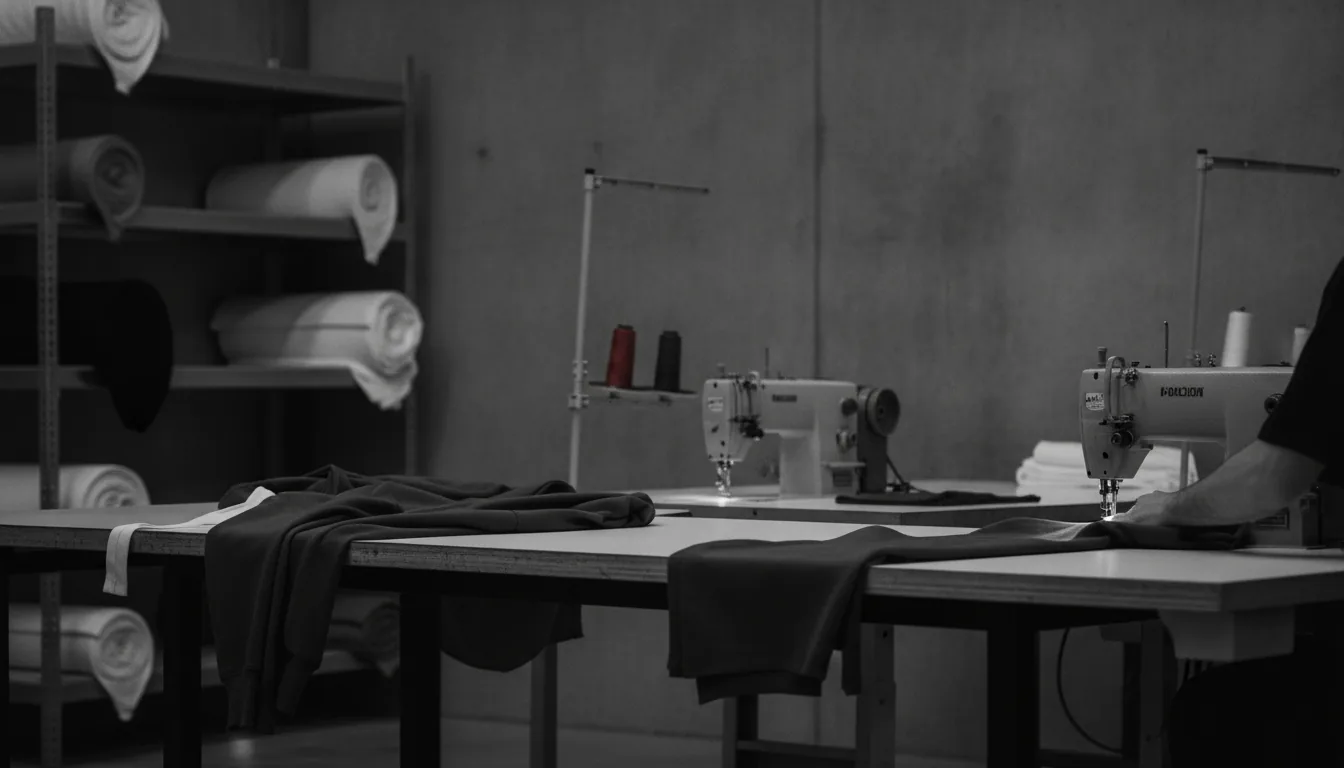
When a brand sends a reference garment, our product development team measures it point by point, chest, length, sleeve, hem, and each construction detail, fabric weight, seam type, decoration placement, and label position, and turns that into a working spec sheet and flat sketch. That document becomes the internal tech pack the pattern maker and sewing line use, and it is shared back with the brand for confirmation before the pre-production sample is cut.
If a brand instead sends a sketch or written brief without a physical reference garment, the same process runs in reverse, our team proposes a measurement chart and fabric spec based on the brief, and the brand confirms or revises it before the sample stage, closing the gap between an idea and a cuttable specification.
Step by step: manufacturing without a tech pack
1. Share what you have. A reference garment, photos, sketches, or a written description of the design, fit, and fabric weight you want.
2. We draft the missing spec. Measurements, fabric and trim details, construction notes, and a flat sketch are documented into a working tech pack.
3. You confirm the draft. Before anything is cut, the draft spec is reviewed and corrected so it matches your intent.
4. Pre-production sample. The confirmed spec is used to cut and sew one physical sample for approval.
5. Bulk production. Once the sample is approved, the same now-finalized tech pack governs the full bulk cut.
When you actually need a full tech pack upfront
A brand placing a first order on a fairly standard silhouette, a regular-fit tee, a pullover hoodie, a basic crewneck sweatshirt, can usually move through the reference-garment route without much friction, because the construction is well understood on the factory floor already. A brand designing a genuinely new construction, an unusual cut-and-sew paneling, a multi-fabric hybrid piece, or a technical outerwear build with specific closures, benefits from investing time in a fuller tech pack upfront, because there is less existing reference for the factory to work from.
Reorders also benefit from having a finalized tech pack on file from the first run, since it becomes the fixed reference that keeps sizing and construction identical across each future batch, see consistent sizing across reorders for how that document gets reused.
Time and cost impact compared
| Path | Time to first sample | Risk if undocumented |
|---|---|---|
| Full tech pack supplied by brand | Fastest | Lowest, spec is already fixed |
| Reference garment, factory builds pack | Slightly longer for measuring and drafting | Low, once draft is confirmed by the brand |
| Sketch or description only | Longest, needs proposal and confirmation rounds | Moderate until measurements are locked |
| Verbal agreement, nothing documented | Fast but unreliable | High, no record to check sample against |
Real example
A streetwear founder with a boxy fit hoodie they liked from another brand, but no design software or pattern-making background, sent us the physical garment. Our team measured each panel and seam, matched a comparable 400 GSM fleece, documented the spec, and confirmed it back before cutting a pre-production sample, arriving at a finished tech pack the brand now reuses for each reorder without repeating the measuring process.
A separate brand starting from a mood board and a written description of a cropped, tie-dyed sweatshirt worked through two rounds of spec confirmation before the first sample was cut, since there was no physical reference to measure directly, proof that a design brief alone is workable, with a longer documentation step before production starts.
What a factory should never do without a tech pack
There is a difference between building a tech pack for you and skipping specification altogether. A factory that agrees to cut fabric based only on a verbal call, with no measurement chart, no fabric spec, and no written confirmation of construction details, is setting up a sample that neither side can objectively check against an agreed standard. If the sample comes back wrong, there is no document to point to for what correct was supposed to look like.
A properly run manufacturer treats the reference-garment or brief route as a documentation exercise, not a shortcut past documentation. The output should always be a written spec sheet and measurement chart the brand signs off on before cutting, even when no tech pack existed at the start of the conversation. Any factory willing to cut bulk fabric with nothing in writing is a red flag worth treating the same way as other warning signs covered in how to avoid clothing manufacturer scams.
Common questions brands have at this stage
Founders without a design background often assume a missing tech pack disqualifies them from working with a serious manufacturer, and quietly settle for a lower-quality factory willing to cut from a vague description with no documentation at all. That tradeoff is unnecessary. A capable manufacturer builds the missing documentation as a normal part of onboarding a first-time brand, and the resulting spec sheet is exactly as usable for reorders as one a brand arrived with on day one.
The other common concern is cost: does building a tech pack from scratch add a separate fee on top of the order. At Minku, drafting the working spec sheet from your reference garment or brief is included as part of onboarding your first order, it is not billed as a standalone service, since it is a necessary step to get your design into production correctly regardless of how it started.
How Minku handles it
Whether you arrive with a complete tech pack, a reference garment, or a sketch and a clear idea, our process closes the documentation gap before anything is cut, and each order still runs through a pre-production sample for approval regardless of how the spec was built. Send what you have and we will tell you exactly what additional detail, if any, is needed to start.
Learn more about what a tech pack is and how to create a tech pack, or see our full cut-and-sew manufacturing service and broader custom clothing manufacturing overview. Ready to start? Get Your Custom Quote.
Can You Manufacture Clothing Without a Tech Pack? — In Detail