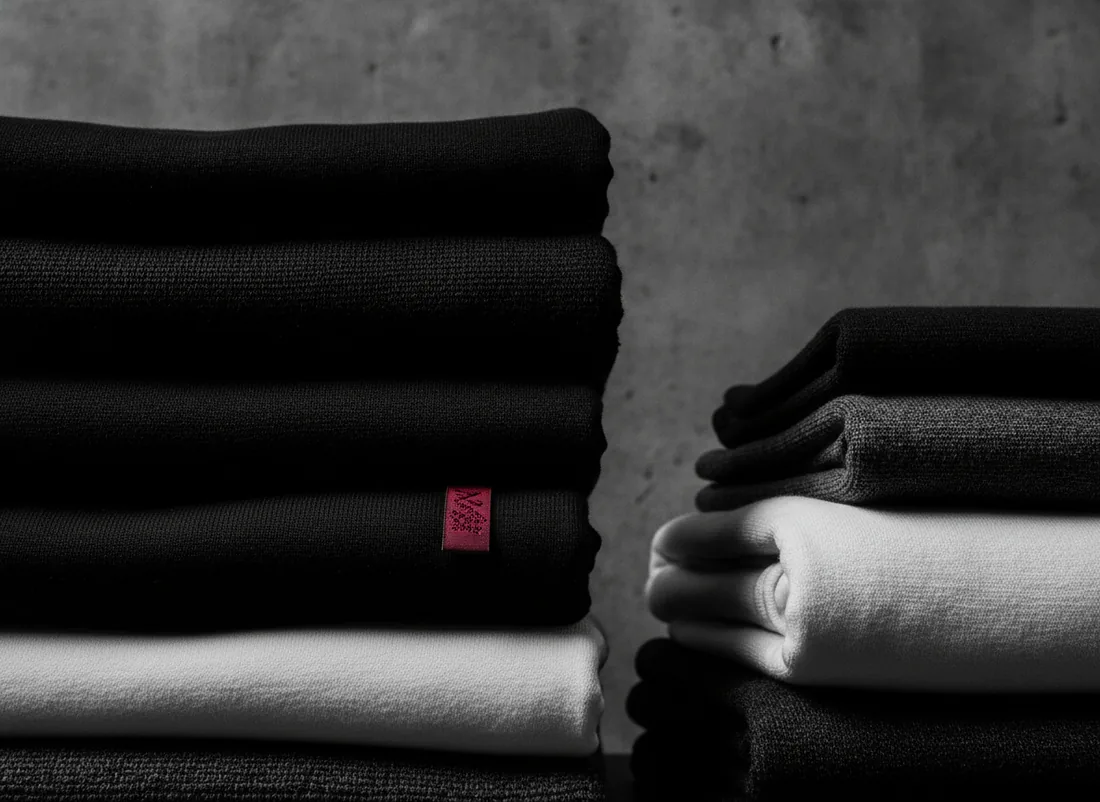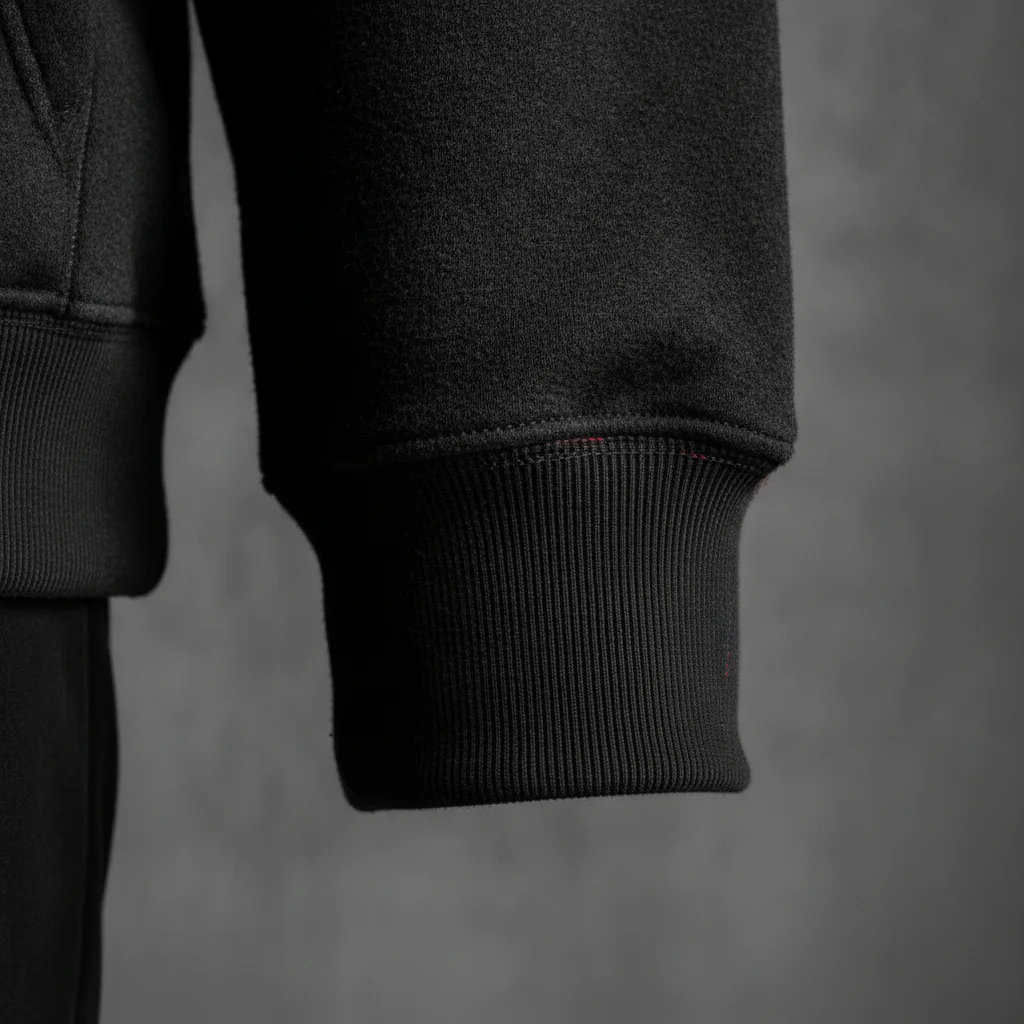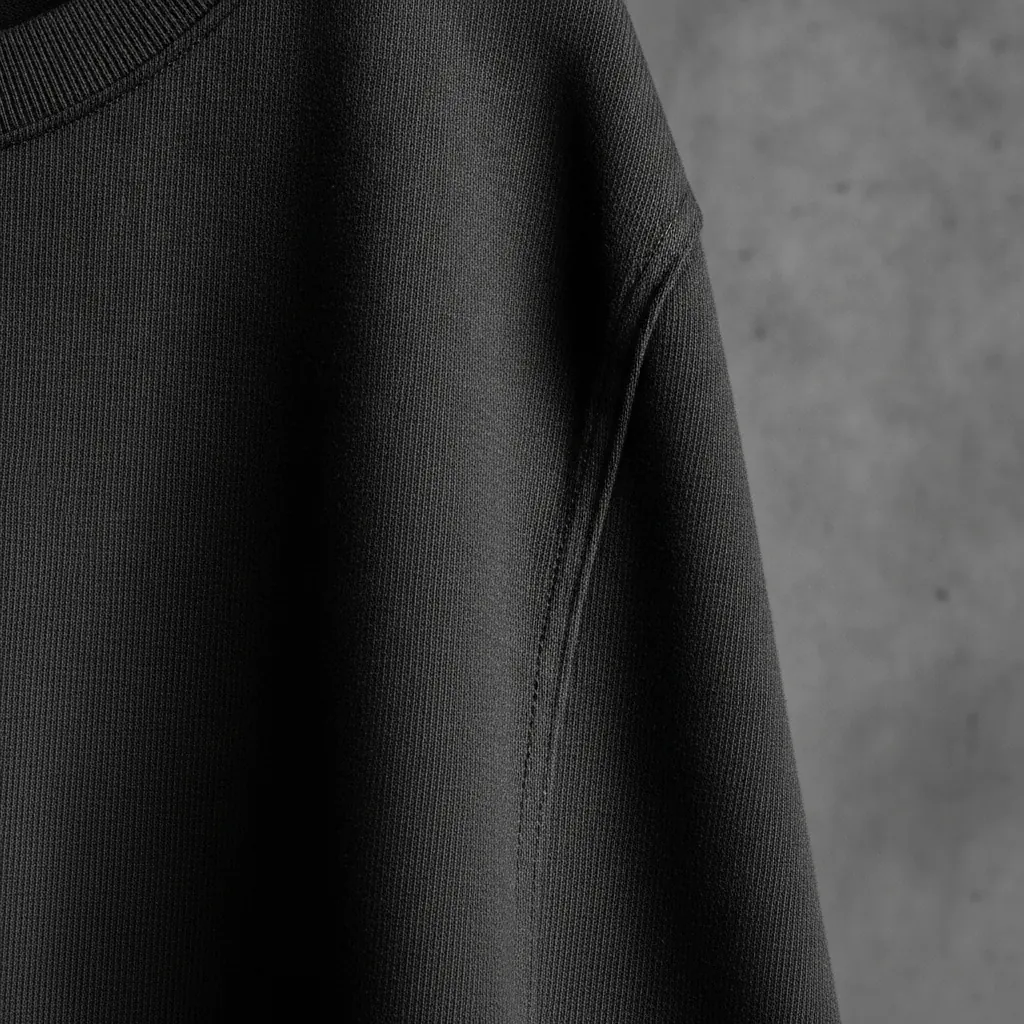
For custom streetwear like t-shirts, hoodies, and sweatsuits, knit fabric is the right construction almost always, while woven fabric belongs on structured pieces such as jackets and technical shorts. Knit jersey, French terry, and fleece stretch and drape the way the streetwear category is built to move; woven cotton, canvas, and shell fabric hold a fixed shape instead.
Knowing which one your garment needs decides the fabric order, the machines that cut and sew it, and how the finished piece performs on the body. At Minku Apparel we cut and sew both knit and woven fabric in-house, from 50 pieces per design, in 240-400+ GSM cotton, French terry, and fleece for knits, and heavier canvas and shell fabric for wovens, so a brand can pair a knit hoodie with a woven jacket in one drop without splitting the order across two factories.
The short verdict
If the garment needs to stretch, drape, and sit close to the body in a relaxed way, knit fabric is the correct call: t-shirts, hoodies, crewneck sweatshirts, and sweatsuit sets are almost all cut from knit jersey, interlock, French terry, or fleece. If the garment needs a fixed shape, a wind-resistant shell, or a tailored outerwear silhouette, woven fabric is the correct call: bomber jackets, coach jackets, denim jackets, and structured cargo shorts are built from woven cotton twill, canvas, nylon, or denim.
Both constructions run through the same cut-and-sew floor and sit within our broader custom clothing manufacturing service, so a brand does not have to choose one fabric family for its whole line.
What knit fabric is
Knit fabric is built by looping a continuous yarn back on itself, row after row, the way a hand-knit sweater is formed but on an industrial circular or flat-bed machine. That looped structure is what gives knit fabric its defining property: natural stretch that snaps back into shape, even without added spandex or elastane, because the loops can pull open and spring back.
Under the knit umbrella sit several distinct fabrics used across a streetwear line. Single jersey is the lightweight, close-drape knit used for standard t-shirts and tank tops. Interlock is a denser, more stable double-knit used where a firmer hand is wanted. French terry has a smooth face and a looped underside, favored for lighter sweatshirts and joggers. Fleece is brushed on the inside for insulation and is the standard for heavyweight hoodies and crewnecks. All of these fall inside our 180-400+ GSM range depending on weight and end use.
Because knit fabric stretches, it tends to curl at a raw cut edge, which is why knit garments are sewn on overlock and coverstitch machines rather than a standard straight-stitch lockstitch. This is a construction detail brands rarely think about, but it directly affects hem finish, neckline stability, and how a garment holds up through repeated washing.
What woven fabric is
Woven fabric is built by interlacing two sets of yarn at right angles, a lengthwise warp yarn and a crosswise weft yarn, on a loom. That interlaced grid is what gives woven fabric its defining property: dimensional stability and a fixed shape, with little to no stretch unless spandex or elastane is woven in deliberately.
Common woven constructions in streetwear outerwear include plain weave cotton (crisp, lightweight, used in lighter shirting), twill (a diagonal weave used in chinos, cargo shorts, and workwear jackets, with a durable, slightly textured hand), canvas (heavy, tightly woven cotton used in structured jackets and heavier shorts), and technical shells like nylon ripstop or polyester taffeta, used for windbreakers, puffer jackets, and coach jackets, often with a water-resistant finish.
Woven fabric frays at a raw cut edge instead of curling, which means woven garments need seam finishing such as overlock edging, bias binding, or French seams to stop the fabric unravelling over time. Zippers, snap closures, and structured pockets also hold their shape more reliably on woven fabric than on knit, which is one reason technical outerwear is almost never made from a pure knit base.
Knit vs woven fabric side by side
Knit
Looped yarn construction. Natural stretch that snaps back. Soft drape, close to the body. Curls at cut edges, sewn on overlock/coverstitch. Standard for tees, hoodies, sweatshirts, sweatsuits.
Woven
Interlaced yarn construction. Minimal stretch unless blended. Fixed shape, structured silhouette. Frays at cut edges, needs seam finishing. Standard for jackets, structured shorts, denim.
Where knit wins
Knit fabric wins on anything meant to feel relaxed against the body: oversized tees, boxy hoodies, cropped sweatshirts, and matching sweatsuit sets all rely on the natural give of a knit to achieve an easy, dropped fit without binding at the shoulders or waist. The stretch also makes knit forgiving across a size run, which matters when a brand is manufacturing across a wide range of body types from one pattern.
Knit is also the more cost-efficient base for high volume basics. A single jersey tee or a fleece hoodie uses a simpler cut-and-sew process than a lined, zippered jacket, so per-piece labour cost is lower, which is part of why the classic streetwear starter lineup, tees and hoodies, is built almost entirely on knit fabric.
Where woven wins
Woven fabric wins the moment a garment needs to hold a shape independent of the body, resist wind or light rain, or carry structured components like a zip front, a stand collar, or welt pockets. A bomber jacket, coach jacket, or puffer needs a shell that will not stretch out of shape under the weight of insulation or a zipper pull, and only a woven or tightly constructed technical fabric delivers that.
Woven also wins on abrasion resistance for garments that take repeated wear at friction points, like cargo shorts or workwear-style jackets, since a tight woven weave resists pilling and thinning far longer than a looser knit under the same stress.
Spec comparison table
| Factor | Knit | Woven |
|---|---|---|
| Construction | Looped yarn | Interlaced yarn |
| Natural stretch | Yes | Minimal unless blended |
| Typical GSM at Minku | 180-400+ | 200-320 |
| Raw edge behavior | Curls, needs overlock | Frays, needs binding/finishing |
| Best product fit | Tees, hoodies, sweatshirts, sweatsuits | Jackets, structured shorts, denim pieces |
| Decoration methods | Screen print, DTG, embroidery, puff, tie-dye, acid wash | Screen print, embroidery, appliques |
Decoration compatibility
Print and decoration methods behave differently on each fabric family. Direct-to-garment (DTG) printing needs an absorbent, close-weave cotton knit to hold ink cleanly, so it works reliably on knit tees and is rarely used on woven shells or heavy canvas. Screen printing works well on both, though a woven canvas surface needs a slightly different ink formulation and cure profile than a soft knit jersey.
Embroidery works on both fabric families but needs different backing and stabilizer: a stretch knit needs a cut-away or tear-away backing matched to its stretch, while a stable woven surface can often take a lighter stabilizer since it will not distort under the needle. Puff print and tie-dye are almost exclusively knit techniques, since puff relies on a foaming ink reacting on a flat knit surface, and tie-dye needs an absorbent cotton knit to take the dye evenly. Acid wash and garment dye work on both, though the finished hand differs, softer on knit fleece, more textured on woven canvas.
Cutting and sewing differences
Knit fabric is cut in stacked plies on a straight-knife or automated cutter, then sewn with overlock machines for seams and coverstitch machines for hems and neck bindings, both built to handle stretch without breaking the stitch. Woven fabric is cut the same way but sewn primarily on lockstitch machines, with additional finishing steps like bias binding or French seams to secure the raw fraying edge.
This is why a factory that runs both fabric families needs two distinct machine setups and two distinct skill sets on the floor, sewing a knit fleece hoodie and sewing a woven nylon bomber jacket are genuinely different manufacturing disciplines, even though both fall under the same cut-and-sew umbrella.
Real examples
A brand launching a first drop with a 320 GSM fleece hoodie and a lightweight woven bomber jacket is running both fabric families in one order, the hoodie sewn on overlock and coverstitch for its stretch hem and ribbed cuffs, the bomber sewn on lockstitch with a bound interior seam and a woven nylon shell. Another brand building an oversized tee line around 220 GSM combed cotton jersey is staying entirely in knit, prioritizing drape and a soft screen-printed hand over any structure.
A workwear-influenced label choosing a 12oz cotton canvas jacket over a knit alternative is choosing structure and abrasion resistance on purpose, accepting the higher per-piece sewing cost of a woven shell because the silhouette and durability the design calls for cannot come from a knit base.
How Minku handles it
We run both knit and woven cut-and-sew production from the same factory floor, so a brand does not need to source hoodies from one manufacturer and jackets from another. Each fabric decision starts with a pre-production sample, knit or woven, so fit, stretch behavior, and decoration are confirmed before bulk cutting begins, and private-label neck tags, woven labels, and packaging apply the same way across both fabric families.
Tell us the garment you are building and we will confirm whether it calls for knit, woven, or both in one line. Start with Get Your Custom Quote or read more on choosing the best fabric for streetwear and what French terry fabric is.
Knit vs Woven Fabric: Which for Your Garment? — In Detail