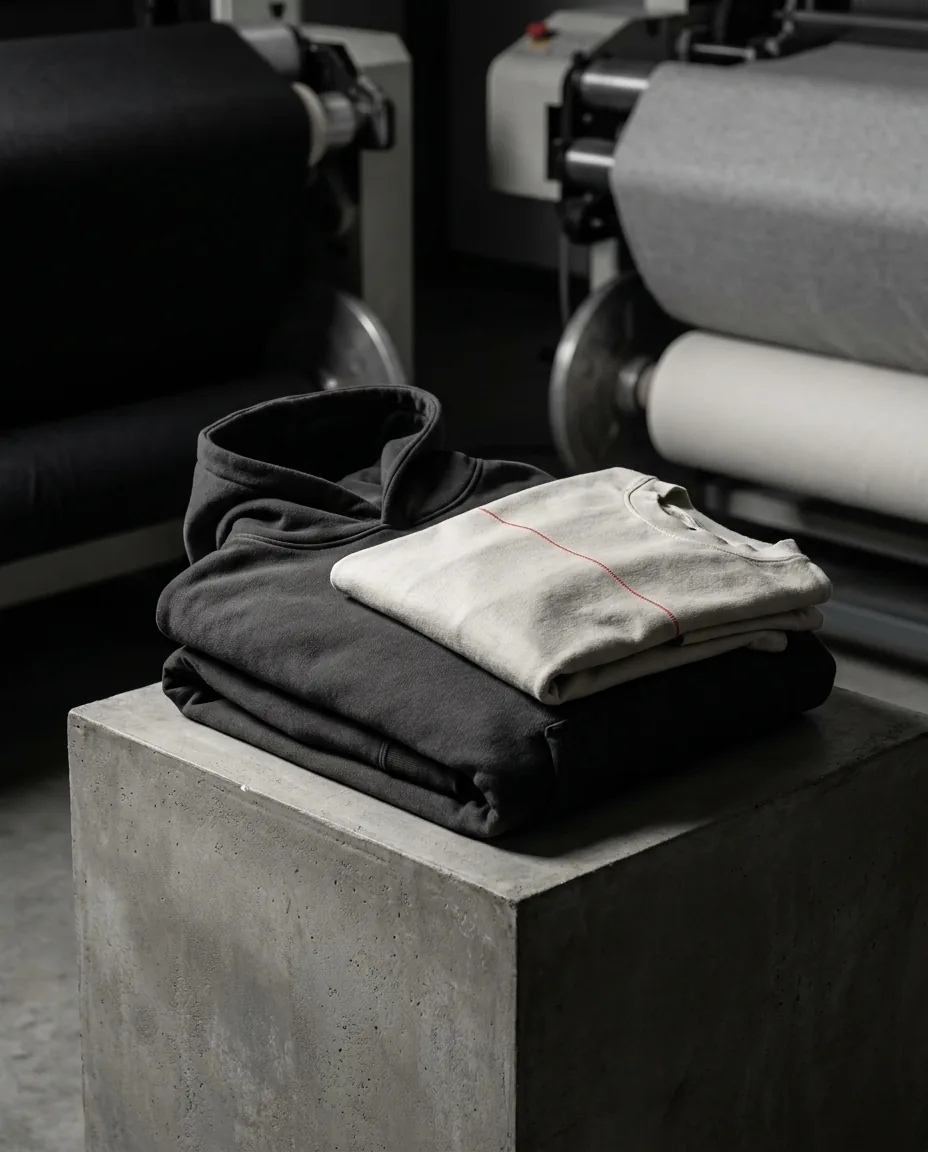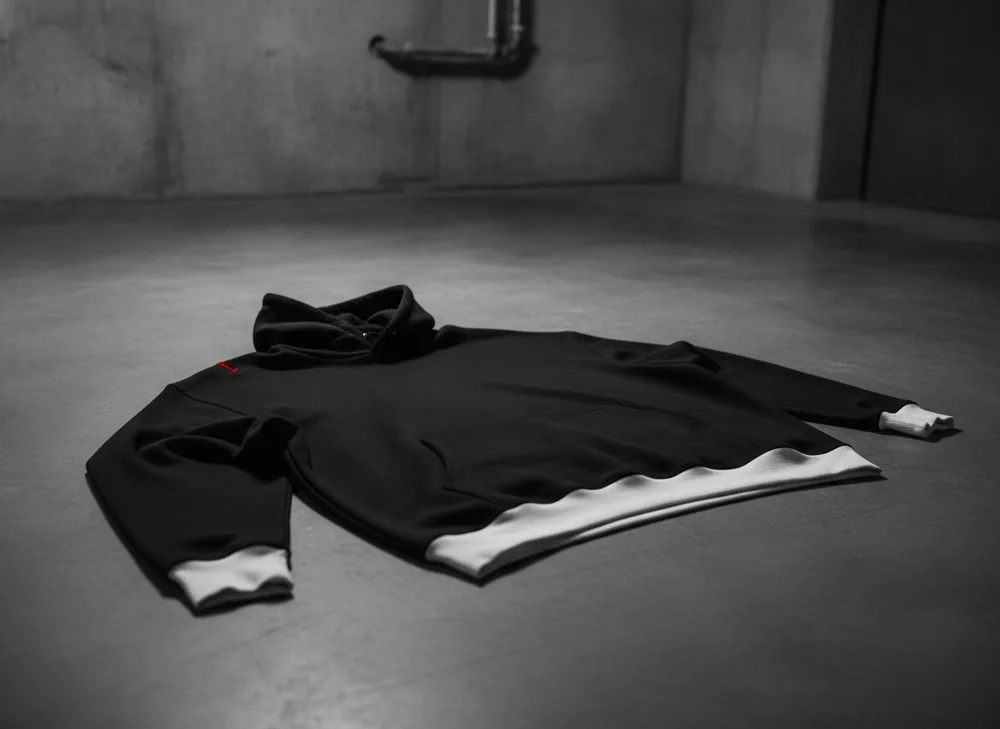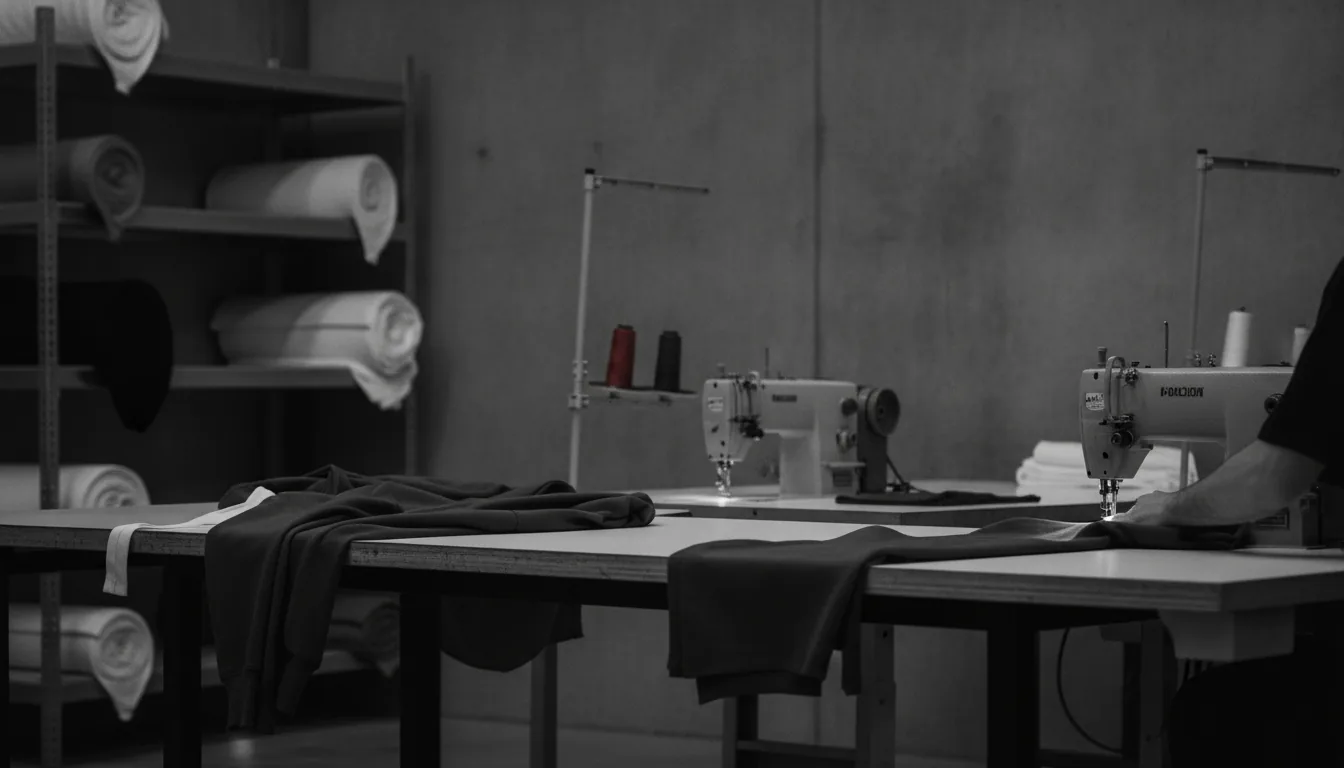
Starting a streetwear brand begins with locking a design and tech pack, sourcing a manufacturer with a low MOQ, sampling the design before bulk production, and launching a first drop of 50 to 300 pieces per design under full private label. Most first-time founders move from a finished design to a live drop in 8 to 12 weeks once a factory, tech pack, and sample round are locked in.
This guide walks through the exact sequence – design, sourcing, sampling, branding, production, shipping, and launch – that separates a brand that ships a first drop from one stuck in planning. Each step below reflects how private label manufacturing actually works, not general startup advice repackaged for apparel.
Business Basics Before You Source a Factory
Register the business entity, secure a brand name that clears a basic trademark search, and set up a business bank account before placing a production order – a manufacturer will need an entity name and shipping address to invoice against, and sorting this out after samples are approved only delays the launch. This is a one-time administrative step, not a recurring part of the manufacturing process, so it should not hold up design and sourcing work running in parallel.
Step 1: Define Your Niche and Design Direction
Before contacting a single manufacturer, narrow the product range for drop one. Most successful first drops center on two to four SKUs – a graphic tee, a hoodie, maybe a crewneck – rather than a full catalog. Decide the silhouette (boxy, oversized, drop-shoulder), the fabric weight target, and the decoration style (screen print graphic, embroidered logo, all-over print) before moving to sourcing. A tight first drop with a clear point of view outperforms a broad one with none.
Step 2: Build a Tech Pack
A tech pack is the technical document a factory manufactures from – measurements, fabric and GSM specification, trim details, print or embroidery placement, and colorways. Founders without design software can still produce a workable tech pack using flat sketches, reference garments, and written measurement specs; a factory’s sampling team can help translate rough direction into a formal spec sheet during the first sample round. See what a tech pack is and how detailed one needs to be before a first quote.
Step 3: Choose a Manufacturer
The manufacturer decision shapes each factor downstream – MOQ, fabric options, decoration capability, and whether your labels and tags go on the garment or a generic factory label does. Look for three things specifically: an MOQ that matches a first-drop size (50 to 150 pieces per design), in-house decoration matching your design (screen print, DTG, embroidery, or wash treatments), and full private label so your neck labels, woven tags, and hangtags ship on the finished product. A factory offering all three under one roof removes the coordination overhead of managing separate vendors for cut-and-sew, printing, and labeling.
Step 4: Sampling and Approval
Before any bulk fabric is cut, a pre-production sample should be produced and shipped for physical approval – fit, fabric hand, GSM, color, and print or embroidery placement all get checked against the tech pack. Expect one to two sample rounds; a first sample rarely nails all detail, and a revision round is standard, not a red flag. Do not authorize bulk production until a sample round is fully approved in writing.
Step 5: Decide MOQ and First Drop Size
New brands consistently over-order on drop one, tying up capital in unsold stock. A 50 to 150 piece run per design, across two to four SKUs, is a workable first-drop range that limits downside while still producing enough units to sell through a launch window and gauge demand for a reorder. See how many units to order for a first drop for sizing guidance by channel (direct launch vs wholesale).
Step 6: Private Label Branding
Private label means the finished garment carries your brand at each touchpoint – a custom-printed or woven neck label, a hangtag with your logo and care instructions, and packaging (poly bag or box) branded to match. This is what separates a brand from a reseller of blank stock; the factory should be able to execute custom labels, tags, and packaging as a standard part of the order, not a paid add-on requiring a separate vendor. See our full breakdown of private label clothing manufacturing for how labels, tags, and packaging fit into one production run.
Step 7: Production and Lead Time
Once a sample is approved, bulk cutting, sewing, and decoration begin. Lead time varies by product and decoration complexity – a screen-printed tee moves faster through production than an all-over print hoodie with embroidered accents – and a factory should give a specific production window per order, not a vague estimate. Build the lead time into your launch calendar with a buffer for the shipping transit that follows.
Quality Control Before Shipment
A factory should run in-line and final quality control checks – stitching, GSM consistency, print or embroidery placement, and trim attachment – before an order is packed for shipment, catching defects before they reach a customer rather than after a return request. Ask what quality control checkpoints exist across the production process, not only at final inspection.
Step 8: Shipping and DDP
Worldwide DDP (Delivered Duty Paid) shipping means the manufacturer handles export customs, international freight, import duty, and customs clearance, so the brand receives a landed, cleared shipment at its door with no surprise duty bill and no customs paperwork to manage. For US-bound orders this typically runs 5 to 8 days by air once production is complete. Build both production lead time and shipping transit into your launch date planning.
Step 9: Launch and Reorder Strategy
Launch with a fixed release date and limited stock – streetwear drop culture rewards scarcity framing over always-in-stock retail framing. Track which SKUs sell through fastest and reorder into those designs rather than re-running the full catalog at even volume. A manufacturer who can turn a reorder without a fresh sampling round (once your spec is locked) keeps your second and third drops moving faster than the first.
Building Demand Before the Drop
Content showing the design and production process – fabric selection, sample fittings, decoration close-ups – builds anticipation for a launch date better than a single announcement post the week of. Streetwear audiences respond to seeing a tech pack become a sample and a sample become a finished garment; documenting that process from the factory floor gives a first-time brand real material to post before a single unit ships. Set the release date once production and shipping are both confirmed, not before, so the announced date holds.
Selling Direct vs Wholesale for Drop One
A direct-to-customer drop on your own site keeps margin and brand control in-house and suits a limited first run of 50 to 150 pieces per design sold at a fixed release date. A wholesale approach – placing stock with independent boutiques or online retailers – can move larger volume per SKU but usually means committing to a higher order quantity and a longer payment cycle before revenue lands. Most first-time founders start direct, build a customer list from drop one, and consider wholesale once a design has proven repeat demand across two or more reorders.
Startup Budget: Where the Cost Goes
| Line Item | What It Covers |
|---|---|
| Tech pack / design | Spec sheet, flat sketches, print files |
| Sampling | 1-2 pre-production sample rounds |
| Bulk production | Fabric, cut-and-sew, decoration for 50+ pieces per design |
| Private label | Neck labels, woven tags, hangtags, packaging |
| Shipping | DDP freight, duty, and customs clearance |
See how much it costs to start a clothing brand for a fuller cost model across drop sizes.
Common Mistakes First-Time Founders Make
- Skipping the sample round to save a week, then discovering a fit issue in a full bulk run.
- Ordering too many SKUs on drop one instead of two to four tightly edited designs.
- Choosing a manufacturer without in-house decoration, adding a second vendor and a second lead time.
- Under-specifying the tech pack and leaving fabric weight or fit open to factory interpretation.
How to Vet a Manufacturer Before Committing
Ask for photos or a physical swatch of the exact GSM and fabric proposed, ask how many sample rounds are standard before bulk cutting, and confirm private label – labels, tags, packaging – is included in the base quote rather than billed as an extra. A manufacturer who answers all three with specifics rather than general reassurance is one worth moving forward with. See how to choose a clothing manufacturer for a fuller vetting checklist.
How Minku Apparel Supports First-Time Brands
Minku Apparel manufactures custom streetwear from its Pakistan factory with an MOQ from 50 pieces per design, 240-400+ GSM fabric, in-house screen print, DTG, and embroidery, and full private label on each order – your neck labels, woven tags, and packaging, not a generic factory label. Each design goes through a tech pack and pre-production sample before bulk cutting, and finished orders ship worldwide DDP, landed and cleared, to the USA, UK, and Europe.
For the wider manufacturing picture beyond a first drop, see our custom streetwear manufacturer pillar page.
How to Start a Streetwear Brand (2026 Step-by-Step Guide) — In Detail