Most streetwear brands price a custom jacket at 2.5 to 4 times factory-direct unit cost once shipping, packaging, and payment processing are factored in – a jacket costing 30 dollars landed typically retails between 75 and 120 dollars. Minku Apparel manufactures custom jackets from 50 pieces per design, and getting the retail math right before you place your order is what protects margin once the drop goes live.
The Standard Markup Formula for Custom Jackets
Start with your landed unit cost – factory price plus DDP (delivered duty paid) freight – then apply a markup multiplier between 2.5x and 4x depending on your brand’s positioning. A newer brand building initial market trust often prices closer to 2.5x to 3x to keep the retail price approachable while still covering marketing and returns. An established brand with a loyal following and higher perceived value can sustain 3.5x to 4x, particularly on a hero jacket that anchors a limited drop. The multiplier needs to cover more than fabric and construction – it needs to fund photography, marketing spend, platform fees, returns, and the margin that keeps the business solvent between drops.
Factory Cost vs Landed Cost vs Retail Price
| Stage | What It Includes | Example (Bomber Jacket) |
|---|---|---|
| Factory unit cost | Fabric, construction, decoration, private label | 28 dollars |
| Landed cost | Factory cost + DDP shipping | 31 to 33 dollars |
| Retail price at 3x landed | Landed cost x markup multiplier | 93 to 99 dollars |
Pricing from factory unit cost alone – skipping the landed cost step – is the most common error new brands make, because it understates the true unit economics and erodes margin the moment shipping is added after the fact.
Pricing by Jacket Style
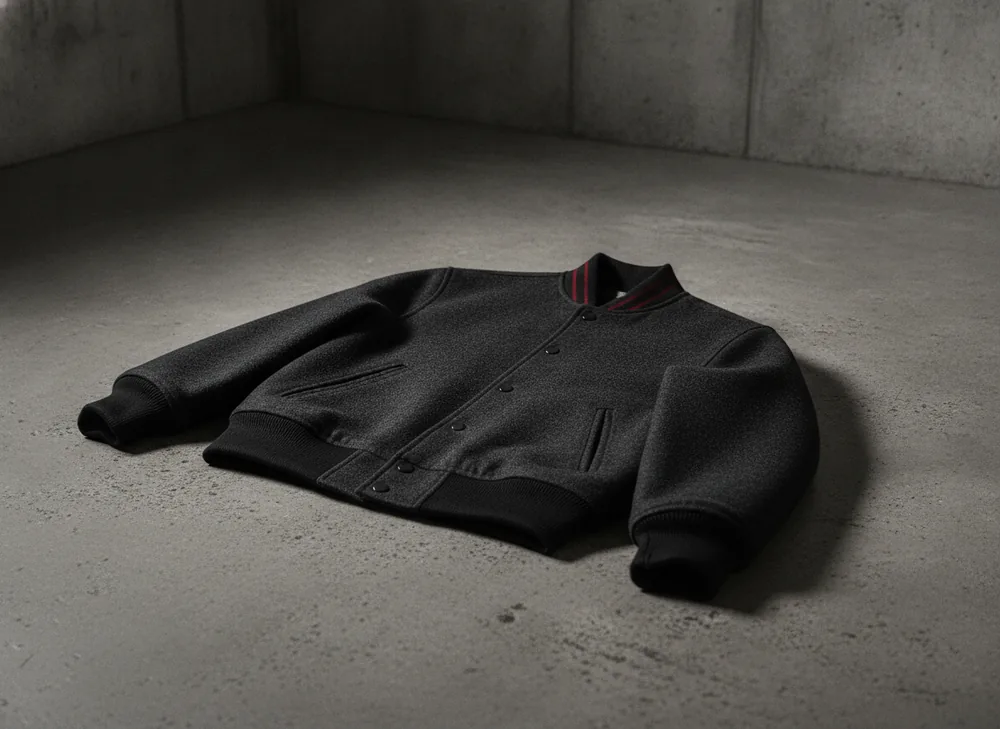
Retail price expectations shift by jacket style because customers already hold a mental price anchor for each: a coach jacket typically retails 60 to 95 dollars, a bomber 85 to 130 dollars, a varsity jacket 100 to 160 dollars given its heavier construction and chenille-style branding potential, a denim jacket 90 to 140 dollars, and a puffer 110 to 190 dollars given its insulation and higher factory cost. Pricing above these bands without a strong brand story or limited-run positioning risks a slow sell-through; pricing meaningfully below them can undercut the premium positioning a jacket is meant to carry as a drop’s hero piece.
Factoring Decoration and Private Label Into Your Retail Price
A puff-embroidered chest logo or a printed satin lining costs more at the factory than a single screen-printed placement, and that cost difference should move your retail price, not only your margin. Brands sometimes decorate a hero jacket more heavily than the rest of a drop specifically to support a higher retail price point – a fully embroidered varsity jacket priced against a coach jacket with one small chest logo, for example. Private label details – a woven label, a branded hangtag, a printed satin lining – are lower-cost additions at the factory level but carry disproportionate weight in a customer’s perception of value, which is part of why full private label is worth the modest per-unit investment.
Wholesale and Direct-to-Consumer Pricing Differences
If you plan to sell through retailers as well as direct-to-consumer, build both price points before you finalize your factory order. Wholesale buyers typically expect to pay 2x to 2.2x your landed cost and resell at their own 2x to 2.5x markup, meaning your direct-to-consumer retail price needs to roughly match or sit close to what a retailer would charge, or you undercut your own wholesale channel. See wholesale vs custom jackets for the full picture on how the two routes compare. Brands selling exclusively direct-to-consumer have more pricing flexibility since there is no retailer margin to protect, but should still price high enough to sustain marketing spend and returns without eating into the margin meant to fund the next production run.
Psychological Price Points and Drop Positioning
Round, deliberate price points – 88 dollars, 98 dollars, 128 dollars – tend to perform better in streetwear than prices that look accountant-derived, like 93.47 dollars. A hero jacket in a drop can carry the highest price point in the collection specifically because it functions as the anchor – other pieces (a t-shirt, a pair of shorts) look reasonably priced next to it, a pattern well understood in drop-based retail merchandising. Limited-run framing – stating a fixed quantity, even a modest one like 100 or 150 units – supports a higher price point because scarcity, not only the garment, becomes part of what the customer is paying for.
Regional Pricing Considerations for USA, UK, and EU Buyers
A jacket priced in US dollars for the American market does not automatically translate to a correct price point in the UK or the EU, because currency, local competitor pricing, and market expectations differ. In the USA, a broad, mature streetwear market across cities like Los Angeles, New York, and Atlanta supports a wide range of price points, from an approachable 60-dollar coach jacket to a 160-dollar varsity piece from a brand with real following. In the UK, factor GBP pricing directly rather than a straight currency conversion from a US price – UK streetwear buyers in London and Manchester respond to round GBP price points the same way US buyers respond to round dollar amounts. Across the EU (Germany, France, the Netherlands, Italy, Spain, Sweden), price in EUR and account for local VAT expectations already being priced into the DDP landed cost, so your storefront price should represent the full, final amount the customer pays with no additional charges at checkout.
Bundling and Multi-Piece Pricing Strategy
A jacket rarely sells in isolation within a drop – it usually sits alongside t-shirts, hoodies, or shorts from the same collection. Bundling a jacket with a lower-price-point piece (a t-shirt or a cap, for example) at a modest reduction off the combined individual prices can lift average order value without eroding the jacket’s own price integrity, since the jacket itself is never marked down on its own. Some brands instead use the jacket as a loyalty or bundle-only item – available only when purchased alongside another piece from the drop – which protects its premium positioning while still driving overall collection sales. Whichever approach you choose, keep the jacket’s standalone price consistent across the drop’s life; changing it mid-drop damages trust with early buyers who paid the original price.
How Reducing Price Too Early Undermines Long-Term Positioning
Marking a jacket’s price down soon after a drop launches – to move slow-selling inventory – teaches your audience to wait for a price reduction on the next drop instead of buying at full price when it lands. This is a real risk specifically on a hero jacket, since it is usually the highest-price item in a collection and the one a brand most wants to protect as premium. If a jacket is not selling at its intended retail price, the more effective fix is usually additional marketing and styling content around the piece rather than an early markdown, which resets customer price expectations for each future release. Reserve limited, planned promotional pricing for clearance of a genuinely discontinued style, not as a routine lever for a jacket that simply needs better positioning.
Common Pricing Mistakes New Brands Make
The most frequent mistake is pricing from factory cost instead of landed cost, which quietly erases margin once shipping is added. The second is under-pricing a hero jacket relative to its actual construction complexity – a puffer or varsity jacket costs more to build than a t-shirt, and pricing it with the same multiplier as a basic tee leaves money on the table. The third is not accounting for return rates, which run higher on jackets than on basics because fit expectations are more particular on an outerwear piece. The fourth is setting a price before the sample is approved – fabric substitutions or construction changes during sampling can shift the factory cost, so final pricing should wait until the sample-approved cost is locked in.
A Worked Retail Pricing Example
A brand orders 150 varsity jackets at a landed cost of 38 dollars per unit (factory cost plus DDP freight). Applying a 3.2x multiplier – reasonable for a hero drop piece with puff-embroidered chenille-style lettering – lands the retail price at approximately 122 dollars, rounded to a deliberate 128 dollars. At that price, selling through 120 of the 150 units covers the full production cost, freight, and marketing spend, with the remaining 30 units representing pure margin – a standard target brands use when planning sell-through on a limited drop.
How Minku Apparel Helps You Price With Confidence
Minku Apparel provides a line-itemed quote – fabric, construction, decoration, private label, and DDP freight broken out separately – so a brand can build its retail pricing model on real, confirmed numbers rather than an estimate. Because pricing is confirmed after the sample-approved cost, not before, a brand avoids the common trap of pricing a drop around a quote that later shifts once fabric or decoration details are finalized. Check your MOQ options and Get Your Custom Quote to lock real numbers before you set your retail price.
How to Price Your Custom Jackets for Retail — In Detail